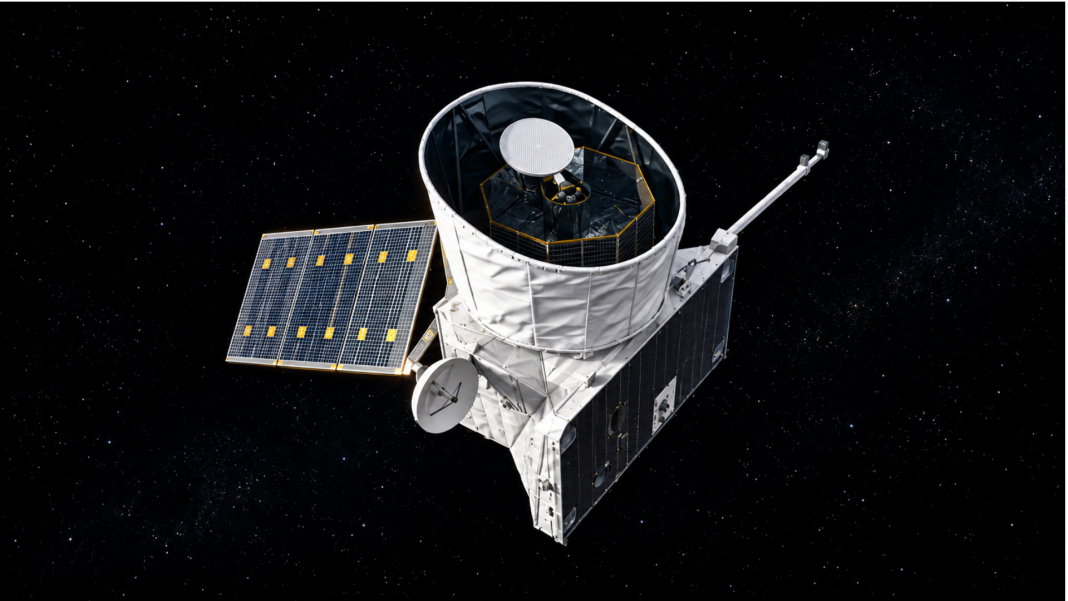

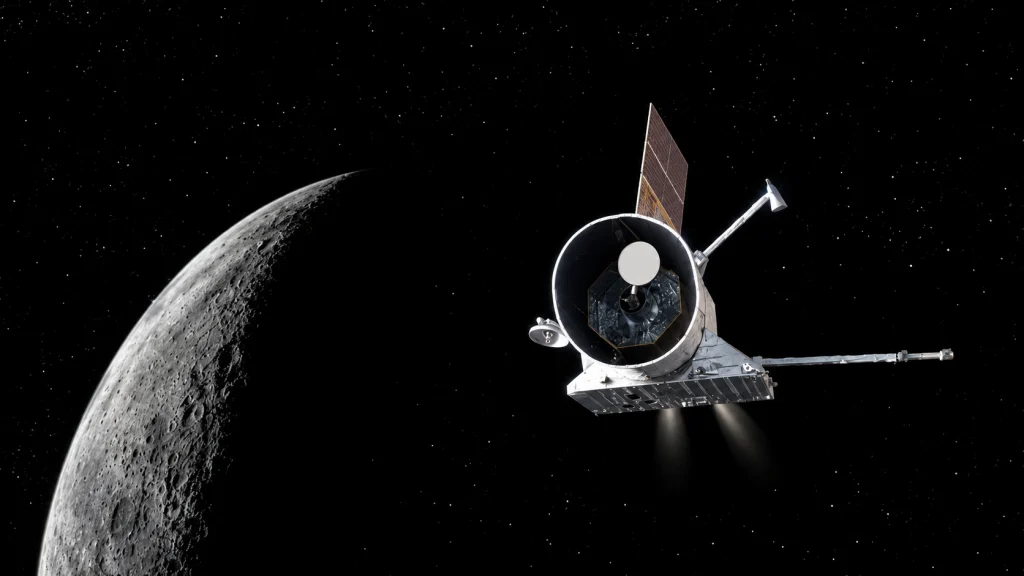
A software malfunction disrupted the BepiColombo spacecraft’s long-awaited arrival at Mercury on November 21, forcing engineers to revise its trajectory after an eight-year journey spanning more than six billion miles.
The mission, a joint project between the European Space Agency (ESA) and the Japan Aerospace Exploration Agency (JAXA), successfully entered Mercury’s orbit despite experiencing an unexpected interruption during a critical maneuver.
Both space agencies have confirmed that the spacecraft remains safe and that its upcoming scientific mission is still on schedule.
What went wrong during BepiColombo’s arrival at Mercury?
As BepiColombo approached within 395 miles of Mercury’s surface, its thrusters began firing to slow the spacecraft and establish a lasting orbit around the planet.
However, a software malfunction caused the planned 37-minute maneuver to end after approximately 28 minutes.
The interruption triggered the spacecraft’s safe mode, a protective system that temporarily suspends nonessential operations when unexpected problems occur.
Engineers subsequently determined that the spacecraft had achieved only 77% of the planned change in speed.
Instead of completing an orbit around Mercury every 58 hours, BepiColombo now takes approximately 75 hours. The spacecraft also reaches a significantly higher altitude than originally intended.
The issue was traced to a problem involving the spacecraft’s guidance software and thruster controls.
Despite the setback, ESA confirmed that engineers have adjusted the remaining trajectory correction maneuvers without needing to add extra thruster burns.
What happens next for the Mercury mission?
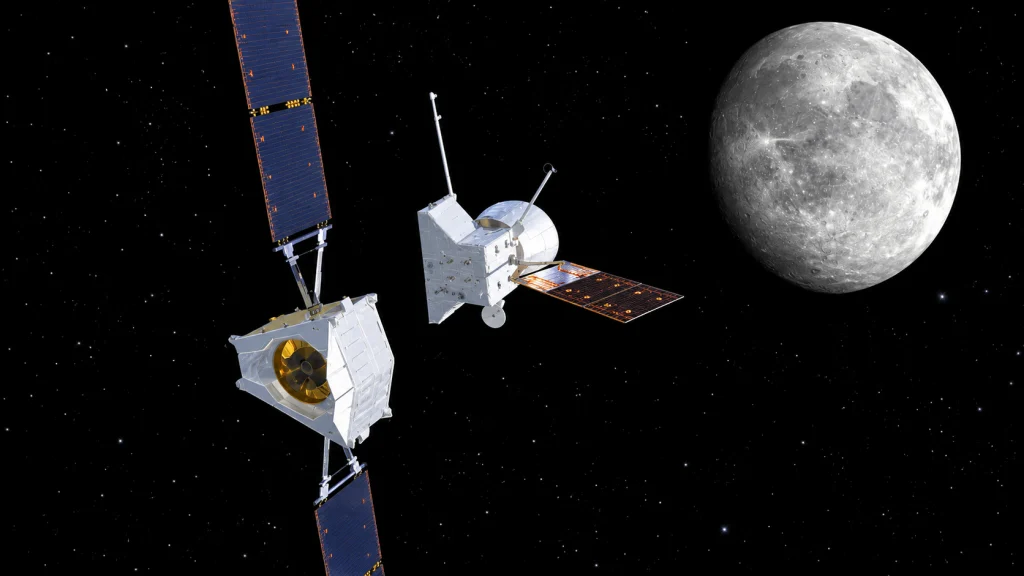
BepiColombo consists of two scientific spacecraft: ESA’s Mercury Planetary Orbiter and JAXA’s Mercury Magnetospheric Orbiter, known as Mio.
The two orbiters are scheduled to separate on December 9–10, allowing them to eventually begin their individual scientific missions.
Further adjustments will gradually lower the European orbiter toward its intended scientific orbit, which it is expected to reach by March 2027.
Routine scientific observations are scheduled to begin in April 2027.
The spacecraft previously experienced an 11-month delay after a propulsion problem in 2024 forced engineers to revise its route.
Why scientists want to explore Mercury
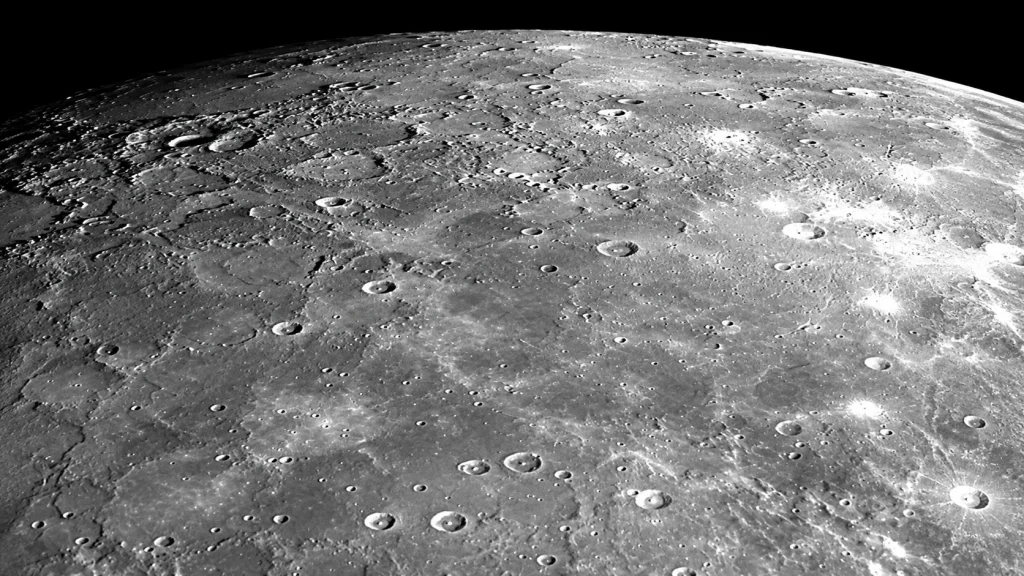
Launched in October 2018 from French Guiana, BepiColombo is only the third space mission to visit Mercury, following NASA’s Mariner 10 and MESSENGER missions.
Mercury’s proximity to the sun makes it particularly difficult to explore. Daytime surface temperatures can reach approximately 800 degrees Fahrenheit, while the sun’s gravitational pull complicates spacecraft navigation.
Scientists hope BepiColombo will help explain Mercury’s unusually large core, its magnetic field and the presence of water ice in permanently shadowed polar craters.
Unlike previous missions, BepiColombo will use two orbiters carrying different scientific instruments to study the planet and its surrounding environment simultaneously.
Despite its challenging arrival, the mission remains on course to provide new insights into Mercury and the formation of the solar system’s rocky planets.