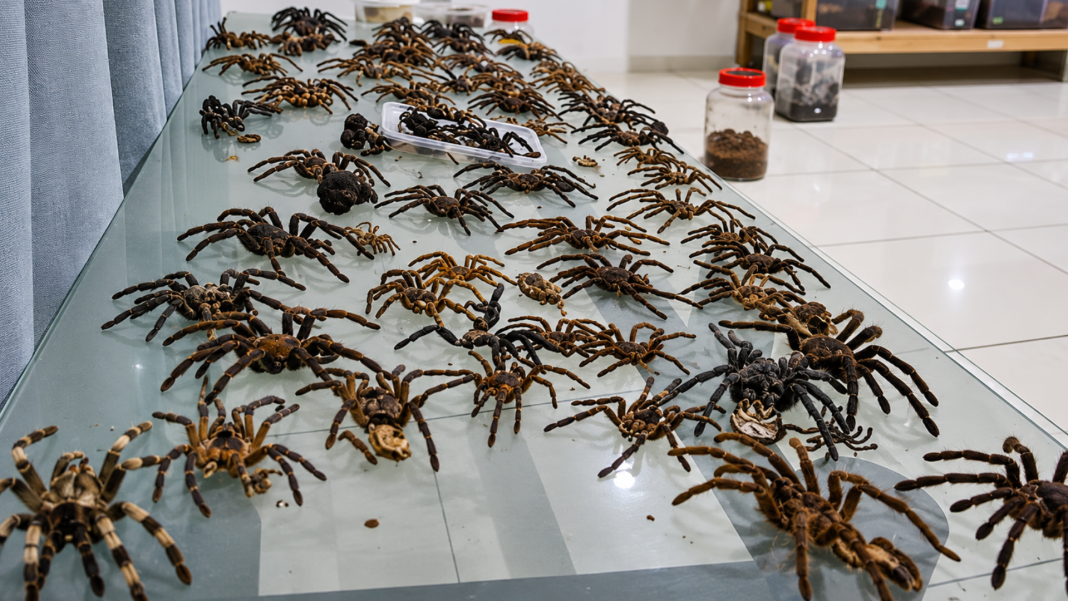

Authorities in Peru reportedly revised the number of tarantulas seized from three international travelers to 12,796 following a wildlife trafficking investigation at Jorge Chávez International Airport in Callao, near Lima.
The discovery was made on November 3, 2026, when authorities intercepted two German citizens and a Polish national preparing to travel to Germany.
Peru’s National Forest and Wildlife Service (SERFOR) initially announced the seizure of more than 3,000 tarantulas. Subsequent reports in November indicated that Peruvian police had significantly increased the estimated number.
Thousands of tarantulas discovered hidden in socks
Authorities launched an investigation after receiving an anonymous tip about suspected illegal wildlife transportation.
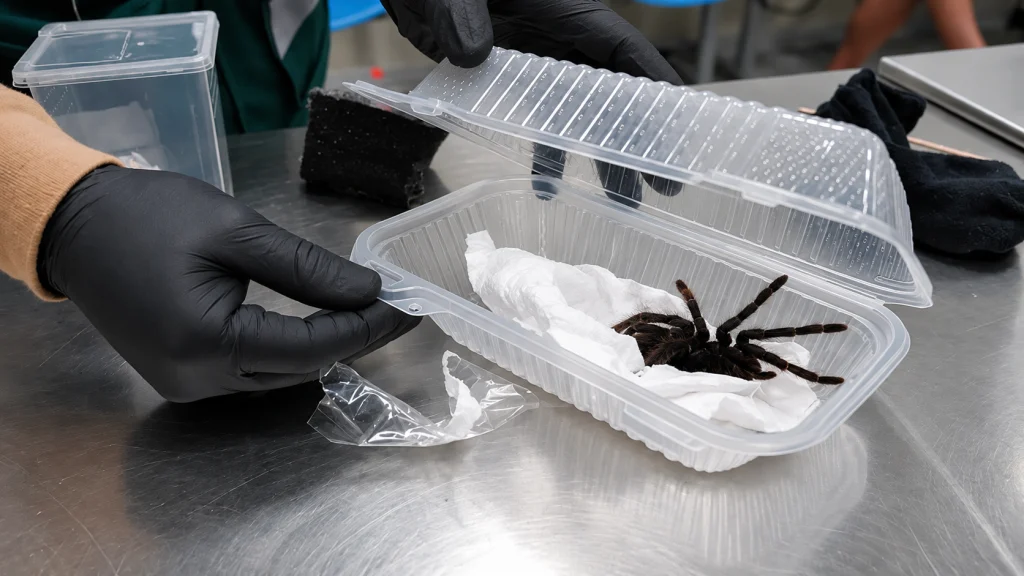
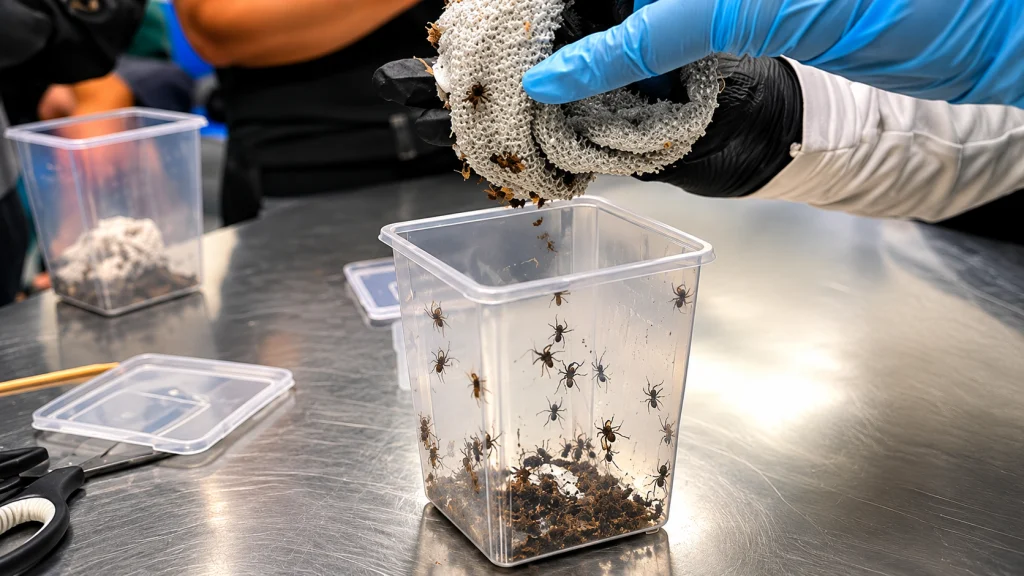
During a luggage inspection, officials discovered thousands of tarantulas concealed inside socks packed in three suitcases. The seizure included eggs, newly hatched spiders and fully grown specimens.
The three travelers were detained by Peru’s environmental crimes police and faced criminal proceedings overseen by a specialized environmental prosecutor’s office.
Authorities have not publicly identified the suspects in the available reports. The outcome of their criminal proceedings remains unclear.
Some seized tarantulas may be unknown to science
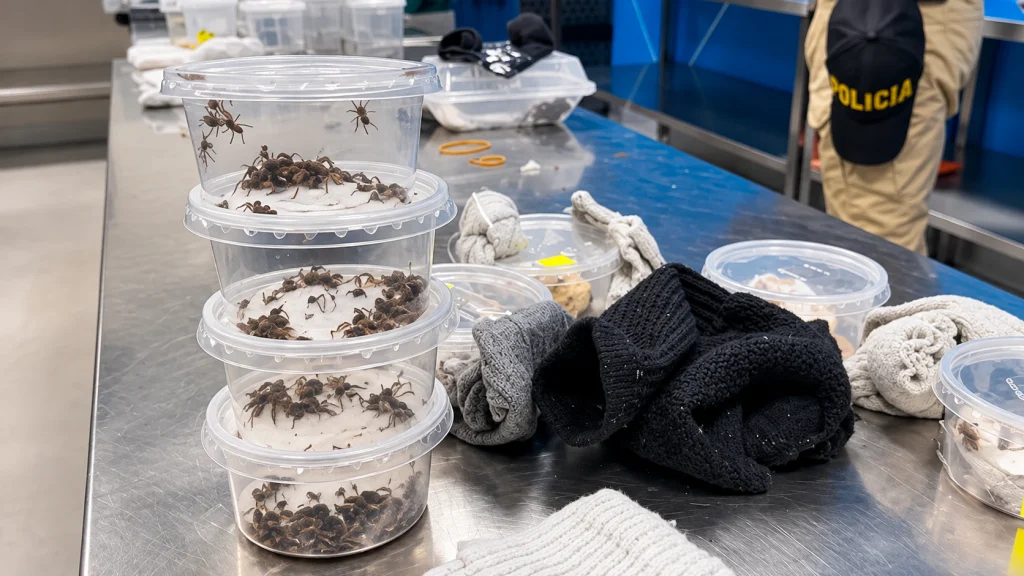
Wildlife specialists identified several types of tarantulas among the confiscated animals, including the Bolivian blue-leg birdeater, a species classified as vulnerable under Peruvian law.
Officials also indicated that some specimens could belong to species that have not yet been formally documented by scientists.
Cora Suárez, a wildlife control technician with SERFOR, explained that the spiders’ distinctive colors and sizes make them attractive to collectors.
Authorities planned to transfer the confiscated tarantulas to an authorized breeding center once specialists completed their identification and assessment.
The incident highlights the conservation challenges associated with illegal wildlife trafficking and the removal of rare species from their natural habitats.