
Former Bangladesh Prime Minister Sheikh Hasina has announced plans to return to her home country on December 16, 2026, despite facing a death sentence. The announcement has raised political tensions in Bangladesh and added pressure to its relationship with neighboring India.
Hasina, 79, has been living in India since August 5, 2024, when a student-led uprising forced her to leave Bangladesh, ending her 15 years in power.
Her spokesperson, Syed Mozammel Ali, announced on November 24 that Hasina had asked the Bangladesh government to arrange a flight from New Delhi to Dhaka through Biman Bangladesh Airlines, the country’s national airline.
December 16 marks Victory Day in Bangladesh, which celebrates the country’s victory in the 1971 war of independence against Pakistan.
However, the Bangladesh government has rejected the idea of allowing Hasina to return as an ordinary passenger.
Bangladesh insists on Sheikh Hasina’s extradition
On November 17, 2025, Bangladesh’s International Crimes Tribunal sentenced Hasina to death for crimes against humanity linked to the government’s response to the 2024 protests.
A United Nations investigation estimated that up to 1,400 people may have been killed during the unrest between July and August 2024.
Hasina was convicted in her absence. She has rejected the verdict and denied the charges against her. Bangladesh’s chief prosecutor, Md Aminul Islam, said Hasina had missed the 30-day deadline to appeal her death sentence.
Zahed Ur Rahman, the prime minister’s information adviser, said the government intends to carry out the death sentence if Hasina returns. The United Nations Human Rights Office stressed the importance of fair trials and expressed opposition to the death penalty.
On November 26, Bangladesh’s State Minister for Foreign Affairs Humaiun Kobir dismissed the possibility of Hasina returning in December. He said she could only return through extradition under strict surveillance.
Extradition is the legal process through which one country hands over a person wanted by another country. Earlier this month, Bangladesh also rejected Hasina’s request for a new passport and national identity card.
Hasina’s return plans put pressure on India-Bangladesh relations
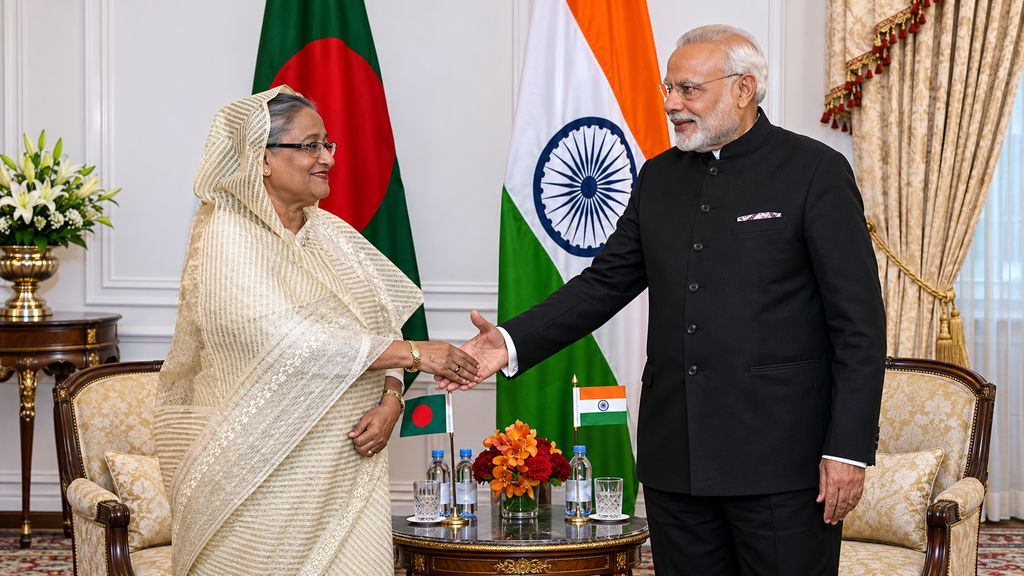
Indian Foreign Ministry spokesperson Randhir Jaiswal said on November 25 that India was still reviewing Bangladesh’s extradition request. However, he explained that Hasina’s decision to return voluntarily was a separate matter between her and the Bangladesh government.
During a visit to Pakistan, Bangladesh Parliament Speaker Hafiz Uddin Ahmed said his country could take the matter to the International Court of Justice (ICJ) if India refused to extradite Hasina. No such case has been confirmed as filed.
Political tensions have increased across Bangladesh in recent weeks, with reports of protests, fires and damage to public property. The government has accused Hasina’s supporters of trying to create unrest. However, responsibility for some of the incidents remains disputed.
Hasina’s Awami League party was banned from political activities under the previous interim government and was prevented from participating in the February 2026 election, which brought Prime Minister Tarique Rahman’s Bangladesh Nationalist Party to power.
India has continued diplomatic talks with Bangladesh, but disagreements over Hasina’s extradition remain unresolved. Despite Hasina’s announcement, neither government has confirmed travel arrangements for December 16.