
A routine Friday morning in downtown Minneapolis was shattered by gunfire. In a matter of seconds, a crowded stretch of Nicollet Mall near Target’s downtown campus became the scene of a double shooting that sent two men to the hospital and prompted a swift police response.
Shooting erupts during morning meeting on Nicollet Mall
Two men were wounded just before 8:30 a.m. on Friday, May 29, 2026, near the intersection of 9th Street South and Nicollet Mall, according to Minneapolis police and multiple local news reports. Authorities said a 25-year-old man had arranged to meet the suspect in the area when that encounter escalated and gunfire broke out. A second victim, a 44-year-old man who was working nearby, was struck as the shooting unfolded.
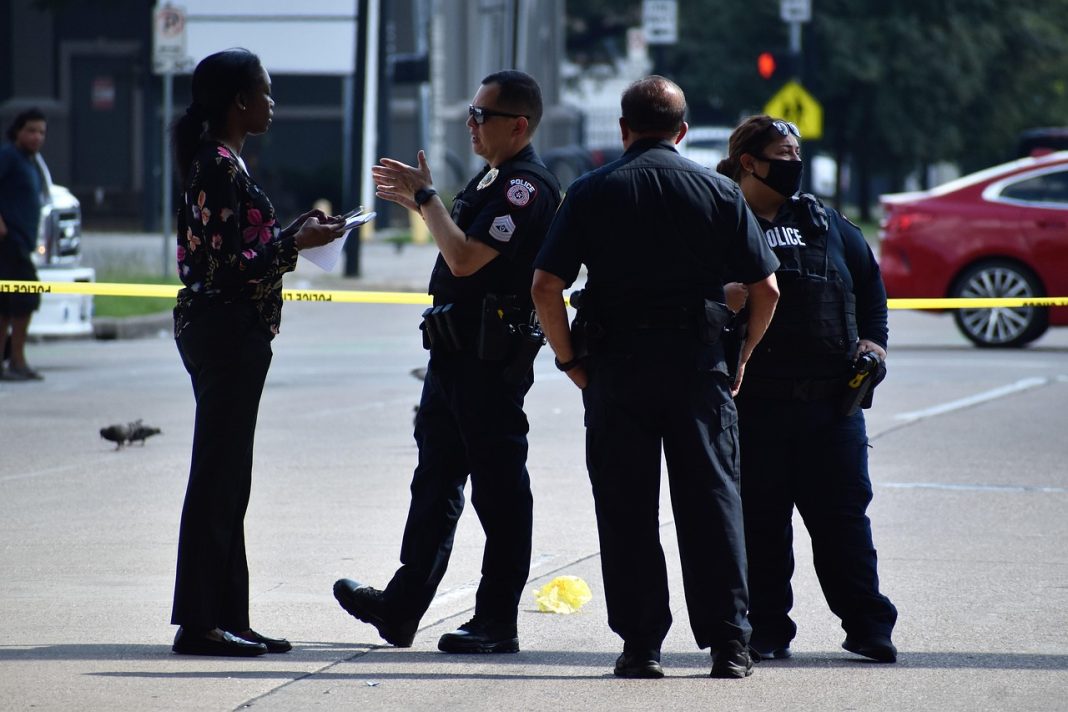
Police and emergency responders arrived quickly and began treating both victims at the scene. Minneapolis police spokesperson Sgt. Garrett Parten said officers provided immediate aid, including what he described as potentially life-saving care for the younger victim, before both men were transported to Hennepin Healthcare. Early official accounts differed slightly on the severity of the injuries, with some outlets reporting that both victims were expected to survive while later reports said the 25-year-old man suffered life-threatening injuries and the older victim’s wounds were less serious.
The shooting happened in one of the city’s most visible commercial corridors, near Target’s corporate headquarters and flagship store. That location heightened public concern, coming at a busy morning hour when downtown workers, service employees and commuters were moving through the area. Detectives later marked evidence on the sidewalk and cordoned off part of the block as investigators worked to reconstruct the sequence of events.
Officials have not publicly identified either victim or the suspect. What police have said so far is that the shooting appears tied to a direct interaction between the suspect and the 25-year-old man, while the second victim was not believed to be part of that dispute. The case immediately raised fresh questions about safety in downtown Minneapolis, where city leaders and business groups have spent months trying to build confidence in the area’s recovery and daily foot traffic.
Witness says gunfire happened in seconds
A witness interviewed by CBS Minnesota said the violence unfolded almost instantly, leaving bystanders stunned and uncertain how to react. The witness said the suspect ran toward a young man standing in front of him, and then shots were fired in rapid succession. “We were not sure what to do at the moment,” the witness told the station, capturing the confusion that often accompanies sudden public gun violence.
That account matched the broad outline provided by investigators, who said the confrontation escalated quickly. The description also underscored how little warning people nearby may have had before the shots rang out. In a downtown setting where workers were cleaning sidewalks, opening businesses and heading into offices, the speed of the shooting amplified the sense of vulnerability among those who saw or heard it happen.
The 44-year-old victim appears to have been what police and local media described as an innocent bystander working for a business in the area. FOX 9 reported that he was employed by a private business nearby when he was hit. That detail has become central to public reaction, because it suggests the gunfire extended beyond the apparent intended target and endangered people with no connection to the original dispute.
Witness testimony will likely play an important role as detectives continue to piece together the incident. Investigators typically compare firsthand accounts with surveillance footage, physical evidence and statements from the suspect and victims when available. In a corridor like Nicollet Mall, where businesses and nearby buildings often have cameras facing the street, authorities may have substantial video evidence to review alongside the recollections of those who were at the scene when the shooting began.
Suspect taken into custody after search nearby
Minneapolis police said officers were able to track the suspect after the shooting and locate him at an apartment in the 1600 block of 1st Avenue South, roughly three-quarters of a mile from the crime scene. Authorities said he surrendered at about 10 a.m., less than two hours after the shooting, and was booked into jail. Police also recovered a gun at the apartment, according to accounts published later Friday.
That quick arrest prevented what might otherwise have become a prolonged manhunt through the downtown core. Officers had initially secured the Nicollet Mall scene while other units pursued leads on the suspect’s whereabouts. The speed of the apprehension may also prove significant to investigators as they work to establish whether the firearm recovered was the weapon used in the shooting and whether the suspect had any prior relationship with the 25-year-old victim.
As of Friday, police had not announced formal charges or released details about a possible motive. Investigators said only that the suspect and the younger victim were meeting when the situation escalated to gunfire. That leaves several unanswered questions, including whether the meeting had been planned in advance for a personal dispute, a transaction or another purpose entirely.
Under Minnesota procedure, any charging decision would likely be made after investigators submit evidence to prosecutors for review. That process can include witness interviews, ballistics testing, video analysis and statements from the wounded victims if their medical condition allows. Until charges are filed, authorities are expected to remain cautious about publicly describing the relationship between the suspect and the intended victim or the chain of events leading up to the shooting.
Downtown location adds to concerns over safety and recovery
The shooting occurred in a part of Minneapolis that city officials, employers and downtown advocates have repeatedly described as critical to the city’s economic health. Nicollet Mall is both a transit corridor and a symbolic center of downtown activity, lined with offices, retail destinations, restaurants and public spaces. The fact that the violence occurred near Target’s headquarters and flagship store gave it added visibility in a city still working to rebuild confidence in its downtown core.
Recent efforts to revitalize downtown Minneapolis have focused on bringing back workers, supporting street-level businesses and rethinking how people move through central corridors such as Nicollet Mall. Public safety has been a recurring theme in those discussions, especially as leaders try to encourage events, dining, tourism and weekday office traffic. A broad-daylight shooting in such a prominent location is likely to sharpen scrutiny of those efforts, even though police moved quickly to arrest a suspect.
The incident also follows other recent violent episodes in and around downtown Minneapolis, which have fed an ongoing debate about policing, social services and the city’s long-term recovery from the disruptions of the pandemic era and civil unrest earlier in the decade. While one shooting does not by itself define broader crime trends, highly visible incidents often have an outsized effect on public perception, especially when they happen in places associated with daily commerce and transit.
For businesses and workers in the area, the immediate impact was practical as well as psychological. Police tape, blocked sidewalks and a visible forensic investigation disrupted the morning routine, while employees and passersby were left to process the trauma of seeing emergency aid rendered in the street. In that sense, the shooting’s significance extends beyond the two men who were struck: it also touched a wider downtown community that has been trying to regain a sense of normalcy.
Investigation continues as officials seek full timeline
By Friday afternoon, investigators were still working to determine the exact sequence of events that led to the shooting. That includes clarifying how the suspect arrived at the meeting, what triggered the confrontation and how many shots were fired. Police had not publicly said whether anyone else was present with either the suspect or the younger victim before the encounter turned violent.
The case is likely to hinge on a combination of witness statements, surveillance video and forensic evidence recovered both at the intersection and at the apartment where the suspect was arrested. Ballistics analysis could help determine whether the firearm police recovered matches shell casings or projectiles from the scene. Investigators may also seek cellphone records or digital messages if they believe the meeting between the suspect and the 25-year-old victim was arranged electronically.
For now, the known facts remain limited but significant: a planned meeting in downtown Minneapolis ended in gunfire, a worker nearby was wounded in the crossfire, and police arrested a suspect within hours. Officials have emphasized that the investigation remains active, and more details could emerge once charges are filed or court documents become public. Those records may provide the first fuller account of motive, prior contact between the men and what prosecutors believe happened in the minutes before the shots were fired.
The episode leaves downtown Minneapolis once again confronting the tension between its role as a center of civic and commercial life and the reality that sudden violence can reverberate far beyond those directly involved. For the witness who described seeing the shooting unfold, the memory was immediate and stark: a few seconds of chaos in a place where people expected an ordinary workday. As investigators continue their work, city residents and downtown workers will be watching closely for answers about how the confrontation began and whether anything could have prevented it.