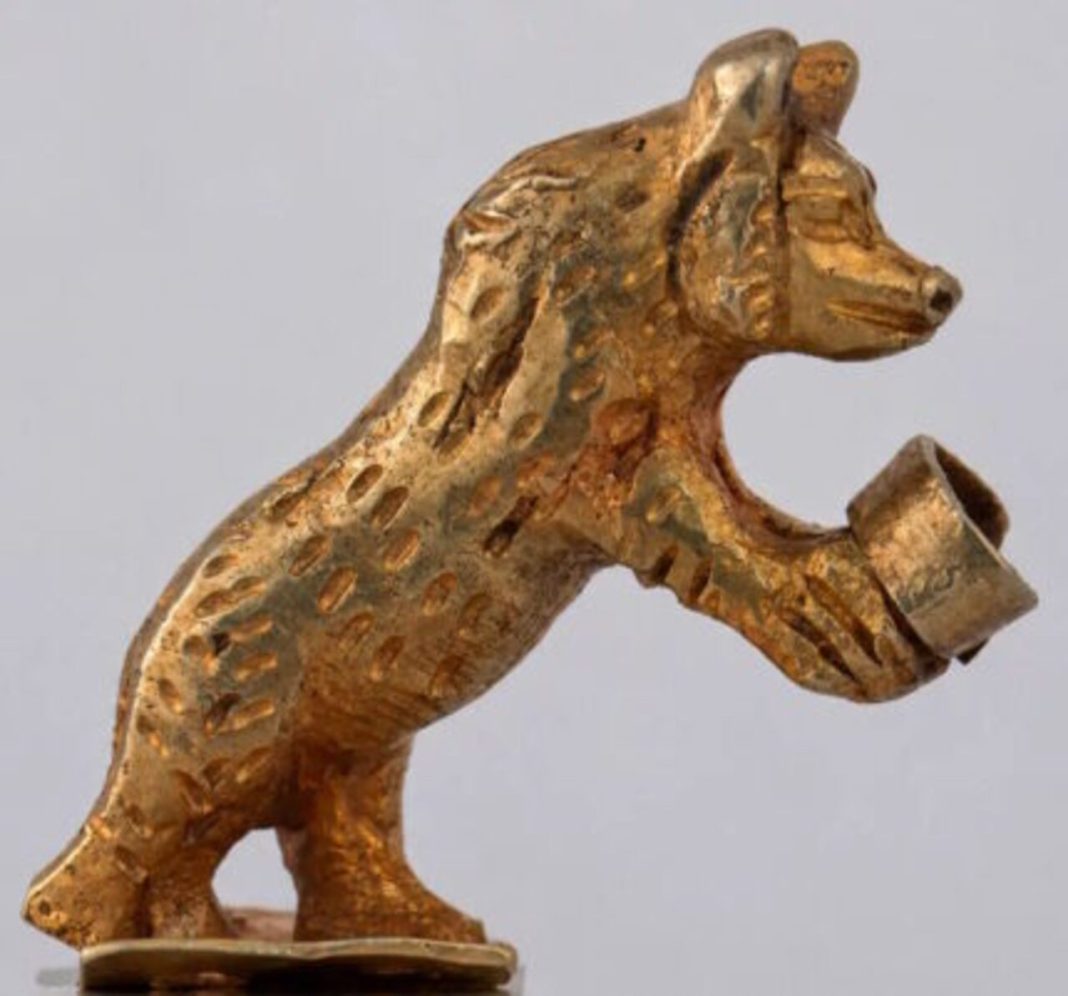

A small gold bear figurine found in a 2,200-year-old burial mound in Almaty is offering archaeologists a rare glimpse into Saka-era craftsmanship. The find was uncovered at the looted Karagaily burial ground, where researchers also found pottery and human remains that may belong to four adults and three children.
A Tiny Gold Bear Opens a Window on Saka Craft
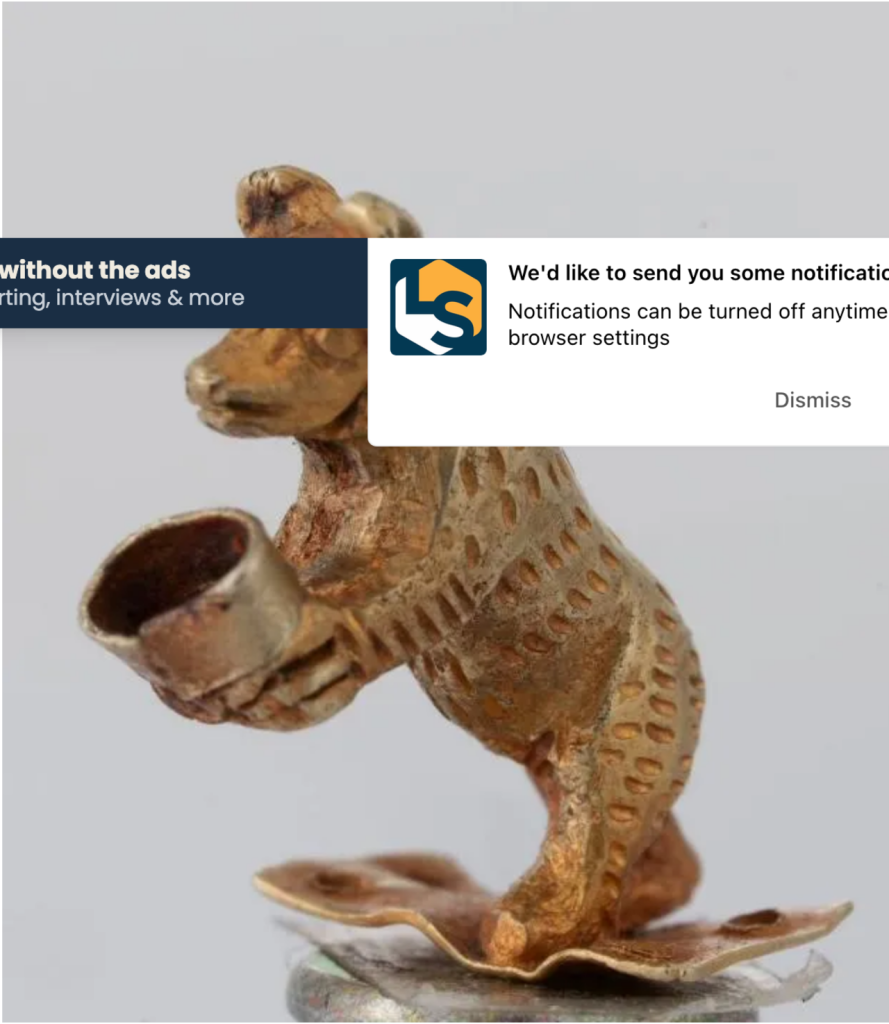
The small cast-gold figurine was found during excavations at the Karagaily burial ground in Almaty. It dates to the Saka period, around the fourth or third century BCE, roughly 2,200 years ago. The bear stands on its hind legs and appears to hold a small vessel between its front paws. Almaty Museum Association officials say no comparable bear ornament has previously been found in Kazakhstan. The find adds a distinctive piece to the region’s record of Saka-era goldwork, which also includes animal-shaped ornaments.
Small Holes Point to a Possible Headdress Ornament
The figurine may once have been sewn onto a headdress. Small holes in its base suggest how it could have been attached, though researchers are still studying the object and its purpose is not confirmed. Animal-shaped details were part of Saka-era dress: archaeologists have found other gold headdress ornaments in the region, including a leopard figurine from a separate burial site in Almaty. The bear is notable for its design, which museum officials describe as unprecedented in Kazakhstan.
The Looted Mound May Have Held Seven People
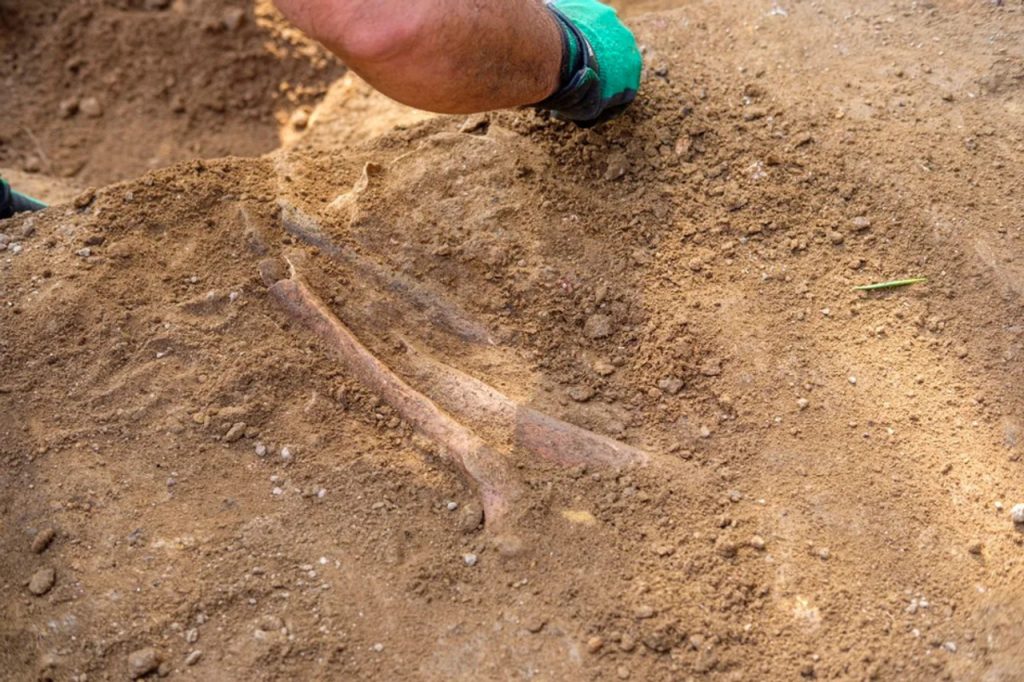
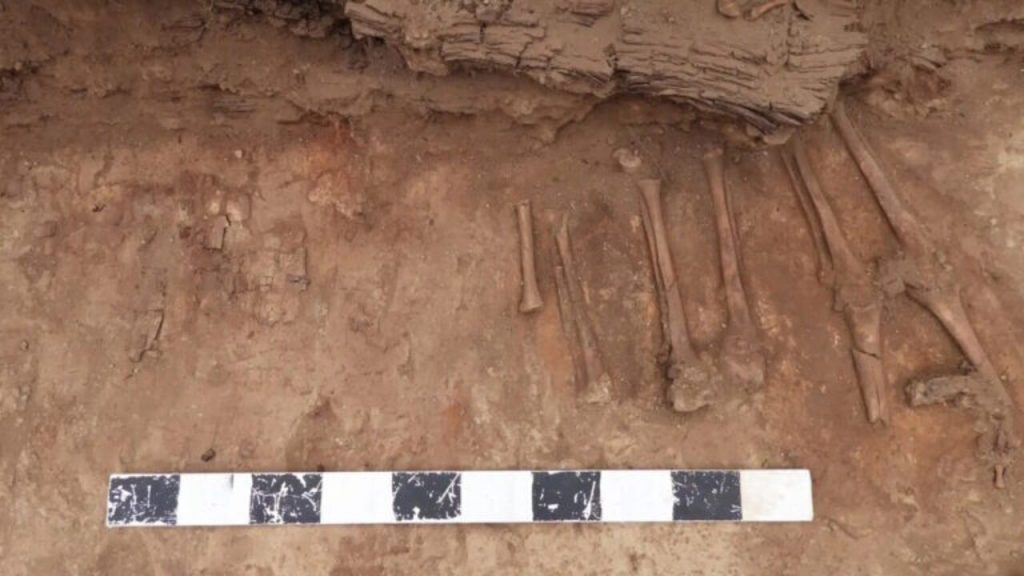
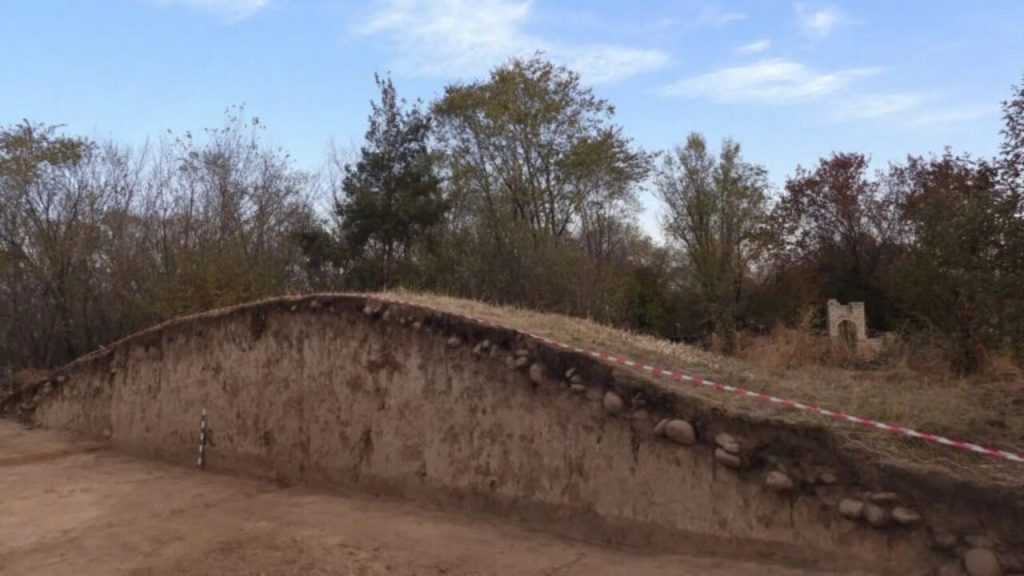
The gold bear is only one part of the story at Karagaily. Researchers found human remains that may belong to four adults and three children, along with fragments of Saka pottery. That count is preliminary, and the exact number of people buried there remains unknown. The mound had been looted in ancient times, leaving a deep pit and pottery scattered around the site. Even so, the bear and other evidence survived. Researchers say the number of remains is unusual for a mound of comparable size, which typically held one or two people.
Further Study Will Help Explain the Burial
The excavation has raised questions that the surviving objects and bones may help answer. Anthropologists are expected to help determine how many people were buried in the mound and clarify the circumstances of the burial. Researchers also plan to study the artifacts before deciding which pieces may be suitable for display at the Almaty Museum. Until that work is complete, the estimate of four adults and three children remains tentative, and the bear’s possible role as a headdress ornament remains an interpretation based on its attachment holes.