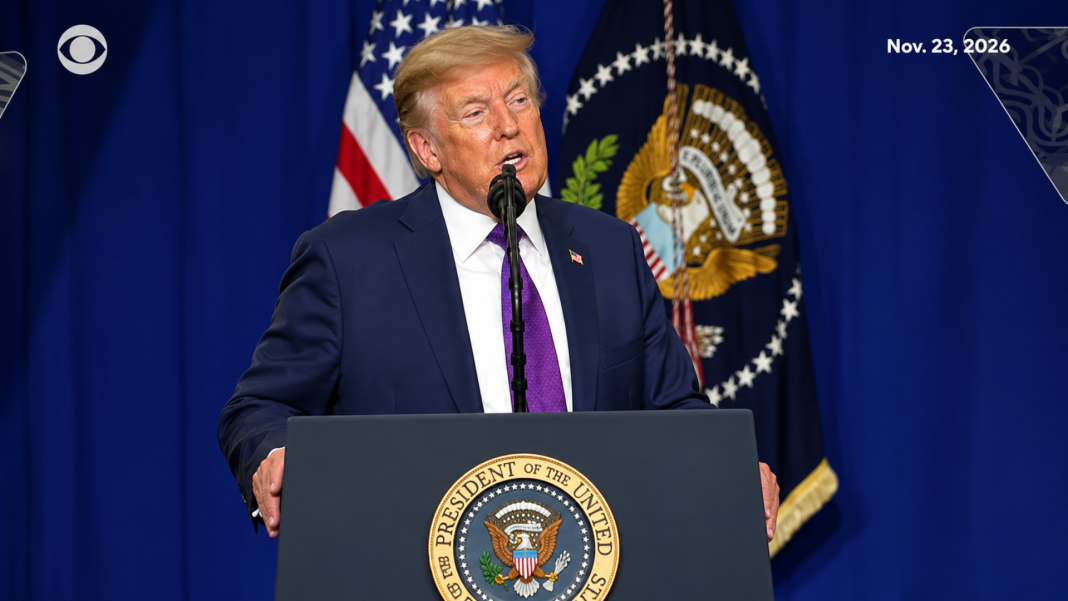


President Donald Trump signed a presidential memorandum on November 23, 2026, expanding federal death penalty prosecution priorities while criticizing California Governor Gavin Newsom’s plan to commute the sentences of 548 death row inmates to life in prison without parole.
Speaking at the Department of Justice alongside victims’ families, Trump expressed opposition to Newsom’s proposal but did not specify what legal action his administration would take.
The federal directive does not create new criminal offenses or directly alter California’s existing death sentences.
New directive expands federal prosecution priorities
The presidential memorandum directs federal prosecutors to seek capital punishment, where appropriate under existing law, in cases involving the first-degree murder of minors and murders committed during rape, sexual abuse, sexual exploitation of a child, sex trafficking, kidnapping or human trafficking.
It also instructs the Justice Department to accelerate proceedings involving federal death sentences, address unnecessary litigation delays and reduce administrative obstacles.
The memorandum builds on Trump’s January 2025 executive order, which established prosecution priorities for eligible federal capital crimes involving the murder of law enforcement officers or crimes committed by individuals unlawfully present in the United States.
Trump also expressed support for proposed legislation that would incorporate aspects of his administration’s death penalty policy into federal law.
Meanwhile, several victims’ relatives attending the Justice Department event expressed opposition to California’s proposed commutations.
California’s clemency plan faces legal opposition
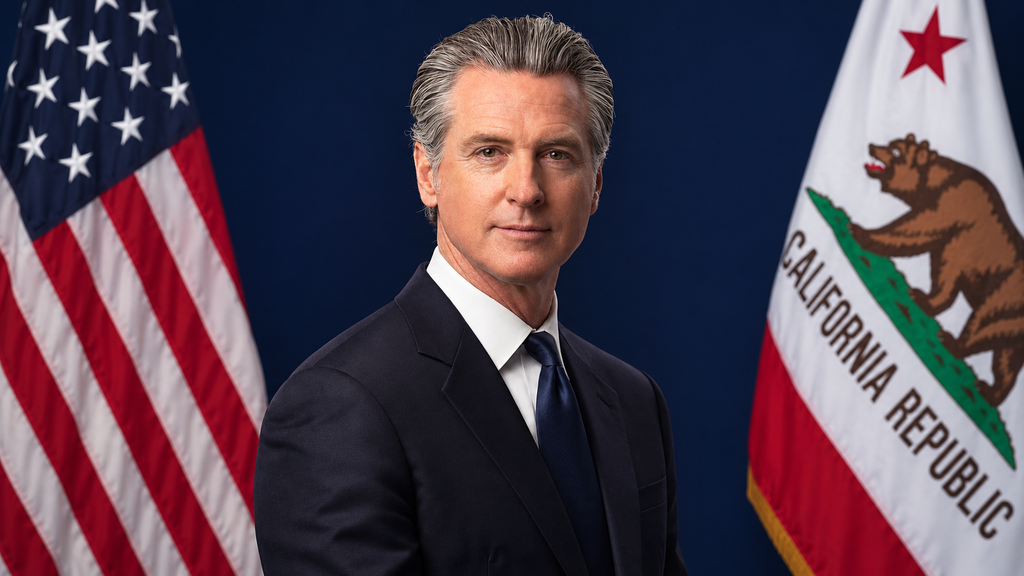
Newsom announced his clemency plan on November 5, arguing that capital punishment was inconsistent with California’s values.
The proposed sentence changes have not taken effect. Under the plan, prisoners would remain incarcerated for life without the possibility of parole, and their convictions and existing restitution obligations would remain unchanged.
Under California’s Constitution, the governor requires a recommendation supported by at least four state Supreme Court justices to grant clemency to individuals with multiple felony convictions.
Newsom’s office referred 382 cases to the court and identified 166 as outside that review requirement. Challengers dispute some of those classifications.
California prosecutors, victims’ relatives and advocacy organizations have separately petitioned the state Supreme Court to block the proposed commutations. They argue that victims’ families were denied their legal right to be heard before the decision.
Newsom has acknowledged differing views among victims’ families while defending his proposal. In response to Trump’s criticism, he also questioned the president’s use of federal clemency powers.
California voters rejected proposals to abolish capital punishment in 2012 and 2016. The state last carried out an execution in January 2006, and Newsom introduced a moratorium on executions in 2019.
Newsom has asked the California Supreme Court to issue its recommendation by the end of 2026, allowing him to act before his term concludes. The proposed commutations remain pending while the necessary legal proceedings continue.