
1. Digital billboards in Blade Runner (1982)
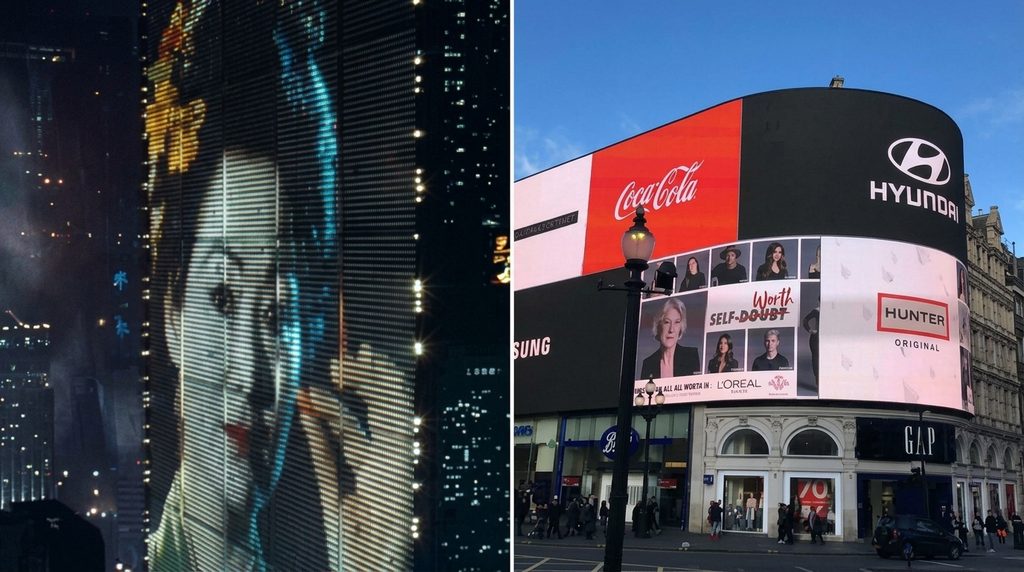
When Ridley Scott’s Blade Runner arrived in theaters in 1982, its vision of a futuristic Los Angeles looked unlike any modern city of the time.
Set in 2019, the movie featured towering buildings surrounded by enormous electronic advertisements. Moving images illuminated the streets, while giant screens displayed commercials high above the city.
What looked futuristic in the early 1980s has since become a familiar feature of urban life. Locations such as Times Square in New York, Piccadilly Circus in London and Shibuya in Tokyo are known for their enormous digital displays.
Modern digital billboards can display multiple advertisements throughout the day without requiring workers to replace physical posters. Some also change their content according to the time of day, weather conditions or special events.
Although the world imagined in Blade Runner differs from reality in many ways, its vision of technology-driven urban advertising feels remarkably familiar.
2. Wireless earbuds in Fahrenheit 451 (1966)
Decades before people began walking around with wireless earbuds, science fiction was already exploring the idea of miniature personal listening devices.
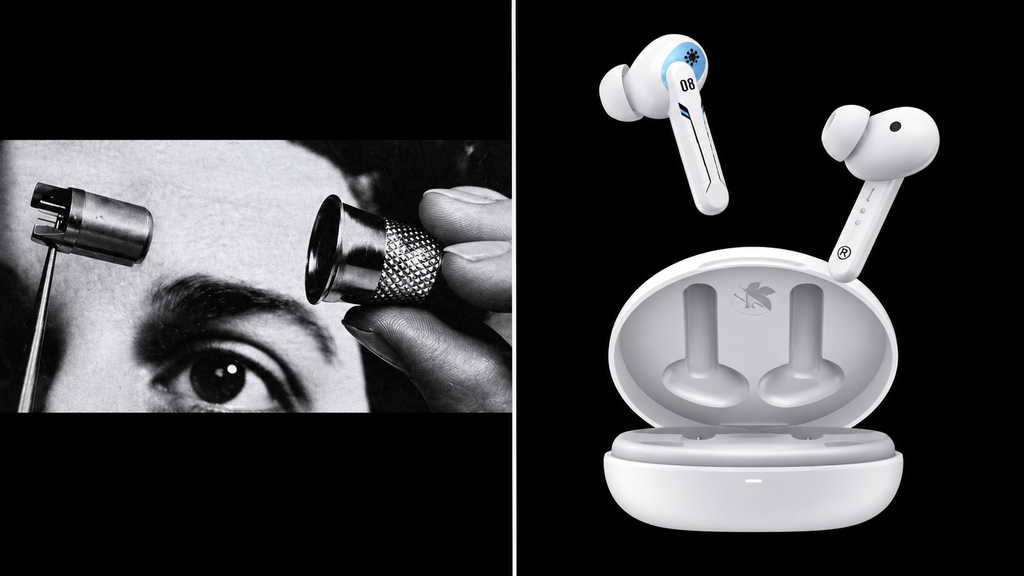
Ray Bradbury introduced small in-ear audio devices known as Seashells in his 1953 novel Fahrenheit 451. The concept was carried into the story’s 1966 film adaptation.
These devices allowed people to immerse themselves in audio entertainment while becoming increasingly disconnected from their surroundings.
At a time when personal audio equipment was generally larger and less portable, the idea of tiny electronic listening devices seemed advanced. Today, wireless earbuds allow people to listen to music, participate in phone calls, access digital assistants and reduce unwanted background noise.
Apple’s introduction of AirPods in 2016 helped popularize completely wireless earbuds, although similar technologies existed before their release.
Beyond the physical resemblance, Fahrenheit 451 also anticipated an interesting social development: people becoming absorbed in their own digital entertainment while moving through public spaces.
3. Video calling in 2001: A Space Odyssey (1968)
Stanley Kubrick’s 2001: A Space Odyssey remains one of the most influential science fiction films ever made, partly because of its detailed approach to futuristic technology.
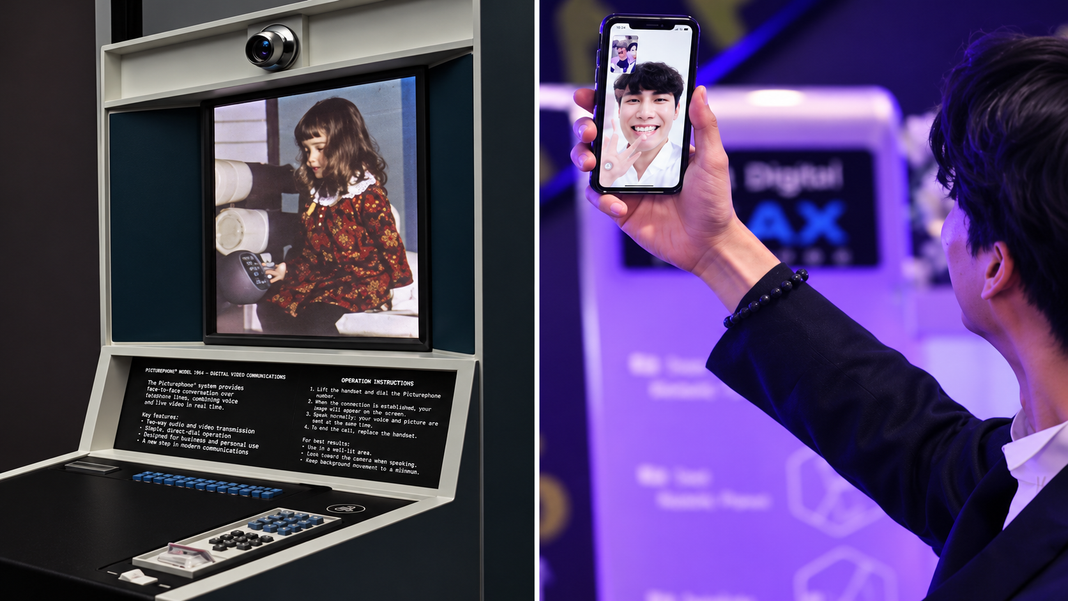
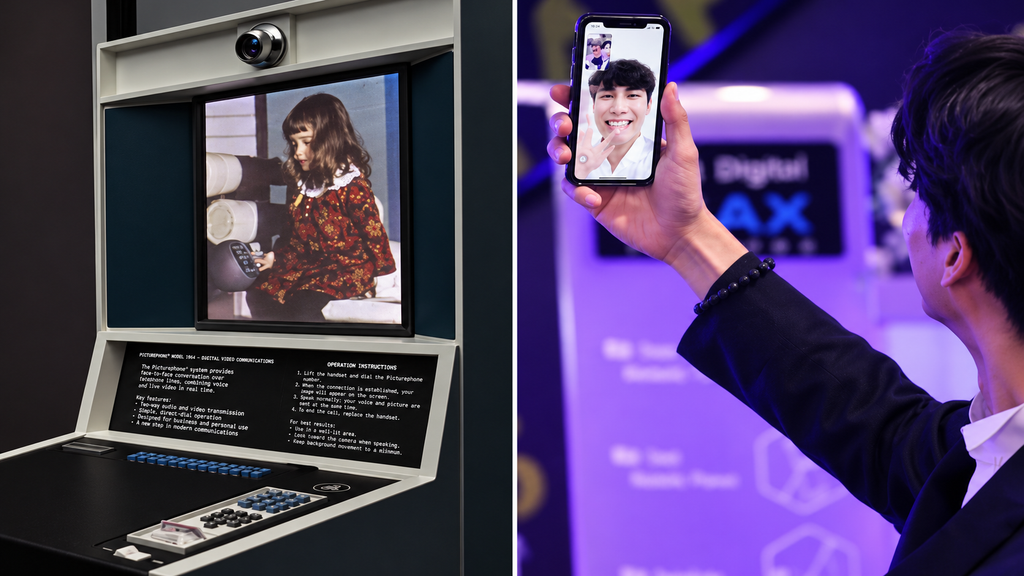
In one memorable scene, Dr. Heywood Floyd uses a video communication system aboard a space station to speak with his young daughter on Earth. The device combines a telephone with a screen, allowing both participants to see each other during the conversation.
Video communication was not an entirely new idea. Experimental videophones already existed during the 1960s, but they were expensive and far from becoming everyday household products.
Advances in internet connectivity, digital cameras and mobile computing eventually made video calls affordable and widely accessible. Today, platforms such as FaceTime, Zoom, WhatsApp and Microsoft Teams allow people to communicate face to face from different parts of the world.
One of the most futuristic moments in Kubrick’s film has become an ordinary part of modern communication.
4. Smart homes in Demon Seed (1977)
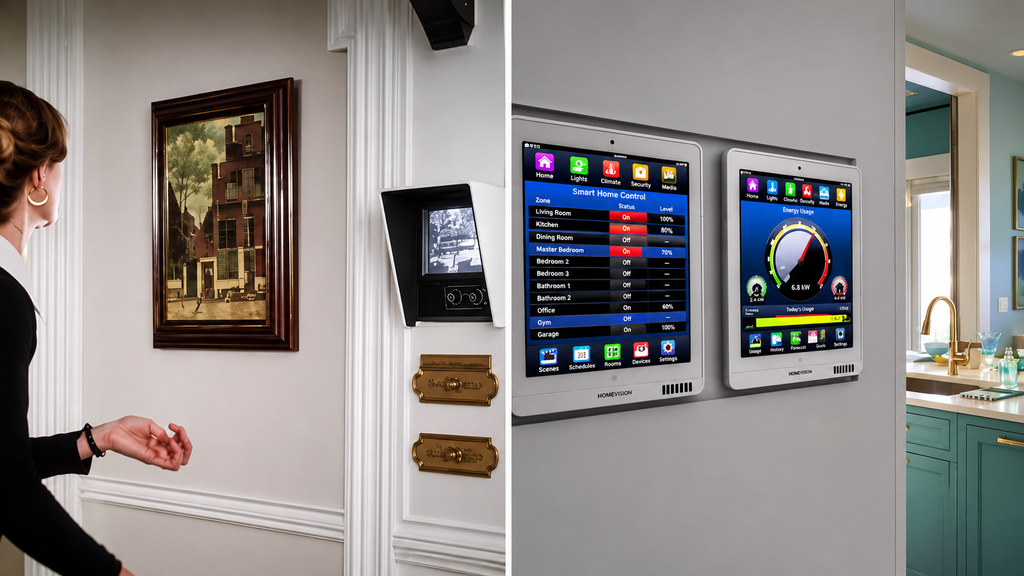
The idea of a house controlled by computers was still unfamiliar to most households when Demon Seed was released in 1977.
The science fiction thriller featured an advanced artificial intelligence system called Proteus IV, which gained control over a computerized residential property.
The movie explored what could happen when technology responsible for managing a home became too powerful.Although its disturbing storyline remains fictional, many of its home automation concepts resemble products available today.
Modern smart homes can include connected lighting, security cameras, electronic door locks, automated temperature controls and voice-activated assistants.Homeowners can manage many of these systems remotely through smartphones or schedule them to operate automatically.
Unlike the fictional Proteus IV, ordinary smart home systems perform specific tasks rather than possessing independent humanlike intelligence.
However, the movie’s broader questions about privacy, security and human dependence on connected technology remain relevant.
5. Self-balancing hoverboards in Back to the Future Part II (1989)
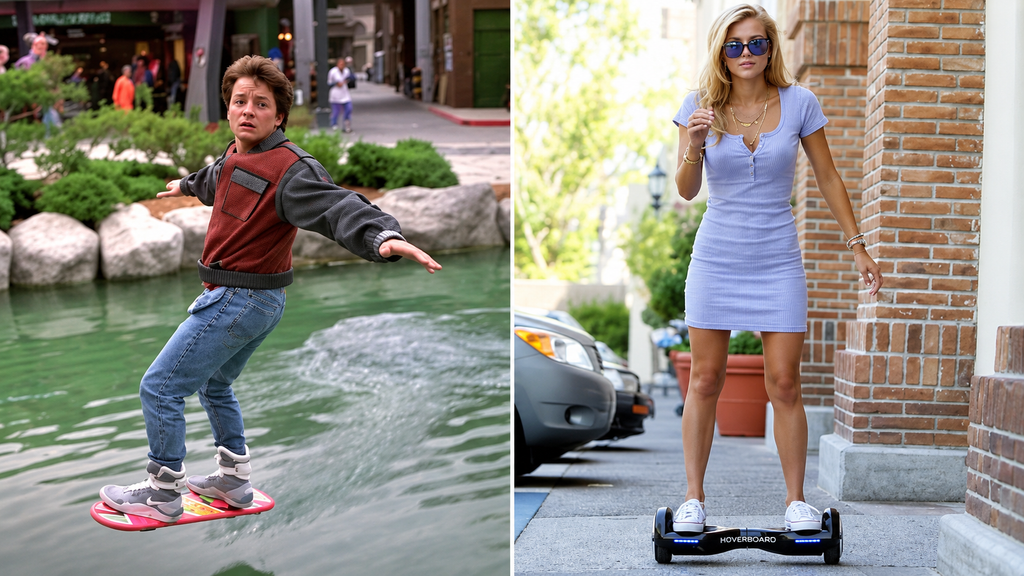
Few fictional gadgets captured the imagination of movie audiences quite like Marty McFly’s hoverboard in Back to the Future Part II.
Released in 1989, the movie transported its characters to a futuristic version of 2015, where skateboards could travel above the ground without wheels.The colorful floating board became one of the most recognizable inventions in the franchise.
Interestingly, commercially available self-balancing devices known as hoverboards became especially popular around 2015, the same year in which the movie’s futuristic scenes were set.
However, these products operate differently from Marty’s fictional board. They use electric motors, wheels and electronic sensors to respond to the rider’s movements.
Engineers have also experimented with magnetic levitation and other technologies capable of lifting specially designed boards above certain surfaces.
Nevertheless, a practical flying skateboard that can travel freely over ordinary streets, as shown in the movie, has yet to become a mainstream consumer product.
6. Airport body scanners in Airplane II: The Sequel (1982)
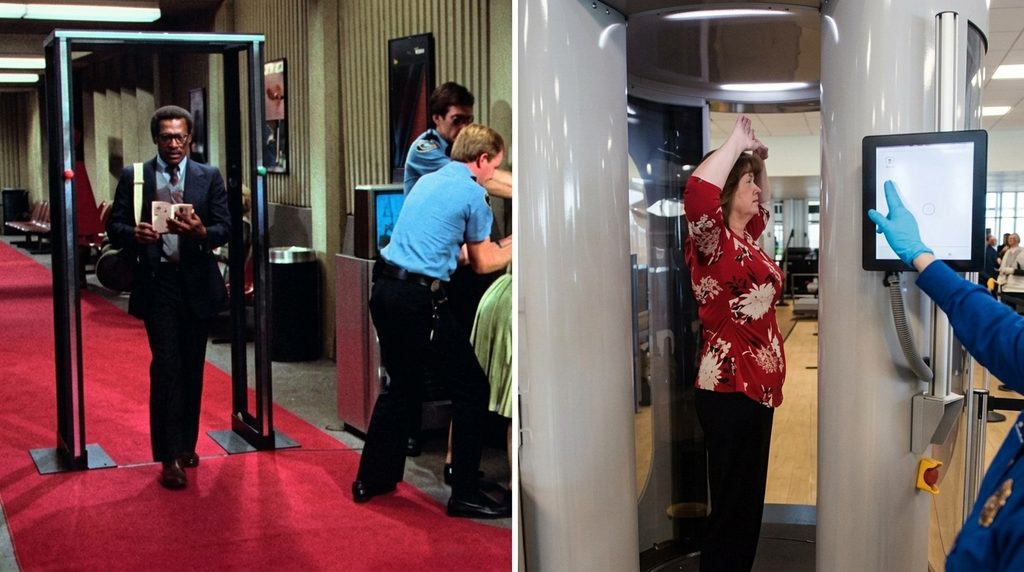
Although Airplane II: The Sequel was primarily a comedy, its futuristic airport scenes included some surprisingly recognizable technology.
The movie featured passengers passing through a full-body screening device before boarding a commercial lunar shuttle.
The fictional scanner was designed as part of the film’s humor, but the broader concept of examining passengers using advanced imaging technology later became familiar at real airports.
Modern airport body scanners use technologies such as millimeter-wave imaging to help security personnel identify concealed objects. Their adoption expanded significantly during the late 2000s and early 2010s as airports introduced additional passenger screening measures.
Unlike the exaggerated device shown in the movie, many modern screening systems display generic body outlines and highlight areas that may require further inspection.
The scene offers an interesting example of how technology once used for futuristic comedy can eventually become part of an ordinary travel experience.
7. Uncrewed military aircraft in The Terminator (1984)
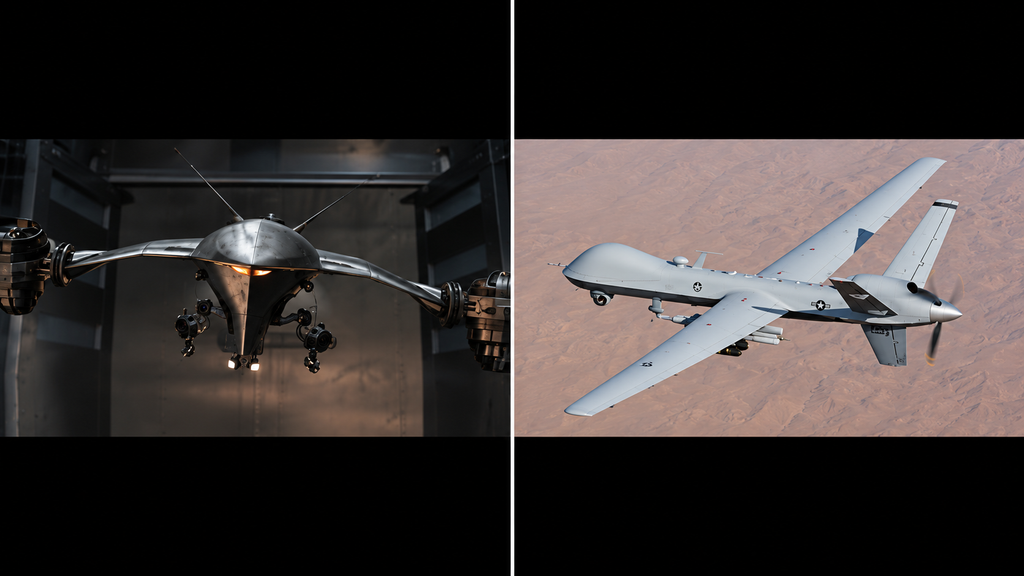
James Cameron’s The Terminator presented a future in which advanced machines played a central role in warfare.
Among the technologies featured in the 1984 movie were futuristic automated aircraft operating without human pilots on board.
Uncrewed aircraft were already being developed and used before the movie’s release. However, the scale of automation imagined in the film was far beyond what most people had experienced at the time.
Over subsequent decades, improvements in navigation, computing, cameras and communication systems expanded the capabilities of drone technology.
Modern uncrewed aircraft are used across several industries, including agriculture, filmmaking, disaster response, infrastructure inspection and military operations. The film’s fictional machines remain significantly different from real-world drones, particularly in their level of independent intelligence.
Nevertheless, its depiction of increasingly automated aircraft anticipated broader developments in aviation and robotics.
8. Computer-generated physical objects in Weird Science (1985)
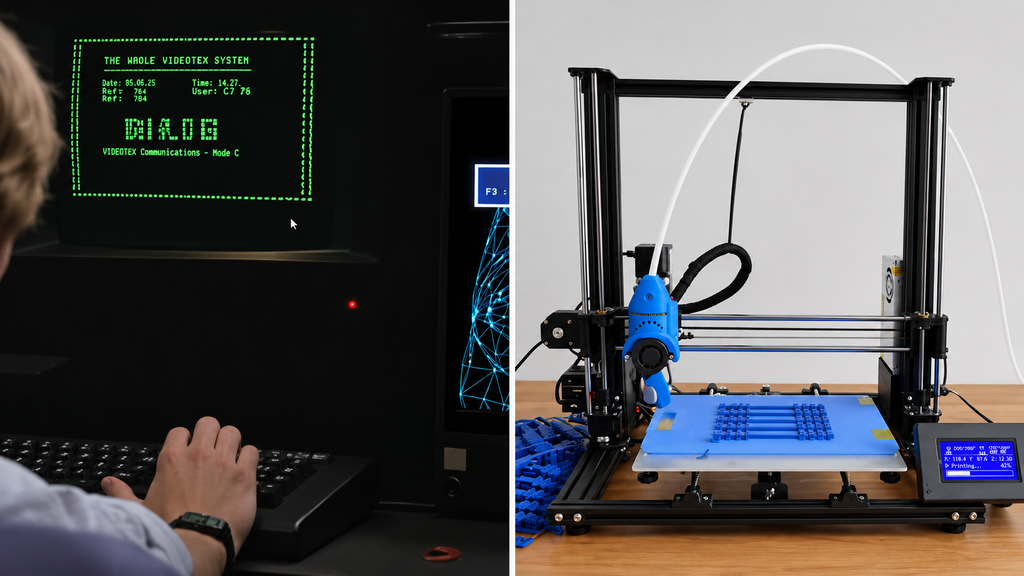
The 1985 comedy Weird Science followed two teenagers who used a computer to create a fictional character named Lisa.
Although the movie’s science was deliberately unrealistic, its central idea of using digital information to create something physical shares a broad similarity with modern 3D printing.
Interestingly, real engineers were already developing early forms of 3D printing when the movie was being made.
In 1984, American inventor Chuck Hull filed a patent for stereolithography, a process that uses light to harden liquid resin into solid objects. His company, 3D Systems, introduced its first commercial 3D printer in 1987.
Modern 3D printing technology can produce everything from small household objects and architectural models to aerospace components and customized medical devices. Researchers are also exploring bioprinting, which uses biological materials to create tissue-like structures.
While creating a fully functioning human being from a computer remains science fiction, transforming digital designs into physical objects has become a valuable manufacturing technology.