
Minneapolis is again confronting upheaval at the top of its police department. Brian O’Hara, brought in from Newark in 2022 to help steer reform, resigned after Mayor Jacob Frey said an outside investigator found he interfered with an internal inquiry.
Resignation follows mayor’s announcement of discipline
O’Hara resigned on Tuesday, May 26, after Frey said he had decided to impose discipline based on findings from an outside investigation into the chief’s conduct. According to the mayor and reporting by the Associated Press, O’Hara chose to step down rather than remain in office under disciplinary action. The announcement landed abruptly in a city where policing remains one of the most politically charged issues in public life.
The outside report, prepared by law firm Forsgren Fisher for the mayor’s office and dated May 26, said there was sufficient evidence to substantiate that O’Hara interfered with an earlier investigation. The report concluded it was more likely than not that he knowingly and intentionally deleted relevant data from his city-issued phone and discussed the matter with at least one city employee despite explicit instructions to keep the investigation confidential. At the same time, investigators said there was not sufficient evidence to substantiate allegations that O’Hara had sexually intimate relationships with city employees.
A written reprimand signed by Frey on May 26 said the substantiated misconduct involved deleting a contact card for a city employee from O’Hara’s city-issued cellphone during the original investigation in an attempt to shield evidence of his connection to that employee from investigators. Frey said the finding represented a breach of trust serious enough to end his confidence in O’Hara’s leadership. AP and local outlets reported that the mayor told the chief he faced discipline up to and including termination.
The resignation was especially striking because it came only weeks after Frey had nominated O’Hara for another term. Earlier this month, the mayor had praised O’Hara’s performance, citing lower crime, more applicants and a growing officer count. That public support made the turnaround all the more dramatic and intensified scrutiny over what the mayor knew and when city leaders learned the underlying details.
O’Hara’s attorney, according to AP, defended the chief’s broader record and pointed to gains in staffing, diversification and public safety outcomes during his tenure. But the immediate issue for City Hall was no longer policy performance alone. It was whether the chief tasked with changing department culture had himself undermined an investigation, a question that rapidly overtook any discussion of his accomplishments.
What investigators found and what they did not
The outside investigative report drew a sharp distinction between the underlying allegations and the conduct that ultimately ended O’Hara’s tenure. Investigators said they did not substantiate allegations that O’Hara had sexually intimate relationships with any city employee. But they did substantiate interference with the earlier inquiry, a finding that became the basis for Frey’s disciplinary decision.
According to the report, O’Hara was informed on May 1, 2025, that an anonymous complaint had triggered an investigation that included allegations of sexually intimate relationships with city employees. The report says he was not told the names or number of employees involved. Investigators later concluded there was no plausible alternative explanation for the disappearance of one employee’s contact card from his phone other than that O’Hara knowingly and intentionally deleted it.
The report further said the deletion appeared aimed at shielding evidence of his connection to a city employee from investigators. It also concluded that O’Hara discussed the investigation with at least one city employee even though participants had been given strict instructions not to discuss any aspect of the matter. Those conclusions, taken together, transformed what began as an inquiry into alleged personal conduct into a misconduct case centered on obstruction and confidentiality breaches.
That distinction matters both legally and politically. In many public-sector investigations, failure to substantiate the original accusation does not end the matter if officials conclude the subject impeded the fact-finding process. In Minneapolis, where public trust in the police department remains fragile, the appearance that the chief interfered with an inquiry was itself enough to create a leadership crisis.
The findings also fueled debate about transparency. Council members and community advocates immediately pressed for fuller disclosure of how the matter was handled, why O’Hara was renominated while the issue was still unresolved, and what safeguards exist when allegations involve top officials. The report’s release answered some questions, but it also raised fresh ones about internal oversight, chain of command and the boundaries between mayoral authority and independent accountability.
Why the departure matters for Minneapolis policing
O’Hara arrived in Minneapolis in late 2022 as an outsider hire with a mandate to restore order and credibility inside a battered department. A veteran of Newark policing and later that city’s public safety leadership, he became the first Minneapolis chief in years to come from outside the department’s own ranks. His appointment was meant to signal both a break from the past and a willingness to import reform experience from another city.
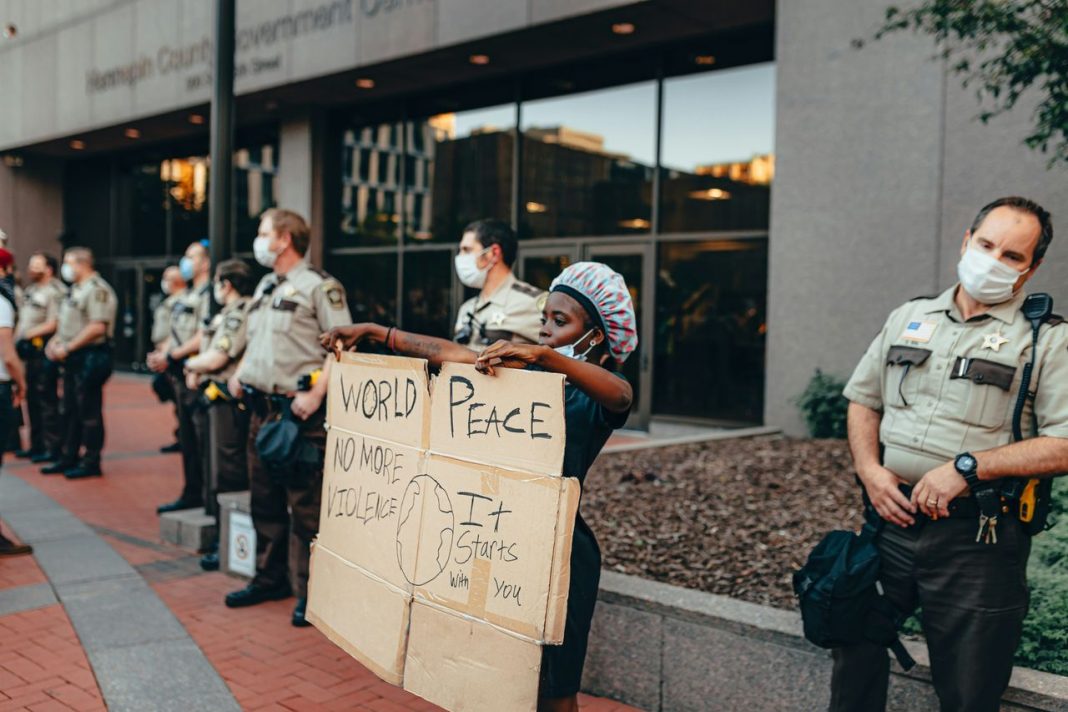
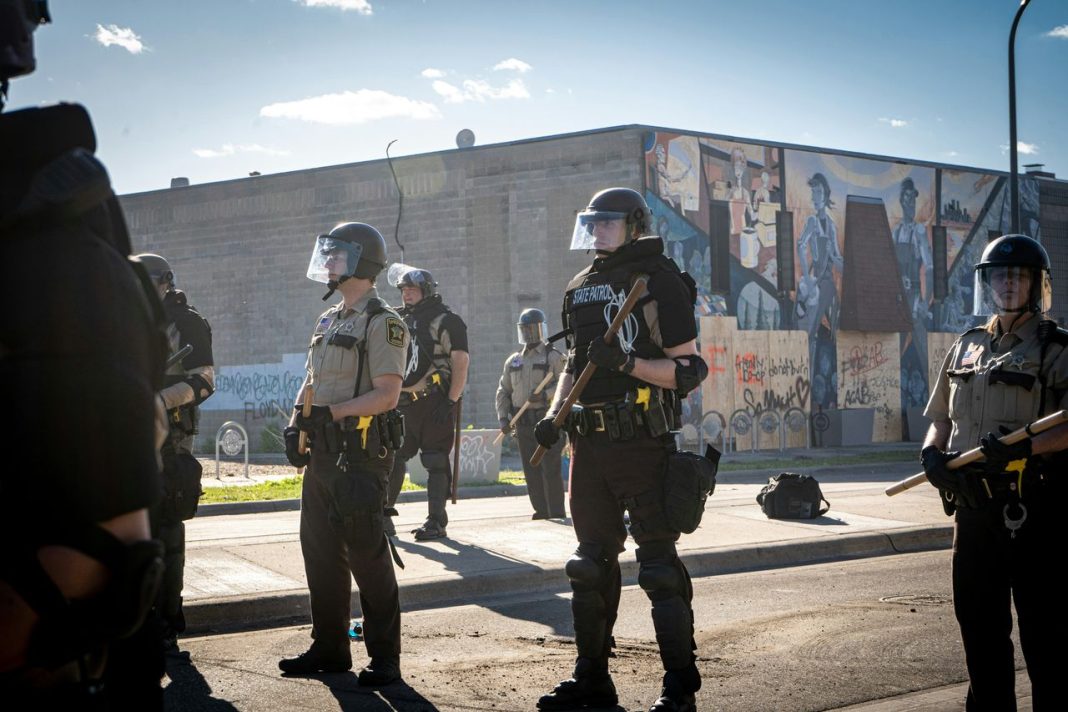
He took over in the long shadow of George Floyd’s 2020 murder by then-Officer Derek Chauvin, a killing that triggered global protests and placed Minneapolis at the center of a national reckoning over policing. By the time O’Hara assumed office, the department was facing depleted staffing, low morale, political conflict and overlapping reform demands from state and federal authorities. The job was never going to be a routine chief’s assignment.
During O’Hara’s tenure, city leaders highlighted signs of stabilization. Frey said this month that the department’s officer count had risen from around 550 to more than 640, that applications were up sharply and that crime had fallen across the city. Supporters argued those measures showed real progress in rebuilding a department that had struggled to respond to violence while also meeting demands for accountability and cultural change.
But O’Hara’s critics said progress on numbers did not resolve deeper concerns about transparency, discipline and reform pace. Minneapolis remains subject to a court-enforceable agreement with the Minnesota Department of Human Rights aimed at transforming policing and addressing race-based practices. The U.S. Justice Department also announced a consent decree with the city and department in January 2025, committing Minneapolis and MPD to comprehensive reforms and ongoing oversight.
That means the chief’s resignation comes at a particularly delicate moment. Leadership instability can complicate reform timelines, unsettle rank-and-file officers and deepen distrust among residents who already question whether institutional change is real. Even before O’Hara’s exit, the city’s broader public safety leadership structure was unsettled, with political fights over top oversight roles and the balance between police operations and civilian-led safety strategies.
Political fallout and questions for City Hall
The resignation immediately reverberated through Minneapolis politics, where policing has become inseparable from wider fights over governance, reform and public safety strategy. Frey has often cast himself as a pragmatic progressive focused on rebuilding police capacity while pursuing court-supervised reform. O’Hara’s downfall now threatens to undercut that message by raising questions about judgment, oversight and the mayor’s handling of senior leadership.
One line of criticism centers on timing. Frey renominated O’Hara earlier in May 2026, before the resignation announcement on May 26. Opponents want to know whether the mayor moved too quickly, whether he had enough information to justify that renomination, and whether City Hall was candid with the public and council members about the seriousness of the allegations and investigative findings as they developed.
Another pressure point is the City Council, where divisions over policing have been deep and durable since 2020. Some members have pushed for a more aggressive restructuring of public safety systems, while others have supported maintaining or rebuilding traditional police capacity alongside reforms. O’Hara’s exit gives critics of the current structure fresh ammunition and may intensify disputes over who should oversee reform, discipline and strategic direction.
The broader public safety apparatus was already in flux. Axios reported before the resignation that council members had soured on the city’s public safety office and that uncertainty surrounded leadership beyond O’Hara himself. In that context, the chief’s departure is not just a personnel change. It compounds an already unstable governance picture at a time when residents are being told to trust institutions to deliver both safety and accountability.
For Frey, the challenge is now twofold. He must explain the handling of O’Hara’s case while also reassuring residents, officers and federal and state monitors that reform work will continue without interruption. That will likely require a carefully managed interim leadership plan, a transparent search or appointment process, and a credible demonstration that no one at the top of the department is insulated from scrutiny.
What comes next for the department and the city
The immediate question for Minneapolis is operational continuity. Police departments depend heavily on clear chains of command, and abrupt leadership changes can create uncertainty internally even when day-to-day policing continues. City officials will need to designate interim leadership, maintain momentum on reform benchmarks and keep communication steady with officers, civilian staff, the council and community groups.
Longer term, the city faces a more consequential choice about what kind of chief it wants next. Minneapolis could look again for an outsider with reform credentials, arguing that independence from department culture remains essential. Or leaders could decide that after years of turbulence, someone with deeper local roots might better navigate labor tensions, neighborhood expectations and the practical demands of implementing complex consent-decree obligations.
Whoever follows O’Hara will inherit a uniquely difficult portfolio. The Minnesota Department of Human Rights agreement requires transformational changes to address race-based policing, while the federal consent decree calls for focused, measurable reforms across key aspects of police practice. Those mandates are not symbolic. They are binding frameworks that will shape training, supervision, discipline, use-of-force rules, data systems and community engagement for years.
The next chief also will have to manage competing public expectations. Some residents want faster, more visible change in police culture and accountability. Others are focused primarily on response times, staffing levels and violent crime trends. The political durability of any police leader in Minneapolis may depend on proving that reform and effective policing are not opposing goals, even if city politics often frames them that way.
For now, O’Hara’s exit leaves behind a split legacy. Supporters can point to staffing gains, lower crime indicators and a willingness to lead during extraordinarily fraught moments. Critics will say the manner of his resignation reveals the persistence of the very accountability problems Minneapolis promised to fix. Either way, his departure marks another turning point for a city still trying to define what police legitimacy should look like after years of trauma, protest and institutional overhaul.