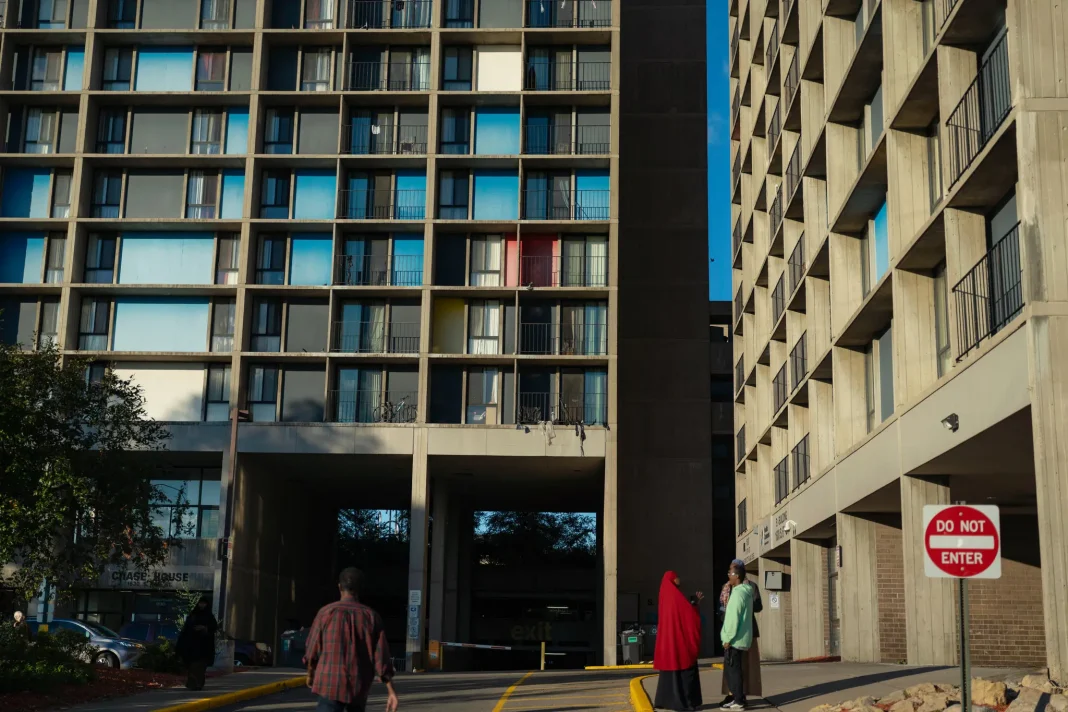

The Trump administration has initiated a major immigration enforcement operation in the Minneapolis-St. Paul area, primarily focusing on hundreds of undocumented Somali immigrants living in the region. According to documents and sources familiar with the operation, Immigration and Customs Enforcement has deployed approximately 100 officers and agents from across the country to conduct what officials are calling “strike teams.” The operation began this week and targets Somali individuals with final deportation orders, though sources indicate others still seeking legal status could also be detained. This enforcement action comes amid escalating rhetoric from President Trump, who has recently intensified his public attacks on Somali communities despite the recent shooting of National Guard members being attributed to an Afghan national.
Administration Defends Enforcement While Critics Condemn Approach
Tricia McLaughlin, spokesperson for the Department of Homeland Security, declined to discuss specific operational details but emphasized that immigration enforcement does not target individuals based on race or ethnicity. Instead, she stated that ICE focuses on people residing in the country illegally. However, Minnesota Governor Tim Walz strongly criticized the administration’s plans through social media, characterizing the operation as a publicity stunt rather than a genuine solution to public safety concerns. Walz stated that while Minnesota welcomes legitimate support for investigating and prosecuting crime, indiscriminately targeting immigrant communities serves no constructive purpose. The tension between federal enforcement priorities and local leadership reflects broader national debates about immigration policy and community relations.
Presidential Rhetoric Intensifies Against Somali Immigrants
During a Tuesday cabinet meeting at the White House, President Trump delivered harsh criticism of Somali immigrants, making inflammatory statements that drew approval from Vice President JD Vance. The president’s comments came shortly before the enforcement operation’s launch, suggesting a direct connection between his public statements and federal actions. Trump has also moved to terminate temporary protected status for many Somalis, protections that some community members have held for decades under programs designed for migrants from nations experiencing crisis or conflict. His social media posts have included unsubstantiated claims about Somali gangs and personal attacks on Representative Ilhan Omar, a Somali-American congresswoman who became a naturalized citizen 25 years ago after arriving as a refugee.
Minnesota’s Somali Community Faces Uncertain Future
Minnesota hosts the world’s largest Somali diaspora, a community that began growing significantly during the mid-1990s as civil war devastated the East African nation. According to Census Bureau data, approximately 73 percent of Somali immigrants nationwide have become naturalized United States citizens. Local officials and immigrant advocacy groups stress that the vast majority of Minnesota’s Somali population consists of American citizens or legal permanent residents who have contributed to the state’s economy and culture for decades. Despite these facts, the current enforcement operation has created widespread anxiety throughout Twin Cities neighborhoods where Somali families have established roots, built businesses, and raised American-born children who know no other home than Minnesota.
Local Activists Mobilize Response To Federal Operations
Community organizer Dieu Do from the Minnesota Immigrant Rights Action Committee reported receiving information about at least two Somali individuals taken into custody on Tuesday morning, with later reports indicating federal agents removing people from vehicles. Activist groups have been preparing for potential large-scale operations for months, developing coordinated response plans that include wearing protective gear, documenting enforcement actions with video recordings, and staging vocal protests. Do emphasized that local activists remain determined to protect community members, stating that federal agents should expect resistance when conducting operations in the area. The confrontational approach reflects lessons learned from previous enforcement actions in Minneapolis and St. Paul that resulted in clashes between protesters and federal officials, including a June operation near downtown Minneapolis.
Sanctuary Policies Tested By Federal Enforcement
Both Minneapolis and St. Paul maintain sanctuary policies prohibiting local law enforcement and municipal employees from cooperating with federal immigration authorities. However, recent high-profile operations have challenged these protections and created tensions between different levels of government. In June, federal agents conducted an operation in a commercial district near downtown Minneapolis that officials later characterized as part of a narcotics investigation, leading to confrontations with protesters and controversial Minneapolis Police Department involvement. More recently, mid-November enforcement action at a St. Paul paper distribution company resulted in 14 arrests and renewed debates about the boundaries of local sanctuary policies. Mayor Jacob Frey of Minneapolis warned that targeting individuals based on Somali heritage would inevitably lead to due process violations and racial profiling, potentially detaining American citizens solely because of their appearance.
Broader Immigration Crackdown Expands Nationwide
The Twin Cities operation represents the latest phase of the Trump administration’s expanding immigration enforcement strategy, following similar actions in Los Angeles, Chicago, and Charlotte. Deputy Chief of Staff Stephen Miller has increased pressure on immigration agencies to boost arrest numbers in recent months, implementing what critics describe as overly aggressive tactics. While the Department of Homeland Security maintains these operations target individuals living illegally in the country and fulfill campaign promises to deport millions of undocumented migrants, advocates argue the enforcement surge serves another purpose beyond arrests. The visible federal presence in cities aims to create fear that encourages voluntary departures, a psychological component of enforcement that affects entire communities regardless of individual legal status. This strategy has drawn sharp criticism from civil rights organizations concerned about constitutional protections and the treatment of long-established immigrant populations.