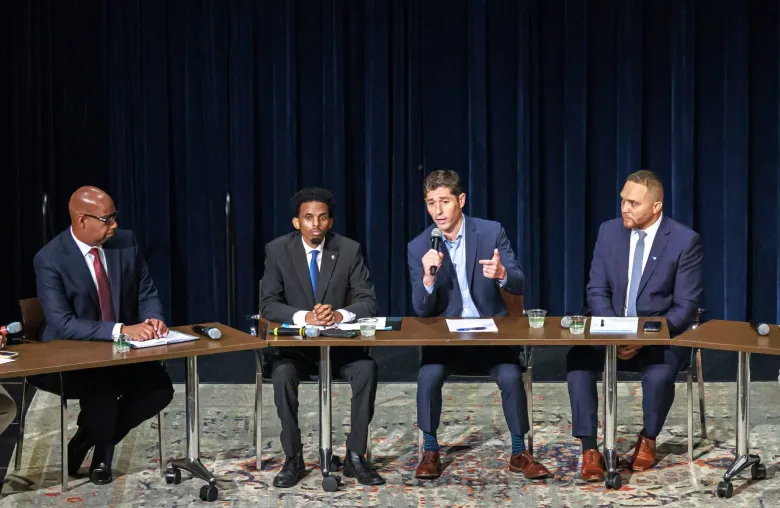

Minneapolis voters head to the polls today in what could become one of the most unusual mayoral elections in recent city history. While incumbent Mayor Jacob Frey maintains a comfortable lead in polling and fundraising, a unique coalition of three challengers is using the city’s ranked-choice voting system to potentially overturn his advantage. The strategy raises questions about whether Minneapolis could elect a mayor that most residents didn’t actually choose as their first preference. This election marks a pivotal moment for a city still recovering from years of upheaval following George Floyd’s murder and the subsequent public safety crisis that followed.
Frey’s Strong Track Record Faces Unique Challenge
Mayor Jacob Frey has guided Minneapolis through its most turbulent period in decades. After George Floyd’s death in 2020 sparked nationwide protests and local demands to abolish police, the city experienced a dramatic surge in violent crime. Homicides doubled while carjackings tripled, and emergency response times stretched dangerously long. Despite facing criticism from both progressives demanding police abolition and residents pleading for safety, Frey maintained a steady course. His persistence appears to have paid dividends, with violent crime falling consistently for three consecutive years since its 2021 peak. Homicides have dropped 20 percent while gun violence has decreased nearly 50 percent, marking significant progress in restoring public safety.
Housing Success Adds to Mayor’s Achievements
Beyond public safety improvements, Frey’s administration championed groundbreaking housing reforms that removed height restrictions for apartment buildings near transit corridors. This progressive approach to urban development has kept Minneapolis rents approximately 15 percent below national averages even as the city’s population continues growing. The policy represents one of the nation’s most ambitious and effective housing initiatives, addressing affordability while encouraging sustainable development. With crime declining, housing remaining accessible, and the city showing clear signs of recovery, Frey enters election day with advantages most incumbents would consider insurmountable. His campaign projects confidence, backed by strong polling numbers and substantial fundraising success.
How Ranked-Choice Voting Creates Opportunity for Upset
Minneapolis adopted ranked-choice voting in 2006, allowing residents to rank up to three candidates by preference. When no candidate achieves 50 percent support, the last-place finisher gets eliminated and their supporters’ votes transfer to their second choices. This process continues until someone crosses the halfway threshold or only one candidate remains standing. State Senator Omar Fateh, attorney Jazz Hampton, and pastor DeWayne Davis have formed an unprecedented three-way alliance, coordinating their campaigns to avoid attacking each other while urging supporters not to rank Frey at all. This strategy successfully elevated a Democratic Socialist candidate from third place to victory in a 2021 City Council race, proving the tactic’s potential effectiveness.
Three Challengers Unite Despite Policy Differences
The alliance relies more on mathematics than shared philosophy. Fateh identifies as a democratic socialist supporting rent control and legalized homeless encampments, while Davis promotes pro-business policies and Hampton positions himself between both approaches. Despite their divergent visions for Minneapolis, all three candidates appear together at events and coordinate messaging against the incumbent. Recent polling from progressive group Minneapolis for the Many showed Frey capturing 34 percent of first-choice votes compared to Fateh’s 29 percent, Davis’s 10 percent, and Hampton’s 5 percent. Only by combining all three challenger totals could they claim momentum, yet that’s precisely the message they’re broadcasting to voters across the city.
Fateh Emerges as Lead Challenger with Complications
Omar Fateh, age 35, represents the progressive challenge to Frey’s pragmatic liberalism. The Somali American state senator initially advocated dismantling the police department but has since moderated his language to emphasize violence prevention and mental health crisis response. He’s secured endorsements from nationally prominent progressives including Representatives Ilhan Omar and Rashida Tlaib. However, Fateh carries significant baggage into the race. His brother-in-law pleaded guilty to submitting fraudulent absentee ballot requests in 2022, and Fateh initially denied knowing him before admitting their close relationship. Questions also emerged about legislation he introduced awarding substantial state funding to a media outlet that had promoted his previous campaign, though federal investigators ultimately cleared him of wrongdoing.
Election Outcome Could Reshape Minneapolis Politics
If Frey secures victory, it validates pragmatic liberal governance in a city recovering from crisis. His success would demonstrate that voters appreciate tangible results on crime reduction and housing affordability over ideological positioning. However, if ranked-choice mechanics elevate a second or third-place finisher into the mayor’s office, Minneapolis could inaugurate a leader chosen by a minority of residents. While not fraudulent, such an outcome would highlight how well-intentioned electoral reforms can produce unexpected distortions. The election serves as a test case for ranked-choice voting systems nationwide, particularly regarding how coordinated campaigns can potentially game the process. Minneapolis voters deserve clear policy debates, but the current dynamics have blurred important distinctions between candidates with fundamentally different visions for their city’s future.