
Minneapolis’ police chief resigned abruptly after city investigators concluded he interfered with an internal misconduct investigation. The departure of Brian O’Hara on May 26, 2026, reopened questions about leadership, accountability and police reform in a city still navigating the aftermath of George Floyd’s killing.
Resignation followed findings of interference, not proof of the underlying allegations
Brian O’Hara resigned after Minneapolis Mayor Jacob Frey said an outside investigation found the police chief had interfered with an earlier probe into allegations about his workplace conduct. Frey announced the resignation on the evening of May 26, saying O’Hara stepped down after being informed that disciplinary action was coming. According to the mayor, O’Hara chose resignation rather than continue under a formal reprimand and the possibility of further consequences.
The most direct reason for the resignation was the investigators’ conclusion that O’Hara knowingly deleted a city employee’s contact card from his city-issued phone and discussed the investigation with another employee after he had been told to keep it confidential. A written reprimand from Frey said those actions risked the integrity of the original inquiry and amounted to a “significant breach of trust.” In the mayor’s account, the problem was not simply poor judgment but conduct that made it extraordinarily difficult for O’Hara to continue leading a department that is itself under intense public scrutiny.
At the same time, the investigation did not substantiate the underlying allegations that O’Hara had sexually intimate relationships with city employees. That distinction quickly became central to the public debate. News reports from the Associated Press, MPR News and the Minnesota Star Tribune all said investigators found insufficient evidence to prove those alleged relationships, even as they concluded that O’Hara had interfered with the process examining them.
That difference matters because it shaped both Frey’s explanation and O’Hara’s defenders’ response. The resignation was not presented as an admission that the original allegations were true. Instead, it stemmed from the city’s conclusion that the chief undermined an investigation into those claims, a finding that city leaders said itself was serious enough to end his tenure.
What investigators said happened inside the reopened misconduct inquiry
The outside law firm hired by the city, Forsgren Fisher McCalmont DeMarea Tysver, revisited the earlier investigation after new evidence emerged, including a recording and other information reported by local media. In a report dated May 26, 2026, investigators said O’Hara intentionally deleted one contact from his city-issued phone between two forensic images taken days apart in May 2025. The missing contact, identified in the public report as “Employee 2,” was the only contact among roughly 600 that disappeared between the two phone images.
Investigators said the first image of the phone was taken on May 1, 2025, immediately after O’Hara was notified of the complaint and told his device would be imaged. A second image was taken by the Minnesota Bureau of Criminal Apprehension on or around May 7, 2025. The report said there was no technical issue that would explain why just one contact vanished, and it found no plausible alternative explanation other than intentional deletion.
The report also said O’Hara discussed the investigation with at least one city employee despite explicit instructions not to do so. Mayor Frey’s written reprimand stated that O’Hara disclosed to another employee that his city-issued phone had been taken as part of the investigation. Investigators concluded that this, too, amounted to interference because confidentiality was important to preserving the integrity of the inquiry.
The report’s conclusions were blunt. It found sufficient evidence to substantiate interference through deletion of relevant phone data and through discussing the matter despite confidentiality orders. But it also concluded there was not sufficient evidence to substantiate allegations that O’Hara had intimate relationships with city employees. That combination of findings left the city in the politically difficult position of saying the chief was not proven guilty of the original conduct alleged, yet was found to have compromised the process designed to test it.
Why the resignation matters in Minneapolis beyond one personnel decision
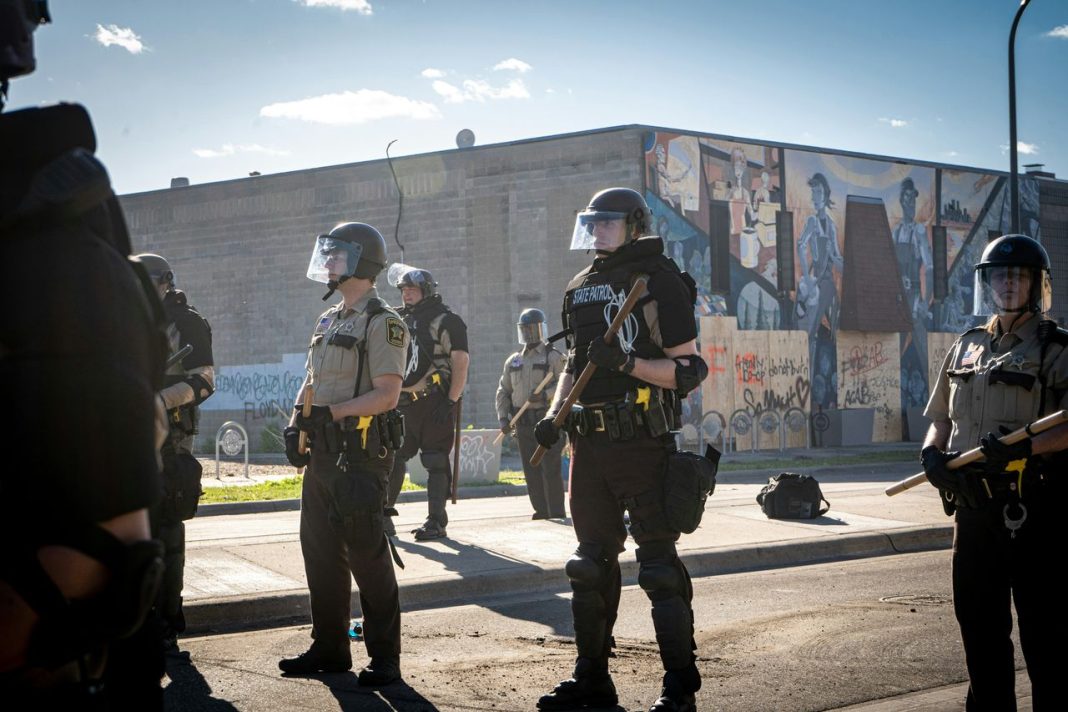
O’Hara was not just another police chief. He was hired in 2022 from Newark, New Jersey, as Minneapolis sought to stabilize a department and push through reforms after Floyd’s murder by former Officer Derek Chauvin in 2020. His tenure unfolded while the department faced officer shortages, heightened public mistrust and overlapping federal and state reform efforts aimed at changing police practices.
The Department of Justice announced a consent decree with Minneapolis and its police department in January 2025, describing a roadmap for reforms after finding reasonable cause to believe the department had engaged in unconstitutional and unlawful policing. O’Hara had been one of the most visible officials tasked with carrying the department through that next phase. His exit therefore lands at a delicate moment for a city already balancing political disagreements over policing levels, oversight and public safety structure.
Mayor Frey had publicly stood by O’Hara only weeks before the resignation, renominating him for another term and praising his performance. In those earlier remarks, Frey pointed to falling crime, a rise in officer applications and an increase in the department’s staffing from about 550 officers to more than 640. That quick reversal made the resignation more jarring and immediately prompted criticism from City Council members and community advocates who questioned when city leaders knew about the renewed investigation and why they had still backed him.
The resignation also throws Minneapolis leadership back into uncertainty. Local reports said Assistant Chief Katie Blackwell was tapped as acting chief while the city begins another search. The political fight over public safety leadership was already active before O’Hara’s exit, with tensions involving the City Council, the mayor and the city’s broader public safety structure. His resignation did not create those battles, but it intensified them by removing a central figure at a time when continuity had been seen as important.
The competing narratives from City Hall, O’Hara’s allies and his critics
Frey framed the resignation as a matter of trust and leadership standards. In his written reprimand, he said the Minneapolis Police Department is working to re-establish trust with the community and that for a chief, trust “is not secondary to the job—it is the job.” That language underscored the mayor’s argument that even if the original allegations remained unproven, interference in the investigation itself was disqualifying for someone leading a department under reform pressure.
O’Hara’s supporters emphasized a different point: the underlying allegations were not substantiated, and they argued that his broader record should not be erased by the final controversy. According to the Minnesota Star Tribune, a statement from his attorney highlighted that O’Hara had been brought to Minneapolis during one of the city’s most difficult periods and cited successes including reductions in violent crime, more staffing and major public safety operations. That defense sought to separate his administrative accomplishments from the misconduct findings that forced him out.
Critics, however, said the outcome confirmed long-running concerns about accountability at the top of the department and in the mayor’s office. Some City Council members used the moment to question Frey’s judgment, asking why he renominated O’Hara if significant concerns were already known. Others argued that the chief’s fall showed how fragile reform remains when leaders seen as agents of change become entangled in their own conduct investigations.
The competing narratives reveal why this resignation has become more than a personnel story. For Frey, it is evidence that standards were ultimately enforced. For critics, it is evidence the city tolerated too much until public disclosure made O’Hara’s position untenable. For O’Hara’s defenders, it is a case in which unproven allegations gave way to a resignation over investigative conduct rather than the conduct first alleged. Those interpretations will likely shape the next phase of debate over who should lead the department and how much confidence the public can place in city oversight.
What comes next for Minneapolis policing and the search for a new chief
In practical terms, Minneapolis now has to replace a chief during a period of institutional transition. The department remains subject to reform demands from the federal government and from state authorities, while also confronting day-to-day concerns about staffing, violent crime, officer morale and public confidence. Any successor will inherit not only operational challenges but also the symbolic burden of leading one of the country’s most closely watched police departments.
The next chief is likely to face intense scrutiny from the start. Minneapolis residents, elected officials and reform advocates will want to know how the city vets leadership candidates, how internal misconduct investigations are handled, and whether the department’s command staff can credibly model the standards being imposed on rank-and-file officers. O’Hara’s resignation may sharpen calls for more independent oversight and more transparent disclosure when allegations involve top city officials.
The episode may also complicate the mayor’s political standing. Frey’s critics have already argued that his administration moved too slowly or too opaquely, especially given that he had renominated O’Hara shortly before accepting his resignation. Frey, for his part, has defended his handling of the matter by stressing that the decisive action came once the outside report substantiated interference. That dispute is likely to continue as council members and local media press for a fuller timeline of what City Hall knew and when.
Why did Brian O’Hara resign? The clearest answer is that investigators concluded he interfered with a misconduct investigation by deleting phone data and discussing the inquiry despite direct orders not to, and Mayor Jacob Frey said that breach of trust made his position untenable. In Minneapolis, though, the consequences are broader. The resignation has reopened unresolved questions about reform, leadership and credibility in a city where policing is never just about one official’s fall, but about whether the institutions around him can still command public trust.