
In Minneapolis, some rooms are bigger than their square footage. Sisyphus is one of them. Now the low-ceilinged brewery-comedy hybrid that helped shape a generation of Twin Cities comics is facing the kind of plot twist no punchline can soften.
A beloved room is suddenly on shaky ground
The immediate crisis is simple enough to describe and hard to overstate. Sisyphus Brewing & Comedy, which has operated at 712 Ontario Ave. W. since 2014, says its current lease expires in January 2027, and owner Sam Harriman has publicly warned that the business may have to leave its longtime home or shut down if a new arrangement cannot be reached. Harriman wrote this week that after negotiations, a signed letter of intent, and what he described as major time and money spent pursuing an expanded or extended deal, Dunwoody College of Technology decided not to move forward with the long-term lease proposal.
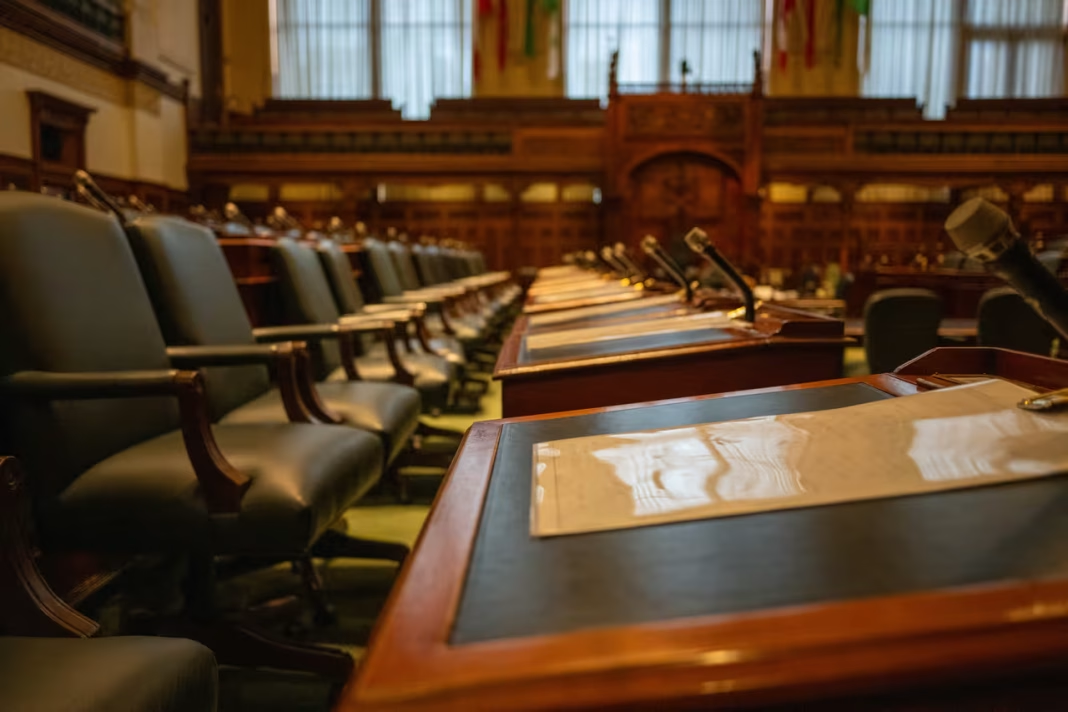
That alarm rippled well beyond the brewery’s customer base because Sisyphus is not merely another taproom. Its own materials describe the venue as a 100-seat showroom, and that intimacy is central to its identity. Comics can hear a table laugh, adjust on the fly, and build a set in real time. Audiences, meanwhile, get the sort of proximity that turns a comedy show from a night out into a shared event. In an entertainment economy increasingly tilted toward either giant venues or disposable digital clips, that kind of room is rare.
News coverage from CBS Minnesota, FOX 9, and the Minnesota Star Tribune all paints the same essential picture: a profitable small business with an outsized cultural footprint has found itself in a precarious real-estate dispute. Harriman has argued that Sisyphus is among the few breweries in the state still firmly in the black, an eye-catching claim at a moment when Minnesota’s craft beer market has been battered by closures and consolidation. The Star Tribune reported that at least 20 craft-beer taprooms in Minnesota have shut down over the past three years, making Sisyphus’ uncertainty feel less like an isolated lease spat and more like another aftershock in a stressed local industry.
Timing matters here. The public blowup came in late October 2026, leaving only a few months before the January 2027 lease deadline. That is a brutally short runway for any hospitality business, especially one built around weekly programming, artist relationships, beer production, staffing, and a loyal neighborhood habit. Even if Sisyphus ultimately survives, uncertainty itself is expensive. It freezes planning, rattles performers, complicates bookings, and forces patrons to contemplate a local institution in the past tense before anything has actually ended.
Why Sisyphus matters beyond beer
If this were only a brewery story, it would still matter. But Sisyphus occupies a deeper niche in Minneapolis because it fused two difficult businesses into one unusually durable ecosystem: independent craft beer and grassroots stand-up comedy. Over roughly a decade, the venue became a laboratory for local talent, a reliable stop for touring comics, and a room with a reputation disproportionate to its modest size. The Star Tribune called it one of Minnesota’s best stand-up venues, not despite its brewery setting but partly because of it.
That reputation was built on specifics, not vague civic affection. Sisyphus’ room is small, but performers and fans routinely praise the low ceilings, tight sight lines, and lack of obstructions that make even a 100-seat audience feel electric. It also offers something banal but powerful in a downtown-adjacent market: free parking. In live entertainment, convenience is not trivial. It shapes where casual fans are willing to go, how often they return, and whether a venue can turn a first visit into a habit.
The room has also punched above its weight in terms of talent. Reports this week noted appearances by nationally known comedians including Michael Che and Michael Longfellow, with additional mention from the Star Tribune of comics such as Sam Tallent, Ian Fidance, Tommy Brennan, and Punkie Johnson. MPR News recently noted Che’s history of supporting independently run Minneapolis comedy rooms, including Sisyphus. That matters because top-tier drop-ins do more than sell tickets. They validate a venue’s reputation within the profession and expose local audiences and openers to a higher level of craft.
Yet the strongest argument for Sisyphus may be its role as an incubator. Comics interviewed by local TV and newspaper outlets described it as a place where they got their first real opportunities: first 10 minutes, first hosted shows, first experiments as producers, first proof that a local scene can actually sustain a career path. Khadijah Cooper told the Star Tribune that opportunities like that are scarce. Sarah McPeck told CBS Minnesota that there is not really another place quite like it, particularly not another brewery that has committed so fully to stand-up.
Then there is the money. Harriman says Sisyphus passes all ticket revenue directly to performers and that those payments totaled nearly $160,000 last year. For a regional comedy scene, that is not a symbolic gesture; it is infrastructure. It means local artists are not merely getting stage time, but income. In an industry where exposure is often offered as a substitute for compensation, Sisyphus built a model that treated comics more like working professionals than lucky hobbyists. That helps explain why the venue’s possible displacement has landed as a cultural emergency, not just a business headache.
What Dunwoody is saying, and where the dispute stands now
For all the emotion surrounding the situation, the public record shows a dispute with important shades of gray. Harriman’s message framed the matter in blunt terms, saying Dunwoody had decided neither to expand nor extend the lease. In that version, the college’s decision effectively forecloses Sisyphus’ future at the site and turns months of negotiation into a dead end. That is the account that ignited outrage across the comedy community and among regular patrons.
Dunwoody College has offered a more measured public response. According to CBS Minnesota and the Star Tribune, a college spokesperson said Dunwoody is still working toward a solution and wants Sisyphus to remain beyond the end of the current lease. The catch is equally clear: the school says it is not in a position to sign the long-term lease that Sisyphus proposed because its first priority is the college’s mission and the needs of students as the campus grows. In other words, Dunwoody has not described the issue as an eviction campaign so much as a refusal to lock itself into a long horizon.
That distinction is more than semantic. It suggests the live question is not whether the two sides are talking, but whether they can agree on time, certainty, and control. From the brewery’s perspective, a short or unstable lease may be nearly as destabilizing as no lease at all. Hospitality operators invest in equipment, staffing, event calendars, and customer expectations that stretch well beyond a few months. From the college’s perspective, preserving flexibility for future student use may outweigh the benefits of a lengthy commercial agreement, especially on property directly tied to campus expansion.
So where does the dispute stand right now? Publicly, it appears to be unresolved but active. Dunwoody says it hopes Sisyphus stays after January 2027. Harriman has said he is working on a resolution and has asked for patience while he figures out next steps. He has also hinted that if Sisyphus continues after January 2027, it likely would not be in its current location. That leaves three plausible tracks: a shorter-term agreement at the current site, a negotiated long-shot compromise that gives both sides some certainty, or a relocation effort that preserves the brand while losing the original room.
For supporters, that ambiguity is both hopeful and maddening. Nothing official suggests the lights are going out tomorrow. But nothing in the public statements guarantees stability either. The dispute has moved past rumor and into a familiar urban reality: a valued cultural space can be widely loved, financially viable, and still vulnerable if its real estate no longer fits the landlord’s long-term plan.
The larger stakes for Minneapolis arts and small business
Cities often discover what matters to them only when it is threatened. That is part of why the Sisyphus fight has resonated so quickly. The venue sits at the intersection of several anxieties Minneapolis already knows well: fragile arts infrastructure, post-pandemic business volatility, development pressure, and the slow erosion of quirky, mid-sized spaces that give a city its character. When a place like Sisyphus wobbles, people are really asking a broader question: what kinds of local institutions are allowed to endure?
Comedy scenes, especially regional ones, depend on ladders. There have to be open mics, then bar shows, then curated showcases, then clubs and festival opportunities. Remove one rung and the whole climb becomes harder. Sisyphus has served as one of those crucial middle rungs, offering a room professional enough to matter and accessible enough to nurture emerging acts. Lose it, and the damage is not just sentimental. It can thin the pipeline that produces the next local headliner, writer, or touring support act.
The brewery side of the equation carries its own civic significance. Minnesota’s craft beer boom helped define the social life of the 2010s, but the economics have become much less forgiving. Higher costs, market saturation, changing drinking habits, and tight margins have made survival harder even for well-liked operators. In that context, Harriman’s claim that Sisyphus is profitable lands with particular force. A profitable brewery-comedy hybrid still may not control its own fate if the land beneath it becomes strategically more important for something else.
This is also a case study in how cultural value and real-estate value often speak different languages. To comics and fans, Sisyphus is a room where careers were launched, risks were taken, and local identity was made tangible. To a property owner, even one sympathetic to that mission, the site may also be a future classroom footprint, a student-services expansion zone, or a piece of campus planning that cannot be surrendered to a long commercial lease. Both views can be sincere. They are not easily reconciled.
That tension shows up in cities across the country. Music clubs, artist studios, bookstores, repertory theaters, and neighborhood bars rarely disappear because nobody cares. They disappear because affection alone is not a lease term. Minneapolis is hardly unique in that respect. But the Sisyphus dispute is a vivid reminder that a city’s cultural ecosystems are not self-sustaining. They depend on policy, landlords, patrons, timing, and luck. Remove one support beam, and the room suddenly feels much smaller.
What happens next for Sisyphus and the Twin Cities comedy scene
In the near term, the most important fact is that Sisyphus is still operating. Shows are still being booked, audiences are still walking through the door, and the room’s calendar continues to project normalcy even as uncertainty hangs over everything. That matters psychologically as much as financially. A venue in limbo can sometimes talk itself into decline if patrons assume the end has already been written. The surest way for supporters to help in the short run is often the least glamorous: keep showing up.
At the same time, the community response is likely to intensify. Comics have already spoken publicly about the venue’s importance, and the emotional language has been striking. McPeck told CBS she was devastated. Cooper said it felt like the rug had been pulled out. Those reactions reflect more than loyalty to a stage. They signal that Sisyphus functions as a kind of commons for a creative community that does not have many surplus spaces. If negotiations continue, public pressure could help keep all sides at the table, even if it cannot determine the final terms.
Relocation, should it come to that, would be both a rescue and a reinvention. Brands can move; rooms cannot. Sisyphus might preserve its business, beer, staff, and booking ethos elsewhere, but recreating the exact chemistry of the Ontario Avenue site would be difficult. Every successful comedy room is a sum of physical details and accumulated memory: the entrance, the bar noise, the stage sightline, the shape of the laugh. Those things are not easily transplanted, even by determined operators with a devoted following.
Still, there are reasons not to write the venue’s obituary. Dunwoody has publicly said it hopes Sisyphus remains after January 2027. Harriman has not announced closure, only uncertainty. And the very speed with which this dispute became a local flashpoint underscores the venue’s leverage as a civic asset. Institutions often become most legible when threatened; supporters, artists, and even landlords can suddenly see their value more clearly. Whether that recognition yields a signed deal remains the unanswered question.
For now, the status is this: the lease at Sisyphus’ longtime Minneapolis home runs through January 2027; the owner says a long-term extension and expansion proposal has been rejected; Dunwoody says it is not prepared to sign a long-term lease but wants the brewery to stay and is still seeking a solution; and the future of one of the Twin Cities’ most important comedy rooms remains unsettled. In a city that prides itself on supporting the arts, that uncertainty is its own kind of test.