The East Side’s latest landmark is a colorful parade of animal figures stretching more than 500 feet along Mounds Boulevard. Dakota artist Bobby Wilson and local collaborators created The Procession of St. Paul to reflect the neighborhood’s diverse communities and honor the Dakota history of nearby Wakaŋ Tipi.
A 500-Foot Parade Turns a Roadside Wall Into a Story

A drive along Mounds Boulevard now passes a procession of colorful animals. Titled The Procession of St. Paul, the mural stretches more than 500 feet along the East Side, with the figures moving south toward Wakaŋ Tipi, a Dakota sacred site by the Mississippi River. Its scale makes the work hard to miss, but the parade also invites a closer look: the animals carry everyday objects and wear work uniforms, connecting the large public artwork to the lives of people in the neighborhood.
Animal Characters Reflect the People Who Call the East Side Home
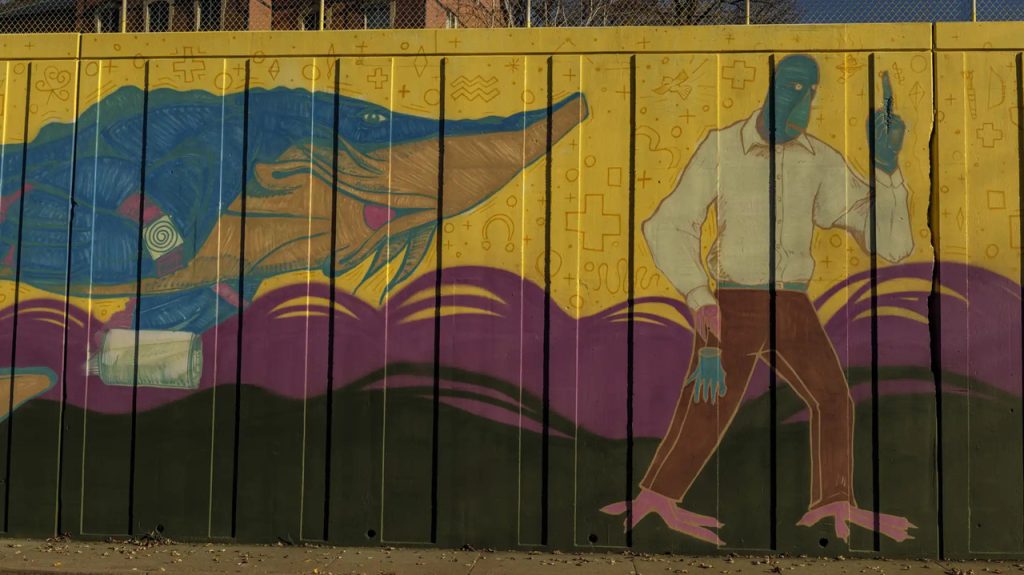
A pink bear with a coffee cup, an elephant and a bison are among the characters that make the mural feel rooted in local life. Dakota artist Bobby Wilson gave the figures roles inspired by people and jobs in the neighborhood, including a Hmong elephant working at a gas station and a bison in a Metro Transit uniform. The mural also includes references to Hmong, Black and Somali communities. Wilson grew up on St. Paul’s East Side and said he wanted people from the communities he knew to see themselves represented.
The Procession Connects Today’s Neighborhood to Dakota History

The animals all move in the same direction, toward Wakaŋ Tipi and the ancestral burial mounds on the bluff at Mounds Park. Wilson, a citizen of the Sisseton Wahpeton Dakota, described the procession as people of the land, from the first people onward, walking a shared path. Nearby Wic̣aḣapi is a Dakota burial site overlooking Wakaŋ Tipi and the Mississippi River. The mural makes that connection visible along a busy street, while recognizing that the East Side is home to many communities whose histories and lives now overlap.
Local Artists and a Dakota-Led Nonprofit Shaped the Project
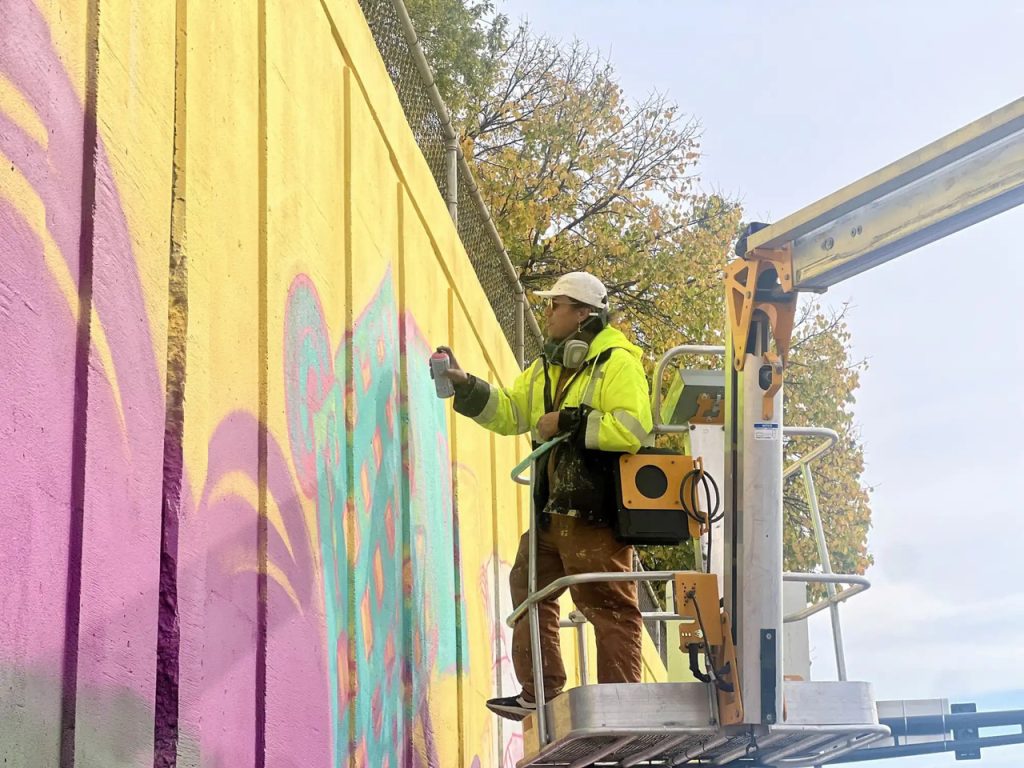
The mural grew from a project led by Wakaŋ Tipi Awaŋyaŋkapi, a Dakota-led nonprofit that oversees Wakaŋ Tipi and Wic̣aḣapi. The organization wanted a welcoming landmark for people arriving from Interstate 94, one that would signal the cultural significance of the nearby sites and invite visitors from different backgrounds. Wilson worked with local artists and community members to bring the piece to life. The project began about four years before the mural’s unveiling and received support from the city of St. Paul, Public Art St. Paul and the Metropolitan Regional Arts Council.