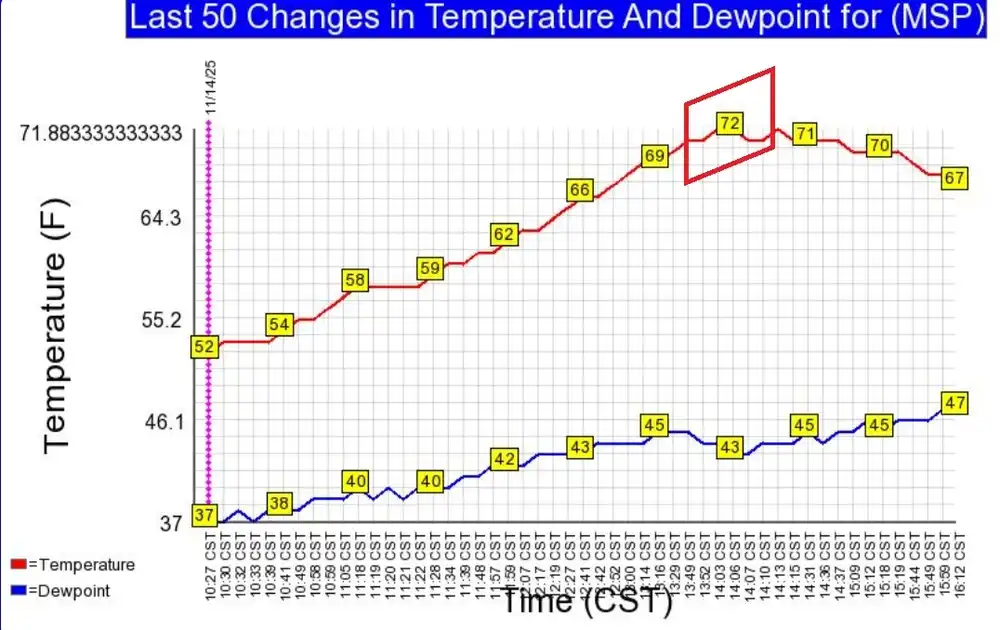
Minnesota cruised into late November with barely a flake to show for the season, marking an unusually slow start to winter across the state. The Twin Cities recorded only a trace of snow by November 18, the date when the metro typically already has its first inch on the ground, leaving the area roughly three to four inches behind the normal pace of 6.8 inches. Duluth fared even worse with just three-tenths of an inch compared to its usual 10.3 inches by mid-November, putting the port city a full 10 inches below average. This prolonged autumn gave Minnesotans extra time to enjoy milder conditions, though winter lovers grew restless waiting for the state’s signature season to finally arrive in earnest.
First Real Snowfall Arrives For Thanksgiving Week
The drought ended dramatically right before Thanksgiving when Minnesota’s first legitimate winter storm swept across the state on November 25 and 26, delivering measurable snow to central and southern regions that had seen nothing all season. What began as rain and dense fog on Tuesday afternoon transitioned to snow by evening as colder air wrapped around an intensifying low pressure system tracking from southern Minnesota toward Michigan’s Upper Peninsula. A broad swath stretching from Wheaton in western Minnesota all the way to Duluth received between four and eight inches, with lighter totals of two to five inches falling on either side of this main band across northern and central parts of the state. The storm brought difficult travel conditions, with the Minnesota State Patrol reporting over 300 crashes and more than 400 vehicles spinning out during the two-day event, though thankfully no fatalities occurred.
Blizzard Conditions Hit Parts Of The State
Strong winds gusting between 40 and 50 miles per hour combined with heavy snowfall to create blizzard conditions across portions of western and northeastern Minnesota during the height of the storm. Snowfall rates exceeded one inch per hour in areas from the Brainerd Lakes region through the Twin Ports corridor and into northwest Wisconsin, with fierce winds whipping the fresh snow and drastically reducing visibility. The challenging conditions led to a significant pileup on westbound Interstate 94 in Clay County near Moorhead on Tuesday afternoon, involving roughly a dozen large trucks and semi-trailers, though officials confirmed no life-threatening injuries resulted from the crash. Blizzard warnings remained posted for parts of western Minnesota while winter storm warnings covered large sections of central and south-central portions of the state through Wednesday morning.
Weekend Storm Brings Additional Accumulation
Minnesota wasn’t finished with snow after Thanksgiving, as another winter system moved through over the weekend of November 29-30, bringing significant additional totals to southern regions. The Twin Cities officially measured 4.7 inches at Minneapolis-St. Paul International Airport, while totals across the metro ranged between two and seven inches depending on location. Chanhassen saw 6.5 inches while Bloomington recorded five inches and Roseville measured around three inches of accumulation. The corners of southern Minnesota experienced the heaviest snow, with Minnesota City northwest of Winona reporting more than 11 inches and Windom in the southeast picking up around nine inches. Rochester and Northfield both saw approximately eight inches, New Ulm measured 7.5 inches, and Mankato recorded about seven inches from the weekend storm.
National Weather Service Changes Winter Terminology
This winter season brings a significant change in how cold weather alerts are communicated to Minnesotans, as the National Weather Service has simplified its warning system. The familiar wind chill watches and warnings have been replaced with extreme cold watches and warnings, which will be issued when wind chills reach 35 degrees below zero or colder. The change aims to clarify communication and reduce confusion among the hundreds of different weather advisories the service issues, making it easier for residents to understand the severity of dangerous cold conditions. Meteorologists will still reference wind chill values in their forecasts since Minnesotans have grown accustomed to gauging outdoor comfort levels using that measurement, but the official alert terminology has been streamlined.
Winter Trends Show Heavier, Wetter Snows
While Minnesota winters have warmed by more than five degrees on average since 1970, the state remains cold enough to support substantial snowfall and is actually experiencing heavier, wetter snow events. Climate data shows this warming trend hasn’t eliminated winter precipitation but rather changed its characteristics, with individual storms sometimes delivering more intense snowfall over shorter periods. The state still averages 110 days per year with snow cover of an inch or greater, and annual snowfall extremes range from over 170 inches in the rugged Superior Highlands along the North Shore to as little as a few inches in portions of southern Minnesota. Snow has fallen in Minnesota during every month except July, underscoring the state’s reputation for extended winter conditions despite the gradual warming trend affecting seasonal temperatures.