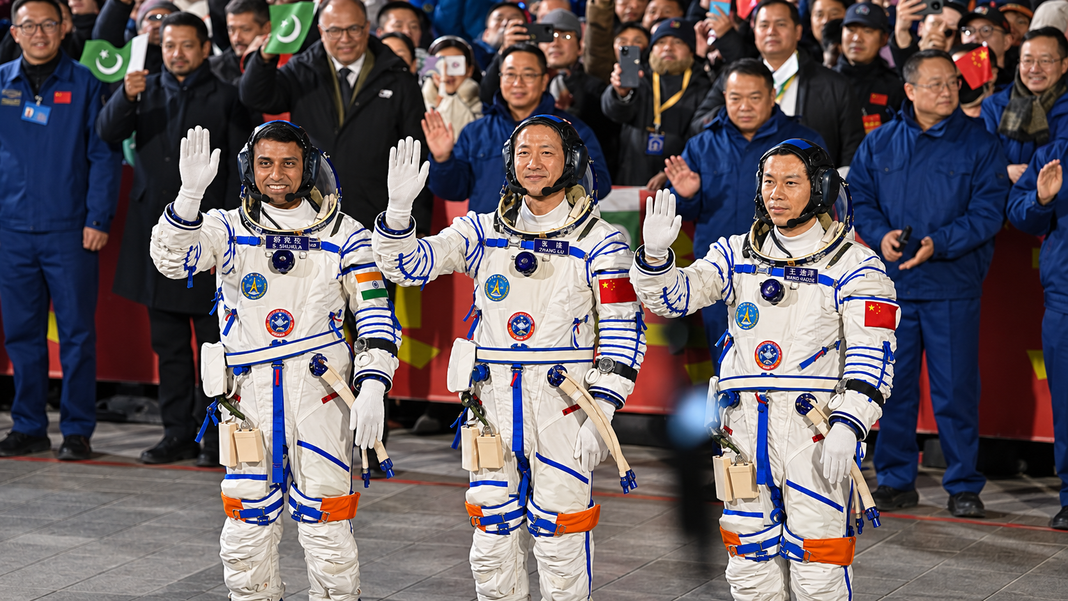

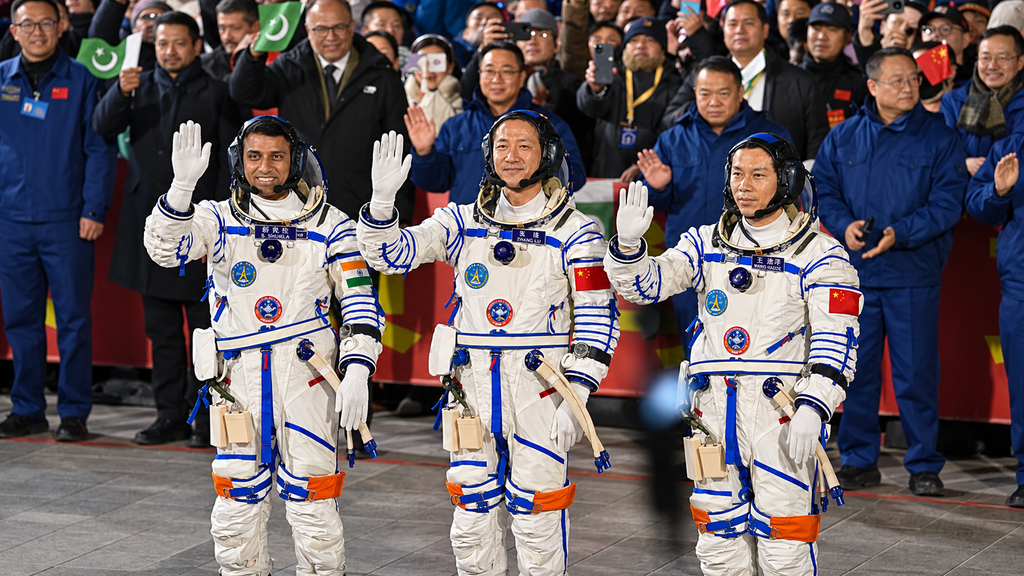
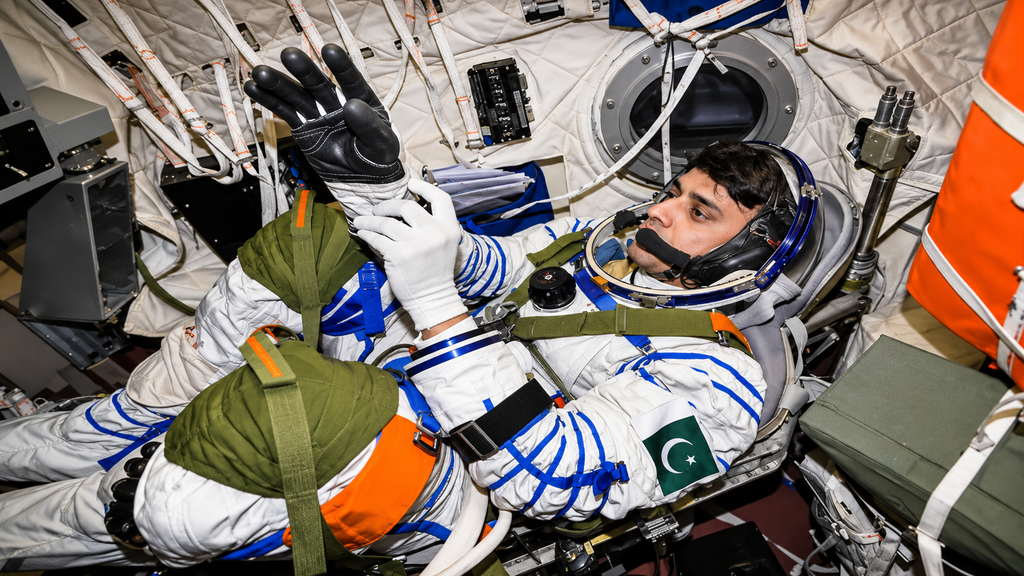
Pakistani astronaut Muhammad Zeeshan Ali became the first foreign astronaut to board China’s Tiangong space station on Wednesday, November 25, 2026, following the successful launch and docking of the Shenzhou 24 spacecraft.
Ali, 40, traveled alongside Chinese astronauts Tang Hongbo, 51, and Wu Yi, 39, aboard a Long March 2F rocket launched from the Jiuquan Satellite Launch Center in northwestern China.
The spacecraft lifted off at 8:18 a.m. local time and successfully docked with the space station at 11:56 a.m.
The three astronauts were welcomed by members of the Shenzhou 23 mission, bringing the number of astronauts aboard Tiangong to six.
The mission marks the first international crewed spaceflight under China’s human spaceflight program and follows a space cooperation agreement signed between China and Pakistan in February 2025.
Pakistani astronaut to conduct scientific experiments in orbit
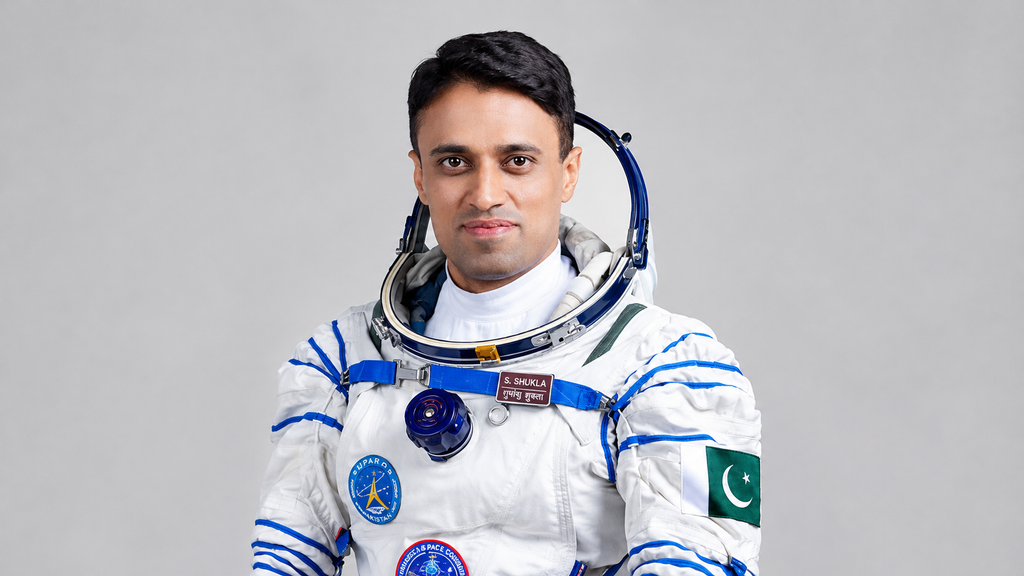
Ali, a pilot who completed seven months of astronaut training in Beijing, is serving as a payload specialist during the mission.
The Shenzhou 24 crew is expected to carry out more than 90 scientific experiments and technology tests throughout its mission.
According to Pakistan’s Space and Upper Atmosphere Research Commission (SUPARCO), Ali will participate in experiments examining the potential use of microalgae as a source of food and oxygen during future space missions.
He will also study the effects of spaceflight on quinoa seeds.
Ali is expected to spend approximately a week aboard Tiangong before returning to Earth with two members of the Shenzhou 23 mission.
Tang and Wu will remain aboard the space station for approximately six months. The mission is the first spaceflight for both Ali and Wu, while Tang has become the first astronaut to visit Tiangong three times.
China and Pakistan expand cooperation into space
Pakistani President Asif Ali Zardari and Chinese President Xi Jinping exchanged congratulatory letters, describing the mission as a significant development in relations between the two countries.
Pakistani Prime Minister Shehbaz Sharif congratulated the nation and thanked China for providing Pakistan with the opportunity to participate in its crewed space program.
The launch prompted celebrations across Pakistan, with families, restaurant customers and scientists gathering to watch the spacecraft depart through live broadcasts.
Pakistan’s Planning Minister Ahsan Iqbal, who attended the launch in China, expressed hope that Pakistan would eventually develop the capability to send astronauts into space independently.
Speaking before the launch, Ali said he hoped future cooperation between the two countries would extend beyond individual missions to further joint spaceflights and exploration of the Moon and Mars.
The mission comes as China prepares for its first crewed lunar landing by 2030, while NASA is targeting a return of astronauts to the Moon in 2028.