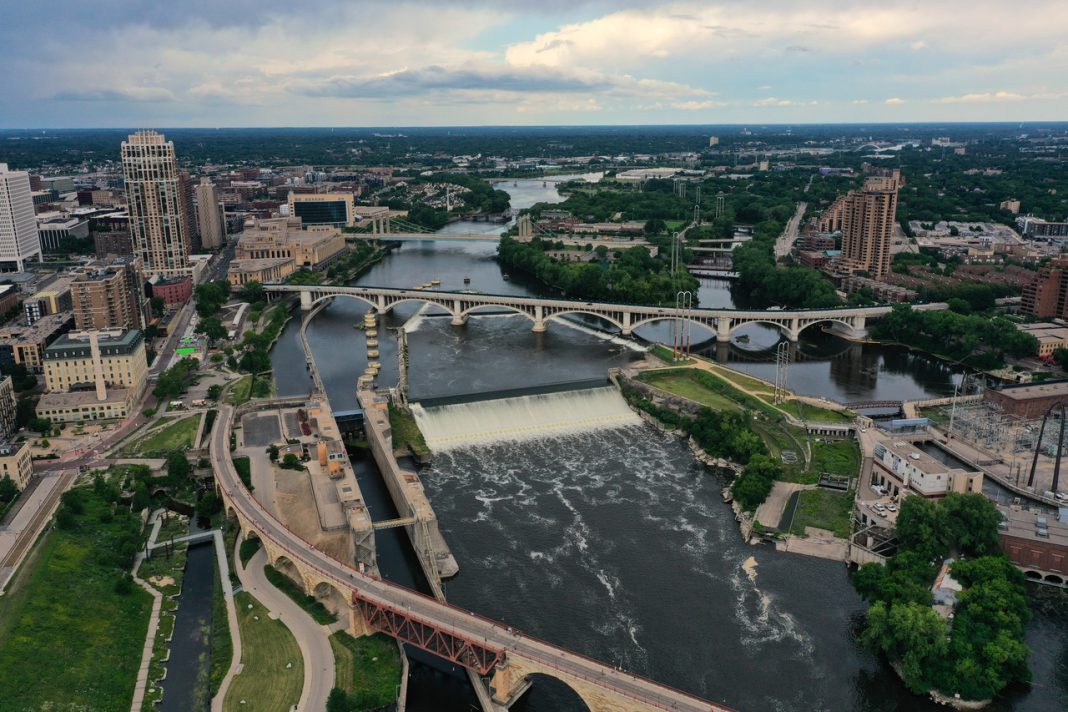

A waterfall in the heart of Minneapolis helped transform a young Midwestern city into one of America’s most powerful industrial centers. St. Anthony Falls, on the Mississippi River, supplied the energy that fueled enormous flour mills, attracted entrepreneurs, and helped Minnesota’s wheat industry reach markets across the country. But the story goes beyond grain and machinery. Advances in milling technology, a devastating factory explosion, and the rise of hydroelectric power all played a role in shaping the city’s growth. Today, the historic riverfront offers a glimpse into this remarkable past. Here are six details that explain how St. Anthony Falls helped build Minneapolis’ flour empire.
St. Anthony Falls Turned Minneapolis Into a Flour-Milling Powerhouse
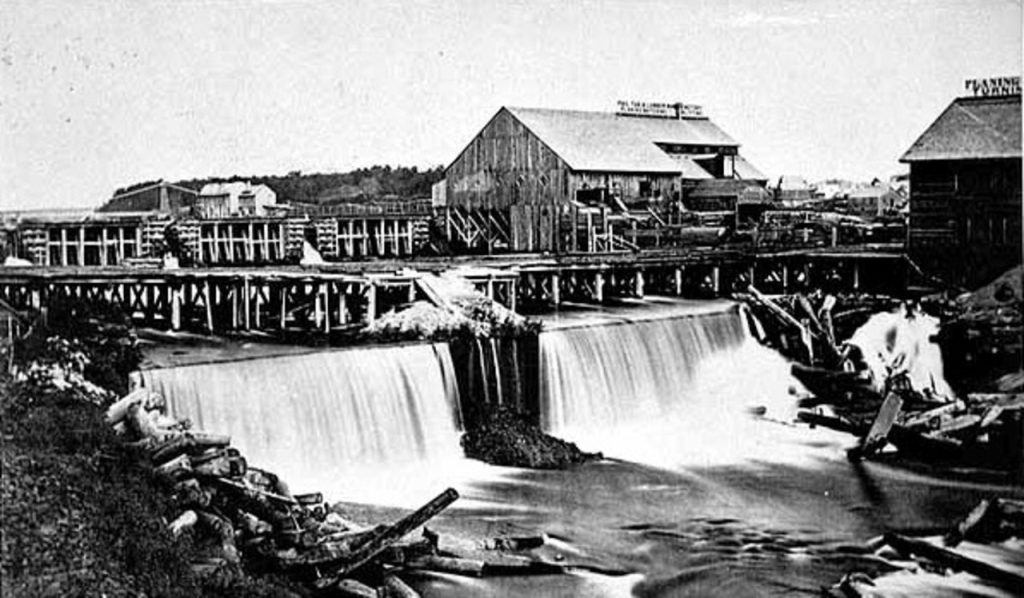
Minneapolis owes much of its early industrial success to a natural feature that was powerful enough to transform an entire city. St. Anthony Falls, located on the Mississippi River near downtown, provided the waterpower that attracted mill owners and helped Minneapolis become the nation’s leading flour producer for roughly 50 years. Before flour milling took center stage, the falls powered sawmills that processed timber from Minnesota’s forests. As the state’s wheat harvest grew and rail connections improved, entrepreneurs began investing heavily in flour production. The mills used the falling water to turn machinery, allowing them to process grain on a much larger scale than would have been possible without a dependable source of power. By the late 19th century, Minneapolis had developed into a major center of flour production, supplying markets across the United States and beyond. The falls did more than support individual businesses. They helped shape the city’s economy, attract workers, encourage transportation development, and establish Minneapolis as an important industrial center in the Upper Midwest.
The Mississippi River’s Natural Geology Made the Falls a Valuable Industrial Resource
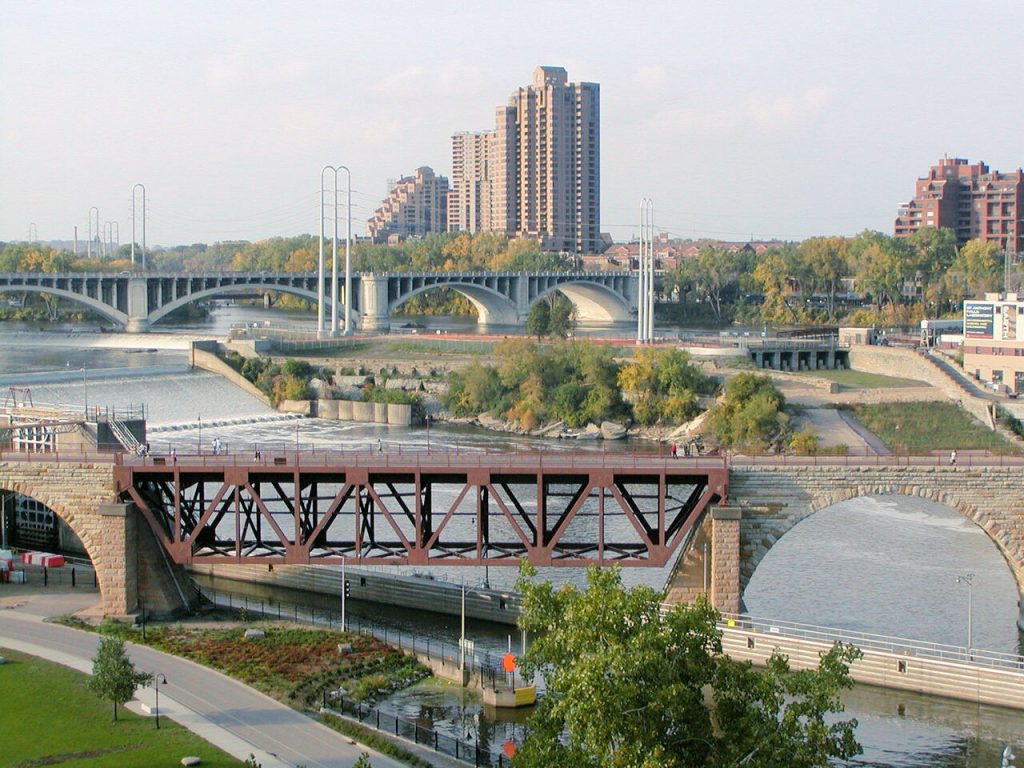
The secret behind St. Anthony Falls’ industrial importance lies partly beneath the river itself. The riverbed above the falls contains a thick layer of hard Platteville limestone, with shale and sandstone beneath it, including softer St. Peter sandstone. This arrangement created a natural ledge over which the Mississippi River flowed, providing the drop that mill owners could harness to power machinery. Engineers also learned to direct water through constructed channels and mill races, carrying it to turbines and waterwheels before returning it to the river downstream. The local geology made it possible to excavate passages through softer rock beneath the limestone, helping mills capture the energy of the falling water. Yet this same arrangement created a serious problem. Water gradually eroded the softer sandstone beneath the limestone cap, leaving sections of the harder rock unsupported until they broke away. Over thousands of years, this process caused the falls to retreat upstream. Industrial development accelerated the danger, as poorly designed water channels and leaks contributed to erosion. The falls ultimately required extensive engineering work, including protective structures and dams, to prevent further damage.
Minnesota’s Growing Wheat Harvest Fueled the Flour Industry
A waterfall alone could not build a flour empire. Minneapolis also needed a steady supply of grain, and Minnesota’s expanding wheat harvest provided exactly that. During the second half of the 19th century, farmers across the state planted increasing amounts of wheat, while railroad development helped transport grain to milling centers. The numbers show how quickly the industry expanded. Minnesota produced approximately 18.9 million bushels of wheat in 1870, rising to 34.6 million bushels by 1880. Flour mills near St. Anthony Falls were well positioned to turn that growing harvest into a valuable finished product. Railroads brought grain into Minneapolis and carried flour to distant markets, allowing local mills to compete beyond the immediate region. The falls supplied power, the surrounding agricultural economy supplied raw materials, and transportation networks connected producers with customers. These factors worked together to make the city one of the country’s leading flour-manufacturing centers. As production increased, mills expanded and new facilities appeared along both sides of the river. The rise of Minneapolis flour milling was therefore not the result of one invention or one business. It grew from the combination of waterpower, fertile farmland, industrial investment, and increasingly efficient transportation.
New Milling Technology Helped Minneapolis Produce High-Quality Flour

For Minneapolis to dominate the flour business, its mills needed to produce flour that bakers wanted to buy. Early mills faced a challenge because Minnesota’s spring wheat behaved differently from the softer winter wheat grown in other regions. Traditional grinding methods could generate excessive heat, discoloring the flour and making it less appealing to some bakers. The grinding process also struggled to separate the wheat’s bran and harder inner layers cleanly, creating a coarser product that was often sold as a lower grade. During the 1860s, millers in southern Minnesota developed improved methods using finer millstones operating at slower speeds. The slower grinding process generated less heat and helped preserve the flour’s color. Later, Minneapolis mills refined the method by introducing porcelain and steel rollers, which improved consistency and reduced unwanted specks. These changes helped produce fine, white flour that was especially suitable for bread making. The combination of better technology, abundant wheat, and reliable transportation gave Minneapolis a strong competitive advantage. Rather than relying solely on the power of the falls, mill owners used innovation to improve the quality of their products and strengthen the city’s reputation in domestic and international markets.
The Washburn A Mill Explosion in 1878 Changed the City’s Milling District

The rapid growth of Minneapolis’ flour industry came with serious industrial risks, and one of the city’s most devastating disasters occurred on May 2, 1878. On that day, the Washburn A Mill exploded, killing 18 workers and destroying a major portion of the city’s milling capacity. The blast and subsequent fire damaged surrounding industrial properties, including lumberyards, planing mills, a machine shop, a wheat-storage elevator, a railroad roundhouse, and nearby homes. Investigators attributed the disaster to flour dust, which can ignite explosively when suspended in the air and exposed to an ignition source. The accident highlighted the dangers of operating large mills without adequate safeguards against combustible dust. Yet the disaster did not end Minneapolis’ milling ambitions. Mill owners rebuilt quickly, and by the end of 1878, 17 mills were operating on the west side of the river. The Washburn A Mill itself was reconstructed with improvements, becoming a symbol of the industry’s determination to recover. Today, the surviving ruins form part of the historic setting around Mill City Museum, where visitors can learn how flour milling shaped Minneapolis and how industrial accidents influenced the development of safer working practices.
St. Anthony Falls Later Helped Power the City’s Early Hydroelectric Industry

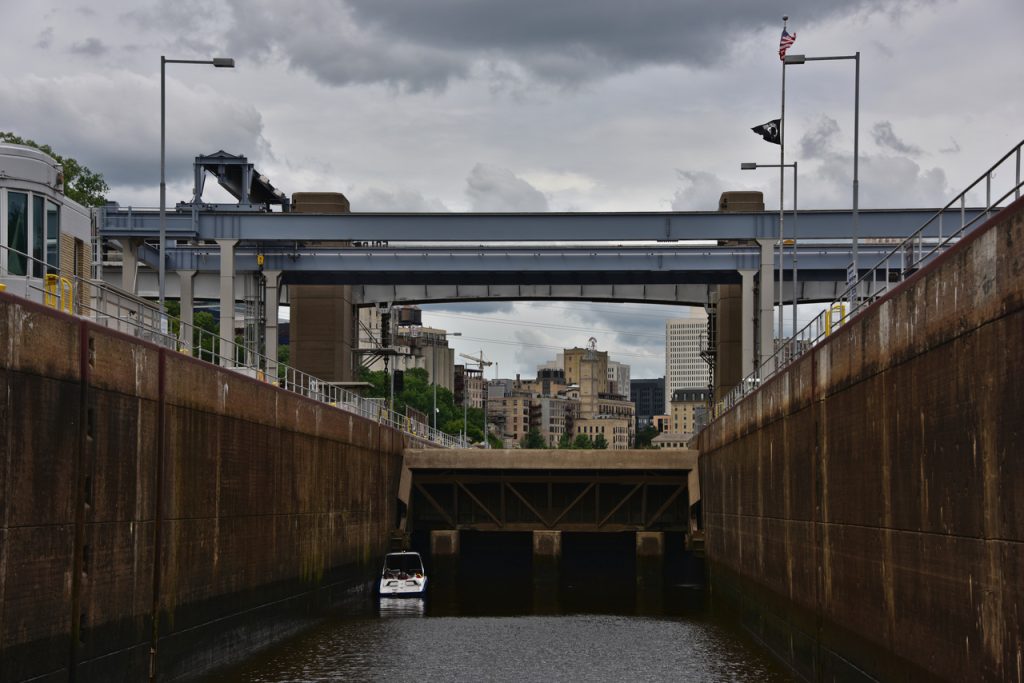
Flour milling was not the final chapter in the industrial story of St. Anthony Falls. As factories increasingly adopted steam power and electricity, engineers began finding new ways to use the river’s energy. In 1882, a commercial hydroelectric central plant at the falls helped establish Minneapolis as an early center of electric power generation. Instead of using waterpower only to operate machinery directly, the new technology converted the river’s energy into electricity that could be distributed to other users. Engineer William de la Barre later played a major role in developing larger hydropower facilities around the falls, including a lower dam and power station that supplied electricity to the Twin City Rapid Transit Company’s streetcars. The development expanded the usefulness of the falls beyond the immediate mill district, allowing waterpower to support transportation and other urban needs. Over time, hydroelectricity became increasingly important as traditional mills moved away from direct water-driven machinery. However, industrial expansion and the construction of navigation infrastructure also changed the river landscape. By 1960, work on the Upper St. Anthony Falls Lock and Dam had closed the west-side waterpower canal, marking the end of an important chapter in the area’s original milling system. The falls remain a powerful reminder of how natural energy helped shape Minneapolis’ industrial and technological history.