

A new undersea cable could change how much data travels across the Atlantic, with Meta developing a 4,300-mile connection called Petal between the United States and France. Designed to carry up to 1 million gigabits of data per second, the system will use advanced fiber technology to increase internet capacity. Here are six key facts about the ambitious project, including its technology, engineering partners and expected launch date.
Petal Will Connect the United States and France

Beneath the Atlantic Ocean, a new internet connection is being planned to link two major digital markets on opposite sides of the ocean. Called Petal, the undersea fiber-optic cable will stretch approximately 7,000 kilometers, or more than 4,300 miles, between the United States and France. The project is being developed by Meta, the parent company of Facebook and Instagram, to increase the capacity of the infrastructure that carries data between continents. Although most internet users never see these cables, they form an essential part of everyday digital life, supporting everything from video calls and online messaging to cloud services and international business communications. Meta has also partnered with telecommunications and engineering companies to develop the system, with plans to bring it ashore on France’s Atlantic coast. Petal is expected to enter service in 2029, although that remains a projected date rather than a completed milestone.
The Cable Is Designed to Carry 1 Million Gigabits of Data Per Second
The numbers behind Petal help explain why the project has attracted attention. The cable is designed to deliver a total capacity of one petabit per second, equivalent to 1,000 terabits or 1 million gigabits per second. In more familiar terms, that translates to approximately 125 terabytes of data every second. Such capacity could theoretically support the transfer of around 25,000 high-definition movies, each measuring 5 gigabytes, in a single second. However, this figure describes the planned capacity of the entire cable system, not the speed available to an individual household or smartphone. Actual internet speeds depend on many other factors, including local network infrastructure, server capacity and congestion. If Petal achieves its target, it will offer approximately twice the capacity of today’s most advanced transoceanic cable systems, helping accommodate growing demand for international data transmission.
Petal Will Use Advanced Multi-Core Fiber Technology
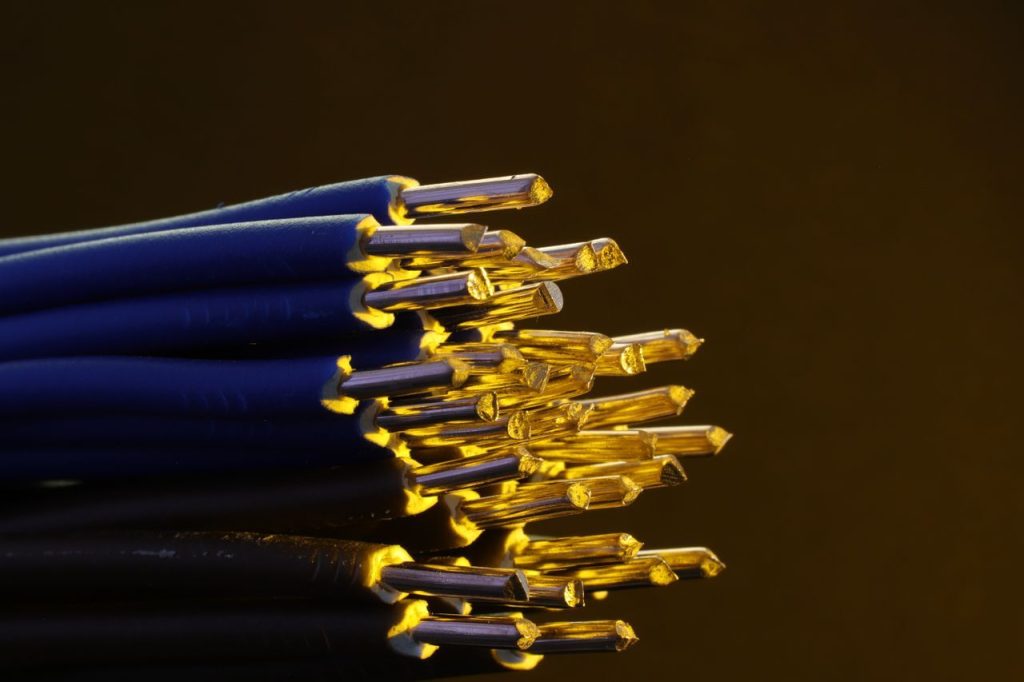
Traditional fiber-optic cables transmit information through thin glass strands containing a single core that carries light signals. Petal will take a different approach by using multi-core fiber technology, with two separate cores inside each fiber strand. This arrangement allows more data to travel through the same physical fiber structure, increasing capacity without requiring a proportional increase in the amount of cable infrastructure. The planned system will contain 24 pairs of dual-core fibers, providing 96 individual cores in total. Meta’s engineers describe this configuration as offering capacity equivalent to 48 pairs of conventional single-core fibers. Each strand is extremely thin, measuring approximately 125 micrometers in diameter, roughly comparable to the thickness of a human hair. The challenge is making this technology work reliably across thousands of kilometers beneath the ocean. Petal is intended to demonstrate that multi-core fiber can operate at scale over transoceanic distances, potentially influencing how future international cable systems are designed.
Petal Could Support Music Streaming for 75% of the World’s Population

One of the most striking comparisons associated with Petal involves music streaming on a global scale. According to Meta’s calculations, the cable’s planned capacity could support simultaneous music streaming for approximately 75% of the world’s population. This illustration assumes audio streams running at roughly 160 kilobits per second and compares their combined data requirements with Petal’s total capacity of one petabit per second. It offers a useful way to understand the scale of the project, even though it is a theoretical comparison rather than a real-world streaming test. The cable will not deliver its entire capacity directly to music listeners, nor will every person have access to that bandwidth individually. Instead, it will provide a high-capacity connection between major networks, helping carry traffic generated by digital platforms and services. The broader significance is that international internet infrastructure must continually expand as more people use data-intensive applications, stream media and rely on cloud-based services.
NEC and Sumitomo Electric Industries Are Helping Build Petal
Building a transatlantic cable requires specialized engineering, advanced materials and equipment capable of operating under demanding underwater conditions. Meta is working with Japan-based NEC, a company with extensive experience in submarine cable systems, and Sumitomo Electric Industries, a major producer of optical fiber. NEC is responsible for engineering the overall system, including its cable technology, repeaters and related equipment, as well as manufacturing and installation. Sumitomo Electric is contributing its expertise in fiber production, which is particularly important because Petal depends on two-core fiber technology to achieve its intended capacity. French telecommunications company Orange is also involved in plans to bring the cable ashore along France’s Atlantic coast and connect it with terrestrial networks. These partnerships bring together different areas of expertise needed to build a system that can carry enormous quantities of data reliably across the ocean. The project’s success will depend on integrating the fiber, amplification equipment and transmission systems into a working cable network.
Petal Is Expected to Enter Service in 2029

Petal is a planned infrastructure project, not an operational cable that is already carrying internet traffic. Meta has announced 2029 as its expected service date, giving the companies involved several years to develop, manufacture, install and prepare the system for use. One of the central engineering challenges is maintaining strong optical signals across approximately 7,000 kilometers of cable. To address this, the system will use repeaters, which amplify optical signals as they travel along the route. Meta’s design also incorporates technology intended to manage signals moving through the dual-core fibers while avoiding a proportional increase in power requirements. These details matter because an undersea cable must function reliably for long periods in an environment where repairs can be expensive and technically difficult. Once operational, Petal is expected to add substantial capacity to connections between North America and Europe. Its planned launch will also provide an important test of whether multi-core fiber technology can support the next generation of high-capacity international internet infrastructure.