

A 66-pound stone discovered underwater off Norway’s coast could change what archaeologists know about prehistoric seafaring. Found near a Stone Age quarry, the unusual object features a groove around its circumference that may have held a rope, leading researchers to suspect it served as an anchor thousands of years ago. If confirmed, the discovery could predate previously known examples by a considerable margin. Here are six clues behind the intriguing theory and what scientists still need to establish.
A 66-Pound Grooved Stone Could Be the World’s Oldest Known Anchor

An ordinary-looking stone could rewrite what archaeologists know about early seafaring. Researchers studying the prehistoric quarry at Hespriholmen, a rocky islet off western Norway, have discovered a rounded stone weighing approximately 66 pounds, or 30 kilograms, with a groove running all the way around it. The unusual feature has led experts to suggest that the stone may have served as an anchor thousands of years ago. If that interpretation is confirmed, the object could be the oldest known stone anchor in the world, predating previously documented examples from the Bronze Age Mediterranean. Archaeologist Leif Inge Åstveit of the University Museum of Bergen has expressed strong confidence in the anchor theory, pointing to the stone’s shape and the location where it was found. However, the discovery has not yet been formally confirmed as an anchor. Researchers must publish their findings and have them reviewed by other specialists before the claim can be established. For now, the stone offers a fascinating possibility: people living along Norway’s coast may have developed practical ways to secure boats much earlier than archaeologists previously understood.
The Stone Was Discovered Near a Prehistoric Quarry Off Norway’s Coast

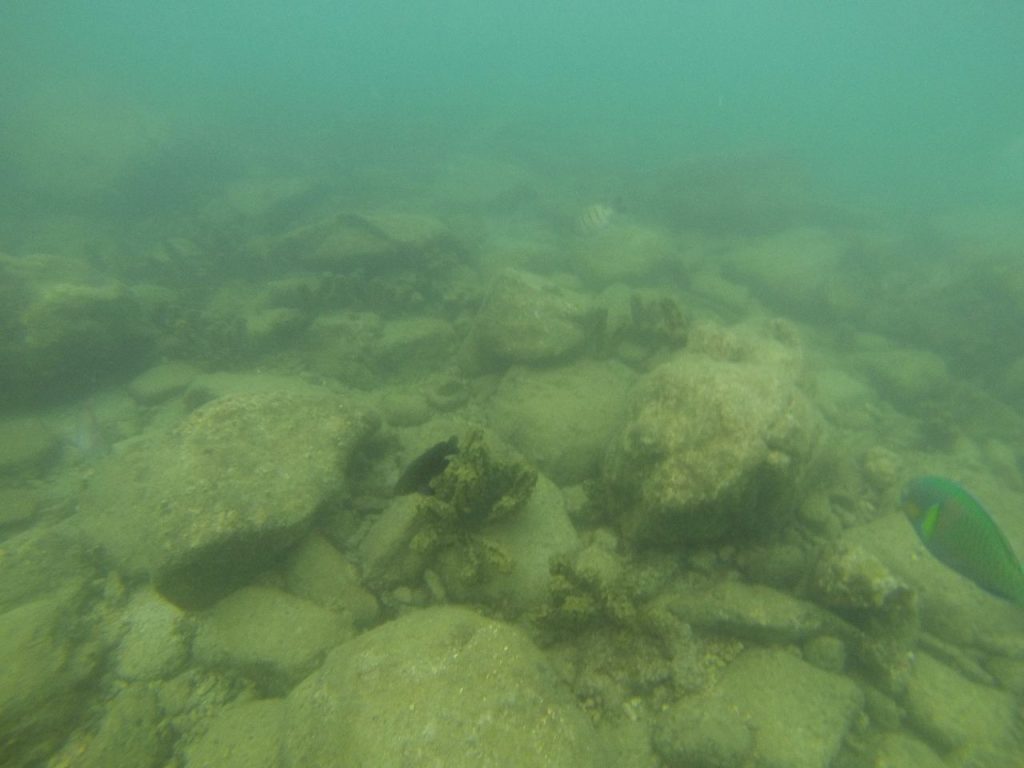
The location of the discovery may be just as important as the stone itself. Hespriholmen lies roughly five kilometers offshore from mainland Norway, in an exposed stretch of water where strong currents and rough weather can make travel difficult. Archaeologists have studied the islet for decades because it contains a major prehistoric greenstone quarry. People visited the site during the Stone Age to extract greenstone, a hard rock used to manufacture axes and other tools. Researchers recently returned to the area to investigate how much stone had been removed and how prehistoric communities managed to transport such heavy material across the water. During their underwater investigations, they identified the grooved stone resting on a mound of discarded quarry material at a depth of approximately 20 meters, or 65 feet. Its position caught their attention because it was found in a place closely connected with ancient quarrying activity. The surrounding archaeological evidence suggests that people repeatedly traveled to this isolated location to collect valuable stone. If the object really was an anchor, it could help explain how they kept their boats steady while working in such a challenging environment.
A Groove Around the Stone Could Have Held a Rope Securely

Sometimes, a single physical feature can transform an otherwise unremarkable object into an important archaeological discovery. In this case, the most intriguing detail is a continuous groove running around the stone’s circumference. The channel appears suitable for holding a rope, potentially allowing the stone to be lowered into the water and used to keep a vessel from drifting away. When researchers returned to the site, they attached a rope around the groove and hauled the stone to the surface. Archaeologist Arild Skjæveland Vivås noted that the stone appeared well balanced and was relatively easy to lift with a simple rope. Its weight also makes it unlikely to have been a small fishing-net sinker, according to the researchers’ interpretation. Together, these features support the possibility that it was designed or selected for a practical maritime purpose. Still, a groove alone cannot conclusively establish how an ancient object was used. Archaeologists must consider its shape, context, wear patterns, and relationship to other finds before settling on an explanation. If the anchor interpretation holds, the stone would provide rare physical evidence of how people may have secured boats during prehistoric coastal expeditions.
Dangerous Waters May Explain Why Stone Age Workers Needed an Anchor

Working at Hespriholmen would have required considerably more than finding a suitable piece of stone. The islet sits in exposed waters where waves, currents, and changing weather can make approaching the shore hazardous. Archaeologists believe prehistoric visitors could safely travel there only when conditions were favorable, with limited wind and relatively small swells. Once at the quarry, they needed to extract greenstone and load heavy blocks onto vessels for the return journey. Researchers have also discovered large hammerstones at the site, tools used to break rock away from the quarry. Transporting these tools and the extracted stone would have required careful handling, particularly if the boat had to remain close to a rocky shoreline. An anchor could have helped keep a vessel in position while people loaded their cargo or worked near the water. Hein Bjerck, an experienced Stone Age researcher who is not part of the investigation, considers the object’s location and the dangerous conditions consistent with the anchor theory. Ordinary Stone Age boats were often pulled onto beaches rather than secured with anchors, making this remote quarry a potentially unusual case. The discovery may therefore point to a specific challenge that encouraged prehistoric people to develop a different solution.
The Discovery Could Reveal How Stone Age People Transported Heavy Greenstone
The grooved stone may help archaeologists answer a larger question about prehistoric technology: how did people transport heavy materials from remote coastal locations before modern boats and equipment existed? Hespriholmen supplied greenstone that was used to make axes, and artifacts made from this material have been found across parts of Norway. Extracting the rock was only the first step. Workers also needed to move tools and raw stone between the islet and the mainland, sometimes across difficult water. Researchers studying the quarry estimate that prehistoric people may have removed as much as 15,000 cubic feet of greenstone, equivalent to nearly 40 large truckloads of material. If the stone was an anchor, it could help explain one part of the logistics involved in this work. It also raises questions about the kinds of vessels used for these journeys. Although hollowed-log boats were known elsewhere in northern Europe, researchers have suggested that a raft or a boat covered with animal skins might have been better suited to the rough conditions around Hespriholmen. No surviving vessel has yet been linked to this particular discovery, so the boat theory remains speculative. Even so, the stone could offer an important clue to the practical skills and maritime knowledge of Stone Age communities.
Scientists Must Publish and Peer-Review Their Findings Before Confirming the Theory

Despite the excitement surrounding the discovery, archaeologists are being careful not to declare the stone the world’s oldest anchor before the evidence has been fully examined. Researchers involved in the investigation believe the object served this purpose, and another specialist who has reviewed photographs has said the interpretation is plausible. However, the team has emphasized that the findings must be formally published and peer-reviewed before the claim can be confirmed. Peer review allows other experts to examine the evidence, assess the proposed explanation, and identify alternative possibilities. Archaeologists will need to establish whether the groove, weight, shape, and underwater location together provide convincing evidence of an anchoring function. They must also consider the site’s chronology and the relationship between the stone and the surrounding quarry remains. If the interpretation is accepted, the object could predate the oldest reliably dated stone anchors currently known from the Bronze Age Mediterranean. That would make it an important discovery in the history of seafaring. Until the research is published and assessed, however, the most accurate description is a possible Stone Age anchor. The distinction matters because archaeological discoveries become meaningful not simply through dramatic claims, but through careful evidence and independent scrutiny.