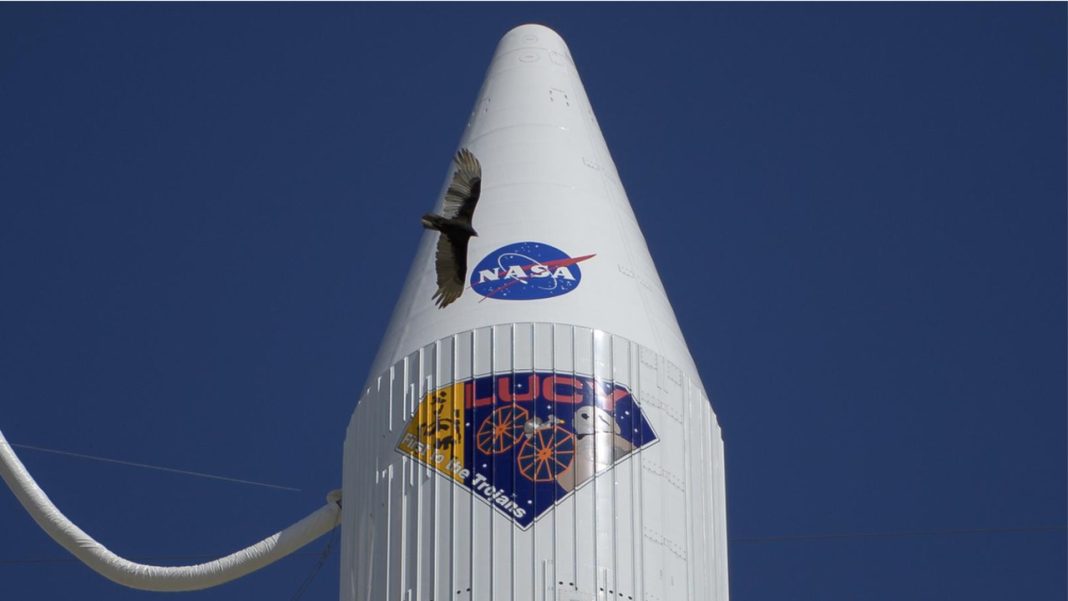

NASA’s Lucy spacecraft has reached a major milestone in its journey to explore some of the solar system’s most mysterious objects. Five years after its launch, the spacecraft has entered the region occupied by Jupiter’s Trojan asteroids, ancient space rocks that could hold clues to how the planets formed billions of years ago. Its arrival marks the beginning of a new phase in a mission designed to study multiple asteroids across Jupiter’s orbit. From its remarkable journey through space to its upcoming encounters, here are six things to know about Lucy’s latest achievement.
NASA’s Lucy Spacecraft Has Entered Jupiter’s Trojan Asteroid Region
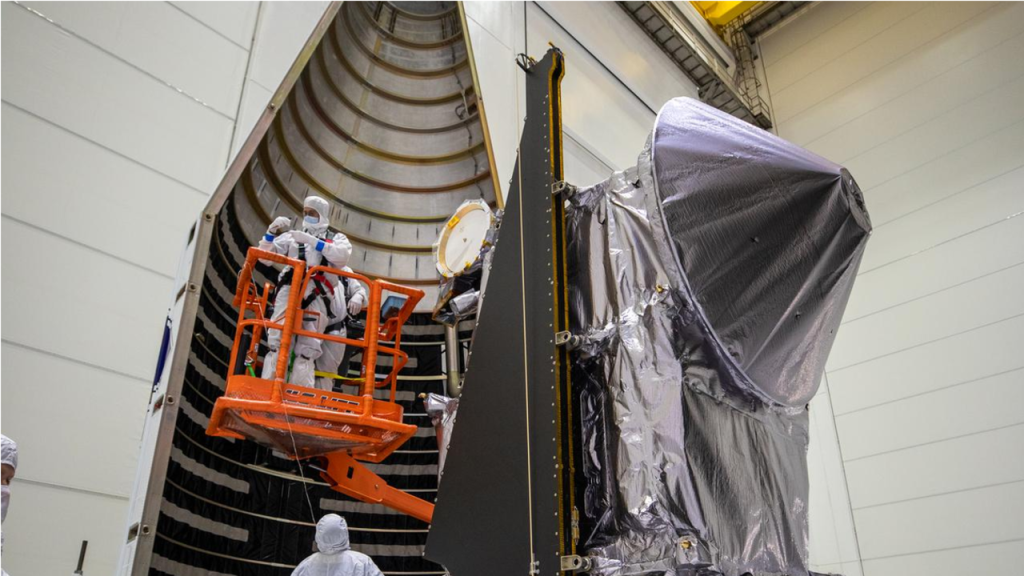
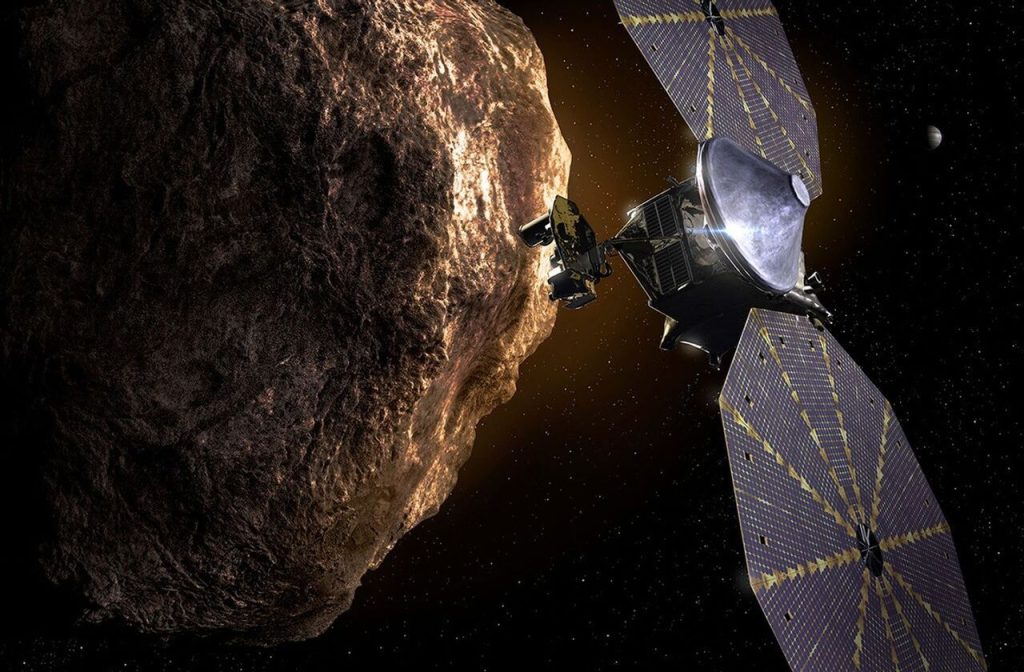
A journey that began five years ago has brought NASA’s Lucy spacecraft to a remarkable milestone in solar system exploration. Launched on October 16, 2021, Lucy has traveled more than 2.2 billion miles and reached the region occupied by Jupiter’s Trojan asteroids. These distant objects share Jupiter’s orbit around the Sun and are considered remnants of the material from which the solar system’s planets formed. Lucy is the first spacecraft specifically sent to explore this population of asteroids, making its arrival an important moment for planetary science. Engineers determined that the spacecraft had reached the region by tracking its radio signals and studying images of surrounding stars. Unlike arriving at a planet with a clearly defined boundary, entering the Trojan region is more a matter of reaching a designated area of space where these asteroids gather. The spacecraft will not begin orbiting Jupiter or landing on the asteroids. Instead, it will continue along a carefully planned route, preparing to fly past individual targets and collect observations that could help researchers understand the solar system’s earliest history.
Lucy Has Traveled More Than 2.2 Billion Miles Since Launch
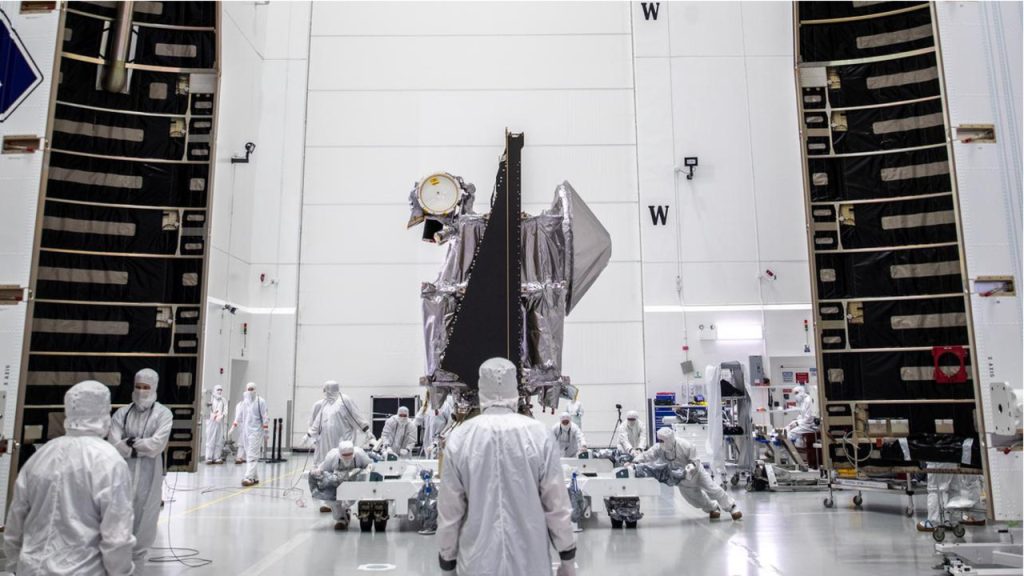
Crossing billions of miles through space requires years of careful planning, precise navigation, and reliable spacecraft systems. Since launching in October 2021, Lucy has traveled more than 2.2 billion miles on a trajectory designed to take it past multiple asteroids over its nearly 12-year mission. Engineers track its position using radio signals exchanged between the spacecraft and Earth, along with images of stars that help determine where Lucy is pointing and moving. The route is carefully designed around the gravitational forces of planets and other celestial bodies. Lucy has already used Earth’s gravity to help adjust its path, and another gravity-assist maneuver is planned for 2030. These maneuvers allow the spacecraft to change its trajectory without relying entirely on onboard fuel to make large course corrections. The long journey is necessary because the Trojan asteroids are spread across enormous distances, with neighboring objects separated by more than 6 million miles on average. Lucy must reach each target at the right moment and speed to gather useful data during a brief flyby. The mission’s progress demonstrates how spacecraft can explore distant regions without needing to stop and orbit every object they study.
Jupiter’s Trojan Asteroids Travel in Two Vast Groups
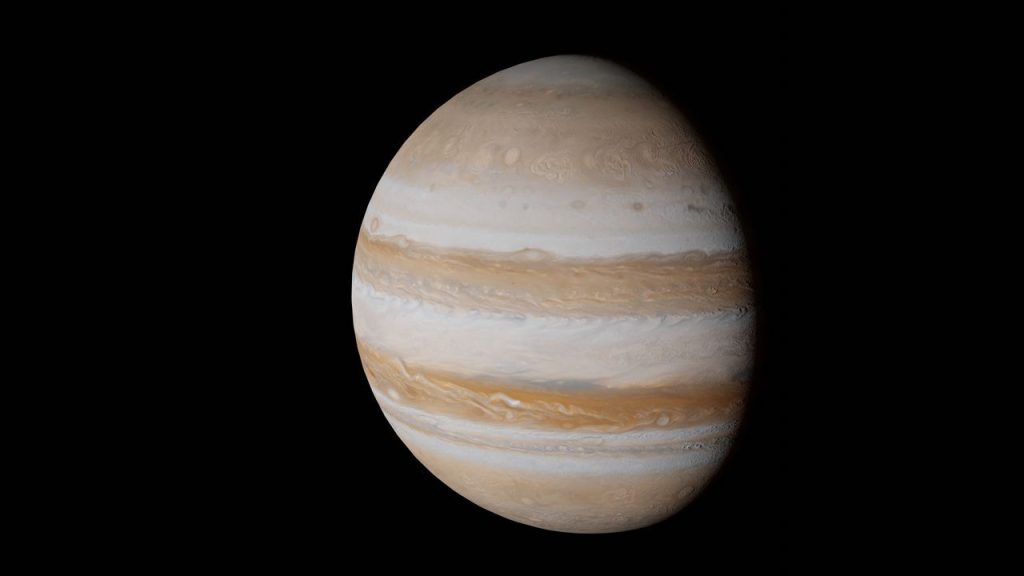
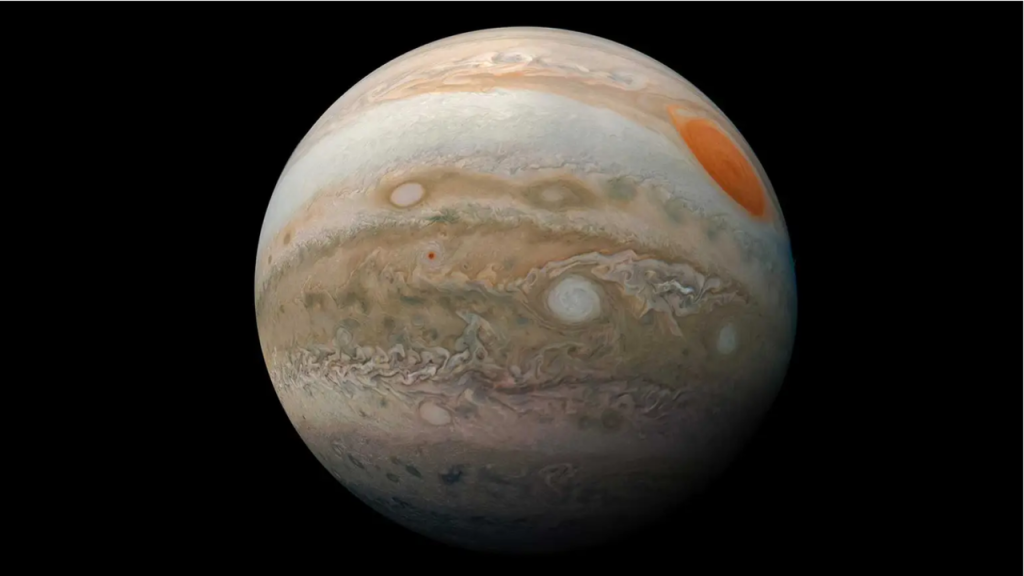
Jupiter’s Trojan asteroids are not concentrated in a single belt or gathered close to the planet itself. Instead, they occupy two large regions along Jupiter’s orbit around the Sun. One group travels ahead of Jupiter near a location known as Lagrange point 4, while the other follows behind near Lagrange point 5. These regions are associated with gravitational conditions created by the Sun and Jupiter that help the asteroids remain in relatively stable positions as they orbit the Sun. The Trojans are still extremely far from Jupiter, averaging about 484 million miles from the giant planet, roughly the same distance as Jupiter’s own distance from the Sun. Although the groups are often described as swarms, the asteroids are widely separated rather than packed tightly together. That distance creates a challenge for Lucy’s navigation team, which must carefully plan each encounter. The spacecraft will first study asteroids in the leading group before returning to Earth’s vicinity for a final gravity assist and heading toward the trailing group. By comparing objects from both regions, scientists hope to discover how their compositions, sizes, and surfaces differ, offering clues about where these ancient bodies formed and how they reached their present locations.
Lucy’s First Trojan Asteroid Encounter Is Scheduled for August 2027
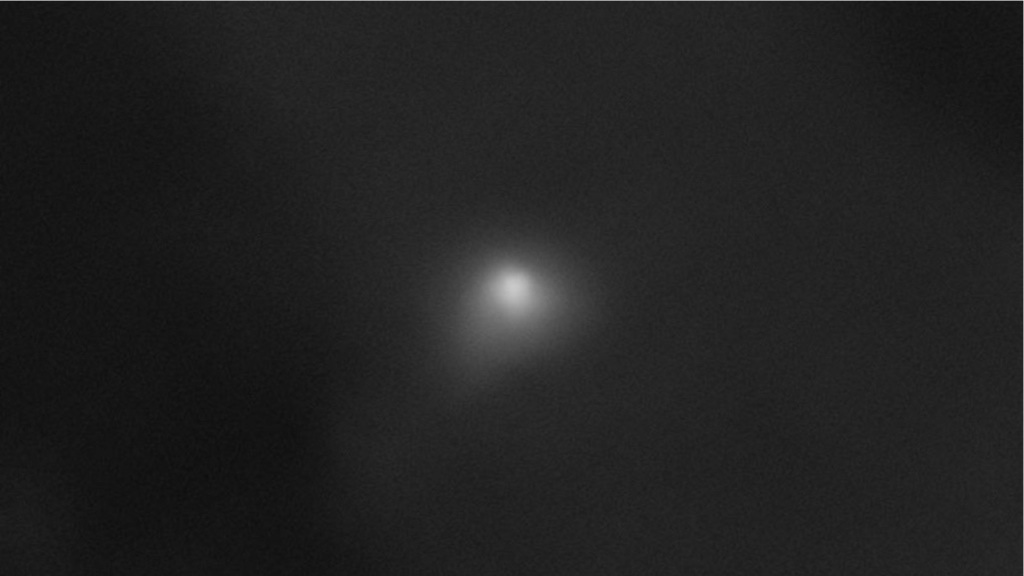
Reaching the Trojan asteroid region is only the beginning of Lucy’s most anticipated work. Its first planned encounter with a Trojan asteroid is scheduled for August 11, 2027, when the spacecraft will fly past Eurybates. From far away, the asteroid appears as a tiny point of light against the background of stars, so scientists must rely on careful observations and navigation calculations to prepare for the meeting. Lucy will not land on Eurybates or enter orbit around it. Instead, it will pass close enough to capture detailed images and gather measurements during a limited observation window. The spacecraft is then scheduled to visit Polymele in September 2027, Leucus in April 2028, and Orus in November 2028. These targets offer scientists a range of asteroids to compare, helping them investigate differences in appearance, composition, and physical structure. The team is already refining encounter plans and testing cameras so the spacecraft can make the most of each brief flyby. Because Lucy will be moving rapidly past its targets, every instrument observation must be timed carefully. The first encounter will be an important test of the mission’s preparations before Lucy continues to the remaining asteroids in the leading Trojan group.
The Mission Could Reveal How the Solar System Formed
The Trojan asteroids may preserve clues from a period when the planets were still taking shape, more than 4 billion years ago. Scientists believe these objects contain primitive material left over from the early solar system, although their exact origins remain an active area of research. Some may have formed in regions far from their current locations before being moved into stable orbits by the changing gravitational interactions of the giant planets. Studying them up close could help researchers test models of how Jupiter, Saturn, Uranus, and Neptune formed and migrated into their present arrangement. Lucy will examine several asteroids rather than focusing on a single object, allowing scientists to compare their surfaces, shapes, colors, and compositions. These differences may reveal whether the asteroids formed in similar environments or came from different parts of the early solar system. The mission is especially valuable because no previous spacecraft has conducted a dedicated exploration of the Jupiter Trojan population. Observations from Lucy could help scientists refine their understanding of the materials that built the outer planets and the events that shaped the solar system. The spacecraft’s findings will not answer every question about planetary formation, but they could provide important evidence for explaining how the system evolved into the arrangement seen today.
Lucy Is Built to Operate in Colder, Darker Regions of Space
As Lucy travels farther from the Sun, its environment becomes colder and sunlight grows weaker, creating additional demands on the spacecraft’s power and temperature systems. The Trojan asteroid region lies more than five times farther from the Sun than Earth does, so Lucy receives considerably less solar energy than a spacecraft operating near our planet. Its large solar arrays are designed to generate electricity even at these greater distances, while the spacecraft’s systems are built to manage the colder conditions. NASA reported in its October 2026 update that Lucy and its scientific instruments were continuing to operate as expected. The team is now preparing for the first close asteroid encounter, including testing the cameras under lighting conditions similar to those expected during the flybys. Lucy will need to collect observations while passing each asteroid at high speed, leaving only a few hours for detailed study. After visiting several asteroids in the leading Trojan group, the spacecraft will return to Earth’s vicinity in 2030 for a third and final gravity assist. That maneuver will send it toward the trailing Trojan group, where it is scheduled to study the binary pair Patroclus and Menoetius in March 2033. The extended mission will allow Lucy to investigate a diverse collection of ancient objects across both regions.