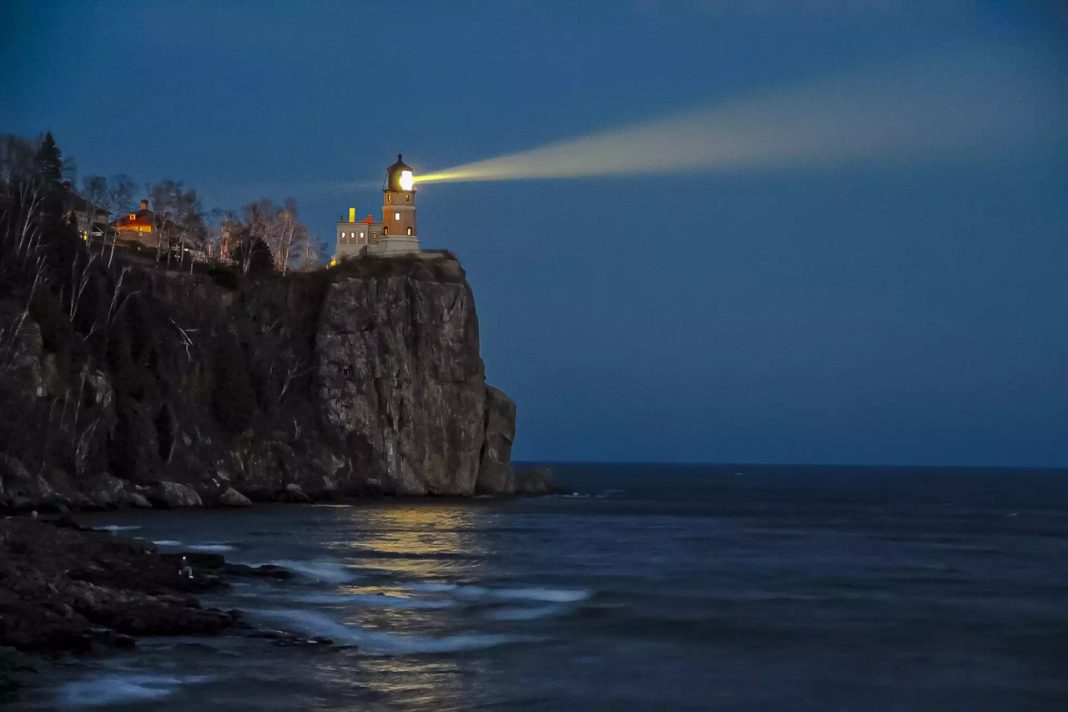

Each November 10, Split Rock Lighthouse’s beacon shines over Lake Superior in memory of the Edmund Fitzgerald’s crew and others lost on the Great Lakes. The ceremony connects a working lighthouse’s history with a remembrance that began in 1985 and continues on Minnesota’s North Shore.
The November 10 Lighting Remembers the Edmund Fitzgerald
Each November 10, Split Rock Lighthouse turns its beacon on as part of a memorial to the SS Edmund Fitzgerald. The date marks the anniversary of the freighter’s loss on Lake Superior in 1975. The ceremony brings people to the North Shore to remember the ship and the people who never returned home. In 2026, the memorial is scheduled for Tuesday, November 10. The lighthouse site opens at 10 a.m., with the ceremony at 4:15 p.m. After the ceremony, the beacon will be lit and the tower will reopen for visitors until 6 p.m. The lighthouse also plans to stream the event for people who cannot attend in person.
The Freighter and Its 29 Crew Members Were Lost in 1975
The Edmund Fitzgerald was a large Great Lakes freighter carrying iron ore pellets when it went down during a severe storm on November 10, 1975. The ship and all 29 crew members were lost. The wreck became one of the best-known tragedies in Great Lakes shipping history, and the event still carries a deep meaning for people connected to the region’s maritime communities. The annual gathering at Split Rock keeps the crew’s names at the center of the remembrance. Visitors can also learn about the ship’s final voyage at the site, where the day includes a film and guided tours about the Fitzgerald. The lighthouse’s setting above Lake Superior offers a direct connection to the waters where the disaster took place.
The Ceremony Reads the Crew’s Names and Includes the Naval Hymn
The memorial ceremony gives time to each crew member by reading all 29 names aloud. The 2026 program is scheduled to begin at 4:15 p.m., when the lighthouse temporarily closes for the remembrance. A ship’s bell tolls as the names are read, and the Naval Hymn is included in the ceremony. These elements make the gathering a moment of reflection rather than simply a lighthouse lighting. Afterward, the beacon is lit in the crew’s honor. The lighthouse tower is expected to reopen for visitors until 6 p.m. The grounds and trails are unlit, and November weather along the shore can change quickly, so attendees should plan for darkness and dress warmly.
The Memorial Also Honors Others Lost on the Great Lakes

The Edmund Fitzgerald is at the heart of the November 10 ceremony, but the memorial reaches beyond one ship. The Minnesota Historical Society describes the gathering as a time to remember all lives lost on the Great Lakes. For generations, these waters have carried commercial vessels, fishing boats, and passenger ships, while storms, cold, and rough conditions have made navigation dangerous. The beacon lighting offers a way to honor those losses together. The ship’s bell, crew names, and hymn focus attention on the Fitzgerald, while the wider remembrance recognizes that many other people and vessels have also been lost. That broader purpose is part of why the event is called “A Great Lakes Memorial.”
The Beacon Lighting Tradition Began in 1985
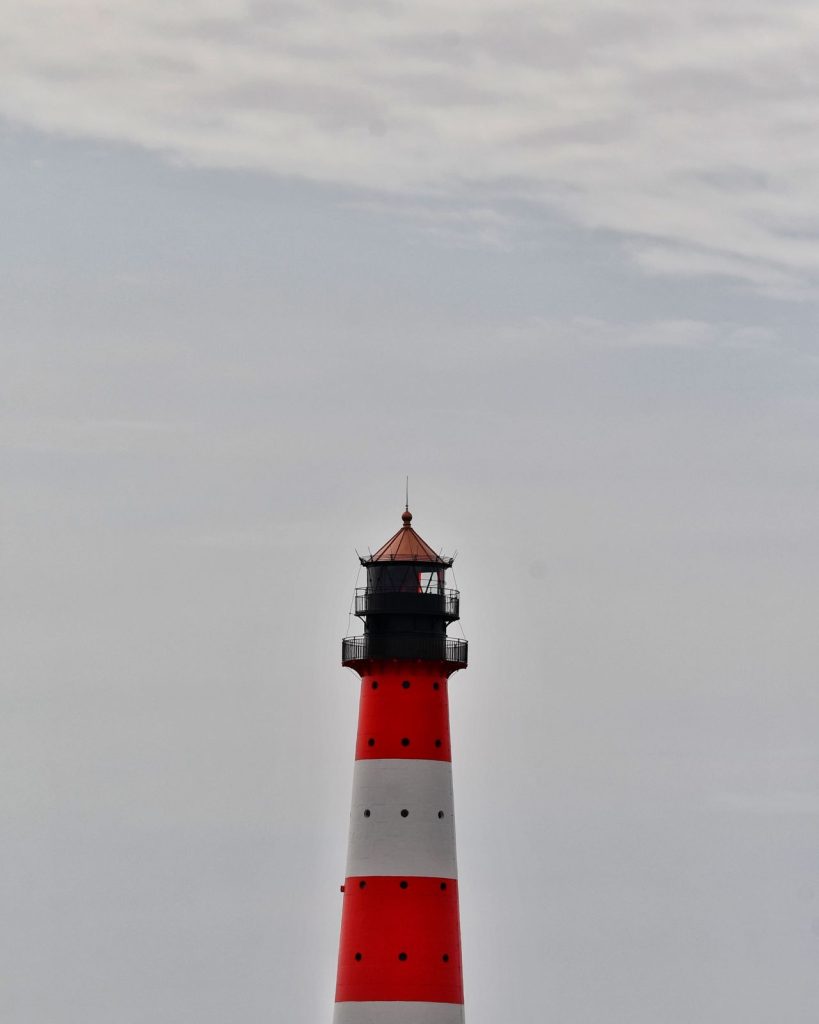
The November memorial lighting began in 1985, ten years after the Edmund Fitzgerald sank. Lee Radzak, then Split Rock Lighthouse’s site manager, decided to light the beacon in memory of the ship’s crew. What started as a personal gesture grew into an annual gathering that has continued for more than four decades. The lighthouse had already been decommissioned by the Coast Guard in 1969, so the beacon was no longer serving its original role as a working navigation aid. Its light returned for a different purpose: remembrance. Today, the ceremony brings together visitors, historians, and people with ties to Great Lakes shipping to mark the anniversary and reflect on lives lost.
The Lighthouse’s Original Beacon Guided Ships From 1910 to 1969
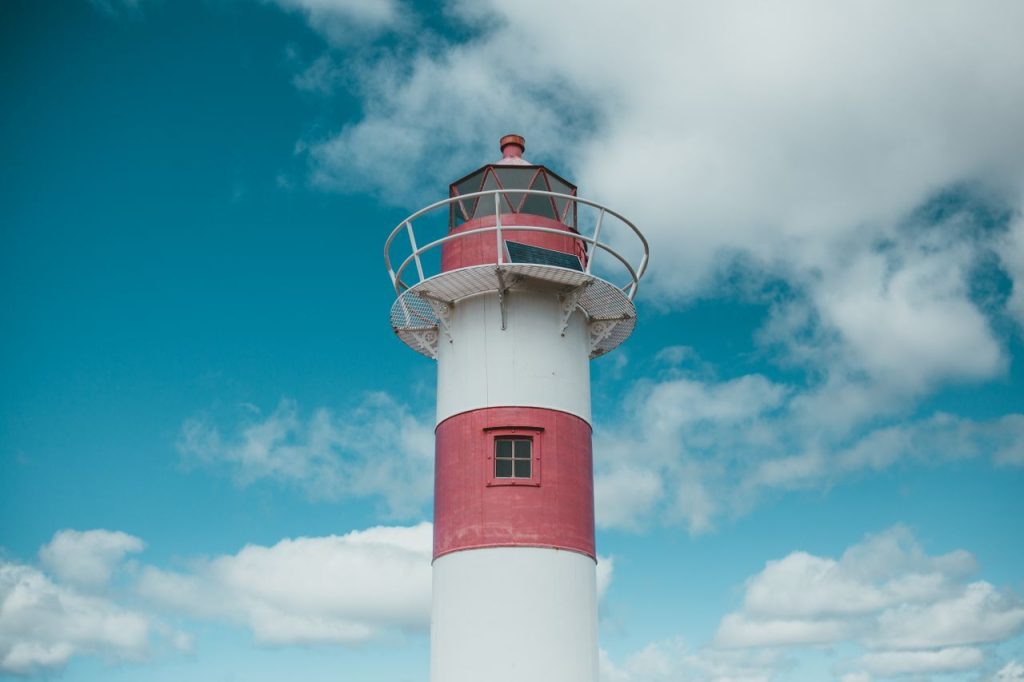
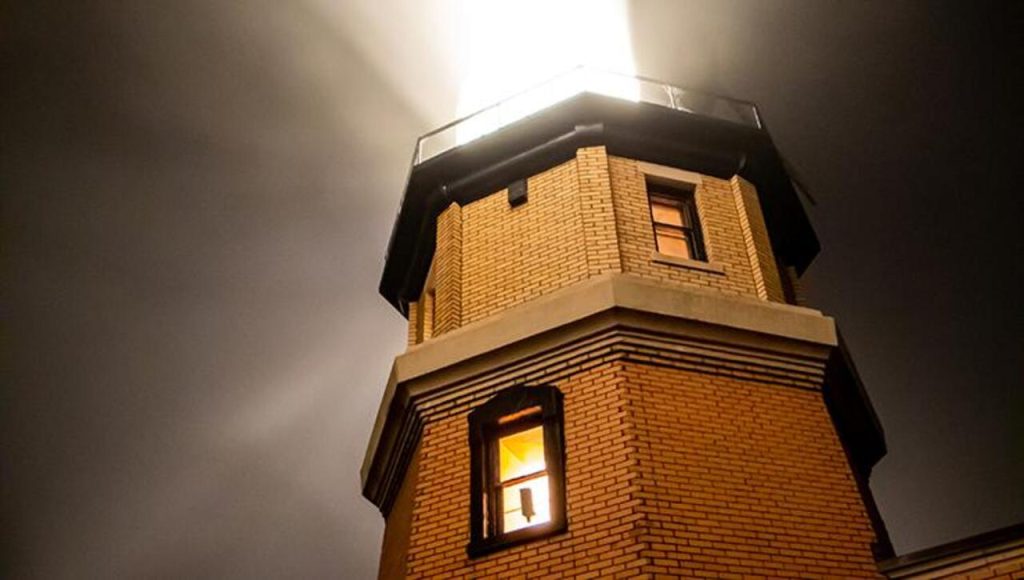
Split Rock Lighthouse was built to help guide vessels along a rugged stretch of Lake Superior’s North Shore. Its beacon operated from 1910 until the light station was decommissioned in 1969. The light flashed once every ten seconds and had an official range of 22 miles. At its center is a large Fresnel lens, made of precisely cut glass prisms that concentrate light into a strong beam. Although the beacon no longer serves as an active navigation aid, it remains in working condition and is lit for special occasions, including the November memorial. Seeing it shine again recalls the lighthouse’s original purpose while giving the light a new meaning as a symbol of remembrance.