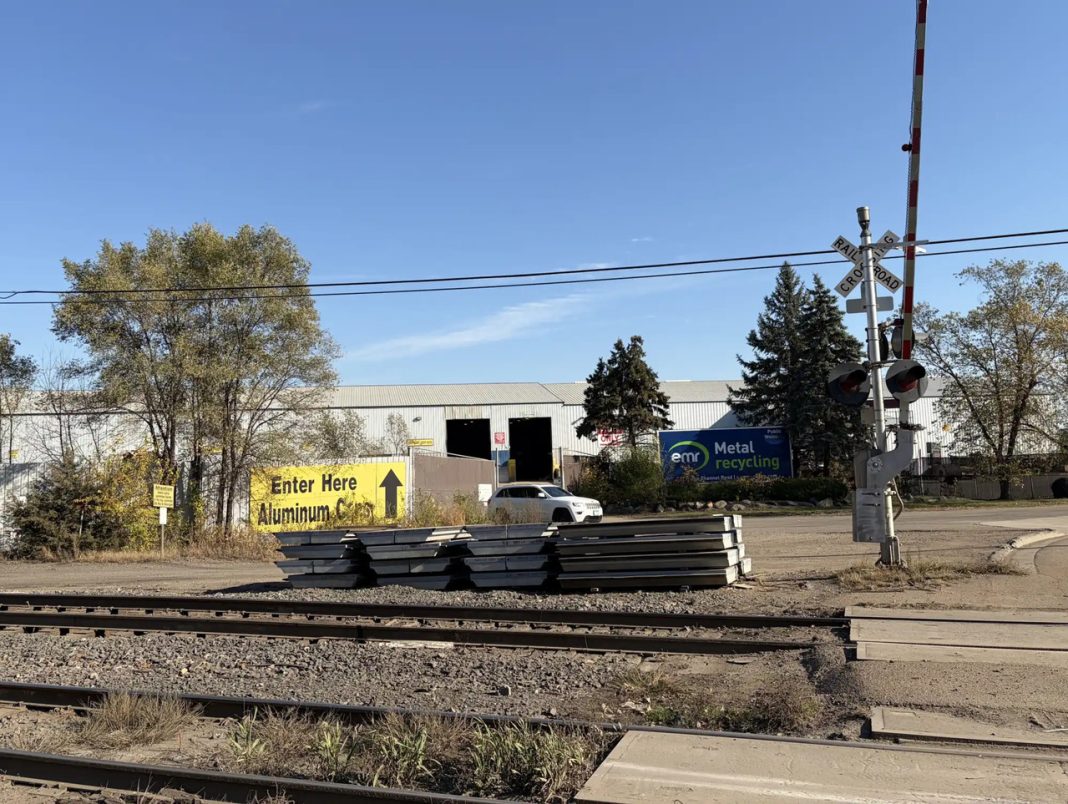

For residents of St. Paul’s Southport neighborhood, dust pollution has become a growing concern that reaches into their homes, affects outdoor activities and raises questions about public health. Air quality monitoring has documented recurring pollution problems, while families have reported respiratory issues and frustration over the lack of lasting solutions. Now, city officials are considering a local ordinance that could require industrial businesses to take stronger steps to control dust. Several important questions remain about the pollution’s sources, enforcement and what it will take to give residents cleaner air.
Residents Say Industrial Dust Has Made Everyday Life in Southport Difficult

For residents of Southport, a neighborhood on St. Paul’s West Side, dust pollution has become a persistent concern that affects everyday activities. People living near the area’s industrial facilities describe dust blowing from unpaved lots and roads, coating vehicles shortly after they have been cleaned and making the air feel unpleasant. Ron Huy, who lives near a metal recycling facility, says he sometimes adjusts his daily routine to avoid walking his dogs when the facility is operating. He has also reported skin irritation that he believes is connected to airborne fiberglass. Dust is not the only concern. Residents say diesel fumes from idling trains can linger around their homes, adding to their frustration with the area’s air quality. The neighborhood sits between a railroad, a highway and industrial properties, placing homes close to several potential pollution sources. Residents have increasingly called for action from city officials, arguing that they should not have to leave their neighborhood to find comfortable outdoor spaces. Their concerns have helped push St. Paul leaders to consider stronger local rules requiring businesses to control dust.
Air Quality Monitoring Has Documented Repeated Pollution Problems Since 2020
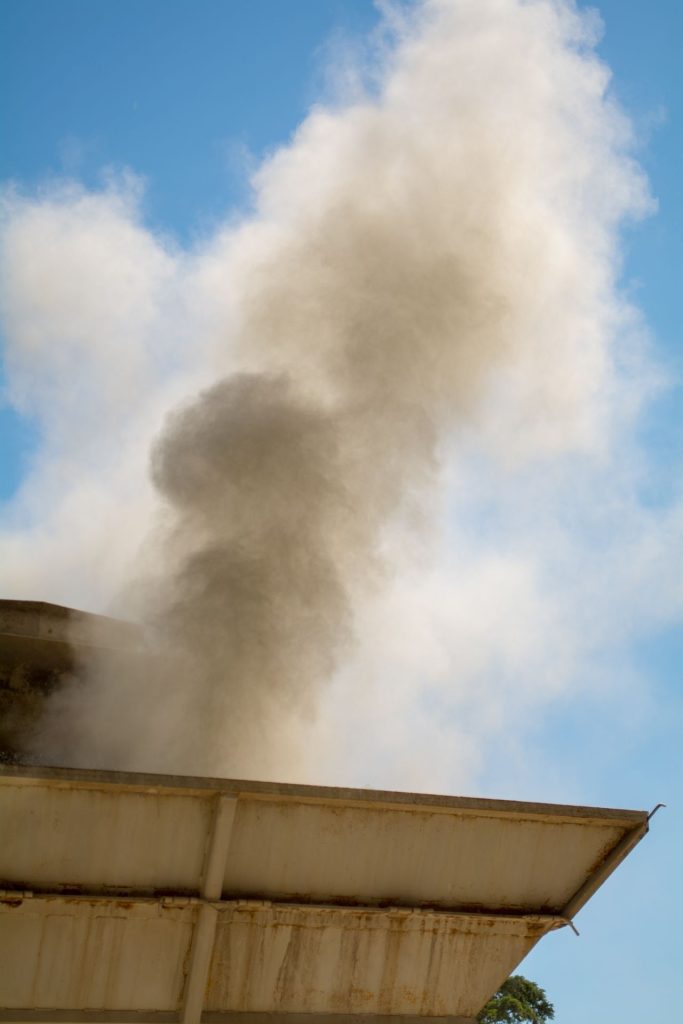
Air quality monitoring supports Southport’s dust concerns by identifying pollution levels above established benchmarks. The Minnesota Pollution Control Agency installed an air quality monitor on the property of Our Lady of Guadalupe Church in 2020 to measure pollution in the neighborhood. According to the agency’s monitoring results, pollution exceeded the secondary air quality standard every year since monitoring began. In 2023, readings also exceeded the primary standard, which is designed to protect public health. The two standards serve different purposes: the primary standard focuses on health protection, while the secondary standard addresses effects such as reduced visibility and damage to buildings and other property. These findings provide evidence of a recurring air quality problem, although they do not establish that every reading came from the same source or that a particular facility caused the pollution. Identifying the source matters because the neighborhood contains several industrial operations, roadways and rail lines that could contribute to airborne pollutants. The MPCA has said it plans to collect additional information using a mobile air monitor in the area. More detailed monitoring could help officials better understand pollution patterns and determine what steps are needed to address them.
Families Report Breathing Problems and Worry About Their Children’s Health

The effects of Southport’s air quality concerns are especially troubling for parents whose children already struggle with respiratory symptoms. Samantha Sanchez, a mother of two, told MPR News that her youngest child developed breathing problems at five months old. His coughing worsened over time, leading to emergency room visits and treatment with a nebulizer several times a day. Sanchez believes neighborhood pollution may be contributing to his difficulties and says she is cautious about allowing her children to play outdoors. Other residents have also reported asthma and respiratory problems that they associate with the area’s air quality. Sanchez has pointed to health data indicating that asthma hospitalizations are more common in the broader ZIP code than the Twin Cities metropolitan average. However, these reports and statistics do not prove that dust from a particular industrial facility caused an individual’s illness. Establishing that connection would require more detailed medical and environmental evidence. Even so, the combination of documented pollution readings and residents’ health concerns has increased pressure on local officials to act. Parents argue that children should be able to play outside without families constantly worrying about the air they breathe.
St. Paul Officials Are Considering a Local Ordinance to Control Industrial Dust

A proposed city ordinance could give St. Paul a more direct role in addressing the dust pollution that residents say has persisted for years. City Council President Rebecca Noecker has been working with residents, advocates and the city attorney on a proposal that would require industrial businesses to take steps to prevent dust from spreading beyond their properties. Noecker hopes to introduce an ordinance before the end of 2026. The proposal follows meetings with Southport residents and a presentation to the City Council by community advocates, including members of the West Side Community Organization and the Minnesota Center for Environmental Advocacy. Under the approach being considered, the city’s Department of Safety and Inspections could be responsible for enforcement, with potential penalties including fines or action involving business licenses. The idea is to create a practical way to hold businesses accountable when dust escapes into nearby residential areas. The state already has a rule requiring reasonable precautions to prevent fugitive dust from leaving a property, but residents and city officials have questioned how effectively existing requirements can be enforced. A local ordinance could provide another route for responding to complaints, although its final language, scope and enforcement procedures still need to be established.
Detroit’s Dust-Control Ordinance Could Offer St. Paul a Useful Model

St. Paul residents and environmental advocates are looking beyond Minnesota for ideas that could help address Southport’s pollution problems. One proposal is to model a local ordinance on rules adopted by Detroit in 2024. Detroit’s approach requires industrial businesses near residential areas to develop plans for controlling dust and preventing it from spreading into surrounding neighborhoods. Advocates believe a similar framework could give St. Paul a clearer way to require preventive measures rather than relying solely on complaints after dust has already escaped. The proposal could also establish more specific expectations for businesses operating near homes, making it easier for residents and regulators to understand what companies are required to do. However, the details matter. St. Paul’s ordinance would need to account for the city’s existing rules, the state’s fugitive dust requirements and the practical challenges of monitoring multiple industrial properties. Some business representatives have expressed concern about adding another layer of regulation before the proposed language is available for review. They argue that officials should first determine whether existing state rules can be improved or enforced more effectively. The debate is therefore not simply about whether dust should be controlled, but about which rules will work best and how compliance can be verified.