
Amelia Earhart vanished over the Pacific Ocean in 1937, leaving behind one of aviation history’s greatest mysteries. Nearly nine decades later, researchers are investigating a mysterious object near Nikumaroro, a remote Pacific atoll that has long been linked to theories about her disappearance. Historical photographs, unusual satellite imagery and the possibility of submerged aircraft wreckage have renewed interest in the search. Here are six clues behind the latest expedition and what they could reveal about Earhart’s final flight.
A Mysterious Object Spotted in Satellite Images
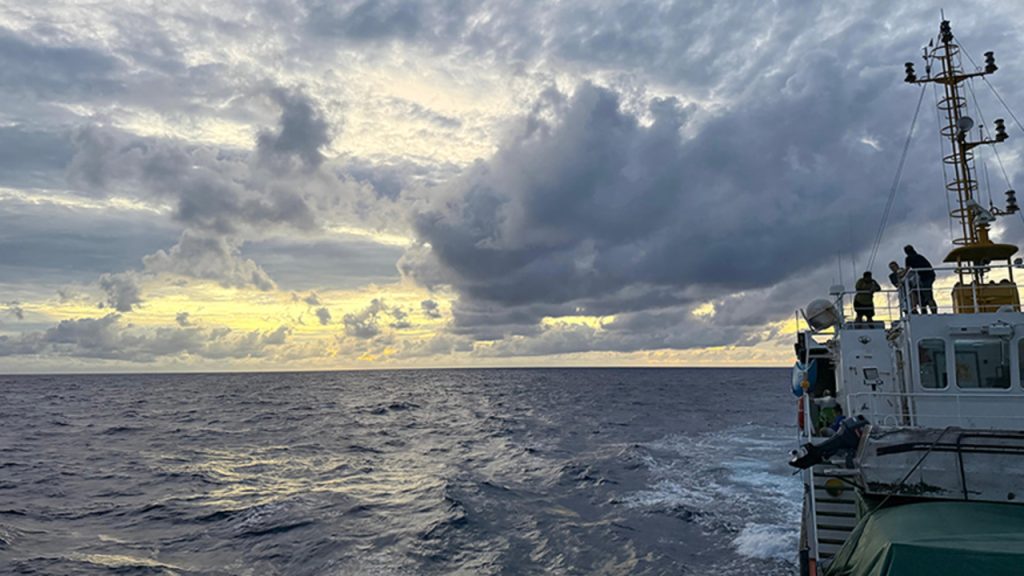
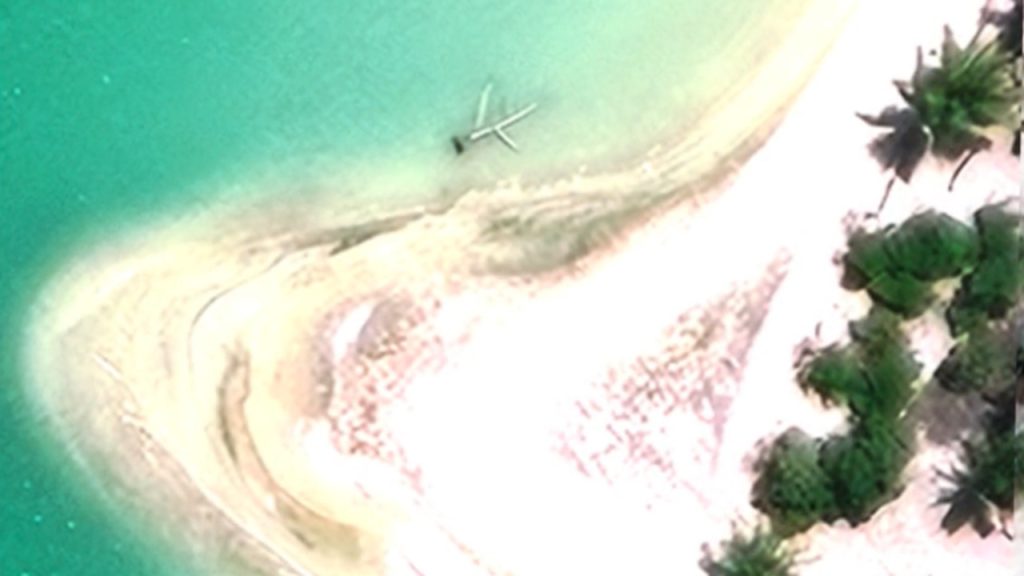
Sometimes, a decades-old mystery gets a fresh lead from an unexpected place. In this case, researchers are investigating an unusual object spotted in satellite imagery of Nikumaroro, a remote atoll in the Pacific Ocean. The object, now known as the Taraia Object, first caught the attention of researcher Michael Ashmore in 2020 when he examined satellite images of the island. Its position in a shallow lagoon and its unusual outline raised an intriguing question: Could it be part of Amelia Earhart’s missing Lockheed Electra 10-E aircraft? The expedition team, led by Richard Pettigrew of the Archaeological Legacy Institute with support from Purdue University and the Purdue Research Foundation, has traveled to the island to investigate the possibility. The object has not been confirmed as aircraft wreckage, and researchers must establish what it actually is through on-site examination. Still, its discovery has given investigators a specific target to study in their latest attempt to solve one of aviation history’s most enduring mysteries.
A Multi-Branched Shape That Resembles an Aircraft
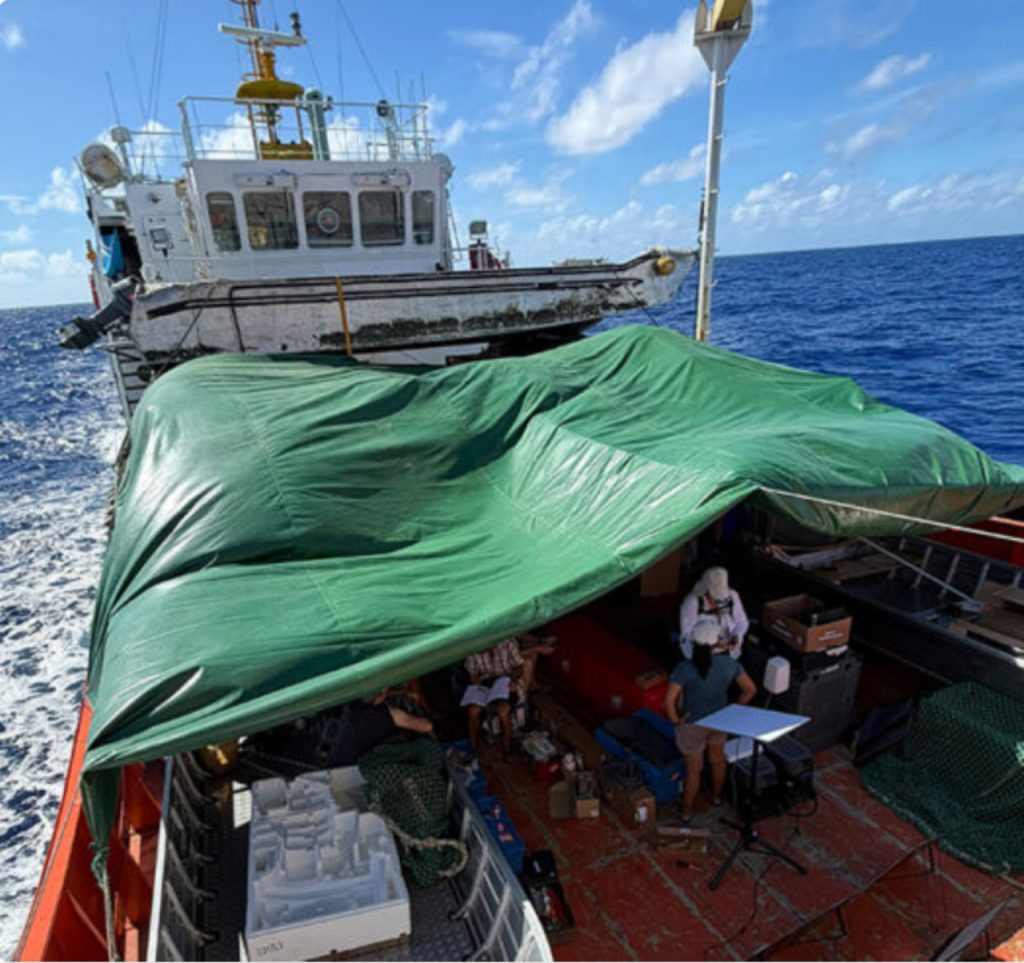
The outline of the Taraia Object is one of the most intriguing parts of the investigation. Researchers involved in the expedition believe its multi-branched shape could resemble the fuselage and wings of an aircraft, potentially offering a clue to the fate of Earhart’s plane. However, appearances alone cannot establish the object’s identity. Ric Gillespie, a veteran Earhart investigator and co-founder of The International Group for Historic Aircraft Recovery, has challenged the aircraft interpretation, arguing that the shape is actually a fallen pandanus tree. He points to the possibility that its visible branches and root ball account for the unusual outline. The competing explanations make physical examination essential. The expedition team plans to map the site, use specialized detection equipment and examine the object beneath the lagoon’s sediment. These methods could help establish its dimensions, composition and orientation. Until those findings are available, the apparent resemblance to an aircraft remains an intriguing lead rather than proof that Earhart’s Electra has been found.
Historical Aerial Photographs Dating Back to 1938
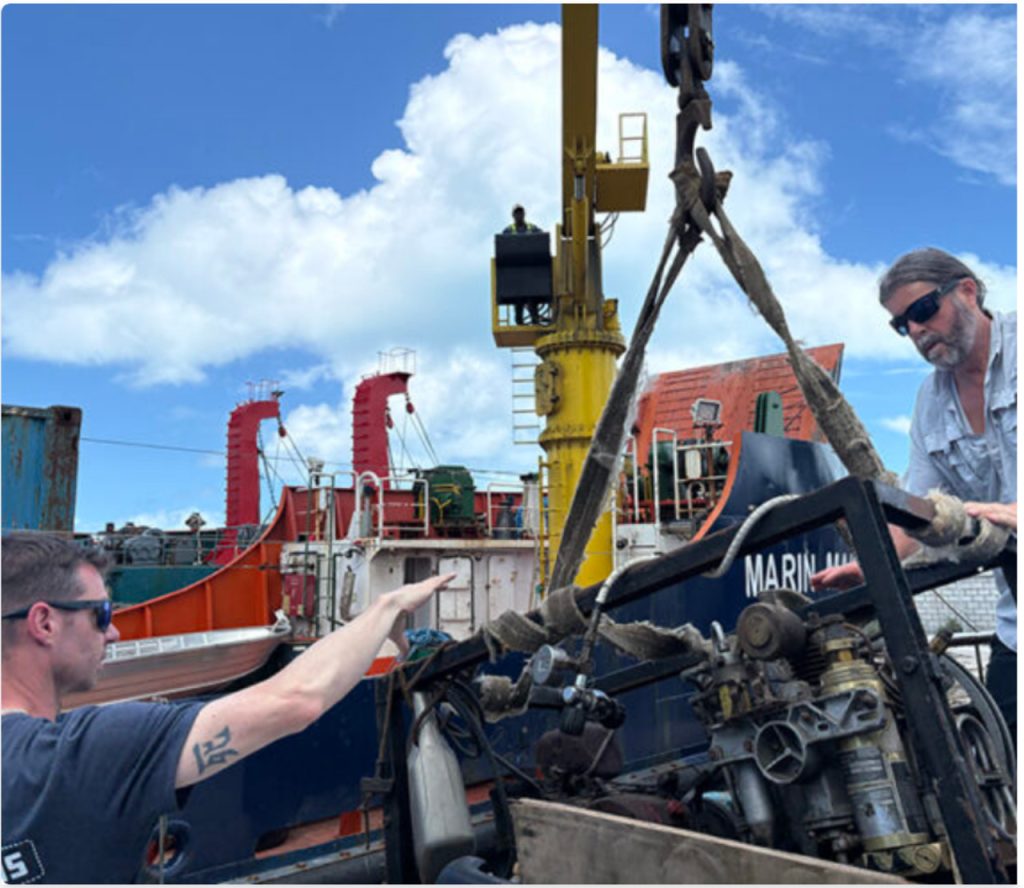
A clue that appears in historical photographs can give researchers something valuable: a way to investigate whether an object has remained in the same location over many decades. The team searching for Earhart’s aircraft says the Taraia Object can be identified not only in satellite imagery from 2020 but also in aerial photographs dating back to 1938, just a year after the aviator disappeared. That timeline makes the images particularly interesting because they could help researchers understand how long the object has been present in the lagoon. If the feature can be consistently identified across photographs taken at different times, investigators may be able to compare its position and shape with the surrounding landscape. However, the photographs do not independently establish that the object is an aircraft. Differences in image quality, viewing angles, water conditions and the appearance of natural debris can complicate comparisons. The expedition’s physical inspection is therefore an important next step. By combining historical imagery with measurements and underwater observations, researchers hope to determine whether the feature is consistent with aircraft wreckage or has a more ordinary explanation.
The Theory That Earhart Crash-Landed at Nikumaroro
The search for the Taraia Object is closely tied to a long-standing theory about what happened to Amelia Earhart and her navigator, Fred Noonan, in July 1937. Earhart was attempting to fly around the world when the pair disappeared during a flight from Lae, in present-day Papua New Guinea, toward Howland Island. Nikumaroro, then known as Gardner Island, lies roughly 400 miles south of Howland Island and has become a focus of the theory that the aircraft failed to reach its intended destination. According to the castaway hypothesis, Earhart and Noonan may have landed on or near the island after failing to locate Howland Island and then survived there for some time. Researchers have cited several pieces of circumstantial evidence, including artifacts found on the island, historical photographs and radio transmission records that have been examined in later investigations. However, no recovered aircraft wreckage has conclusively linked Earhart to Nikumaroro. The new expedition aims to test one specific part of the theory by examining the Taraia Object. If the object proves to be part of the Electra, it would provide powerful evidence for the hypothesis. If it does not, the broader mystery of Earhart’s disappearance will remain unresolved.
The Possibility of Submerged Aircraft Wreckage in the Lagoon
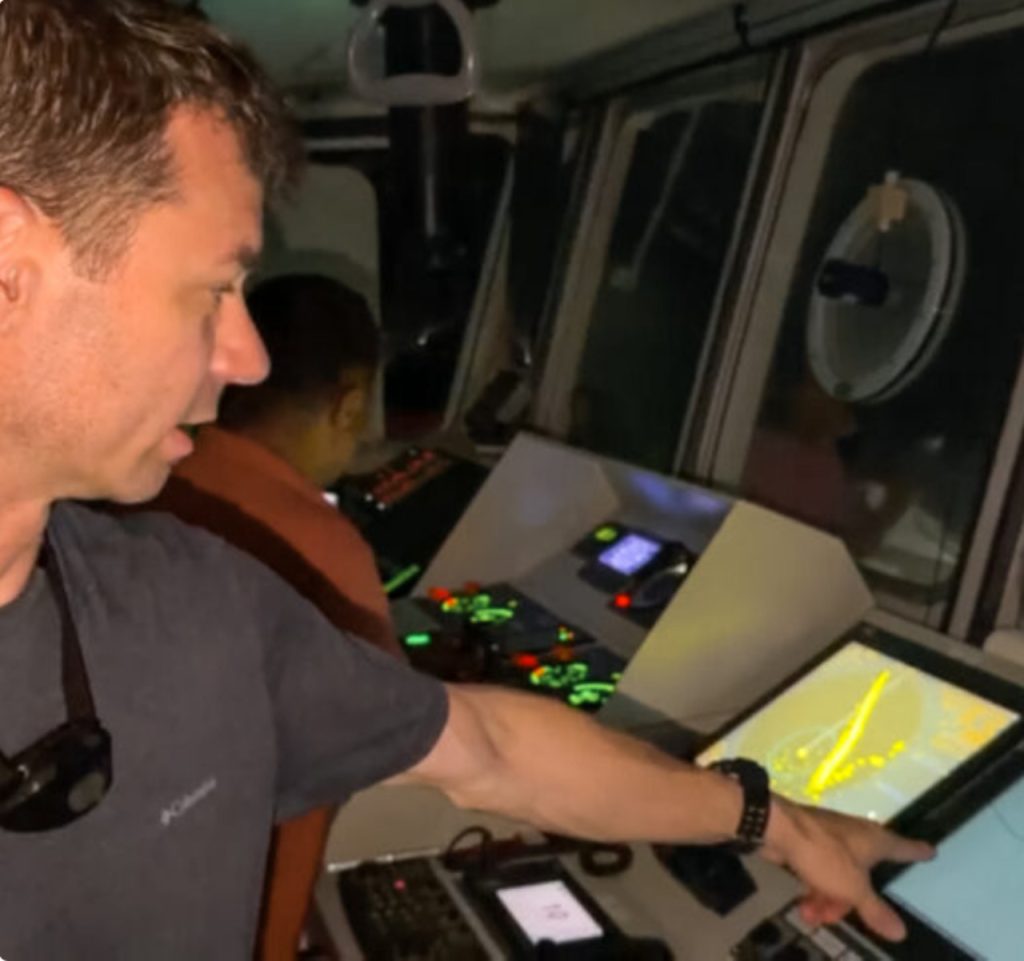
Finding a possible aircraft outline in a lagoon is only the beginning of the work. Researchers must determine what lies beneath the water and sediment before drawing any conclusions about its identity. The Taraia Object is believed to be close to the lagoon’s shoreline, potentially under as little as five feet of water, depending on the tide, with an additional layer of sediment covering it. The expedition plans to approach the site methodically, first documenting the area and establishing a grid for the investigation. A magnetometer will be used to detect ferrous metals, including steel components and cabling that could remain even though the Lockheed Electra was largely constructed from aluminum. The team also plans to use sonar technologies to search beneath the lagoon floor, followed by a hydroprobe to investigate the object’s depth, orientation and surface composition. A water-induction dredge will then remove sediment for visual inspection. These steps could help researchers distinguish manufactured aircraft components from natural material. The work is complicated by changing tides, weather and sea conditions, which affect access to the site. Even if the object turns out to be wreckage, further analysis would be needed to establish whether it came from Earhart’s aircraft.
Amelia Earhart’s Final Flight and Last Known Radio Transmissions
The final hours of Earhart’s flight remain central to every serious attempt to explain her disappearance. On July 2, 1937, she and Noonan departed Lae on a flight toward Howland Island, a small Pacific destination that was difficult to locate across the open ocean. The journey was part of Earhart’s ambitious attempt to become the first woman to fly around the world. As the aircraft approached the region, radio communications indicated that the crew was struggling to find the island. Earhart’s final known transmissions included a report that fuel was running low and a statement giving the aircraft’s geographical line of position. The plane and its occupants were never found during the major search that followed. The prevailing official U.S. government view has been that the aircraft ran out of fuel and crashed into the ocean near Howland Island. The Nikumaroro theory offers a different possibility: Earhart and Noonan may have reached another island and landed there after failing to find their intended destination. The Taraia Object investigation could help test that alternative, but the final radio messages do not establish where the aircraft ultimately came down. Until physical evidence can be linked conclusively to the Electra, the circumstances of the disappearance remain uncertain.