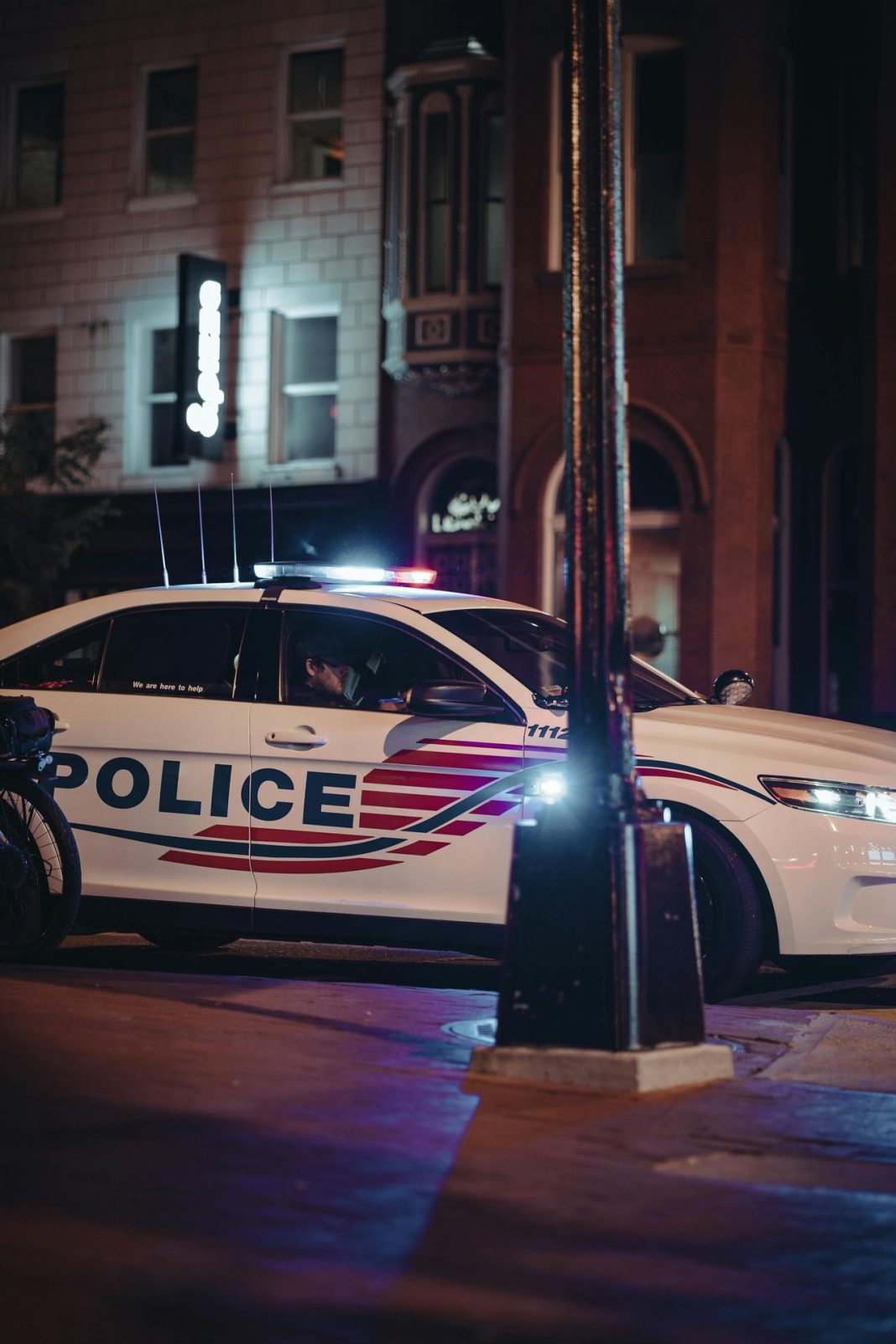

Gunfire shattered an otherwise busy stretch of south Minneapolis. What began as an arrest-warrant operation quickly turned into a barricade, an evacuation and a prolonged law-enforcement response in one of the city’s most active commercial districts.
By the end, the suspect was in custody. But the confrontation left residents, business owners and public safety officials confronting familiar questions about risk, preparation and the growing volatility of warrant service operations in Minnesota.
What happened near Nicollet and West 28th
The confrontation unfolded Tuesday, June 9, 2026, near West 28th Street and Nicollet Avenue in south Minneapolis, an area better known for restaurants, apartments and steady daytime foot traffic than for armored vehicles and crisis negotiators. According to the Hennepin County Sheriff’s Office, deputies were attempting to serve an arrest warrant when shots were fired at them. Early public updates indicated a large law-enforcement presence, road closures and an active effort to secure the scene.
Initial reporting from FOX 9 and CBS Minnesota showed how quickly the situation escalated. Authorities said deputies came under fire while trying to carry out the warrant, and the suspect then barricaded himself inside an apartment building. FOX 9 reported that by early afternoon the suspect was not yet in custody, while CBS Minnesota said the building had been evacuated and crisis negotiators were on scene as law enforcement worked to contain the threat.
CBS Minnesota identified the man named in the arrest warrant as 31-year-old Tyler Joseph O’Brien. The station also reported that the sheriff’s office said investigators could not immediately and definitively confirm that the person firing on deputies was the same individual they had been trying to arrest, a sign of how fluid and uncertain the situation remained during the standoff. Star Tribune reporting added another significant detail: Minnesota Department of Corrections Commissioner Paul Schnell said a warrant had been issued on March 5, 2026, after an alleged violation of supervised release.
What made the incident especially alarming was the setting. This was not an isolated industrial block or remote suburban cul-de-sac. It was a busy Minneapolis corridor in and around Eat Street, with nearby apartments, businesses and pedestrians. That reality forced law enforcement to balance the urgent need to contain an armed suspect with the equally pressing task of protecting civilians in a dense urban environment.
How the standoff grew into a major tactical response
As the hours passed, the response broadened from an arrest attempt into a full-scale tactical operation. Authorities closed roads, pushed the public away from the area and evacuated the apartment building tied to the standoff. Minneapolis police supported sheriff’s deputies at the scene, and the visible footprint of the response signaled that officials were treating the situation as both volatile and potentially prolonged.
One of the more striking details came from CBS Minnesota’s reporting that deputies used a drone to locate the suspect inside the apartment, only for the suspect to shoot the drone down. That detail underscored both the danger facing officers and the challenge of resolving the confrontation without sending personnel directly into the line of fire. CBS also reported that officers on scene feared the suspect may have had a long gun and possible explosives, concerns that would help explain the caution, perimeter control and extended negotiations.
Star Tribune coverage described flash bangs and other tactical tools being deployed over the course of the afternoon as law enforcement attempted to pressure the barricaded man to surrender. Witnesses and reporters in the area heard intermittent loud bangs as the standoff dragged on. In practical terms, that meant a major disruption not just for nearby residents but for workers, customers and transit users moving through one of south Minneapolis’ most heavily traveled corridors.
The operation also revealed the modern mix of tactics now common in urban standoffs: drones, armored vehicles, loudspeaker commands, evacuation protocols and crisis negotiation teams working alongside patrol officers and deputies. That layered approach is designed to slow events down, gather intelligence and reduce the chance of a deadly outcome. It also reflects lessons law enforcement agencies have absorbed from prior incidents in Minnesota and elsewhere, where rushing a barricaded suspect can produce catastrophic results.
At the same time, the episode showed how little information is often available in real time. Early reports confirmed shots fired, a barricaded suspect and no immediate injuries, but many basic facts remained unsettled for hours. That is typical in fast-moving critical incidents, and it often creates a tension between public demand for clarity and investigators’ need to avoid releasing unverified details.
The human toll on residents, businesses and first responders
For people living and working nearby, the standoff was not an abstract public safety event. It was a direct interruption to daily life. Residents had to leave homes or remain sheltered in uncertainty, while business owners in the Nicollet corridor faced closures, blocked access and the reality that a lunchtime commercial district had suddenly become a tactical zone.
Television footage described by CBS Minnesota captured one of the day’s most vivid moments: a woman carrying a young child leaving the building under police direction, with a dog following behind. That image distilled the civilian dimension of the crisis. Even when no one is physically injured, such incidents impose fear, confusion and lasting stress on people who did nothing more than happen to be nearby when violence erupted.
For law enforcement, the confrontation was another reminder of the dangers involved in serving warrants. Even routine planning can collapse in seconds when a suspect decides to open fire. Minnesota officers and deputies have had repeated exposure to that risk in recent years. In April 2024, two Hennepin County sheriff’s deputies were injured during a warrant operation in Minnetonka after a suspect shot first, according to the Associated Press. That event remains part of the backdrop against which every high-risk warrant service is now assessed.
The south Minneapolis incident also lands in a state still marked by broader concern over attacks on first responders. After the Burnsville killings in 2024 and other high-profile armed confrontations, the public and police leadership alike have become acutely aware that domestic calls, warrant service and apprehension efforts can turn deadly without warning. Each new standoff is therefore interpreted not only as an isolated criminal case but as part of a larger pattern of increasingly perilous field operations.
Yet the human toll extends beyond fear and tactical strain. Neighborhood trust can be affected when heavily armed responses unfold in dense residential areas. Residents often want two things at once: decisive action against armed suspects and assurance that police methods are measured, disciplined and transparent. Incidents like this one test whether agencies can deliver both under extreme pressure.
Why warrant service has become a bigger public safety flashpoint
Serving an arrest warrant can sound procedural, even routine. In practice, it is one of the most unpredictable tasks in policing. Officers must make rapid judgments about who is inside, what weapons may be present, whether children or bystanders are nearby and whether the suspect is likely to flee, surrender or fight. In an apartment building or mixed-use corridor, every one of those variables becomes more complicated.
This Minneapolis case highlights the core difficulty. Deputies were not responding to a shooting already in progress; they were trying to take a wanted person into custody. But the effort instantly became a gunfire incident, then a barricade, then an evacuation and tactical containment operation. That chain of escalation demonstrates why warrant service is increasingly treated as a specialized, intelligence-heavy function rather than a straightforward knock at the door.
Minnesota has spent years debating how such operations should be handled, especially after fatal and controversial encounters tied to warrant execution. The scrutiny intensified after the 2022 killing of Amir Locke in Minneapolis and continued through later reviews of police tactics and warrant policy. While this week’s standoff involved the Hennepin County Sheriff’s Office rather than a Minneapolis police warrant raid, the public policy questions overlap: how to protect officers, how to protect civilians and how to prevent a wanted-person operation from spiraling into mass danger.
The available reporting suggests law enforcement leaned heavily on containment rather than immediate forced entry. Evacuating the building, using a drone, bringing in negotiators and maintaining a broad perimeter all fit that model. From a tactical standpoint, such patience can reduce the risk of casualties. From a community standpoint, however, it can also extend disruption for hours and leave neighbors trapped in uncertainty as rumors spread faster than verified facts.
The case is also a reminder that supervision status matters. Star Tribune’s report that the arrest warrant followed an alleged supervised-release violation indicates the suspect was already in a post-prison monitoring framework. That detail may become central as officials examine what intelligence was available before deputies approached the location and whether the threat assessment fully captured the risk.
What comes next after the suspect’s arrest
With the suspect now in custody, the focus shifts from emergency response to investigation, charging decisions and after-action review. Authorities will need to establish precisely who fired at deputies, what weapons were present, whether explosives were actually at the scene and how the operation unfolded minute by minute. Those findings will determine not only the criminal case but also whether agencies revise any aspect of their tactical planning.
Investigators are also likely to review communication timelines closely. During prolonged standoffs, official statements often evolve as facts are confirmed, and this case was no exception. Early reports emphasized that the suspect was barricaded and that deputies had not made direct contact. Later reporting identifying the warrant target and describing the drone being shot down added important context. A full accounting will help clarify what happened and when law enforcement knew it.
For Minneapolis residents, the incident is another example of how public safety challenges can spill abruptly into everyday spaces. Nicollet Avenue is not just a map point; it is a lived neighborhood corridor where people eat lunch, wait for buses, run errands and return home from work. When a warrant service operation erupts into gunfire there, the city is reminded that even targeted enforcement actions can have sweeping ripple effects.
It also reinforces the importance of coordinated regional policing. The sheriff’s office led the operation, Minneapolis police supported it and additional specialized resources were brought to bear as the danger level rose. In a metro area where jurisdictional lines are real but operational threats are shared, that kind of interagency coordination is essential. The challenge is ensuring it remains effective without becoming so normalized that heavily militarized responses feel routine.
The broader story, then, is not only that a suspect was taken into custody. It is that another Minnesota warrant operation turned into a high-risk public confrontation, this time in the heart of south Minneapolis. The arrest ends the immediate threat, but the deeper issues remain: how to assess danger before deputies approach a door, how to protect civilians in dense neighborhoods and how to keep a necessary law-enforcement function from becoming a recurring urban crisis.