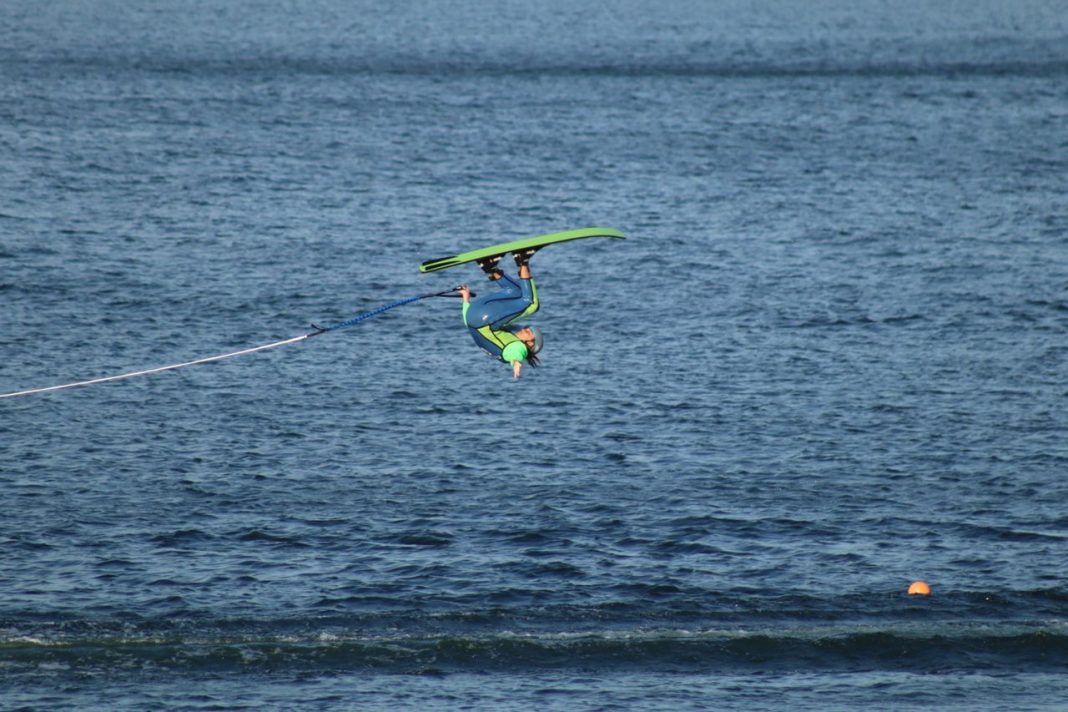

Minnesota is known for its thousands of lakes, but one of its most surprising contributions to sports history began on Lake Pepin in 1922. There, an 18-year-old named Ralph Samuelson experimented with homemade wooden skis and a motorboat, eventually creating what is widely recognized as modern water skiing. From his early struggles to his daring demonstrations, Samuelson’s story reveals how an unusual idea became a worldwide sport. Here are seven fascinating details behind water skiing’s Minnesota roots.
Water Skiing Was Invented on Lake Pepin in 1922

Minnesota’s lakes are famous for summer recreation, but one of the state’s most unusual contributions to sports history began with a teenager determined to try something new. On July 2, 1922, Ralph Wilford Samuelson successfully water-skied on Lake Pepin near Lake City, Minnesota. At just 18 years old, he experimented with ways to stand on skis while being pulled behind a boat, adapting the familiar idea of skiing on snow to the water. Lake Pepin, a naturally formed lake along the Mississippi River, provided the setting for his attempts. Samuelson’s early equipment was homemade, and his progress came through repeated experiments rather than sophisticated technology. His achievement is widely recognized as the birth of modern water skiing, a sport that would eventually spread around the world. Today, Lake City embraces this history, and the lake remains an important landmark for people interested in the origins of the sport.
Ralph Samuelson Was Just 18 When He First Skied on Water

The story of water skiing began with a young man who was barely out of his teens but already eager to test the limits of what was possible. Ralph Samuelson was 18 in the summer of 1922 and lived in Lake City, Minnesota, near Lake Pepin. He was familiar with aquaplaning, an activity in which a person rides a board while being towed behind a boat. The idea of standing upright on skis across the water captured his imagination, leading him to experiment with different equipment and body positions. His early efforts were frustrating, and he spent several days trying to get onto the water successfully. On June 28, he managed a short ride on skis after starting from an aquaplane, but he wanted to prove he could rise onto the skis with the boat’s pull alone. His breakthrough came on July 2, when he found a technique that worked. That persistence helped establish Samuelson’s place in sports history, and he is widely remembered as the father of water skiing.
Samuelson Experimented With Barrel Staves Before Building Wooden Skis
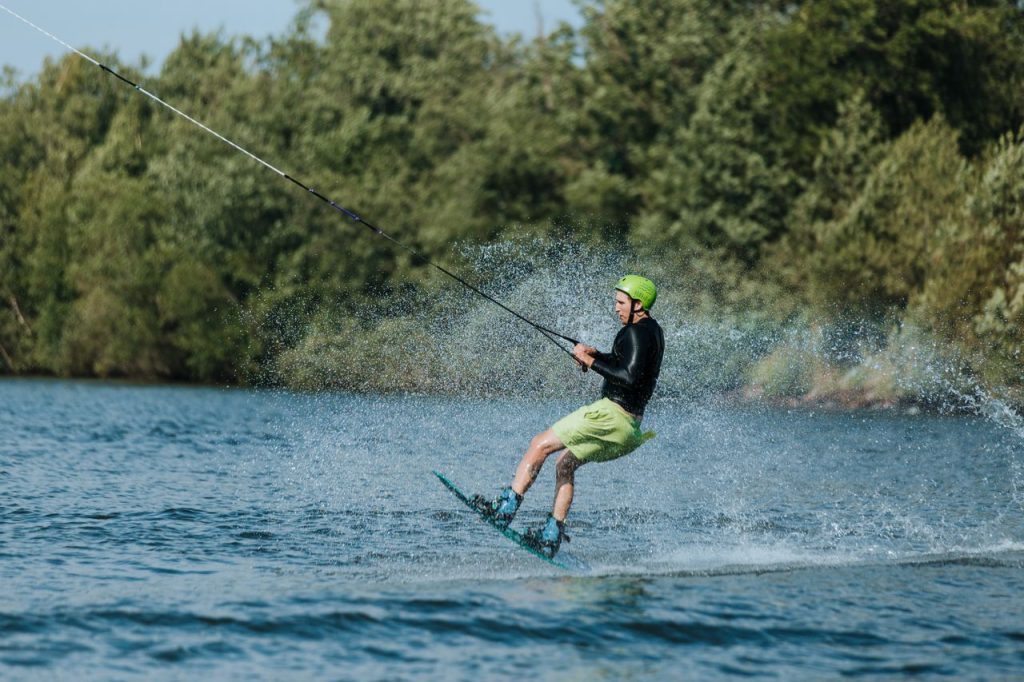
Before modern water skis became specialized pieces of sporting equipment, Samuelson had to work with whatever materials he could find. His early experiments included using barrel staves, the curved wooden strips that form the sides of a barrel. These improvised boards were not designed for skiing, so getting them to glide smoothly across the water was difficult. He also experimented with snow skis before developing a more suitable design. Eventually, Samuelson used pine boards purchased from a local lumberyard to make a pair of water skis. Historical accounts describe the boards as approximately nine feet long, with tips shaped upward to help them stay above the water. He softened and curved the wood using heat from his mother’s wash boiler and reinforced the skis with metal supports. Leather straps and other simple materials helped secure his feet. These handmade skis were a far cry from the lightweight, carefully engineered equipment used today, but they helped prove that a person could travel across the water on skis behind a powered boat.
Keeping the Ski Tips Above the Water Helped Him Succeed

Sometimes, a small adjustment makes the difference between repeated failure and a breakthrough. Samuelson discovered this while struggling to rise onto his skis behind his brother Ben’s boat on Lake Pepin. During his early attempts, he kept the skis level or allowed their tips to dip slightly into the water. This made it harder to rise and maintain balance as the boat pulled him forward. On July 2, he tried leaning backward and angling the ski tips upward instead. The change helped the skis plane across the surface rather than dig into the water. With the boat providing the necessary pull, Samuelson was finally able to rise and ski successfully. The principle remains important in water skiing today: the skier must manage body position and keep the skis angled appropriately to move across the water’s surface. Modern equipment and training have made the sport more accessible, but the basic physics behind Samuelson’s discovery still applies. His breakthrough showed that successful water skiing depended not only on the skis themselves but also on understanding how the body, equipment, and moving water work together.
Samuelson Turned Water Skiing Into a Public Spectacle
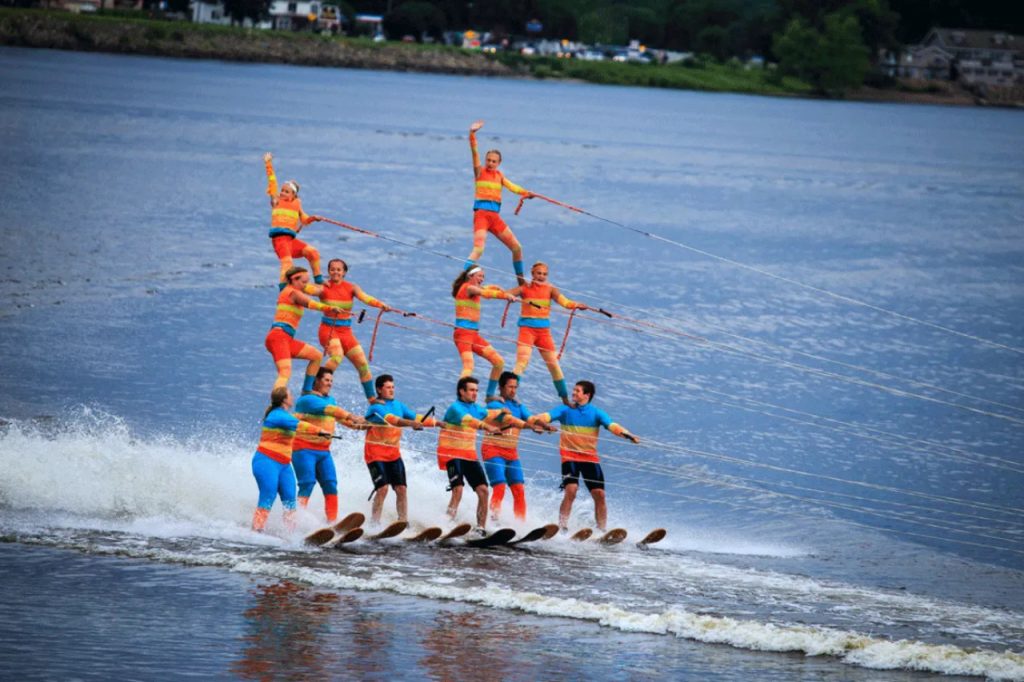
Inventing a new sport was only the beginning of Samuelson’s contribution. He also helped introduce water skiing to wider audiences by performing demonstrations and entertaining spectators. After his successful experiments on Lake Pepin, he began showing people what the unusual activity could do, attracting attention with his ability to glide across the water behind a boat. In 1925, he performed what is widely recognized as the first water-ski jump, using a homemade wooden ramp on Lake Pepin. He later traveled to other locations to demonstrate the sport and perform water-skiing shows. These public appearances helped people understand that skiing on water could be more than a curious experiment. However, Samuelson did not patent his equipment design, and he did not become wealthy from the sport’s eventual popularity. His role in its early development was recognized more widely in later years, including through his induction into the Minnesota Inventors Hall of Fame. His demonstrations helped lay the groundwork for water skiing to develop into an organized recreational and competitive activity.
He Performed Water Ski Stunts Behind a Boat and Explored Other Challenges
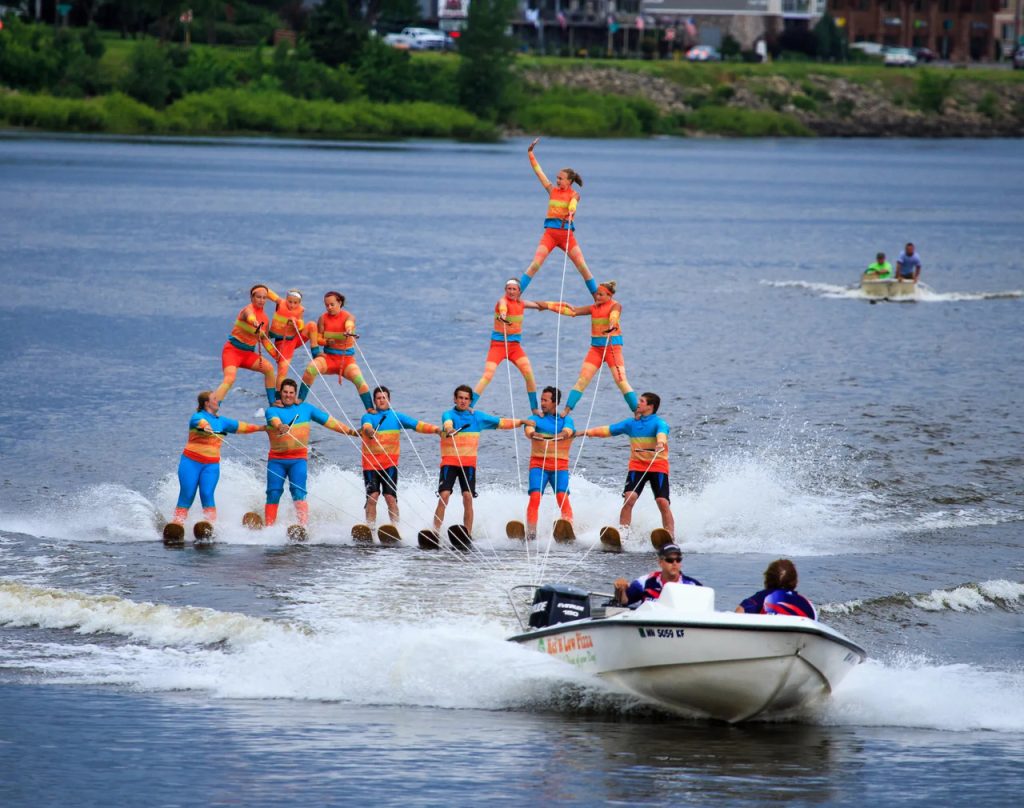
Water skiing quickly became more than simply standing on two boards while being pulled across a lake. Samuelson’s experiments and demonstrations helped establish the sport’s potential for increasingly difficult feats. In the early 1920s, he used a boat driven by his brother Ben to test different techniques and develop his balance on the water. His later performances included jumps from a wooden ramp, demonstrating that skis could be used for aerial maneuvers as well as straight-line skiing. Some historical accounts also describe Samuelson experimenting with being towed by an airplane, although details of these demonstrations vary across retellings. His documented achievements on Lake Pepin, especially his successful ride in July 1922 and his early ski jump in 1925, are central to his legacy. Over time, water skiing developed into a sport with distinct disciplines, including slalom skiing, trick skiing, and jumping. Modern participants use specialized boats, carefully designed skis, and protective equipment, but the spirit of experimentation that defined Samuelson’s early attempts remains part of the sport’s history.