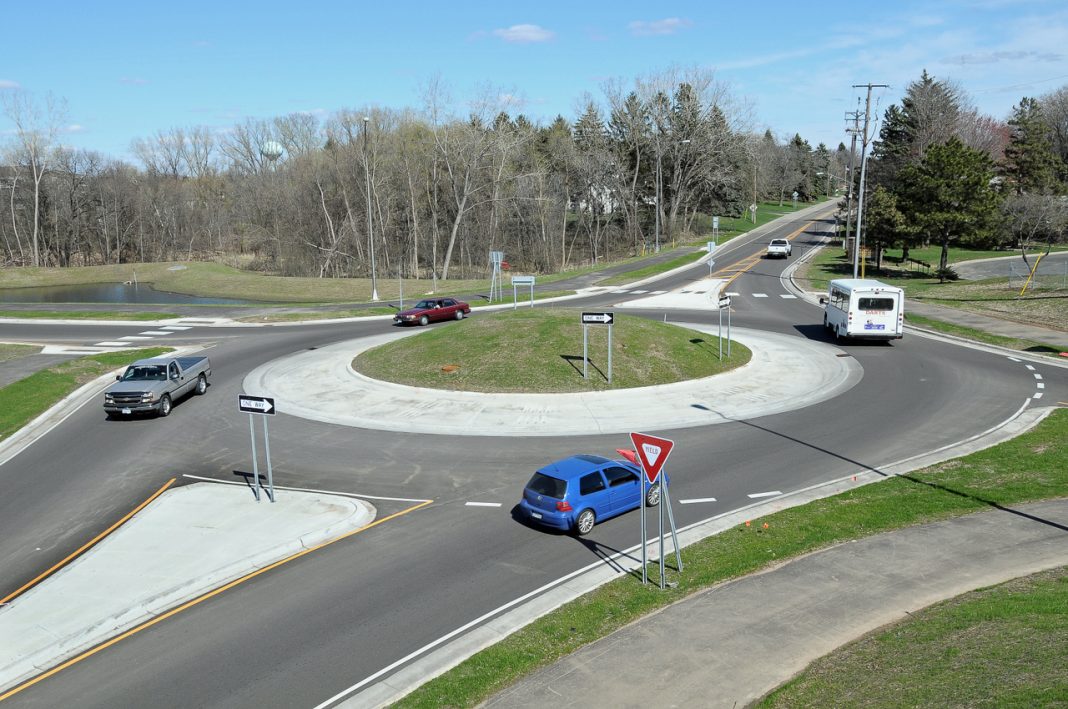

Minnesota drivers traveling north of Onamia have a new traffic layout to navigate after a roundabout opened at the junction of Highways 27 and 169 in Mille Lacs County. The $4.5 million project aims to improve intersection safety, manage turning movements and provide better access to nearby roads and properties. From new pedestrian crosswalks to updated entrances, several changes could affect familiar routes. Here are four important details drivers should know before approaching the redesigned intersection.
The New Roundabout Is Open at the Highway 27 and Highway 169 Junction
A busy intersection north of Onamia has a new traffic pattern, giving Minnesota drivers a different way to navigate one of the area’s important highway connections. The Minnesota Department of Transportation announced on October 27, 2026, that the new roundabout at the northern junction of Highway 27 and Highway 169 in Mille Lacs County is now open. The intersection also connects with the west frontage road, creating a four-legged design intended to improve access for motorists and nearby businesses. MnDOT had already restored direct access to and from Highway 27 at Highway 169 earlier in October, allowing drivers to use the junction again as the project moved toward completion. The $4.5 million project began in June 2026 and was scheduled to continue into late October. Motorists can now travel through the redesigned intersection, although anyone accustomed to the former layout should pay close attention to the new traffic signs, lane markings and entry points. The roundabout is designed to keep vehicles moving while reducing the risks associated with conventional intersections.
The Four-Legged Design Aims to Reduce Serious Crashes
The new roundabout is intended to do more than change the appearance of the intersection. Its design addresses safety concerns by encouraging drivers to slow down and reducing the number of dangerous crossing and turning movements that can lead to severe collisions. At a conventional intersection, vehicles may cross directly through opposing traffic paths or make turns that expose them to fast-moving vehicles. A roundabout changes those movements by guiding traffic in one direction around a central island, with drivers yielding before entering. MnDOT says the new four-legged layout is designed to lower vehicle speeds and minimize high-risk turning movements at the Highway 27 and Highway 169 junction. The agency also expects the redesign to help keep traffic moving more smoothly through the area. However, drivers should not assume that a roundabout will eliminate congestion entirely, particularly during busy recreational travel periods. Traffic modeling conducted during the project’s development indicated that summer and weekend traffic could still cause backups. The main goal is to make movements through the intersection safer and more manageable, even when traffic volumes are high.
New Pedestrian Crosswalks and Reconstructed Entrances Improve Access

The intersection’s redesign also changes how motorists reach nearby roads and properties, making local access an important part of the project. In addition to constructing the roundabout, MnDOT reconstructed adjacent entrances and added pedestrian crosswalks and approaches. County Road 35, also known as Twilight Road, was realigned to connect with westbound Highway 27, while the Veterans Club received a revised right-in, right-out entrance on eastbound Highway 27. The project also includes a concrete median with three-quarter access movements to and from Highway 169, helping manage how vehicles enter and leave the highway. These changes are intended to make traffic movements more predictable while improving safety for people walking near the intersection. Pedestrian facilities are particularly important along highways, where vehicle speeds and traffic volumes can make crossing difficult without designated routes. During the project’s planning stages, MnDOT also consulted local communities, businesses and tribal leaders about access and other potential effects. Some residents and local officials raised concerns about business access, congestion and construction disruptions. The agency adjusted elements of the design, including the addition of a fourth leg connecting to the west frontage road, to address some of those concerns.
Drivers Must Yield, Slow Down and Signal Before Exiting
For drivers approaching the new intersection for the first time, the most important change is understanding how traffic moves through a roundabout. Motorists must slow down as they approach, watch for signs and lane markings, and yield to vehicles already circulating inside the roundabout. Once a safe gap appears, drivers can enter and continue around the central island toward their intended exit. MnDOT advises motorists not to stop inside the roundabout unless doing so is necessary to avoid a collision, since unexpected stops can disrupt traffic and increase the risk of crashes. Drivers should also use their right-turn signal when exiting, activating it as they pass the exit immediately before the one they plan to take. Pedestrians using designated crosswalks require particular attention, and motorists should watch for anyone approaching or crossing the roadway. Drivers unfamiliar with roundabouts should avoid making sudden lane changes or trying to pass other vehicles within the circle. Taking a moment to read the signs and identify the correct exit can help prevent confusion. With the new layout now open, following these basic rules will help motorists, pedestrians and nearby road users adjust to the redesigned Highway 27 and Highway 169 junction.