

What unsettles many Minnesotans isn’t just the presence of immigration enforcement, but how it’s showing up. Recent reports describe federal agents using disguises such as hard hats, work vests, and unmarked vehicles with dummy license plates to approach people without immediately identifying themselves. For immigrant communities and their neighbors alike, these tactics blur the line between ordinary daily life and law enforcement activity. The result is a growing sense of unease, where even familiar sights can trigger fear and suspicion.
When Familiar Faces Raise Alarm
There’s an instinctive sense of safety people have when they see a familiar uniform or a branded work vehicle. A utility worker wearing a hard hat, a neighbor’s contractor arriving in a plainly marked truck — these images are woven into everyday life. But in parts of Minnesota, those reassuring sights have started to carry an unsettling edge. Reports have emerged of federal immigration agents disguising themselves as construction workers or utility employees, complete with hard hats and work vests, as part of efforts to approach individuals without immediately identifying themselves as law enforcement. For many residents, especially those in immigrant communities, this blurs the line between routine daily life and enforcement activity, feeding anxiety about who can be trusted and where safety begins.
The concern goes beyond anecdote. Multiple credible accounts have circulated of agents using these disguises to make contact with people in settings where they would not ordinarily expect law enforcement presence. Schools, parks, and job sites, places associated with work, family, and community, have become practice stages that residents describe as deceptive. What used to be clear markers of safety now prompt hesitation: Is that crew repairing a streetlight, or are they federal agents observing a neighbor? This shift from transparent enforcement to covert approaches deepens fear precisely because it targets the mundane. When everyday visuals are repurposed for enforcement, people start to wonder if anyone could be a plainclothes agent, and that uncertainty carries a real psychological weight.
How the Ruses Are Being Used
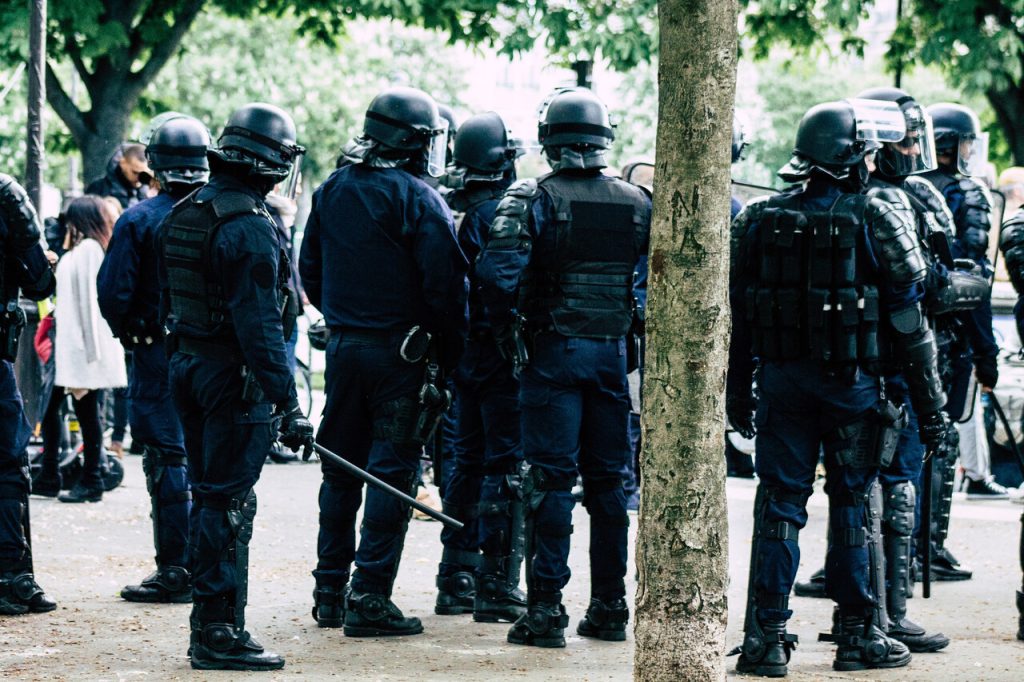
Reports from Minnesota and beyond describe specific tactics that authorities have employed to make contact with individuals believed to be in the country unlawfully. Some involve federal agents showing up in hard hats and tool belts, approaching a home or a workplace in a manner designed to appear innocuous before revealing identities. Others involve vehicles that appear to belong to delivery companies or utility services. There are even accounts of so-called “dummy plates,” license plates that mimic legitimate local tags but are not traceable, used to obscure the presence of government vehicles. These methods are intended to reduce alarm and increase the chances of engagement, but they do so by inserting law enforcement into regular community rhythms without upfront disclosure.
These tactics are not entirely new in law enforcement or immigration enforcement overseas, but their use domestically has raised eyebrows precisely because of where and how they are being used. In some reported instances, people greeted what looked like a maintenance crew outside a school or a community center, only to discover later that the interaction was part of an enforcement action. For families and workers, the shock isn’t just that agents arrived; it’s how. Approaching from behind the language of ordinary life, tools, hard hats, and unmarked vehicles, creates a sense of uncertainty and vulnerability. The legal line between legitimate investigative techniques and deceptive practices may be narrow, but for those on the receiving end, the impact is immediate and personal.
Why These Tactics Are Escalating
These enforcement tactics did not become widespread by accident. They are part of a broader federal strategy in interior states like Minnesota, where immigration enforcement was intensified in recent months under targeted operations. Officials framed these efforts as necessary to locate individuals who had failed to appear for removal hearings or who were deemed public safety concerns. In response, federal agents often found themselves facing communities that were wary, defensive, and quick to spread word of enforcement without context. In such environments, traditional approaches, serving notices, identifying themselves openly, were seen by some in law enforcement as less effective, especially when people anticipated enforcement and avoided contact.
That context helps explain why disguises and unmarked vehicles have been used, but it does not erase the tension they create. Law enforcement agencies often balance transparency with tactical advantage when pursuing suspects, but immigration enforcement has unique sensitivities because it intersects with civil liberties, race, and community trust. As agents adapt to resistance and evasion, they may adopt strategies designed for other types of policing, without fully accounting for the community impact. In Minnesota’s case, where recent enforcement has already generated protests and political pushback, these subtler techniques feed into a broader narrative of intrusion and fear. What federal officials regard as an operational necessity, many residents interpret as a breach of the social contract that separates ordinary life from law enforcement strategy.
Community and Legal Concerns

The community response in Minnesota has been swift and emotional. For immigrant families, especially those with mixed-status members, the idea that someone could approach under the guise of a utility worker or contractor is deeply unsettling. Parents worry about whom they can trust with their children. Workers wonder whether showing up for a job could lead to an unexpected encounter with agents. These fears are not abstract. They directly influence attendance, daily routines, and how people interact with services and institutions they once felt comfortable accessing. Community leaders describe a climate of anxiety that goes beyond legal status, touching on questions of dignity, safety, and belonging.
Legal advocates have also raised concerns about the constitutionality and ethics of these tactics. The Fourth Amendment protects against unreasonable searches and seizures, and critics argue that disguising law enforcement in ways that deceive residents blurs the line between voluntary consent and coercion. If someone invites what they believe to be a maintenance crew onto their property, only to discover they are interacting with federal agents, legal questions arise about consent and deception in law enforcement. Lawyers and civil liberties organizations are examining whether these methods meet constitutional standards and whether legislative oversight or court intervention may be necessary to balance enforcement priorities with individual rights.
What Officials and Advocates Say
Responses from officials and advocacy groups have been sharply divided. Some government representatives defend the use of unmarked vehicles, dummy plates, and worksite disguises as legitimate tactics in law enforcement, especially when pursuing individuals whom authorities believe pose public safety risks or who have evaded traditional approaches. From their perspective, blending in with ordinary environments can reduce the risk of confrontation and protect both agents and the public from sudden escalation. They argue that federal law grants broad authority to conduct enforcement operations in interior states and that tactics evolve with changing circumstances.
Community advocates and civil liberties groups take a different view. They argue that such practices undermine trust in public life and can lead to unintended consequences, including trauma and fear among children and families. For them, the concern is not just the legality of these actions, but the human impact, how ordinary people feel surveilled in spaces that should be safe. Without clear guidelines and transparency, advocates warn, the line between lawful enforcement and deceptive intrusion becomes dangerously thin. They are calling for stronger safeguards, community dialogue, and independent oversight to ensure that enforcement does not erode the basic sense of security that citizens and residents alike rely on in their daily lives.
References
Hard hats and dummy plates: Reports of ICE ruses add to fears in Minnesota – abcnews.com
Hard hats and dummy plates: Reports of ICE ruses add to fears in Minnesota – lancasteronline.com
Hard hats and dummy plates: Reports of ICE ruses add to fears in Minnesota – wivb.com