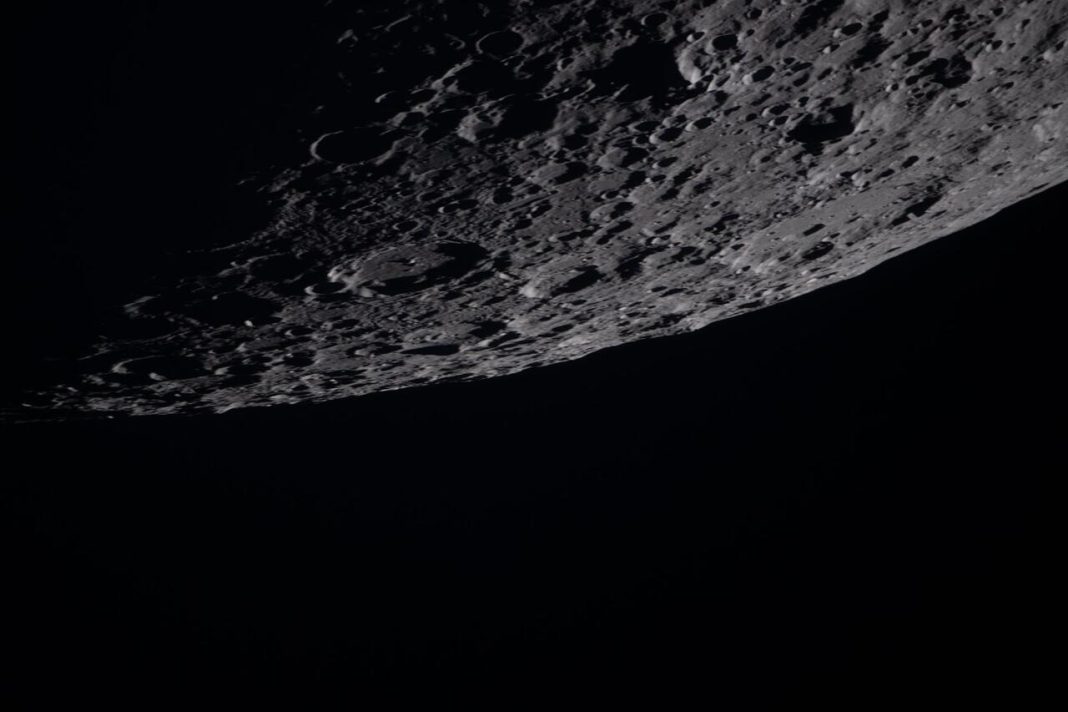

NASA has released more than 11,000 full-resolution images and videos from the Artemis II mission, offering a closer look at the Moon through the eyes of astronauts who traveled around it. The collection includes striking lunar landscapes, unusual surface colors, faint impact flashes, and observations recorded during a rare solar eclipse. These images, combined with crew audio and handwritten annotations, give scientists new material to study the Moon’s geological history and prepare for future lunar exploration.
The Moon’s Surprising Range of Colors
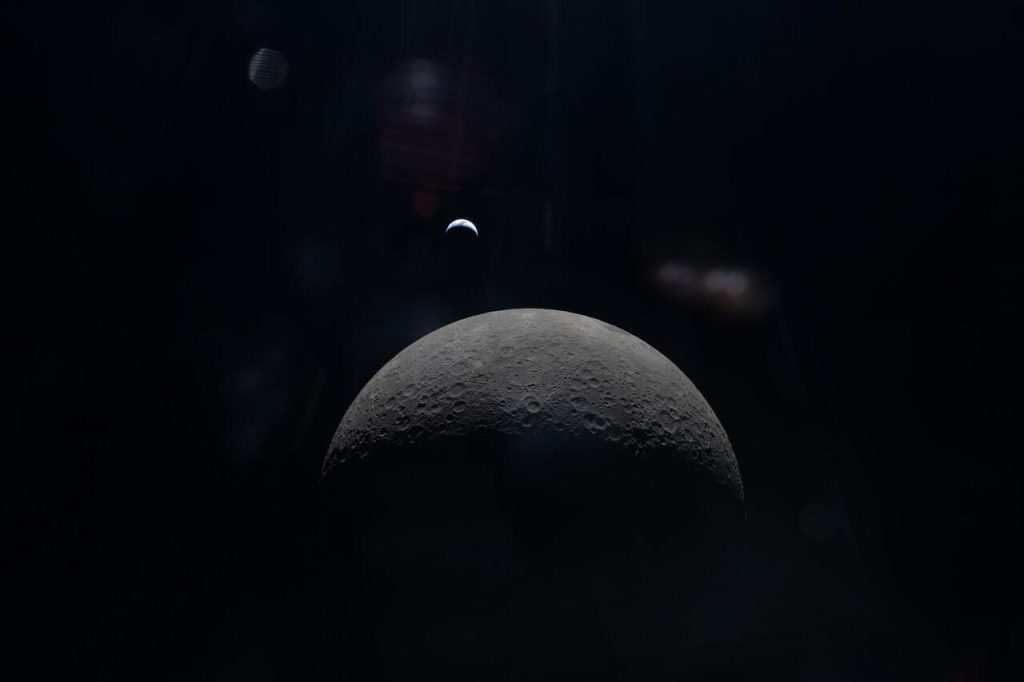
The Moon may look gray from Earth, but NASA’s newly released Artemis II images reveal a more colorful surface than many people might expect. During their April 2026 lunar flyby, astronauts reported seeing subtle shades of gray, black, brown, tan, white, green, and blue. These colors are more than a visual curiosity. They can offer clues about the Moon’s mineral composition and volcanic history. For example, blue hues can indicate titanium-rich volcanic rocks, while brown shades can reflect differences in iron content. Greenish areas may point to glass formed during volcanic eruptions or asteroid impacts. Scientists can compare the astronauts’ descriptions and photographs with observations from orbiting spacecraft to investigate these differences. The findings could improve our understanding of how the Moon formed and evolved, while helping researchers identify geological features worth studying during future lunar missions.
Five Faint Flashes From Impacts on the Lunar Surface
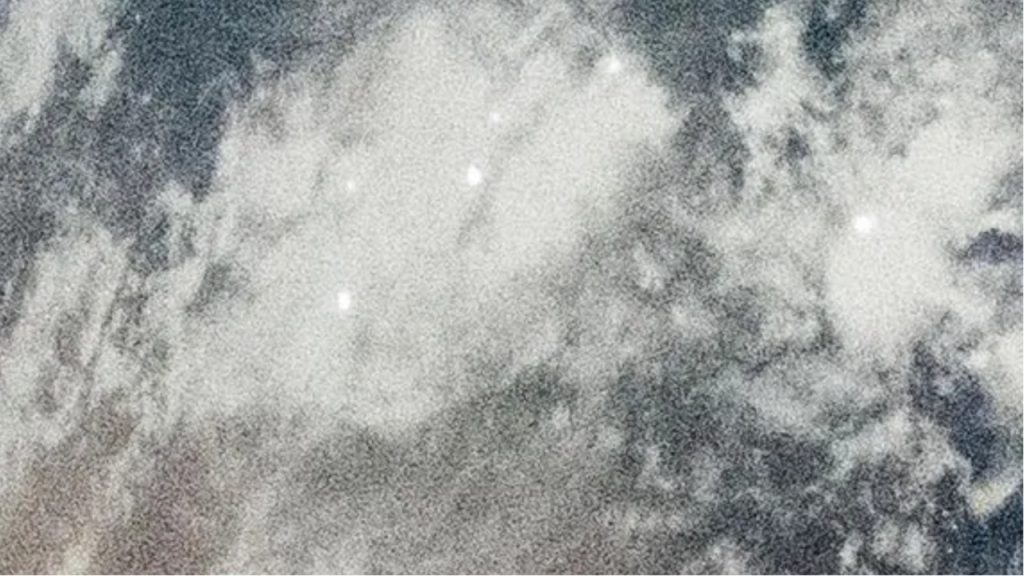
Some of the most remarkable observations from Artemis II happened in brief flashes that were easy to miss. During the lunar flyby, the astronauts reported seeing five extremely faint bursts of light on the Moon’s darkened surface. Scientists determined that these were impact flashes caused by rocky fragments striking the Moon at high speeds. With virtually no atmosphere to slow incoming objects or burn them up before impact, even relatively small fragments can hit the lunar surface directly and release energy as visible light. NASA’s preliminary findings indicate that the flashes were faint enough to require careful visual observation and detailed crew annotations. The astronauts recorded the apparent locations of the events on a tablet, allowing scientists to compare their observations. Because the flashes occurred during a total solar eclipse, the unusually dark conditions made them easier to see. Studying these events could help researchers estimate how frequently small objects strike the Moon, valuable information for understanding the environment future lunar explorers and equipment will encounter.
Dramatic Craters and Mountains Along the Lunar Terminator
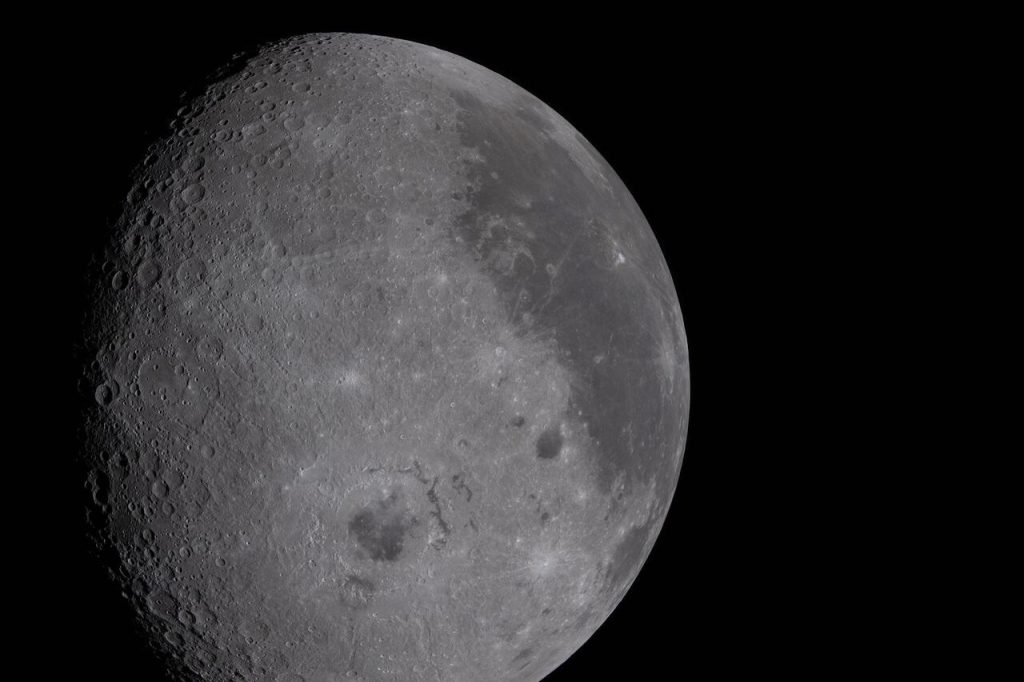
The boundary between lunar day and night, known as the terminator, offers a striking view of the Moon’s rugged landscape. When sunlight arrives at a low angle, mountains cast long shadows, crater rims stand out sharply, and depressions become easier to distinguish. Artemis II allowed astronauts to observe these features directly from a crewed spacecraft, documenting details that can be difficult to appreciate in images taken under different lighting conditions. The released photographs and accompanying observations allow researchers to examine the relationship between shadows, terrain shapes, and surface texture. This is particularly useful because the Moon’s appearance changes dramatically depending on the Sun’s position. A crater that looks relatively flat under direct illumination may reveal steep walls and a complex floor when shadows stretch across it. Such observations can help scientists interpret lunar topography and prepare for future exploration, especially in regions near the south pole where low-angle sunlight and persistent shadows complicate navigation and surface operations.
The Massive Orientale Basin and Its Surrounding Terrain
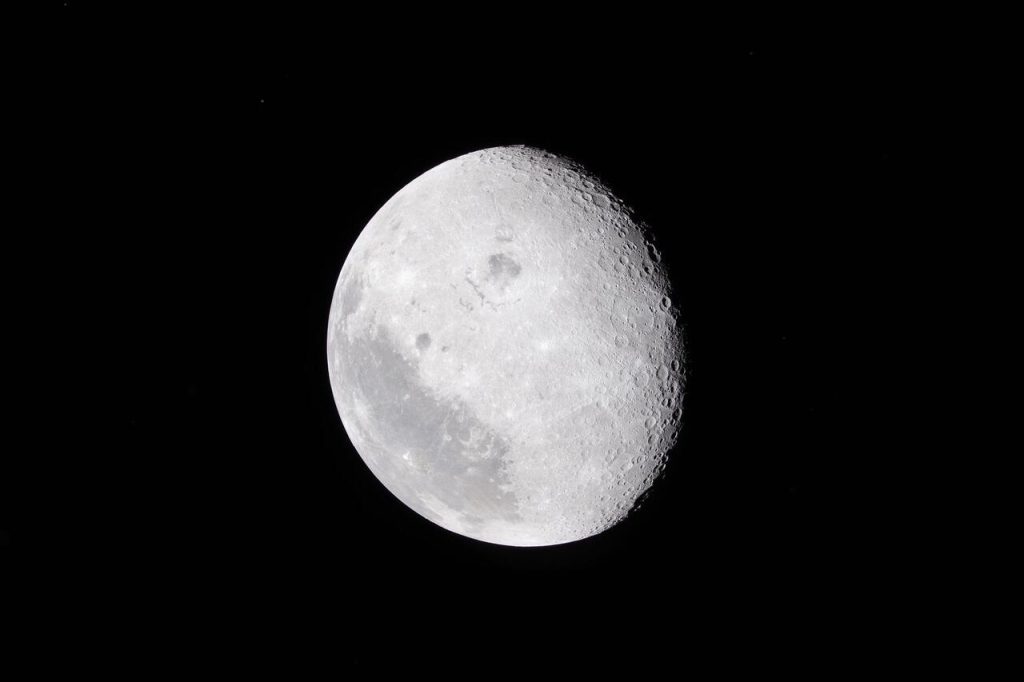
One of the Moon’s most impressive geological landmarks is the Orientale basin, a vast impact structure surrounded by multiple rings of mountains. Formed by an enormous collision early in lunar history, the basin preserves evidence of the powerful forces that shaped the Moon. Artemis II astronauts photographed the region during their flyby, providing a human-observed perspective that researchers can compare with existing maps and orbital measurements. NASA’s released material includes comparisons between crew photographs and data from the Lunar Reconnaissance Orbiter, which has mapped the Moon in considerable detail. These comparisons help scientists connect what the astronauts saw through the spacecraft windows with measurements of elevation, surface roughness, rock abundance, and brightness. The basin’s layered rings and surrounding terrain offer clues about how material was displaced during the impact and how the landscape developed afterward. By combining the new photographs with established orbital datasets, researchers can refine their understanding of this enormous geological feature and the history recorded in its distinctive structure.
Ancient Lava Flows and Other Geological Features
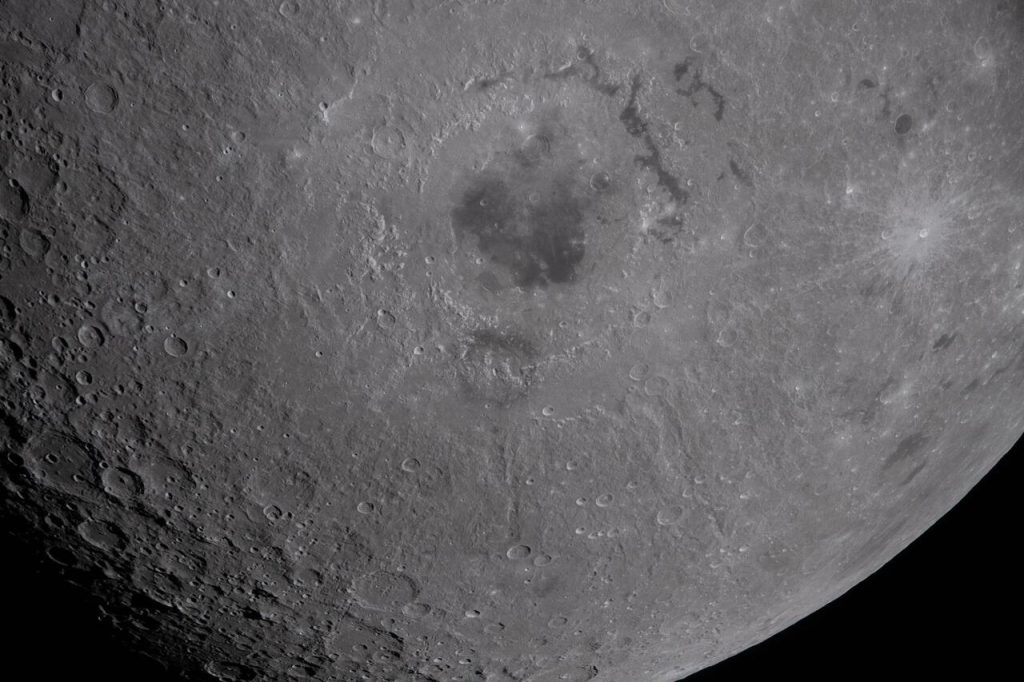
The Moon’s surface holds a record of volcanic activity that took place billions of years ago, and Artemis II observations may help scientists examine that history more closely. Large dark plains, formed when ancient lava spread across the lunar surface and later cooled, contrast with brighter highlands and other geological formations. During the flyby, the astronauts described differences in color across regions such as the Aristarchus Plateau and nearby volcanic plains. Greenish and yellowish hues reported in some areas, alongside neighboring brown and gray surfaces, offer useful observations for investigating variations in mineral composition and volcanic history. These descriptions do not establish the exact composition of individual rocks on their own, but they provide valuable clues that scientists can test against orbital measurements and other data. The crew’s photographs, spoken observations, and annotations add context to images collected by robotic spacecraft. Together, these records can help researchers distinguish geological units, investigate how volcanic activity changed over time, and identify surface features that may deserve closer attention during future lunar exploration.
The Moon During a Total Solar Eclipse
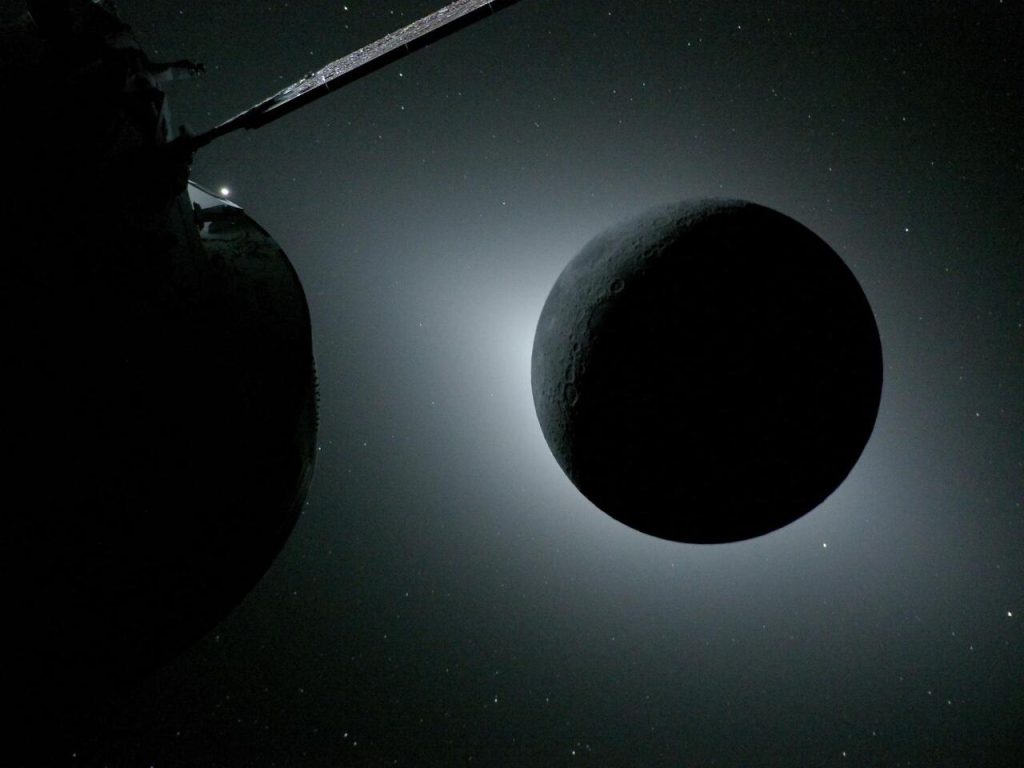
A total solar eclipse viewed from near the Moon offers a perspective that is difficult to experience from Earth. During Artemis II, the crew watched the Moon block the Sun for an extended period as the spacecraft traveled around the lunar far side. This created unusually dark conditions that helped the astronauts observe faint impact flashes and features that might otherwise have been overwhelmed by sunlight. The eclipse also provided an opportunity to examine the Sun’s outer atmosphere, known as the corona, and the faint glow of zodiacal light produced when sunlight scatters off dust throughout the inner solar system. NASA’s released imagery and accompanying observations document aspects of this unusual viewing opportunity. The photographs are particularly useful when considered alongside the crew’s descriptions, since human observers can notice subtle visual changes that may not be immediately obvious in a photograph. Scientists can use these records to investigate how the Moon’s appearance changes under different lighting conditions and to study phenomena surrounding the eclipsed Sun.
Differences in Lunar Surface Brightness and Texture
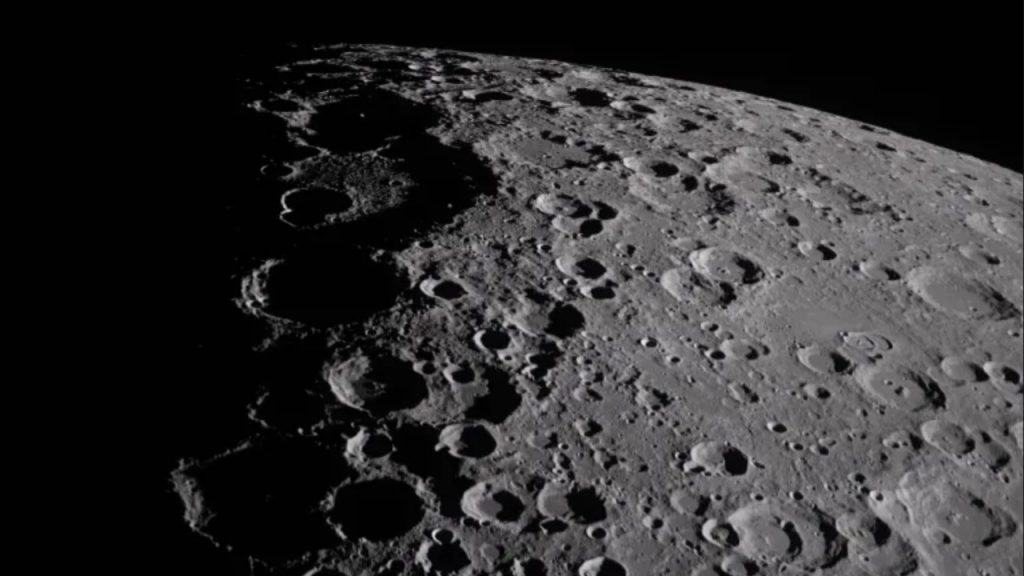
A closer look at the Artemis II photographs reveals that the Moon’s surface is not uniformly bright or smooth. Some areas appear relatively pale, while others are darker, rougher, or marked by tightly packed craters. These differences can reflect variations in mineral composition, the amount of impact damage a region has experienced, and the angle at which sunlight strikes the terrain. The astronauts’ observations are especially valuable because they document how these features appeared to the human eye from a moving spacecraft. Researchers can compare the photographs with data from NASA’s Lunar Reconnaissance Orbiter to investigate the relationship between visible brightness and measured surface properties. Such comparisons also help scientists understand how contrast, shadows, and viewing angles influence the way lunar terrain is perceived. This knowledge matters for future missions, when astronauts may need to recognize hazards, interpret unfamiliar landscapes, and select suitable locations for scientific work. The newly released imagery therefore provides more than a collection of striking views: it offers another way to study the Moon’s geology and prepare for exploration.