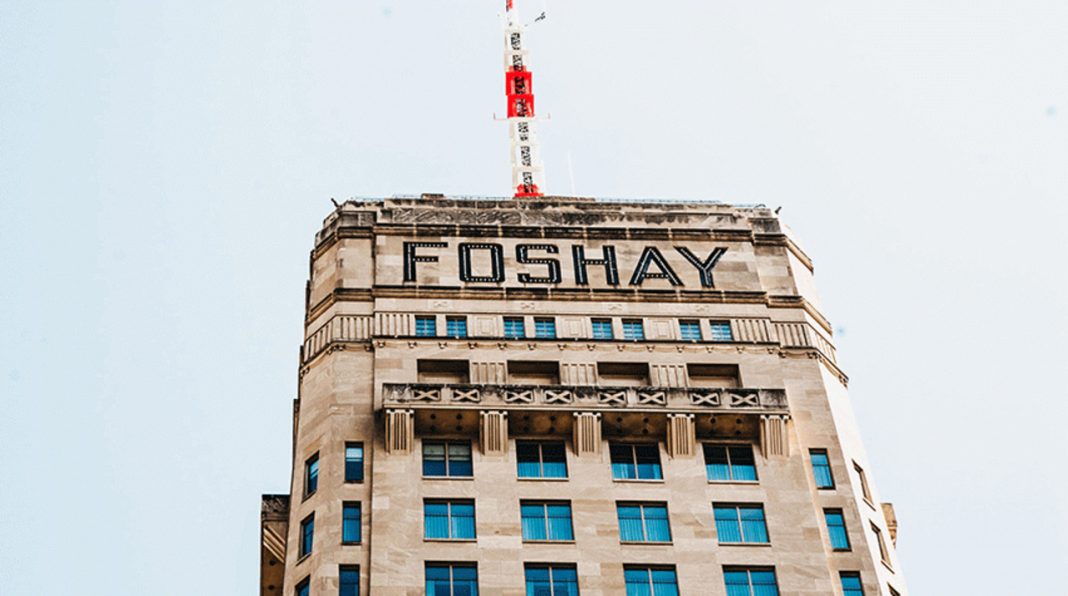

Minneapolis has an architectural landmark that rewards anyone willing to look beyond its impressive silhouette. The Foshay Tower, completed in 1929, blends the bold geometry of Art Deco with luxurious materials, intricate metalwork, and a distinctive shape inspired by the Washington Monument. From its elaborate lobby to the enormous lettering near its peak, the building tells a story of ambition, craftsmanship, and changing fortunes. Here are six details worth spotting when exploring one of Minneapolis’ most recognizable historic buildings.
The Tower’s Washington Monument Shape Makes It Stand Out
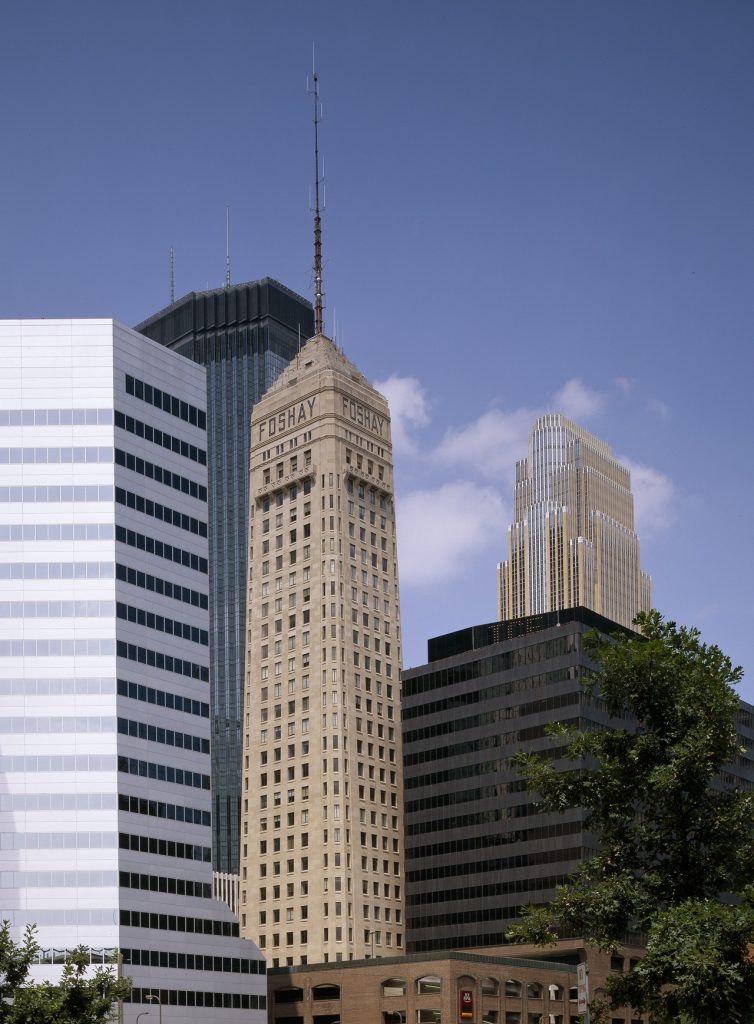
Minneapolis has no shortage of striking buildings, but the Foshay Tower stands apart because it looks more like a monument than a conventional skyscraper. Completed in 1929, the 447-foot, 32-story building was designed by architect Leon Eugene Arnal of the Minneapolis firm Magney and Tusler. Its tapered shape was inspired by the Washington Monument, a design Wilbur Foshay admired and wanted to reinterpret for his own commercial tower. The structure begins with a broad base and gradually narrows as it rises, creating the appearance of an elongated obelisk topped by a stepped pyramid. This distinctive silhouette helped make the tower one of Minneapolis’ most recognizable architectural landmarks. Its reinforced concrete and fabricated steel framework also reflected the engineering ambitions of the late 1920s, when cities competed to build impressive structures that represented modern progress and commercial success.
Carved Chevrons and Elaborate Doorways Showcase Its Art Deco Style
Look closely at the Foshay Tower’s entrances and the building’s decorative character becomes much easier to appreciate. Its doorways feature elaborate detailing, while carved chevrons introduce the sharp, angular geometry associated with Art Deco design. Rather than relying on the elaborate floral patterns of some older architectural styles, Art Deco often emphasized symmetry, repeated geometric shapes, and streamlined ornamentation. The Foshay’s decorative features reflect that approach while giving its entrances a sense of ceremony. The building’s original design also included cathedral-style light fixtures, which complemented the carefully embellished doorways. These details were part of a larger architectural vision that treated even the lower levels as an important part of the tower’s identity. Although the building was designed primarily as an office tower, its ornamentation gave it the appearance of something more monumental. Visitors exploring the lobby and entrances can still find traces of the craftsmanship that helped distinguish the building when it opened.
African Mahogany, Italian Marble, and Terrazzo Add Rich Interior Details
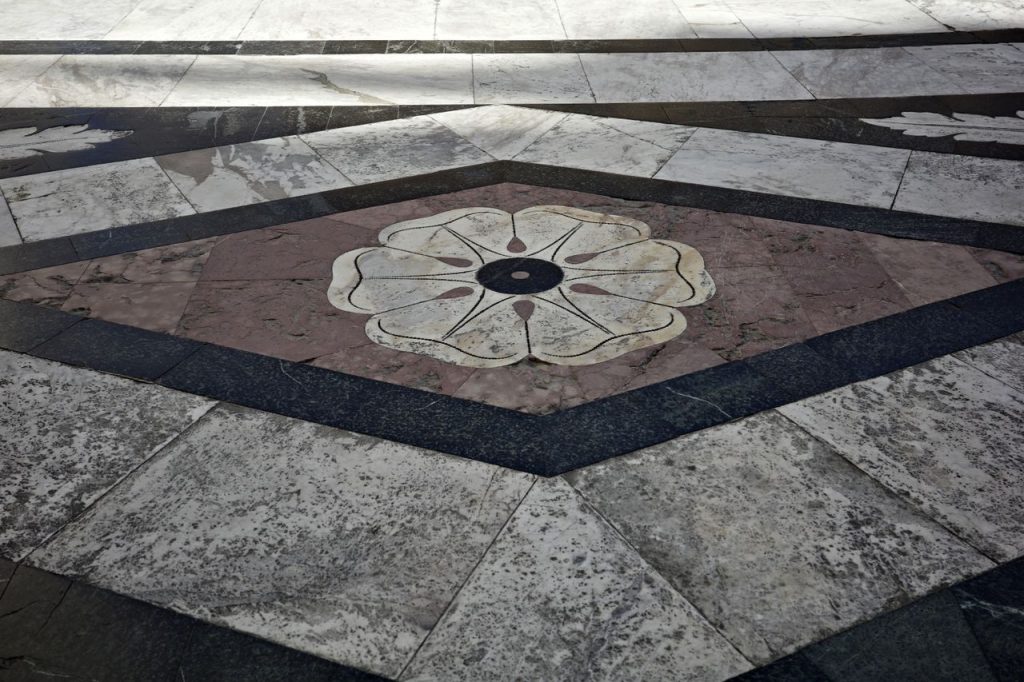
The Foshay Tower’s Art Deco character continues inside, where its original materials reveal how much attention went into the building’s interiors. Italian marble was used for walls, while terrazzo flooring added a polished surface with decorative geometric appeal. African mahogany and other fine woods brought warmth to spaces that might otherwise have felt formal and imposing. The original lobby also featured ornamental bronze and wrought-iron grillework, along with elaborate light fixtures. These materials reflected the ambition of Wilbur Foshay, who wanted the tower to project wealth, prestige, and modern sophistication. The most lavish finishes appeared in his private quarters on the upper floors, where marble walls, fine woodwork, glass-paneled ceilings, and gold bathroom fixtures demonstrated his taste for luxury. Some original interior features have been altered or concealed over time, but the surviving marble, terrazzo, and decorative metalwork continue to offer a glimpse of the building’s original design.
The Limestone Pyramid Displays Wilbur Foshay’s Name in Huge Letters
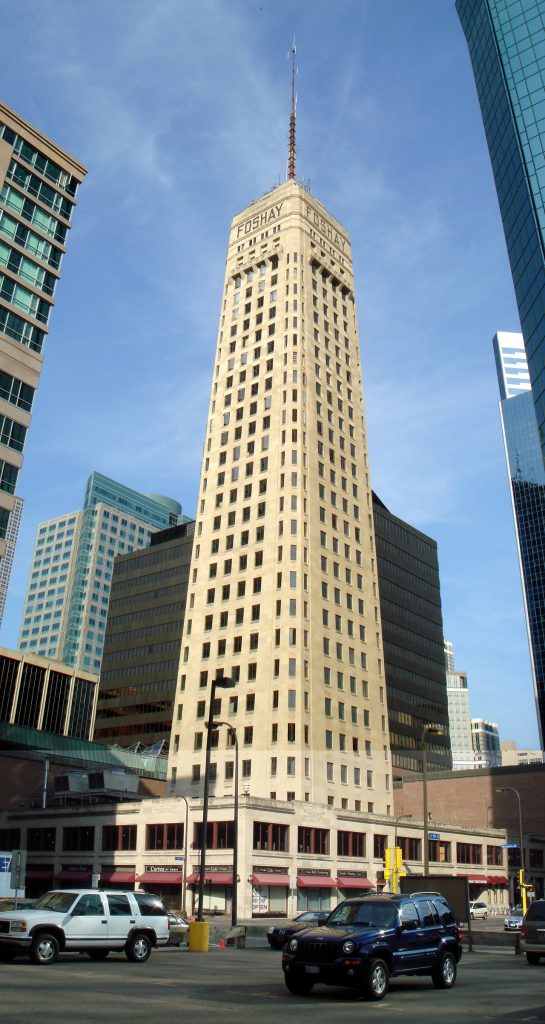
One of the tower’s most unmistakable features sits near its peak: the name FOSHAY displayed in enormous letters across its four sides. Each letter measures about 10 feet tall, making the name visible from a considerable distance. The lettering appears on the building’s stepped limestone pyramid, reinforcing the tower’s unusual combination of monument-like architecture and commercial ambition. This was no accidental design choice. Wilbur Foshay financed the project and wanted the building to serve as a lasting symbol of his business success. Inspired by the Washington Monument, he envisioned a skyscraper that would dominate the Minneapolis skyline while bearing his name prominently. The tower’s exterior was clad in limestone, giving the structure a smooth, unified appearance that complements its tapered form. The illuminated lettering made the building especially distinctive after dark, when the name stood out against the city skyline. Today, the feature remains one of the clearest reminders of the personality and ambition behind the tower’s creation.
Geometric Metalwork and Decorative Lighting Extend the Art Deco Design
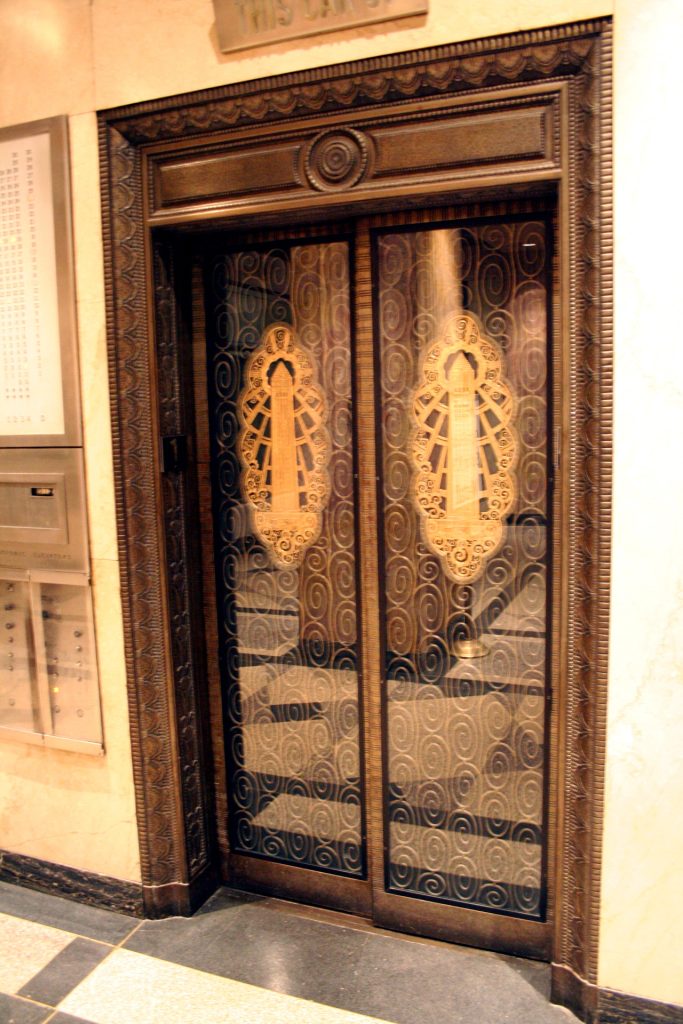
The Foshay Tower’s decorative metalwork shows how Art Deco design can turn practical architectural elements into visual highlights. In the lobby, ornamental bronze and wrought-iron grillework introduced intricate patterns without overwhelming the surrounding marble and terrazzo. The elevator doors featured swirling metal latticework, while the original lighting fixtures added another layer of geometric detail. Tiered glass chandeliers and gilded moldings helped create a polished atmosphere that continued the building’s decorative theme from the entrance to the interior corridors. These elements were especially important during the late 1920s, when Art Deco buildings often used metal, glass, and carefully arranged geometric patterns to convey modernity and luxury. Some original features have been removed or hidden behind later renovations, so not every detail remains visible in its original form. Still, the surviving fixtures and metalwork help explain why the tower is valued for more than its height. Its design combines structural simplicity with carefully placed decoration, giving the building a distinctive character.
The Museum and Observation Deck Reveal the Tower’s History
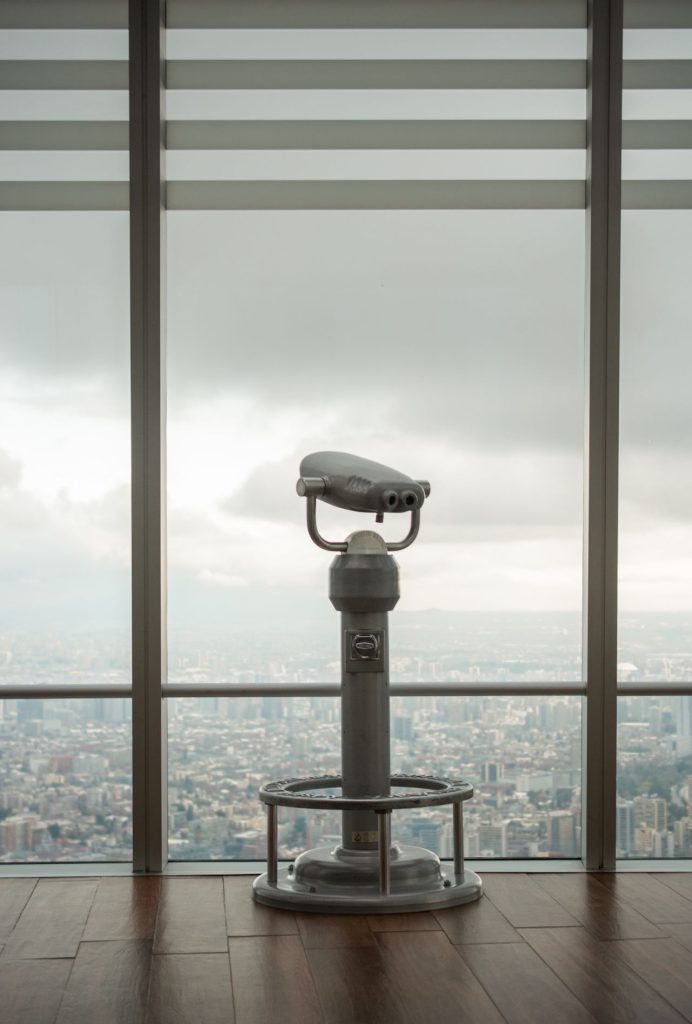
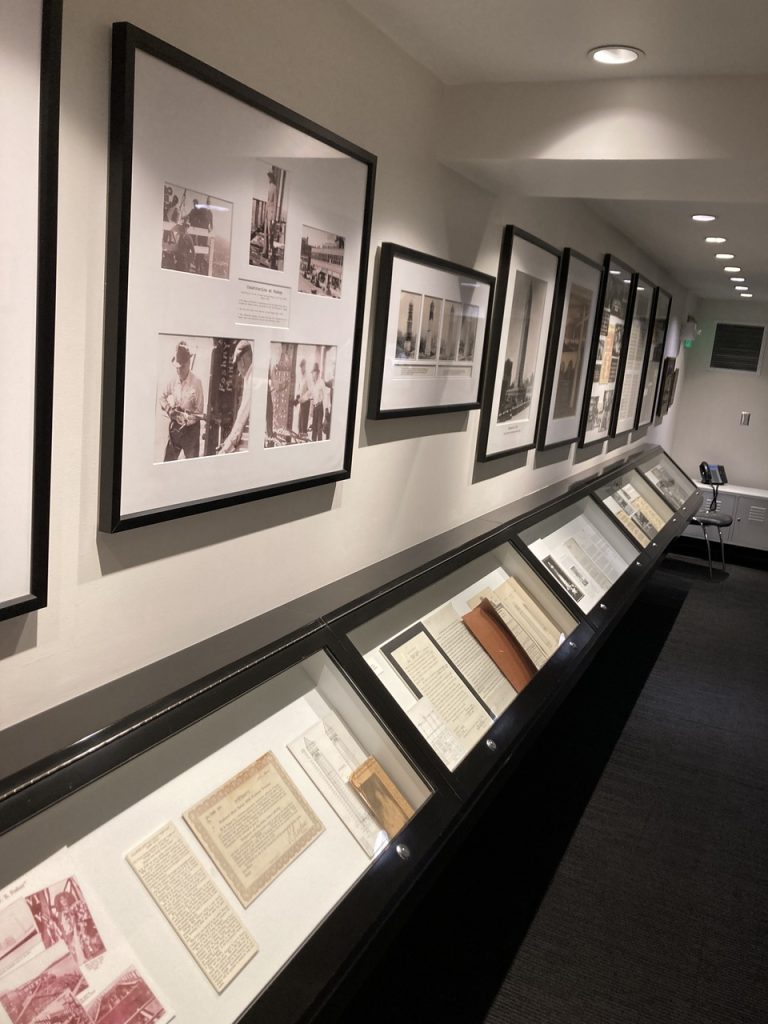
The best way to appreciate the Foshay Tower is to look beyond its exterior and explore the history preserved inside. The Foshay Museum and Observation Deck occupy the upper portion of the building, offering exhibits about its construction, its financier Wilbur Foshay, and its place in Minneapolis history. Displays include historical photographs, architectural sketches, artifacts, and objects associated with the tower’s lavish opening celebration in 1929. Visitors can also learn how the building’s fortunes changed after the stock market crash later that year, when Foshay’s financial empire collapsed. From the observation deck, the city spreads out in a 360-degree panorama, providing a clear view of how Minneapolis has grown around the historic tower. The building was listed on the National Register of Historic Places in 1978 and later underwent a major renovation that transformed it into the W Minneapolis hotel. Together, the museum, preserved architectural features, and elevated views offer a closer look at one of the city’s defining landmarks.