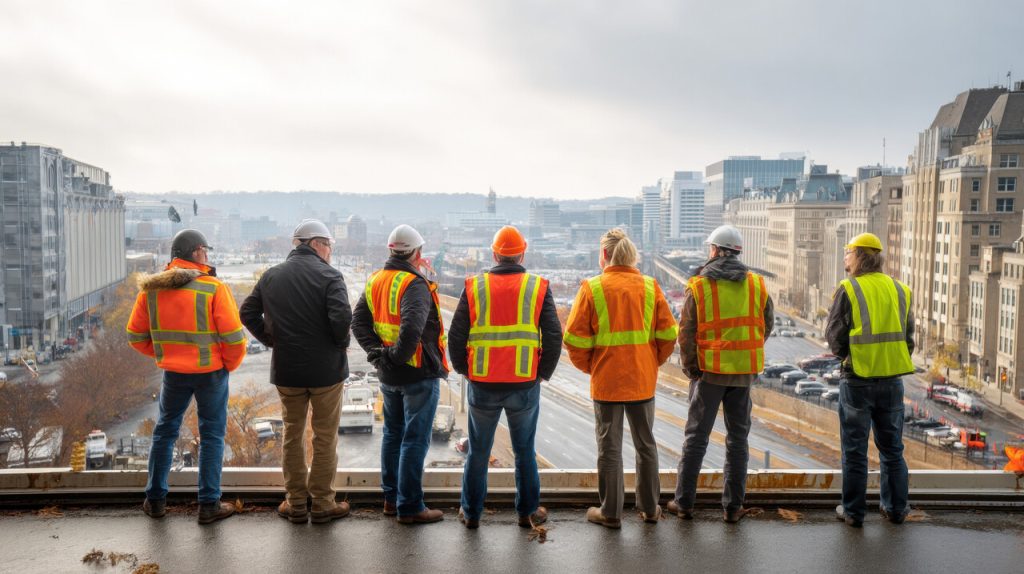
Construction crews across Minnesota are feeling a strain that has nothing to do with weather or material shortages. Increased immigration enforcement has begun to reshape daily life on job sites, affecting who shows up for work, how projects move forward, and how secure workers feel doing their jobs. What was once a steady industry built on schedules and coordination is now grappling with uncertainty as fear of ICE activity ripples through the workforce. The impact is visible in delayed timelines, quieter sites, and growing concern among contractors who rely on a stable labor pool to keep projects on track.
When Immigration Enforcement Hit Construction Sites
There’s a new reality on Minnesota construction sites that’s hard to miss: federal immigration enforcement no longer feels like something that happens far away. Instead, workers, supervisors, and project managers describe interactions with federal agents, sometimes unexpected, sometimes overt, as part of their daily routine. In recent months, Immigration and Customs Enforcement (ICE) has increased its presence around job sites, ostensibly to identify and detain undocumented workers. That shift hasn’t been gradual or subtle. It’s been direct and immediate, and it’s altering how people think about coming to work.
For many laborers, especially those from communities with higher immigrant populations, the increased enforcement presence has created an atmosphere of apprehension. Workers talk about friends who stayed home after notices of federal activity circulated through group chats, and others describe mid-week shifts where an unexpected visit by enforcement officers slows work to a crawl. Managers who once focused solely on deadlines and safety now also juggle concerns about employee documentation and security. The construction industry in Minnesota, which already faced workforce challenges, is now grappling with a new variable that doesn’t show up on project timelines but deeply affects who shows up at all.
Labor Shortages and Project Delays

The most visible impacts of these enforcement actions are on labor shortages and project timelines. In an industry already short-staffed due to demographic trends and retirements, fear of immigration enforcement has compounded the shortage. Some workers are simply not coming to sites where they’ve heard there have been agent visits. Others, even if legally in the country, are hesitant to travel to work at all, avoiding intersections and checkpoints for fear of questions or identification checks. The result is clear: projects that once ran on predictable schedules are now experiencing gaps in staffing that ripple through every phase of construction.
These shortages translate directly into delays, whether on a new housing development or a commercial build. A site that’s down for several days can fall behind on timelines that involve sequential tasks, pouring foundations, framing structures, and finishing interiors. Each delay is more than an inconvenience. It can affect contracts, increase costs, and erode trust between builders and clients. Suppliers notice too. When timber, concrete, or fixtures are scheduled for delivery, having fewer hands on deck can push those schedules back, creating a domino effect that can take weeks to correct. In a sector where timing and coordination are currency, uncertainty about who will show up for the next shift introduces real operational risk.
Erosion of Worker Protections
Another consequence industry insiders point to is a weakening of worker protections, not by policy changes, but by the climate of fear itself. When workers are more afraid to speak up, they are less likely to report unsafe conditions, wage theft, or discriminatory treatment. Construction has long battled safety challenges, and unions and advocacy groups have worked for decades to ensure that employees feel safe reporting violations. But when the very act of showing up for work feels risky, concerns about occupational safety take a back seat to questions about personal security.
Union representatives and worker advocates express particular concern that ICE activity is unintentionally discouraging reporting on matters that should be handled through normal channels. A worker who might otherwise note a failure to follow safety protocols or unpaid overtime may stay silent, fearing that visibility could somehow put them at risk. Whether or not that fear is rational in every case, its impact is real. Workers become less empowered, industry standards weaken, and the long-term well-being of the workforce suffers. What had once been a regulated environment where laborers felt some level of protection now feels more precarious, with more at stake than job performance alone.
Broader Economic Ripples
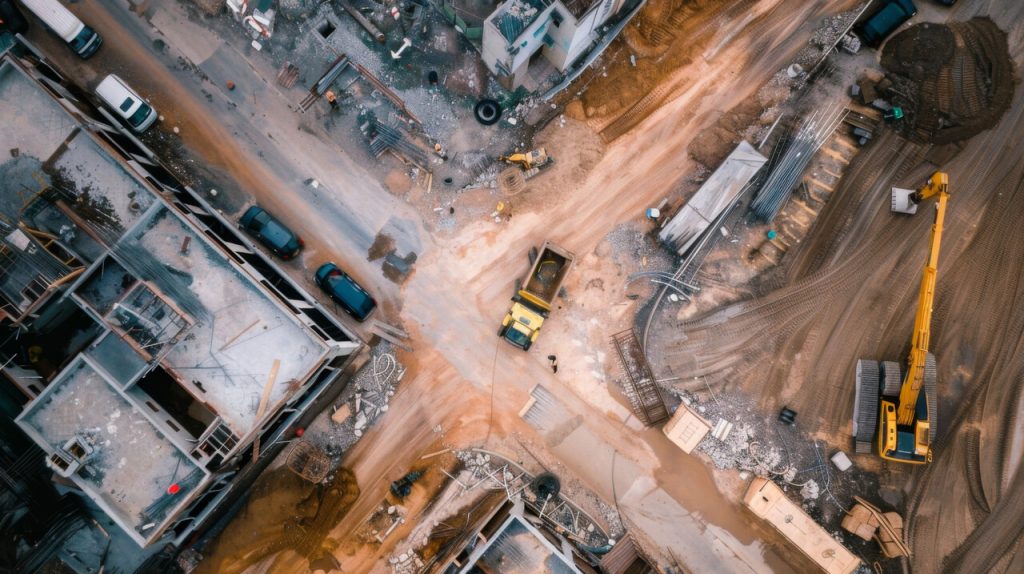
The effects of these enforcement actions go beyond individual sites and workers. Small contractors in Minnesota are sounding the alarm about the broader economic impact. Construction is not a niche industry. It’s a major engine of employment, tax revenue, and community development. When projects stall, the impact trembles outward into suppliers, equipment rentals, real estate markets, and even local service businesses that count on steady spending from construction employees. A slowdown in housing starts, for instance, can exacerbate affordability problems in markets already struggling with limited inventory.
Contractors also speak to the reputational impact. Minnesota has historically positioned itself as a place that welcomes business and workforce development. If skilled or experienced laborers choose to work in neighboring states with fewer enforcement tensions, that’s a competitive disadvantage that local firms can’t ignore. Attracting new workers, whether recent immigrants, young adults, or experienced tradespeople, becomes harder when word spreads that the work environment is unpredictable. In an industry that thrives on reliability and scheduling, uncertainty about labor availability fundamentally shifts how decisions are made, sometimes pushing investment toward regions perceived as more stable.
What Industry Leaders Are Calling For
Faced with these disruptions, industry leaders in Minnesota are pushing for clearer policies and stronger assurances that enforcement will not undermine economic stability. They aren’t necessarily asking for changes to immigration law itself. Rather, contractors, business associations, and trade organizations want clearer delineations about where and how agents may operate, especially around job sites. They argue that enforcement tactics should not unintentionally disrupt legitimate economic activity or create an undue burden on businesses trying to comply with all applicable laws.
At the same time, there are calls for greater communication and partnership between federal agencies and local business communities so that enforcement does not appear arbitrary or unpredictable. Some leaders advocate for designated protocols that respect both the rule of law and the practical needs of industries reliant on a stable workforce. Their message is straightforward: enforcement and economic vitality do not have to be mutually exclusive. With thoughtful policy guidance and collaborative approaches, it’s possible to safeguard communities while maintaining the labor flows and project timelines that underpin Minnesota’s construction economy. Whether that message leads to meaningful adjustments remains an open question, but for now, the industry continues to adapt to a landscape where fear has become a factor in everyday work life.
References
- ICE surge chills Minnesota construction industry, slows projects – finance-commerce.com
- Minnesota’s construction industry is feeling the impact of ICE – mprnews.org