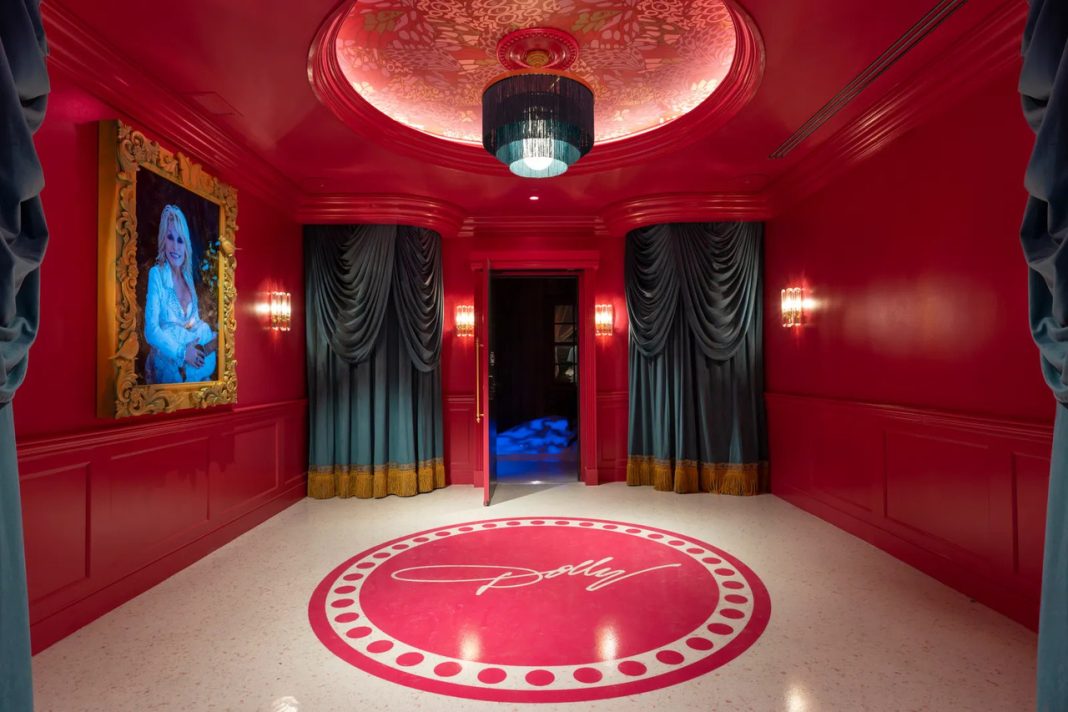

Dolly Parton’s new Nashville museum offers far more than a collection of costumes, awards, and career memorabilia. Dolly Parton’s Life of Many Colors Museum takes visitors through the singer’s story from her childhood in the Great Smoky Mountains to the Nashville career that made her a global music icon. Along the way, the exhibits bring together deeply personal belongings, rare recordings, family memories, songwriting artifacts, iconic fashions, and pieces of Dolly’s performance history. Some displays reveal parts of her life that even longtime fans may not have seen before, including the wedding dress she thought was lost for decades. The experience ultimately brings her story full circle, ending with a concert-style finale that puts visitors inside the world of Dolly on the road and onstage.
Dolly’s Childhood Cabin Brings Her Smoky Mountain Roots to Life
The museum starts at the beginning, with the humble Tennessee childhood that eventually became the foundation of Dolly Parton’s extraordinary career. Visitors enter a recreation of the small cabin in the Great Smoky Mountains where Dolly grew up, giving the opening of the exhibition a very different feel from the rhinestones and stage costumes that appear later. The setting is deliberately personal, taking guests back to the family and place that shaped her earliest years. One small detail carries a particularly meaningful piece of history: a sack of cornmeal sits on the porch as a reference to how Dolly’s parents paid the doctor who delivered her in 1946. Inside, an old recording of Dolly’s mother, Avie Lee Parton, tells the story of Coat of Many Colors in her own voice. The recording originally appeared on a small 45 record included with Dolly Dolls in the 1970s and was brought into the museum so visitors could hear Avie Lee tell the story herself. The result connects Dolly’s famous song to the family history behind it, rather than simply presenting it as another piece of her musical career.
Dolly Herself Becomes the Guide Through Her Story
Instead of relying solely on conventional museum labels, the exhibition allows Dolly to guide visitors through the story in her own recorded voice. The museum’s first section is an immersive walkthrough covering different stages of her life, beginning with the night she was born and continuing through her family, Nashville years, career and the people who mattered along the way. These recordings, called Dolly-grams, were made earlier in 2026 and were created specifically to let Dolly explain important moments herself. That choice matters because the museum was built around her own ideas about what should be shown and how her story should feel. The goal was for her to act almost like the conductor of the entire experience, appearing through recordings as visitors move from one period of her life to another. The museum also incorporates multimedia installations, personal stories and artifacts from her collection, making the experience less like a static display of memorabilia and more like a guided journey through her memories and career.
Her Lost Wedding Dress Became One of the Museum’s Most Personal Discoveries
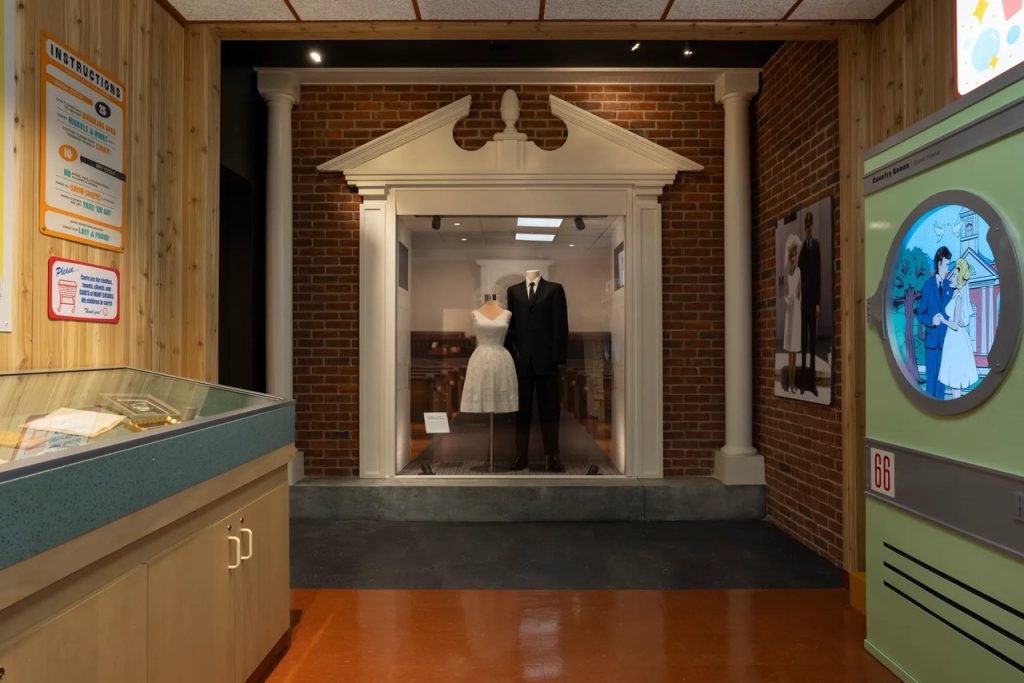
One of the most remarkable objects on display was not sitting in a carefully cataloged museum collection when preparations began. It was discovered in 2024 inside a small military trunk that had belonged to Dolly’s late husband, Carl Dean, from his time in the National Guard. The trunk contained a simple white A-line wedding dress that Dolly had worn in 1966 and that had been presumed lost for years. The discovery became even more significant when the archive team found additional pieces from the wedding, including her veil, the Bible she carried instead of a flower bouquet, a letter from the pastor who married the couple and a previously unseen photo strip. Dolly had not seen the dress since her wedding day, and when it was brought to her for verification, she immediately recognized it. The museum now displays the dress in a specially designed case inspired by Ringgold Chapel in Georgia, where Dolly and Carl were married. The collection turns what could have been a simple fashion display into a remarkably intimate glimpse at a private chapter of her life.
Dolly’s Fashion Archive Shows How Her Signature Style Took Shape
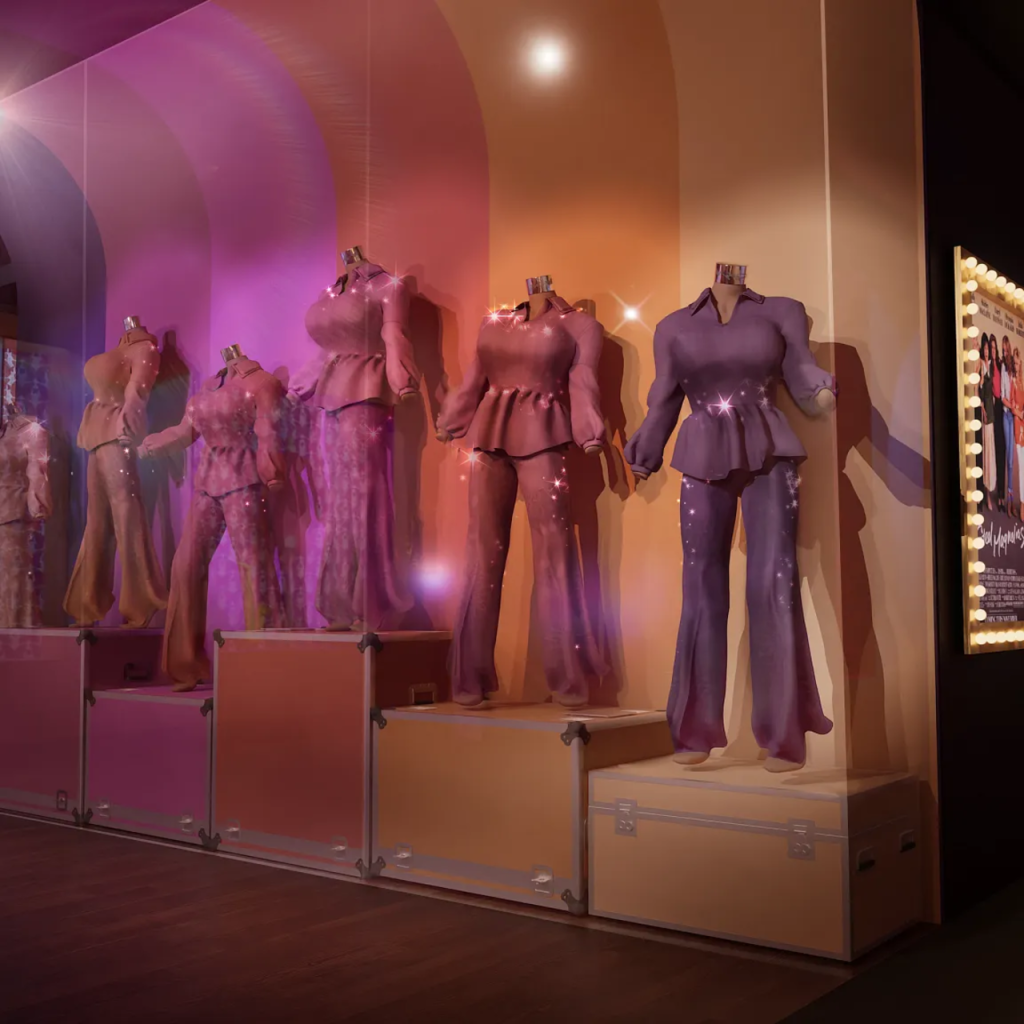
Dolly’s wardrobe gets its own place in the museum, and the displays make clear that her clothes were never just background details to her public image. The exhibition includes costumes and pieces representing seven decades of her career, reflecting the bright colors, rhinestones, sequins and distinctive silhouettes that became closely associated with her performances. One particularly notable item is the outfit she wore on the cover of Jolene. It had never been exhibited before because the garment needed restoration and careful attention before it could be placed on display. The museum team worked to preserve it for the opening, with Dolly taking particular interest in having some of her favorite pieces represented. The wardrobe section is also designed to change over time. Rather than displaying the same collection indefinitely, the museum plans to rotate artifacts, meaning future visitors can encounter pieces that were not available during the initial opening. That approach also gives the museum access to the breadth of Dolly’s extensive personal archive without trying to put everything on the floor at once.
Her Songwriting Process Gets Its Own Spotlight
Dolly’s career was built on more than the songs audiences eventually heard on records and stages, and the museum makes room for the work that happened before those finished performances. In the recreation of OwePar, her first publishing company, visitors can see Dolly’s desk along with artifacts including her first RCA recording contract and a reel-to-reel tape recorder. The exhibit also gives visitors the opportunity to hear short clips from recordings of Dolly working through songs. These aren’t polished concert performances. They offer a glimpse into the process of developing music, allowing visitors to hear fragments of the songwriting work that happened before a song reached its finished form. That detail fits naturally into a museum that places songwriting at the center of Dolly’s identity. The broader exhibition follows her journey from the Smoky Mountains to Nashville and eventually to an international career, while the writing room brings the focus back to the craft that helped make that journey possible.
The Museum Ends With a Concert-Style Experience
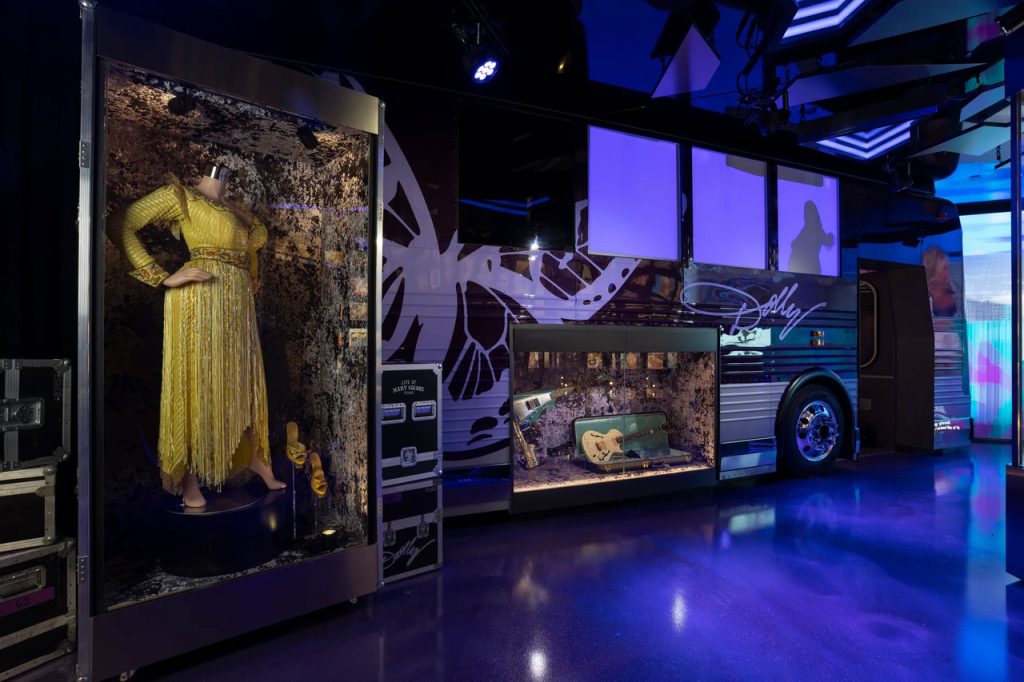
The final stretch of the museum is designed to feel less like another gallery and more like stepping backstage before a Dolly Parton performance. After the life-story portion, visitors encounter a recreation of Dolly’s tour bus, a dressing-room setting and a backstage hallway before reaching a virtual performance featuring footage from what is described as her last official recorded concert. The sequence was intentionally designed as the crescendo of the museum. The bus also has a personal connection to Dolly’s family because touring was a major part of her life, and her niece Rebecca Seaver recalled traveling with her and spending time on the bus as a child. Before the concert experience, visitors pass through another of the museum’s “God light” moments, referencing Dolly’s practice of praying before performances. The virtual concert includes recognizable hits while keeping the setting relatively intimate. Together, the bus, dressing room, backstage passage and recorded performance turn the final portion into a recreation of the world surrounding Dolly before she stepped onto a stage.