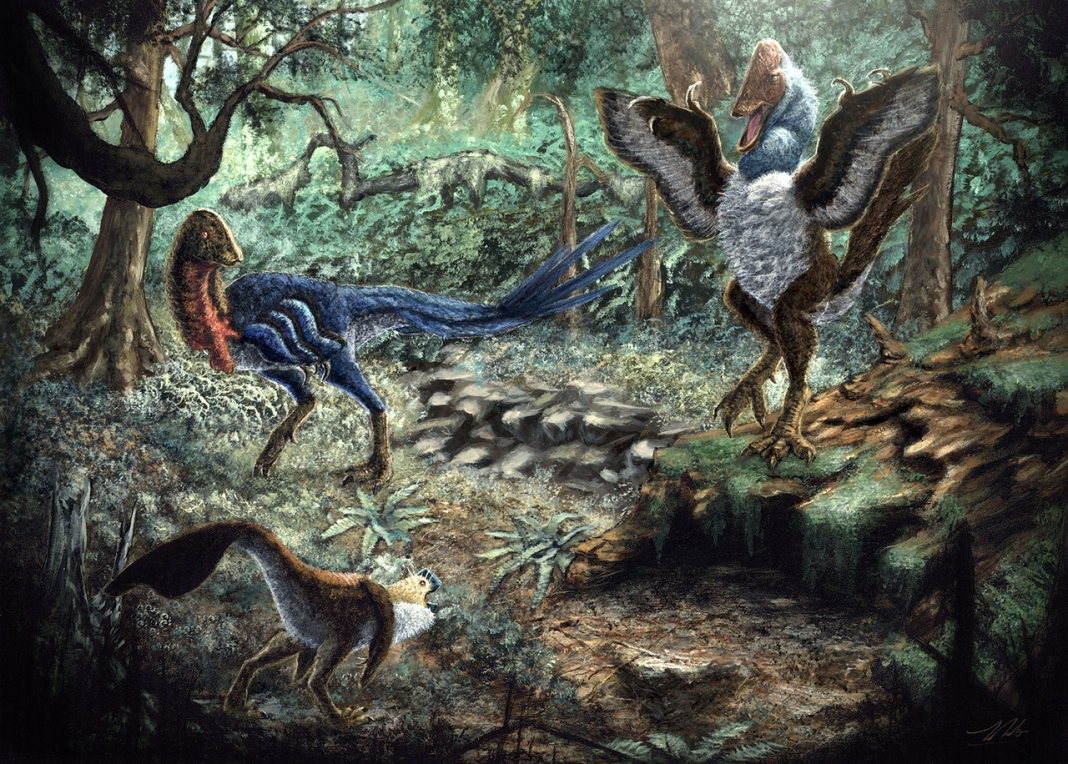

Dinosaurs are often imagined as fearsome predators or enormous plant-eaters, but a newly discovered species is revealing a much more unusual side of prehistoric life. Meet Infernogallus jamesi, a turkey-sized dinosaur that lived around 66 million years ago and appears to have specialized in eating fruit. Its unusual skull and distinctive chewing mechanism helped it process fleshy fruits in ways that researchers compare to modern parrots. Discovered in the famous Hell Creek Formation, this small dinosaur could also offer fresh clues about how prehistoric animals interacted with flowering plants and potentially helped spread their seeds.
Infernogallus Was the First Known Dinosaur Specialized for Eating Fruit
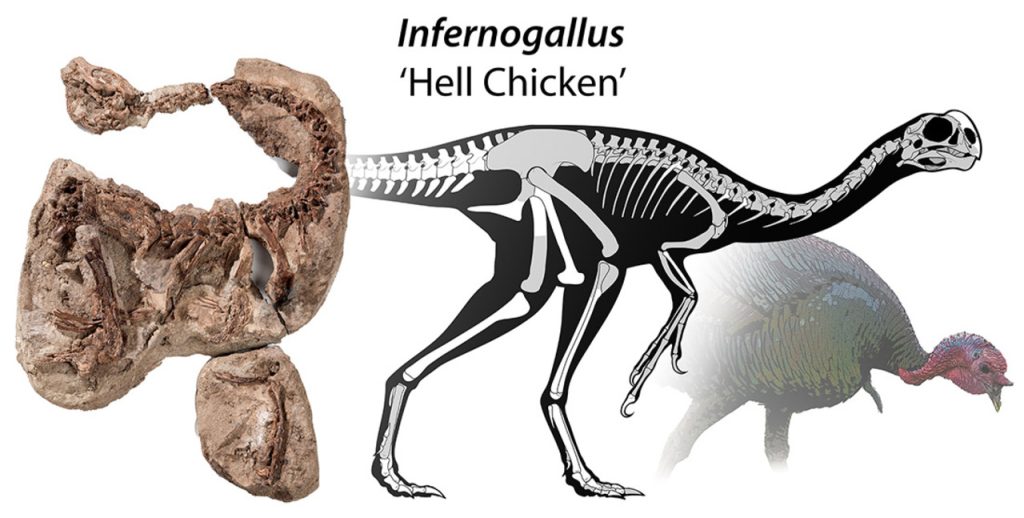
Not every dinosaur needed sharp teeth or powerful jaws to survive during the Cretaceous period. Some found an entirely different way to get by, and Infernogallus jamesi is a fascinating example. Paleontologists have identified this newly described, small oviraptorosaur as the first known dinosaur with clear anatomical adaptations for a specialized fruit-based diet. The discovery is particularly surprising because Infernogallus belonged to a lineage that evolved from meat-eating ancestors. Researchers believe it lived approximately 66 million years ago, when flowering plants were becoming increasingly important across terrestrial ecosystems. Its skull suggests that fleshy fruits, particularly varieties with a large central seed surrounded by edible pulp, made up a substantial part of its diet. These fruits are broadly known as drupes, a category that includes modern peaches, cherries, mangoes, and olives. Rather than swallowing everything whole, Infernogallus appears to have been adapted to process the soft flesh and separate it from the central seed. The discovery, based on a remarkably preserved skull and partial skeleton, gives scientists their clearest evidence yet that some dinosaurs developed highly specialized relationships with flowering plants. It also challenges the traditional picture of dinosaur diets, revealing that their feeding habits were considerably more varied than previously understood.
Its Unusual Skull Allowed It to Chew Fruit Like Modern Parrots
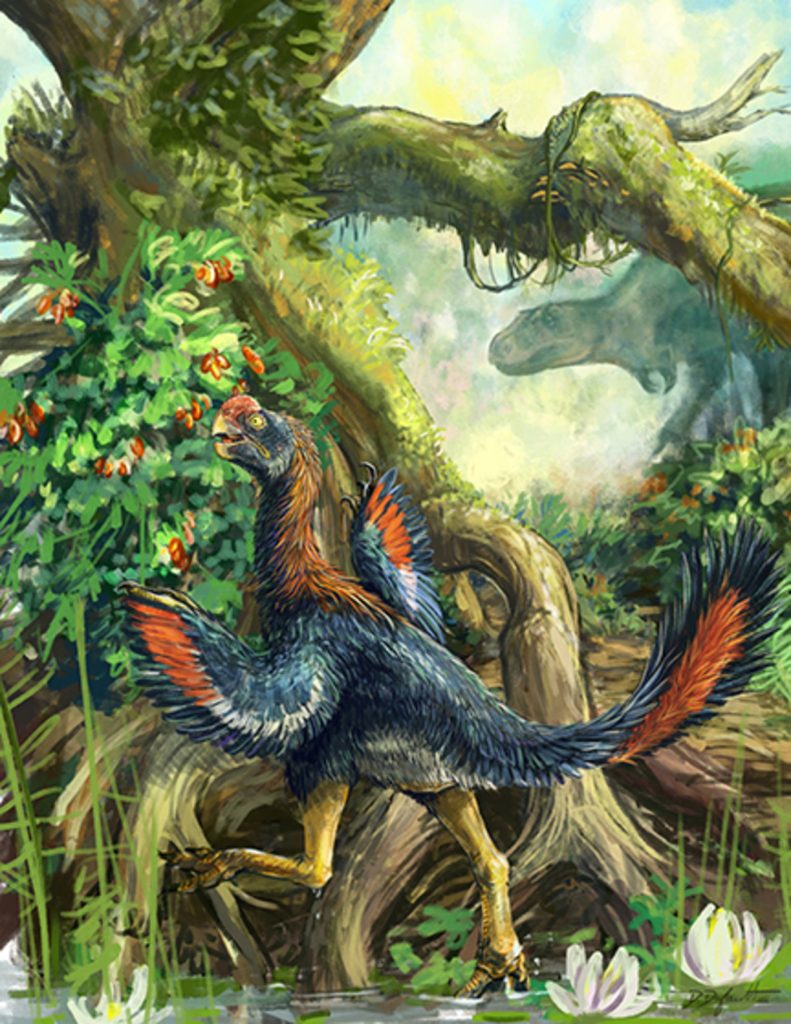
The real surprise behind Infernogallus lies in its unusual skull, which had a remarkably sophisticated arrangement of bones and muscles for processing soft food. Researchers used CT scans to reconstruct its skull and examine how its chewing muscles were positioned. They discovered that the bones forming the roof of its mouth, known as the palatal bones, curved downward into the oral cavity. This unusual arrangement changed the orientation of certain chewing muscles, allowing them to operate in a forward-and-backward direction rather than relying primarily on the up-and-down movement seen in many other dinosaurs. As a result, Infernogallus could move its beak in a sliding chewing motion that helped mash and separate fruit flesh from seeds. This arrangement has a striking modern comparison in the vulturine parrot, a bird that specializes in eating fruit. The dinosaur also possessed ridges and grooves along its beak that helped crush and shear soft plant material. Its movable jaw joint provided additional flexibility, making the entire feeding mechanism particularly effective. These adaptations are especially interesting because similar features evolved independently in certain modern fruit-eating animals. Although no living animal has precisely the same combination of characteristics, the similarities offer paleontologists a valuable way to understand how this ancient dinosaur processed its food.
The Turkey-Sized Dinosaur Lived Alongside T. rex and Triceratops
Despite having a relatively small body, Infernogallus inhabited one of the most recognizable dinosaur landscapes in prehistoric North America. The animal lived in the Late Cretaceous Hell Creek environment, a region that covered parts of present-day Montana, North Dakota, South Dakota, and Wyoming. Its fossils were discovered in the Hell Creek Formation, the same geological formation famous for preserving remains of Tyrannosaurus rex and Triceratops. Infernogallus was approximately the size of a modern turkey, measuring around 1.5 meters (five feet) long and weighing roughly 11 to 12 kilograms (24 to 26 pounds). It belonged to a group of toothless, feathered dinosaurs called caenagnathids, which were part of the broader oviraptorosaur lineage. Although its relatives had evolved from meat-eating ancestors, Infernogallus had developed a very different way of life, relying heavily on soft plant material and fruit. Its small size would have made it a very different presence from the enormous predators and herbivores sharing its habitat. Researchers believe it was probably covered in feathers, based on evidence from closely related dinosaurs, although feathers have not been directly preserved in the known fossil remains. Its nearly complete, articulated skull and partial skeleton are particularly valuable because fossils of small dinosaurs are relatively uncommon. The specimen is currently displayed at the Royal Ontario Museum, giving visitors an opportunity to see an animal that occupied a surprisingly specialized ecological role.
Its Discovery Could Reveal a Hidden Role Dinosaurs Played in Spreading Seeds
The discovery of a fruit-eating dinosaur raises an interesting question about how prehistoric flowering plants spread across ancient landscapes. Today, many birds, mammals, and reptiles help flowering plants reproduce by eating fruit and transporting seeds to different locations. Some seeds survive digestion and are deposited elsewhere, potentially allowing new plants to grow away from their parent vegetation. Scientists now believe that certain dinosaurs may have performed a similar ecological function during the Cretaceous period. Infernogallus is particularly interesting because its specialized jaws suggest that it could process fleshy fruits while leaving their larger central seeds relatively intact. This raises the possibility that caenagnathids helped move seeds across the landscapes they inhabited. The timing is also significant. Flowering plants, known scientifically as angiosperms, were becoming increasingly dominant during the Cretaceous, gradually transforming terrestrial ecosystems that had previously been dominated by cone-bearing plants and other vegetation. As fruits became larger and more diverse, they created new food opportunities for animals capable of processing them. However, researchers are careful not to claim that Infernogallus definitely spread seeds or played a major role in the expansion of flowering plants. There is currently insufficient direct evidence to establish how frequently these dinosaurs transported seeds or how far they might have carried them. Nevertheless, the discovery introduces a compelling possibility: large-bodied fruit-eating dinosaurs may have contributed to plant reproduction in ways that paleontologists have not fully recognized.