
NASA’s Perseverance rover has uncovered new clues about Martian dust that could change how scientists prepare for future human missions to the Red Planet. Researchers detected extremely fine particles that earlier measurements could not fully capture, raising fresh questions about astronaut health, spacesuit design and habitat safety. The findings highlight a challenge that goes beyond keeping equipment clean. From hidden respiratory risks to advanced dust-removal technology, here are six discoveries that could shape how NASA prepares humans to explore Mars.
Perseverance Detected Dust Particles Smaller Than Previously Measured
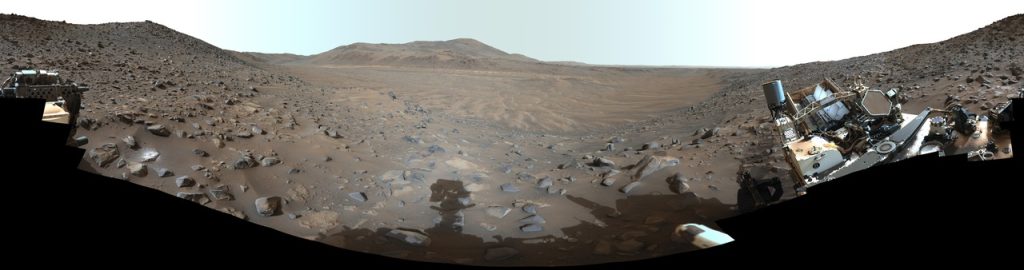
Mars may look like a world covered in ordinary reddish dust, but NASA’s Perseverance rover has revealed that some of its particles are far smaller than earlier measurements could detect. Using its PIXL instrument, short for Planetary Instrument for X-ray Lithochemistry, scientists identified fine particles measuring less than 2.5 micrometers and ultrafine particles around 100 nanometers across. To put those numbers into perspective, a human hair is roughly 70 micrometers wide, making these dust particles tiny by comparison. Earlier measurements on Mars could resolve particles down to approximately 3 micrometers, leaving the smallest fraction less clearly understood. Perseverance detected particles on samples of materials carried aboard the rover, including Teflon, Vectran and basaltic glass. Some of the measured particles ranged from approximately 100 to 300 nanometers. These findings represent the first direct on-site measurements of fine and ultrafine Martian dust. The discovery matters because particle size influences how dust behaves, where it can travel and how easily it can enter sensitive equipment or the human respiratory system. Better measurements give NASA engineers a clearer picture of the conditions future astronauts could face while working on the Martian surface.
The Smallest Dust Particles Could Pose Serious Health Risks
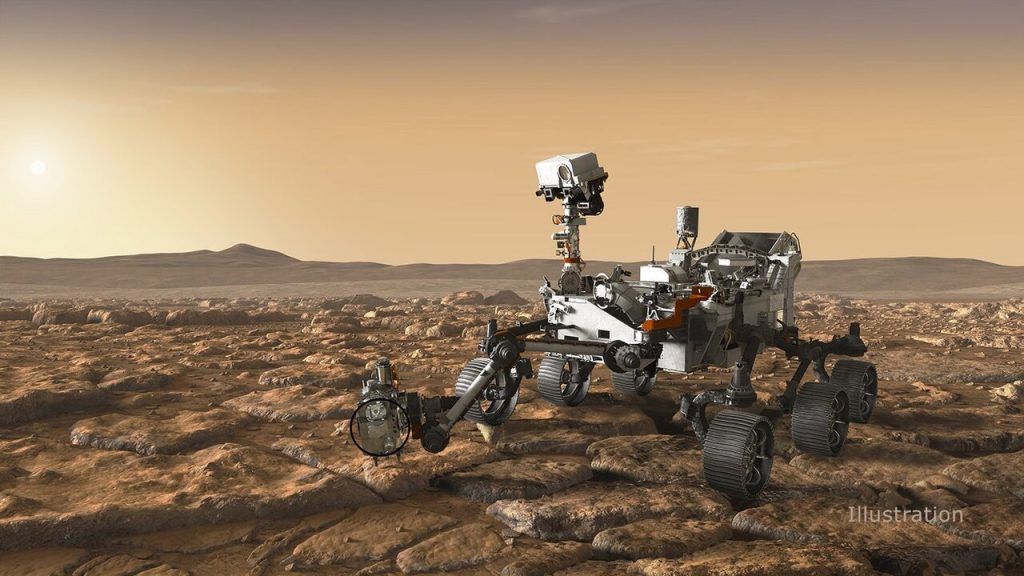
The danger of Martian dust is not simply a matter of how much of it astronauts encounter. Its size and chemical makeup could make even tiny particles a concern during extended missions. On Earth, fine particulate matter measuring less than 2.5 micrometers can penetrate deep into the lungs, and some particles can enter the bloodstream. Research has also found that ultrafine particles measuring around 100 nanometers or less may travel from the nasal cavity toward the brain along the olfactory nerve. Mars presents additional challenges because its dust contains silicate minerals and chemically reactive substances, including perchlorates and reactive iron. Perchlorates can interfere with thyroid function, while reactive iron can contribute to cellular damage. Scientists do not yet have enough direct human exposure data to determine precisely how dangerous Martian dust would be to astronauts, so the potential risks should not be treated as established medical outcomes for Mars explorers. The level of danger will depend partly on the concentration of dust, the duration of exposure and the effectiveness of protective equipment. Perseverance’s measurements give researchers a more reliable starting point for assessing those risks and developing appropriate exposure limits, cleaning procedures and health protections before humans travel to Mars.
Static Electricity Determines Which Dust Particles Stick to Spacesuits
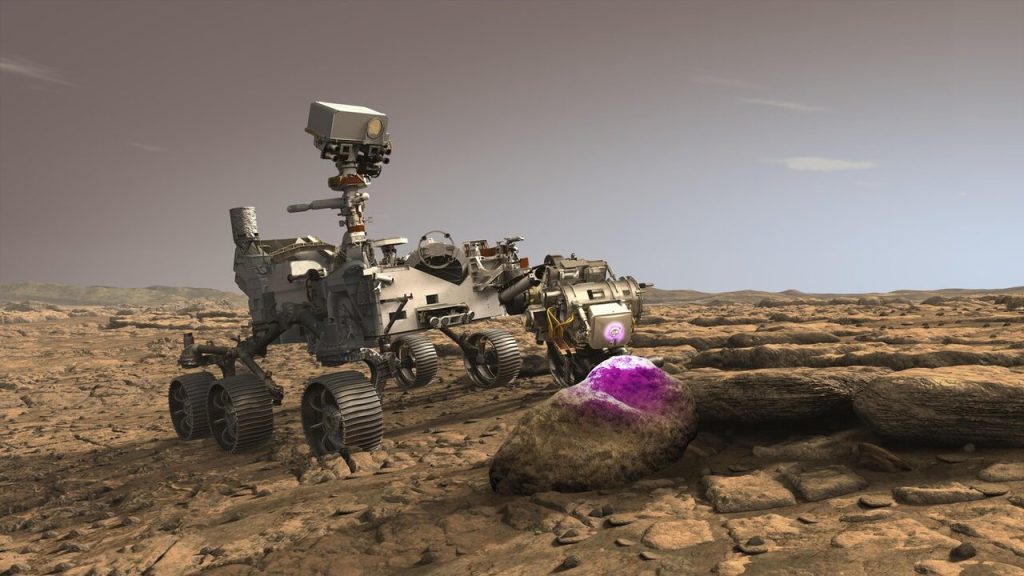
Getting dust off a spacesuit could prove surprisingly difficult, especially when the particles are too small to see with the naked eye. Perseverance’s measurements suggest that static electricity plays an important role in determining which particles cling to different materials. As dust grains collide in the Martian atmosphere, they can develop electrical charges. The materials they encounter then attract particles differently, depending on their properties. NASA’s research found that the finest dust remained attached to samples through years of rover driving and drilling, even as larger clumps could be shaken loose over time. This distinction matters because the particles that remain behind may be the hardest to remove and could pose the greatest challenge for future crew-support systems. Astronauts working outdoors could accumulate dust on their suits, gloves and other equipment before returning to a habitat. If that dust enters an enclosed living space, it could contaminate surfaces and increase the chance of inhalation. The results suggest that dust management cannot rely solely on brushing away visible debris. Engineers will need to understand how electrical attraction works across different materials and develop practical ways to remove the finest particles before they follow astronauts indoors.
Spacesuit Materials Could Be Redesigned to Resist Dust
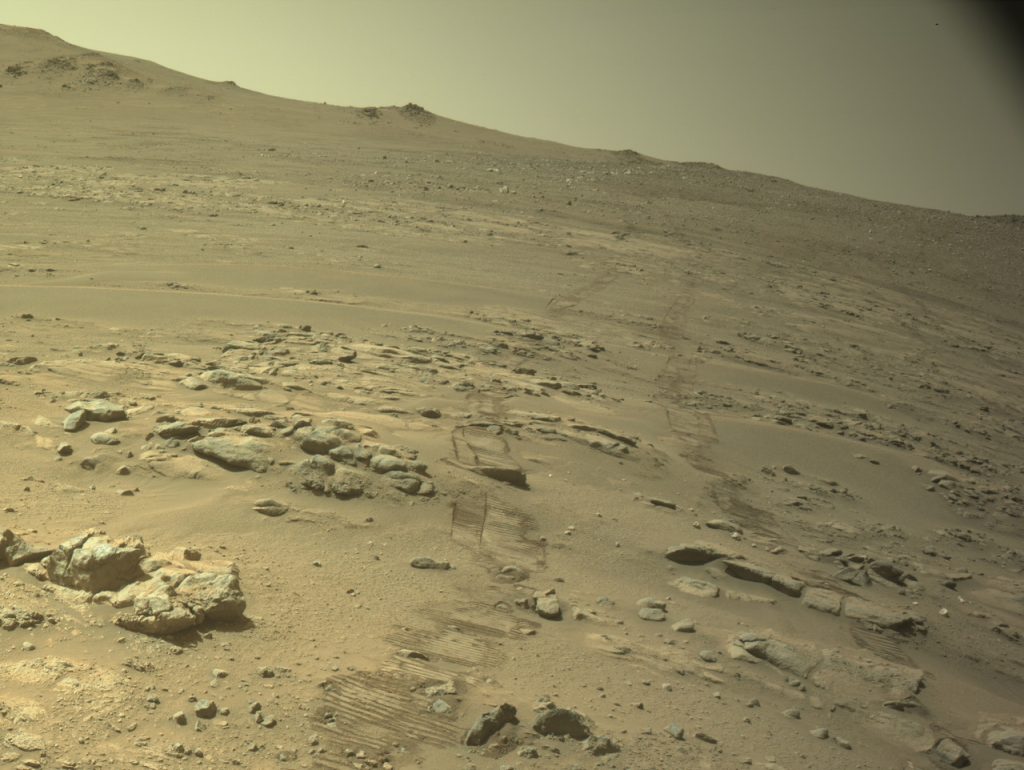
Choosing the right fabric for a Mars spacesuit could become just as important as designing its life-support systems. NASA sent several small material samples to Mars aboard Perseverance so researchers could study how they respond to the planet’s harsh environment. These samples include Teflon and Vectran, materials used in spacesuits for different purposes. Teflon has nonstick properties, while Vectran is a strong, cut-resistant fiber used in areas such as the palms of astronaut gloves. Scientists examined the fine dust accumulating on these samples and found that some materials retained particles differently from others. In particular, the results showed that organic polymer materials such as Teflon can collect fine dust despite their familiar nonstick properties. That does not mean Teflon is unsuitable for spacesuits, but it highlights why performance on Earth cannot fully predict how a material will behave on Mars. The findings could help engineers compare fabrics, protective coatings and surface treatments when developing future equipment. A material that attracts less dust could make it easier to clean suits after outdoor work and reduce the amount of contamination carried into a habitat. Researchers must still consider other essential requirements, including flexibility, strength, durability and protection against radiation, when deciding which materials are best suited for astronauts.
Future Mars Habitats Could Use Suitports and Advanced Airlocks
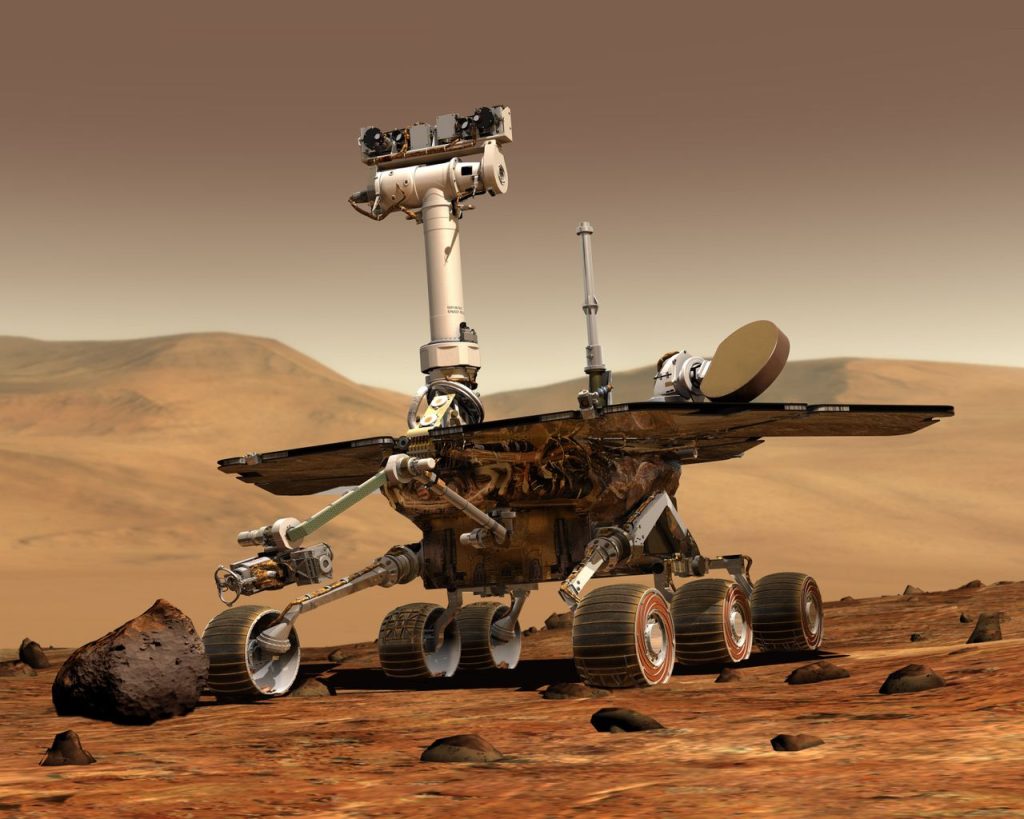
Keeping Martian dust outside a crew’s living quarters may require a different approach to entering and leaving a habitat. One option NASA researchers have highlighted is a suitport, a system that allows a spacesuit to remain attached to the outside of a habitat. Instead of bringing a dusty suit through an interior doorway, an astronaut enters it from inside the habitat and seals it in place before heading outdoors. When the astronaut returns, the suit can remain outside, limiting the amount of dust carried into the living area. Another possibility is a dual-chamber airlock, which creates an additional barrier between the exterior environment and the habitat’s clean interior. Such systems could help control contamination during repeated outdoor excursions. Perseverance’s measurements are useful because engineers now have direct evidence that the smallest Martian dust particles can cling to surfaces for long periods. Larger clumps may fall away, but finer particles can remain attached and become harder to remove. Habitat designs will therefore need to consider more than visible dust and debris. Air filtration, cleaning procedures, suit storage and the movement of people and equipment between indoor and outdoor spaces will all matter. These approaches are potential solutions rather than finalized designs for future Mars missions, but the new measurements can help NASA evaluate which systems offer the best protection.
Perseverance Is Helping NASA Prepare for Human Exploration
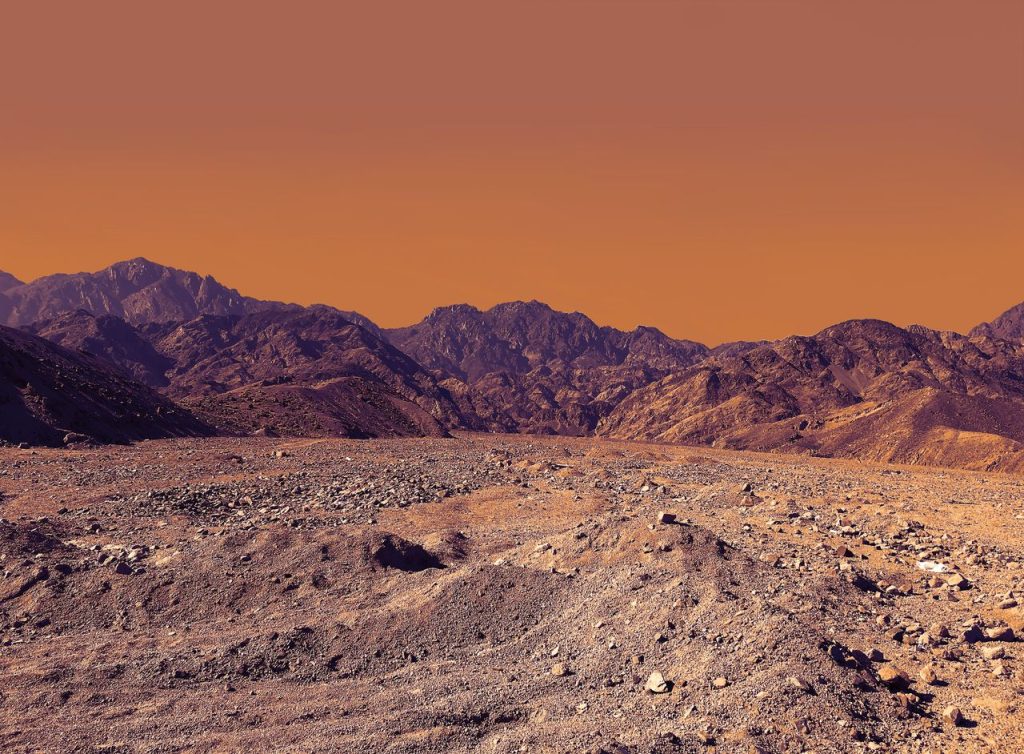
Perseverance was built primarily to search for signs of ancient microbial life and study the geology of Mars, but its work is also helping scientists prepare for a future human presence on the planet. Among the equipment carried by the rover are samples of spacesuit materials designed to be exposed to the Martian environment. Scientists can examine how dust accumulates on those samples after long periods on the surface, providing evidence that cannot be gathered as easily in laboratories on Earth. The PIXL instrument supplied the measurements that revealed the presence of fine and ultrafine dust, while samples mounted on calibration targets allowed researchers to study how particles collected on different materials. The results can support work on spacesuit design, habitat engineering, dust-removal methods and astronaut health standards. NASA is also investigating ways to remove dust from equipment in other extraterrestrial environments. In March 2025, an Electrodynamic Dust Shield was tested on the Moon, using electric fields to clear lunar dust from surfaces such as glass and thermal radiators. That technology is not a ready-made solution for every Martian dust problem, since lunar and Martian environments differ, but it illustrates the range of approaches being explored. By combining observations from robotic missions with laboratory testing and technology demonstrations, NASA can address some of the risks of dust before astronauts undertake long-duration missions on Mars.