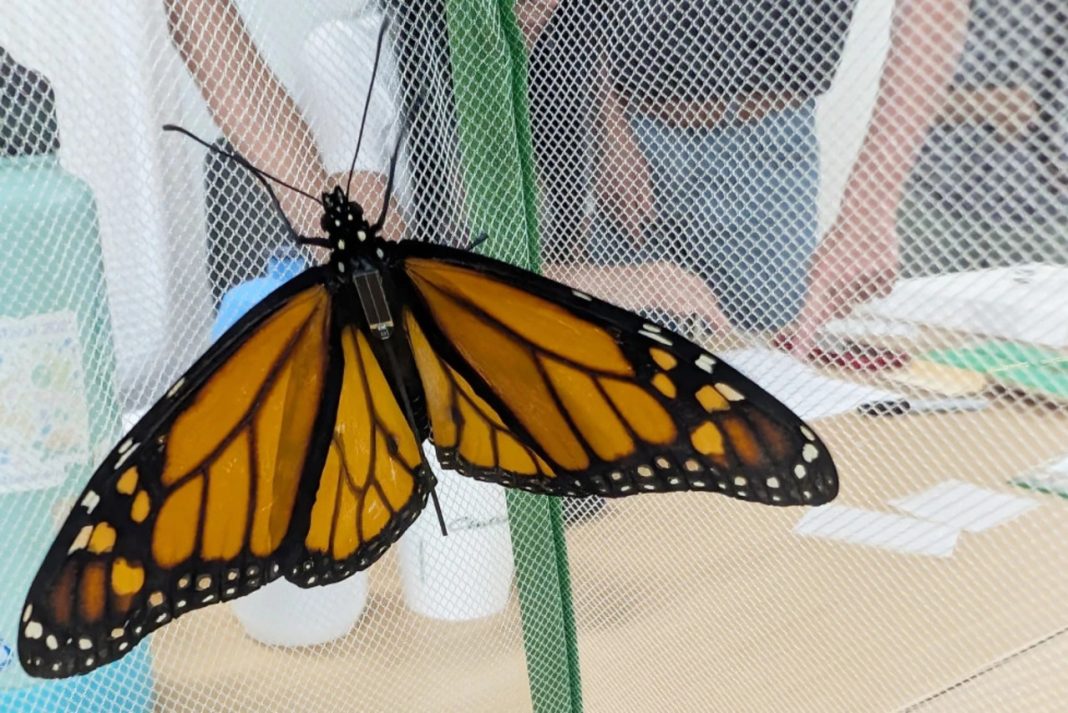

Nearly 1,750 monarch butterflies are taking flight with tiny tracking devices attached to their bodies, giving scientists an unprecedented look at their remarkable migration. The technology is helping researchers uncover unexpected routes, identify important resting places, and understand the challenges these delicate insects face along the way. The findings could provide valuable clues for protecting monarch populations that have declined sharply over the past few decades.
Nearly 1,750 Monarch Butterflies Are Carrying Tiny Solar-Powered Trackers

Following a butterfly across thousands of miles once seemed almost impossible, but remarkably small technology is changing that. Scientists have attached solar-powered radio transmitters to nearly 1,750 monarch butterflies this year, allowing researchers to detect their movements during migration. Each device costs around $200 and weighs roughly as much as a drop of water. Researchers developed a careful tagging process to avoid placing too much weight on the insects. Most selected butterflies weigh more than 400 milligrams, giving them a better chance of carrying the equipment without being overburdened. The devices are attached to the butterflies’ bodies using adhesive, and the insects are released after the procedure. The public can also follow reported detections through the free Project Monarch Science app. This technology gives researchers a new way to study individual journeys rather than relying entirely on occasional sightings and traditional monitoring methods. However, the tags are not suitable for every butterfly, and scientists continue to examine how they might affect natural behavior.
Scientists Are Discovering Unexpected Migration Routes Across North America

The monarch migration is often described as a journey from Canada and the northern United States to wintering forests in central Mexico, but the routes butterflies take can be surprisingly varied. New tracking information is revealing connections that researchers had previously suspected but could not confirm at this scale. One particularly notable finding involves an eastern monarch detected in Utah, west of the Rocky Mountains, before making its way toward Mexico. Other tagged butterflies traveled down the Eastern Seaboard to Florida, crossed the Gulf of Mexico, and continued into Mexico. These discoveries suggest that the boundaries between migration routes and populations may be more complicated than scientists once understood. Monarchs that travel east of the Rocky Mountains often pass through a narrow region known as the Texas funnel during their seasonal journeys. The exact route can shift from year to year depending on environmental conditions. Researchers have already recorded about 175 tagged butterflies in Mexico during the current migration season, providing valuable evidence of how these insects move across such a vast landscape.
The Trackers Are Helping Researchers Identify Critical Stopover Locations

For a migrating monarch, reaching its wintering grounds is only part of the challenge. Along the way, butterflies need places to find nectar, access water, and rest safely overnight. These stopover areas can make a major difference to their ability to complete a journey that may stretch roughly 3,000 miles from southern Canada to central Mexico. Researchers are particularly interested in understanding where monarchs pause during migration and how those locations change with the seasons. In Texas, scientists are combining tracking technology with community science to study the areas butterflies use as they travel through the state. Their choices may depend on the availability of flowering plants, water, and trees that provide shelter when they settle for the night. The Texas funnel is especially important because large numbers of eastern monarchs pass through this region during their fall journey south and their spring movement north. Identifying these resting and feeding areas could help conservationists decide where habitat protection and restoration efforts would make the greatest difference.
New Tracking Data Could Help Protect Monarchs From Population Decline
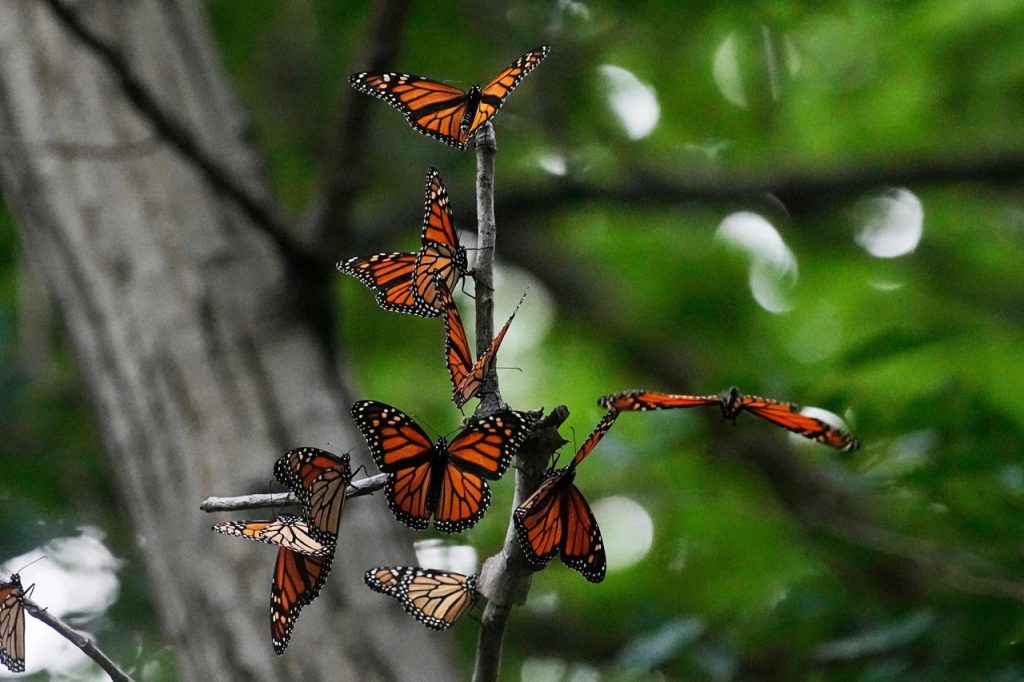
The urgency behind this research becomes clearer when looking at how sharply monarch populations have fallen. Since the mid-1990s, eastern monarch numbers have declined by more than 80%, while western monarch populations have dropped by roughly 95%. Several pressures are contributing to these losses. Pesticides can damage milkweed, the plant monarchs depend on to lay their eggs and the only food source for their caterpillars. Climate change adds another layer of difficulty by disrupting the environmental cues that guide migration. Unusually warm conditions can delay the butterflies’ departure, while freezing temperatures may threaten those that have not reached their wintering grounds. Prolonged drought can also reduce the water and nectar supplies they need along the way. Roads create another danger, as butterflies can be struck by passing vehicles, while development continues to reduce important habitats, including forests used by western monarchs in California. Better migration data could help conservationists respond with more targeted measures, such as planting milkweed and other pollinator-friendly flowers, protecting overnight shelter areas, and improving conditions along transportation corridors. The tracking technology cannot solve these problems on its own, but it can help reveal where protection is most urgently needed.