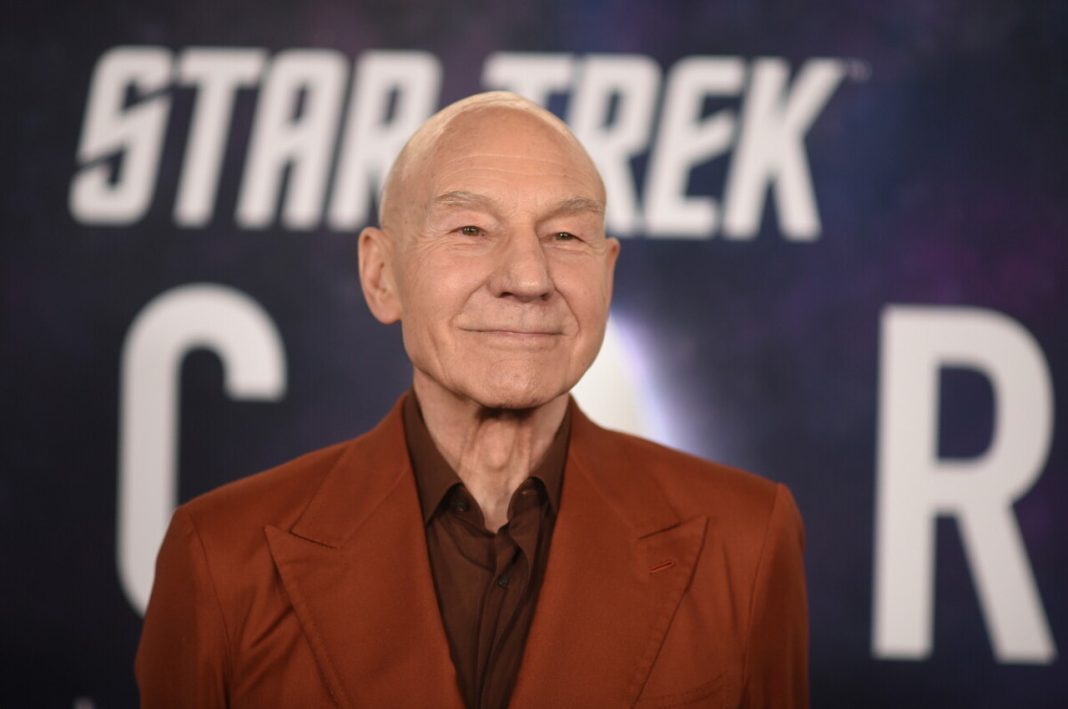

Patrick Stewart became a household name through his portrayal of Captain Jean-Luc Picard in Star Trek, but his remarkable career extended well beyond the famous science fiction franchise. From bringing the wisdom of Professor Charles Xavier to the X-Men films to delivering acclaimed Shakespearean performances on stage, Stewart consistently demonstrated an impressive range. He explored everything from classic literary tragedies and fantasy epics to unconventional comedies, often choosing roles that challenged audiences’ expectations. His collaborations with fellow acting greats, award-winning theatrical performances, and willingness to experiment with different genres helped establish him as one of Britain’s most versatile performers. Here are eight memorable roles that reveal just how much more there was to his career than Star Trek.
Professor Charles Xavier in X-Men
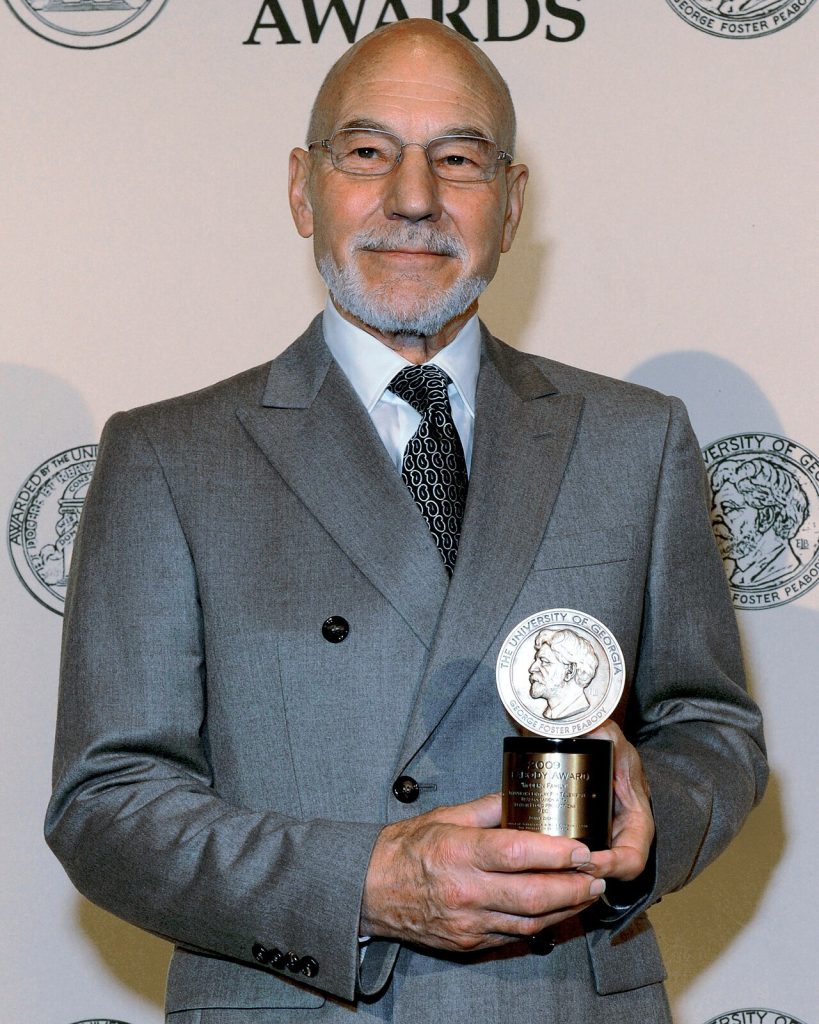
Patrick Stewart brought an extraordinary sense of wisdom and humanity to Professor Charles Xavier, making him one of the most memorable characters in the X-Men franchise. First appearing in the 2000 film X-Men, Stewart played the powerful telepath who founded and led the School for Gifted Youngsters. Xavier believes mutants and humans can coexist peacefully, even as prejudice and fear threaten that possibility. His calm personality, thoughtful leadership, and willingness to protect others made him an important counterbalance to Ian McKellen’s Magneto, who believed mutants needed to fight for their survival. Stewart reprised the role across several films, including X2: X-Men United, X-Men: The Last Stand, and X-Men: Days of Future Past. His performance took a particularly emotional turn in Logan (2017), where audiences saw an aging and vulnerable Xavier struggling with the consequences of his powers. The film offered a much darker interpretation of the character and earned Stewart widespread critical praise. He later returned for a cameo in Doctor Strange in the Multiverse of Madness (2022), proving that his connection to the character remained an important part of his screen legacy.
Claudius in Hamlet

Shakespeare’s Hamlet gave Stewart an opportunity to demonstrate the classical acting abilities that had shaped much of his career. He portrayed Claudius, the King of Denmark who has murdered his brother, married his widow, and taken the throne. Although Claudius is often presented as the villain of the tragedy, Stewart brought considerable complexity to the character. Rather than portraying him as an openly sinister ruler, he presented a polished and seemingly reasonable politician whose charm concealed a deeply troubled conscience. The production, which featured David Tennant as Hamlet, attracted considerable attention because it brought together two actors already familiar to science fiction audiences through Star Trek and Doctor Who. However, the casting was far more than a publicity attraction. Stewart’s nuanced performance earned him an Olivier Award, recognizing his work in one of Shakespeare’s most demanding tragedies. His ability to make Claudius simultaneously persuasive, calculating, and vulnerable demonstrated the depth of his theatrical experience. It also reminded audiences that his commanding screen presence had its roots in decades of classical stage performances.
Macbeth in Macbeth
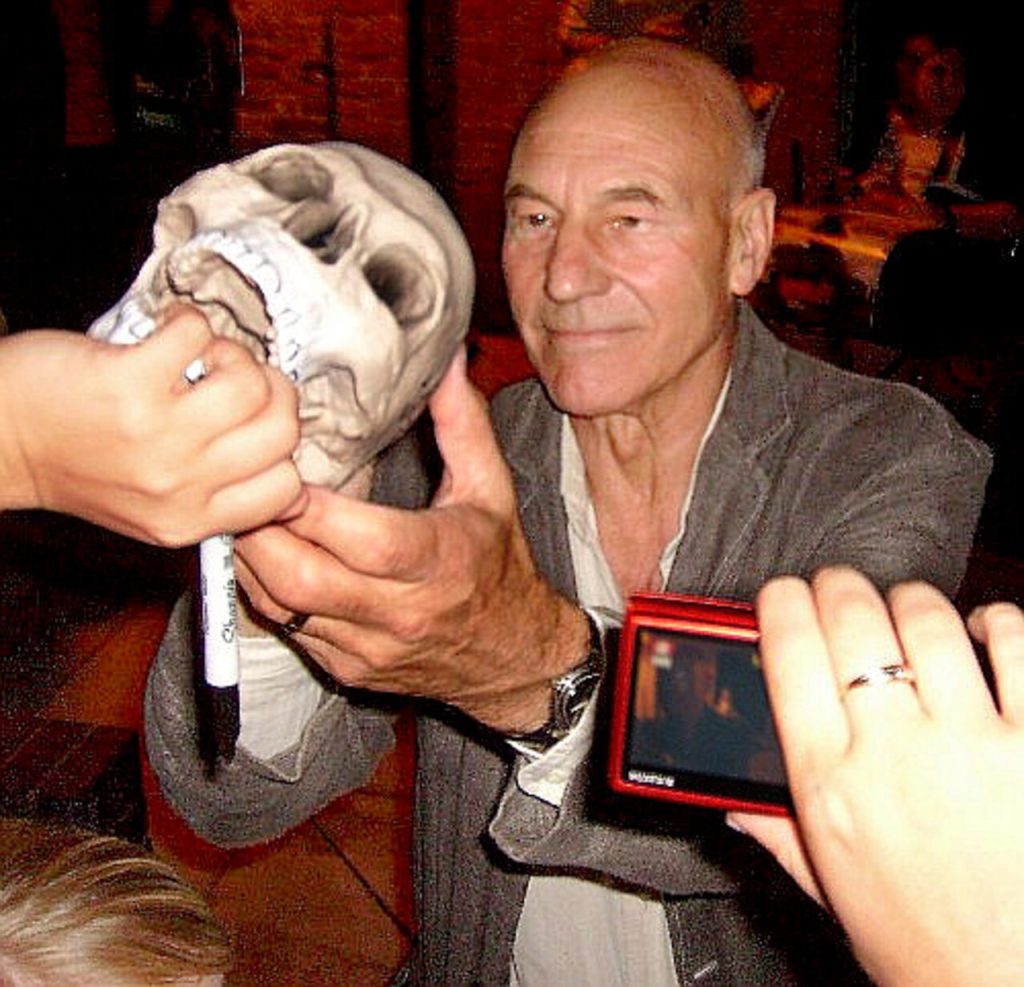
For Stewart, playing Macbeth was the fulfillment of an ambition that had stayed with him since adolescence. He had memorized much of Shakespeare’s tragedy when he was just 14, long before he became an internationally recognized actor. However, he did not professionally take on the title role until 2007, when director Rupert Goold cast him in a striking production at Chichester Festival Theatre in England. The interpretation placed the story in a bleak, modern-looking setting, giving the familiar tale of ambition and political violence an unsettling atmosphere. Stewart played Macbeth as a military figure whose desire for power gradually destroys his judgment and sense of security. His performance captured the character’s conflicting emotions, from confidence and ambition to paranoia, guilt, and desperation. The production subsequently moved to London’s West End, the Brooklyn Academy of Music, and Broadway in 2008. It earned Stewart his only Tony Award nomination, while critics praised the intensity and complexity of his interpretation. The role became one of the most celebrated theatrical achievements of his later career and demonstrated how his long relationship with Shakespeare continued to shape his work.
Ebenezer Scrooge in A Christmas Carol
Few theatrical performances demonstrate Stewart’s versatility quite like his one-man production of Charles Dickens’ A Christmas Carol. Instead of sharing the stage with an ensemble cast, he took on the challenge of performing the entire story himself, moving between Ebenezer Scrooge, the spirits, Bob Cratchit, and the many other characters who bring the Christmas classic to life. The production required remarkable control over his voice, facial expressions, timing, and physical movements. Each character needed a recognizable personality, yet Stewart had to maintain the flow of the story without allowing the transitions to become distracting. He first brought the production to Broadway in 1991 and returned to it in later years, including 1992, 1994, and 2001. His performance earned him a Drama Desk Award for Outstanding Solo Performance. What made the production particularly impressive was its ability to turn a familiar literary story into an intimate theatrical experience. Stewart’s background in Shakespeare and classical theater helped him handle Dickens’ language with confidence, while his distinctive voice gave the different characters a memorable presence. It remains an important example of his ability to hold an audience’s attention without relying on elaborate staging or a supporting cast.
Vladimir in Waiting for Godot
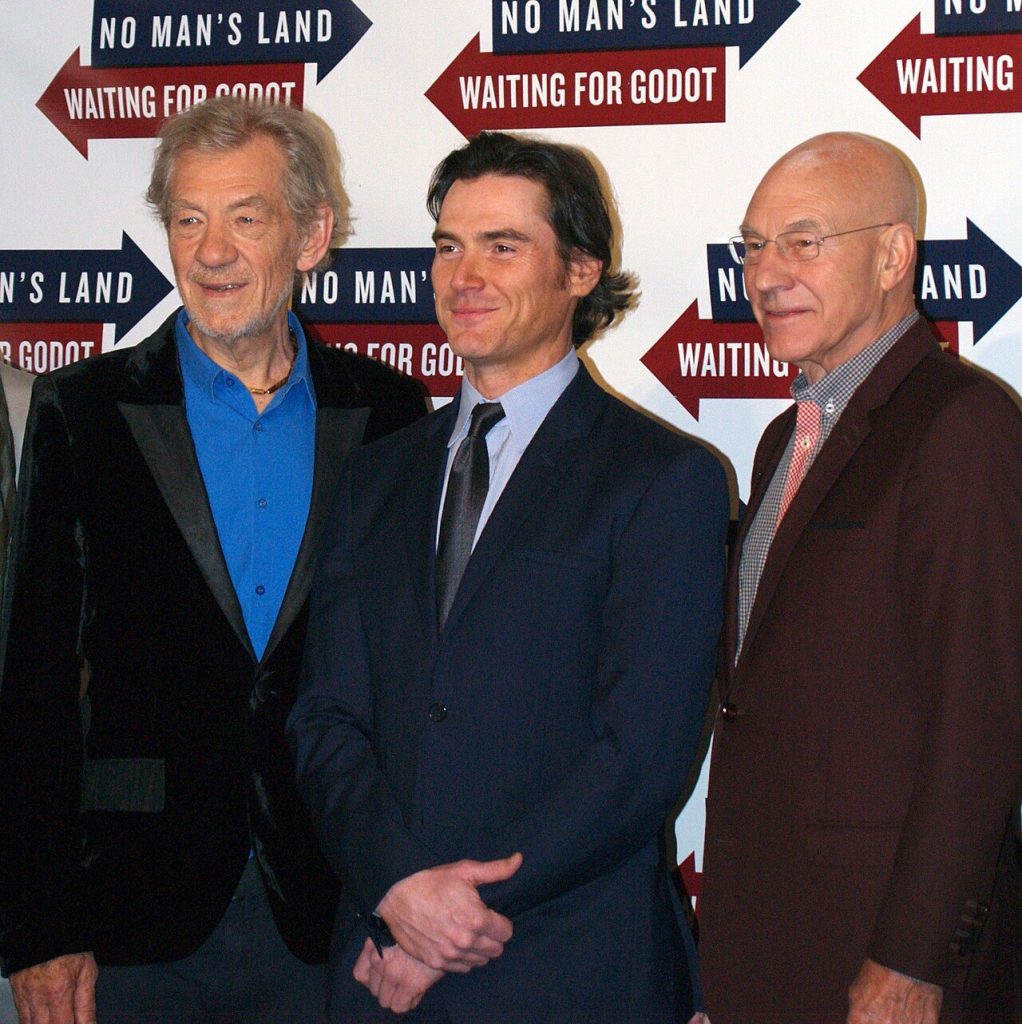
Stewart’s friendship with fellow actor Ian McKellen produced some memorable theatrical collaborations, including their appearance together in Samuel Beckett’s Waiting for Godot. Stewart played Vladimir, one of two wandering characters who spend the play waiting for a mysterious figure named Godot, who never arrives. McKellen portrayed Estragon, Vladimir’s companion. On the surface, the story appears simple, but Beckett uses the pair’s conversations, arguments, jokes, and repeated routines to explore loneliness, uncertainty, friendship, and the meaning of human existence. The production demanded a delicate balance between comedy and philosophical reflection, requiring both actors to make seemingly ordinary exchanges engaging. Stewart and McKellen first performed together in the 2009 production, which later reached London’s West End, toured the United Kingdom, and appeared on Broadway. Their established friendship helped create a natural chemistry between the two characters, although the performances still required considerable discipline and precision. The production also highlighted Stewart’s willingness to embrace unconventional theater rather than remain associated exclusively with Shakespearean drama or blockbuster films. For audiences, seeing two celebrated actors explore Beckett’s unusual world together became one of the memorable theatrical events of their later careers.
Hirst in No Man’s Land

Harold Pinter’s No Man’s Land gave Stewart another opportunity to explore the complicated relationships and uncomfortable silences that define modern theater. He played Hirst, a wealthy and successful writer who encounters an unexpected visitor in his London home. The play gradually develops into an unsettling examination of memory, identity, class, and the uncertainty of human relationships. Unlike conventional dramas, Pinter’s writing rarely provides straightforward explanations of what characters think or intend. Instead, meaning emerges through pauses, incomplete conversations, subtle changes in behavior, and the struggle for control between individuals. Stewart was particularly well suited to this style because his theatrical experience had taught him how much an actor could communicate without relying on lengthy speeches or dramatic gestures. He appeared alongside Ian McKellen, with the two actors bringing their established partnership to another challenging production. Directed by Sean Mathias, the play was performed in London’s West End, toured the United Kingdom, and reached Broadway. The production also demonstrated the range of Stewart’s theatrical interests. After years of playing commanding leaders and heroic figures on screen, he continued to seek out characters whose motivations were less obvious and whose stories required audiences to pay close attention.
Leondegrance in Excalibur
Before Star Trek: The Next Generation turned Stewart into an international television star, he was already building a film career through appearances in productions such as John Boorman’s Excalibur (1981). The fantasy epic retells the Arthurian legends surrounding King Arthur, the legendary sword Excalibur, and the rise and fall of Camelot. Stewart played Leondegrance, a nobleman connected to the political and military world surrounding Arthur’s kingdom. The film featured an impressive ensemble cast, including Nigel Terry, Helen Mirren, Liam Neeson, and Gabriel Byrne. Its dramatic interpretation of medieval mythology, with elaborate costumes, battles, and supernatural elements, made it a distinctive fantasy production of its time. Although Stewart’s part was smaller than some of his later leading roles, Excalibur remains an interesting entry in his filmography because it showcases his work before widespread recognition arrived through television. His classical training also made him a natural fit for a story built around legendary kings, loyalty, betrayal, and power. Looking back, the film represents an important stage in his transition from British theater to the international screen career that would eventually make him one of the most recognizable actors of his generation.
Walter Blunt in Blunt Talk
Stewart’s reputation for playing intelligent, dignified, and authoritative characters made his starring role in Blunt Talk an especially entertaining departure. The Starz comedy series, created by Jonathan Ames and produced by Seth MacFarlane, follows Walter Blunt, a British television personality attempting to establish himself as a respected news presenter in Los Angeles. Unfortunately, his professional ambitions are regularly disrupted by his impulsive behavior, questionable decisions, personal problems, and complicated relationships. Rather than relying on the commanding presence audiences associated with Captain Jean-Luc Picard or Professor Charles Xavier, Stewart played Blunt as an often ridiculous personality whose confidence frequently gets him into trouble. The role allowed him to explore physical comedy, awkward situations, and irreverent humor while making full use of his natural screen presence. The series premiered in 2015 and ran for two seasons, ending in 2016. It offered audiences a refreshing look at an actor who was clearly comfortable making fun of the dignified image he had built over decades. His performance also reinforced an important part of his legacy: Stewart was never limited to serious drama, science fiction, or Shakespeare. He could be just as entertaining when playing a deeply flawed character who repeatedly makes a mess of his own life.