
The line for a strong iced coffee can tell you a lot about a city. In St. Paul, it is now telling a story about Vietnamese coffee, neighborhood identity and a business ready to scale.
Phê Coffee’s planned expansion to Edina, Eagan and Grand Avenue feels bigger than a real estate update. It marks the next chapter for one of the Twin Cities’ most closely watched young cafe brands.
A Lowertown Cafe Turns Early Momentum Into Regional Growth
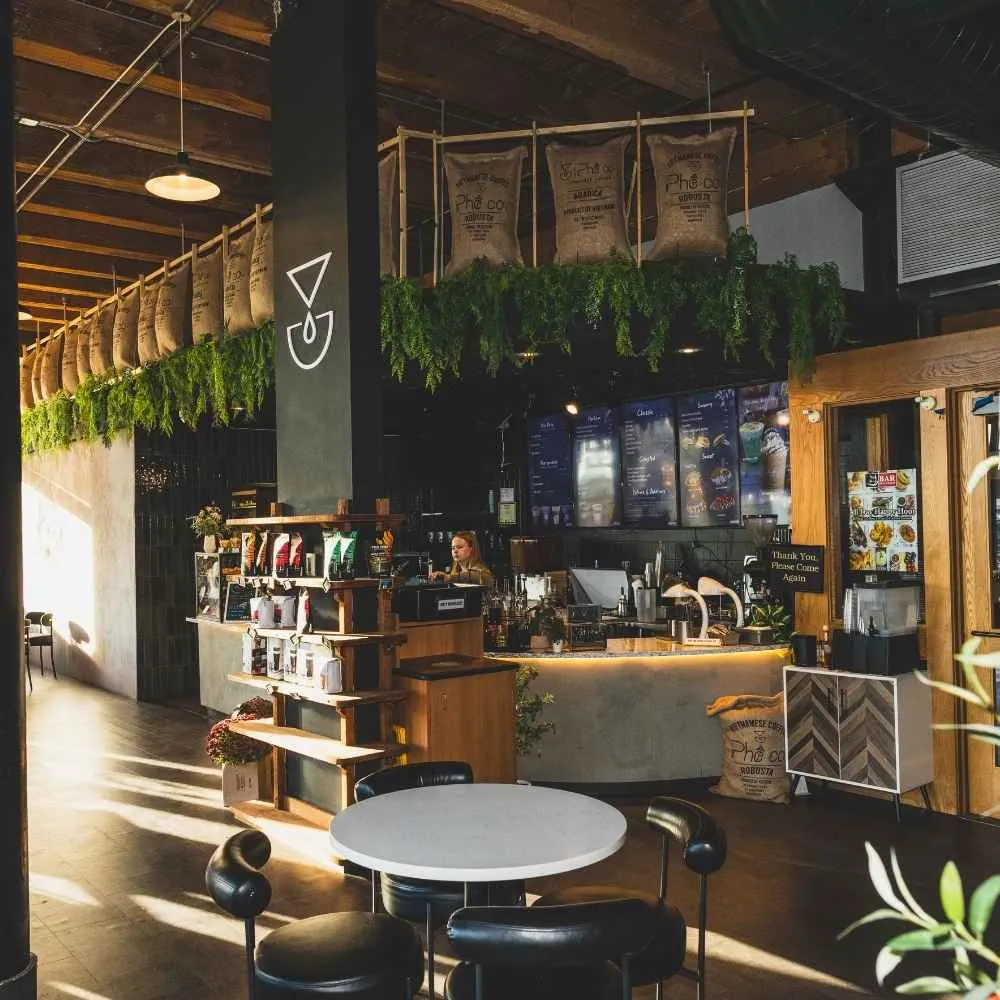
Phê Coffee began in St. Paul’s Lowertown, a neighborhood where foot traffic, sports crowds and downtown regulars can make or break a cafe. The shop found an audience quickly, helped by a menu that stood out in a region where third-wave espresso culture is common but dedicated Vietnamese coffee programs are still emerging. According to the Minneapolis/St. Paul Business Journal, the company now plans to add three locations in Edina, Eagan and on Grand Avenue, transforming a single-shop success into a four-cafe metro footprint.
That leap matters because it suggests the original business has moved beyond novelty and into repeatable demand. Expanding to three additional sites is not the kind of step owners take on hype alone. It usually means a concept has found operational rhythm, brand clarity and a customer base broad enough to travel across neighborhoods and suburbs. In this case, owner Dat Vu is reportedly leading the expansion alongside family members who helped build the company from the start.
The family dimension is central to understanding why Phê Coffee has resonated. Sahan Journal previously reported that Vu opened the business with his wife, Hanh Nguyen, his sister-in-law Chloe Nguyen and her husband Ryan Nguyen, all with roots in Vietnam and a shared desire to bring a fuller Vietnamese coffee experience to the Twin Cities. That origin story gives the brand more than personality. It gives it cultural coherence, something customers increasingly notice in a market crowded with coffee concepts chasing aesthetics before substance.
Lowertown also gave the company a useful proving ground. The neighborhood blends office workers, residents, market-goers and baseball fans near CHS Field, allowing a young cafe to test whether its drinks could connect with both coffee enthusiasts and casual customers. Visit Saint Paul has highlighted Phê Coffee as part of the area’s dining draw, a sign that the shop is already woven into how the neighborhood presents itself to locals and visitors alike. For a business still early in its life, that kind of civic visibility is powerful.
What comes next will test whether the Lowertown appeal can translate without losing its character. Yet the decision to expand into three distinct trade areas suggests confidence that the appeal is portable. Edina brings an affluent, highly competitive cafe landscape. Eagan offers suburban convenience and commuter patterns. Grand Avenue, by contrast, gives Phê Coffee a chance to embed itself in one of St. Paul’s most recognizable retail corridors. Together, the three sites form a strategic map, not just a growth spurt.
Why Vietnamese Coffee Is Becoming the Twin Cities’ Next Big Cafe Story
Phê Coffee’s growth is arriving at a moment when Vietnamese coffee is no longer a niche curiosity in the metro. Sahan Journal has documented a wave of Vietnamese coffee businesses around Minneapolis and St. Paul, while the Star Tribune has reported on an influx of cafes and trailers dedicated to the style. That matters because no single shop expands in isolation; successful growth usually rides a wider change in consumer taste, and the Twin Cities appear to be in the middle of one.
Part of the appeal is sensory. Vietnamese coffee drinks often deliver intensity, sweetness, texture and visual drama in one cup. Phin-brewed coffee, condensed milk, salted foam, pandan flavors and egg coffee all offer something distinct from the familiar latte-cappuccino-cold brew triangle that dominates many American cafe menus. For younger consumers especially, drinks that are both rooted in tradition and visually memorable can generate the kind of word-of-mouth that modern coffee businesses need.
But there is more going on than trendiness. Vietnamese coffee culture offers a different framework for what a cafe can feel like. It can be slower, bolder and more layered, with a stronger emphasis on texture, sweetness and customization than some minimalist specialty coffee spaces. In Minnesota, where immigrant food cultures have long shaped the dining scene, this style of expansion fits a broader pattern: communities introducing formats that were once underrepresented, then watching mainstream demand catch up.
The Twin Cities have become fertile ground for that change. Càphin has brought Vietnamese coffee into Minneapolis, while other players such as Giọt Cream Coffee and Sunday’s Cà Phê have helped widen public familiarity with the category, according to reporting from Sahan Journal, the Star Tribune and local profiles. As more customers learn the language of cà phê sữa đá, egg coffee and foam-topped specialty drinks, businesses like Phê Coffee no longer need to spend all their energy explaining the category. They can focus on refining the experience and broadening access.
That shift is crucial from a business standpoint. The first wave of culturally specific cafes often survives by drawing customers who already understand the product. The second wave grows by persuading newcomers that the category belongs in their daily routine. Phê Coffee appears poised to benefit from that second-wave dynamic. By opening in Edina and Eagan, not just in urban core neighborhoods, the company is effectively betting that Vietnamese coffee now has suburban pull as well as city credibility.
The spread also reflects a national pattern. Local reporting has noted that Vietnamese coffee’s momentum extends well beyond Minnesota, with similar growth visible in places such as California, Boston and New York. In other words, Phê Coffee is expanding at a moment when the category has cultural wind at its back. Timing, in hospitality, can be as important as taste.
What Customers Can Expect From the Brand as It Grows
The strongest cafe expansions are built on items customers can describe from memory. Phê Coffee seems to have that advantage. Reporting highlighted one of its signature draws: Vietnamese coffee topped with a salty, cheesy foam, a drink profile that is unusual enough to spark curiosity and satisfying enough to earn repeat orders. In a market saturated with interchangeable espresso bars, memorability is currency.
The menu’s appeal is broader than one standout drink. Earlier local coverage described offerings that include snacks and paninis, among them a banh mi panini, alongside specialty beverages with flavor profiles that feel both playful and rooted in Vietnamese tastes. Mpls.St.Paul Magazine has also noted drinks such as pandan-flavored iced coffee and banana-foam matcha at the Lowertown shop. That range matters because modern cafe economics increasingly depend on all-day relevance, not just the morning rush.
The planned Grand Avenue location may push that evolution even further. Sahan Journal reported that the new shop is expected to include a fast-casual menu of healthy, fresh Asian fusion bowls in addition to the coffee program. If that approach carries into the broader expansion strategy, Phê Coffee may be positioning itself less as a simple beverage stop and more as a flexible daytime dining brand. That would broaden check averages, lengthen customer visits and strengthen the case for destination traffic.
There is also a subtle operational advantage in Vietnamese coffee itself. The flavor profile is naturally strong, often built around robusta-based tradition and sweet balancing elements, which means iced drinks can travel well and hold up in takeaway format. In an era when many customers grab coffee between errands, school drop-offs or office commutes, drinks that remain vivid after ten or fifteen minutes in a cup carrier have real commercial value. Convenience is not glamorous, but it often determines which chains and independents scale successfully.
Brand identity will be the harder thing to preserve. Customers who fell for Lowertown’s atmosphere will want the new sites to feel like extensions of the original rather than diluted copies. That means architecture, service style, menu consistency and storytelling all matter. A growing business can add square footage quickly, but authenticity is slower to replicate. Phê Coffee’s challenge is to make each new location feel intentional enough that first-time customers discover the brand, while longtime fans still recognize the soul of the original shop.
The Geography of Expansion Says as Much as the Menu
The three planned locations are not random dots on a map. Each says something different about how Phê Coffee sees its future. Grand Avenue is perhaps the most symbolically charged. It gives the brand a place on one of St. Paul’s best-known commercial corridors, where independent retail still carries real cultural weight. A shop there would not simply add revenue; it would announce that Phê Coffee belongs in the city’s upper tier of recognizable neighborhood businesses.
Edina signals another ambition entirely. It is a polished, competitive market with established consumer spending and no shortage of attractive cafes. Opening there implies confidence that Phê Coffee can win customers who have abundant options and high expectations. If the brand succeeds in Edina, it will strengthen the case that Vietnamese coffee is not just growing in communities already primed for it, but crossing into the broader mainstream of Twin Cities coffee consumption.
Eagan offers yet another type of test. As a suburban employment and residential hub, it can reward concepts that are easy to revisit during daily routines. Successful cafes in places like Eagan often become part of the rhythm of school runs, hybrid commutes and weekend errands. For a company with longer-term metro ambitions, that kind of habitual traffic is invaluable. It creates durable sales patterns that are often less volatile than destination-only business.
Dat Vu’s own comments suggest this is not the end of the roadmap. Hoodline, drawing from earlier reporting, noted that Vu has talked about the possibility of eventually opening as many as 10 coffee shops around the Twin Cities. Even if that number remains aspirational, it reveals the scale of the vision. This is not a cautious one-store-at-a-time experiment. It is the outline of a regional brand in formation.
Still, expansion in the Twin Cities is never frictionless. The Business Journal noted Vu’s frustrations with post-Covid struggles and city permitting delays tied to St. Paul’s cyberattack, reminders that hospitality growth depends not only on customer enthusiasm but also on construction schedules, municipal systems and capital discipline. Those realities can slow even the most promising concept. Yet if Phê Coffee can navigate them, the reward is substantial: a rare chance to define a category while it is still taking shape in the local market.
What Phê Coffee’s Next Step Means for St. Paul and the Metro Food Scene
Every city likes to believe it can spot a future institution before the rest of the region catches on. Phê Coffee has begun to inspire that feeling in St. Paul. Its rise fits neatly into the local appetite for independent businesses with strong point of view, but it also speaks to something broader: the way immigrant entrepreneurship continues to refresh the Twin Cities dining landscape with forms, flavors and rituals that eventually become part of everyday life.
For St. Paul specifically, the company’s growth carries civic significance. A homegrown cafe concept scaling outward from Lowertown sends a different message than a national chain filling vacant storefronts. It suggests the city can still produce brands with enough originality to export. That matters for neighborhood morale, for commercial landlords seeking compelling tenants and for younger entrepreneurs wondering whether a distinctive concept can really grow here.
The expansion may also sharpen competition in a healthy way. As Vietnamese coffee becomes more visible, other operators will refine their own menus, storytelling and hospitality to keep pace. Customers benefit from that pressure. They get better drinks, more specific experiences and a wider sense of what the local coffee scene can include. The result is not just more places to buy caffeine, but a richer urban and suburban food culture.
There is a larger lesson here about how regional taste evolves. A decade ago, many Twin Cities consumers may have encountered Vietnamese coffee mostly in restaurants or as an occasional treat. Today, dedicated cafes are helping transform it into a regular ritual. That shift happens when businesses translate cultural specificity into daily habit without sanding off the details that made it meaningful in the first place. Phê Coffee appears to understand that balance unusually well.
If the Edina, Eagan and Grand Avenue shops open to the kind of response Lowertown earned, Phê Coffee will move from promising newcomer to one of the metro’s defining independent cafe brands. More importantly, it will help cement Vietnamese coffee as a permanent part of the Twin Cities’ drinking culture. For customers, that means more bold brews, more inventive menus and more reasons to cross town for a cup that tastes like momentum.