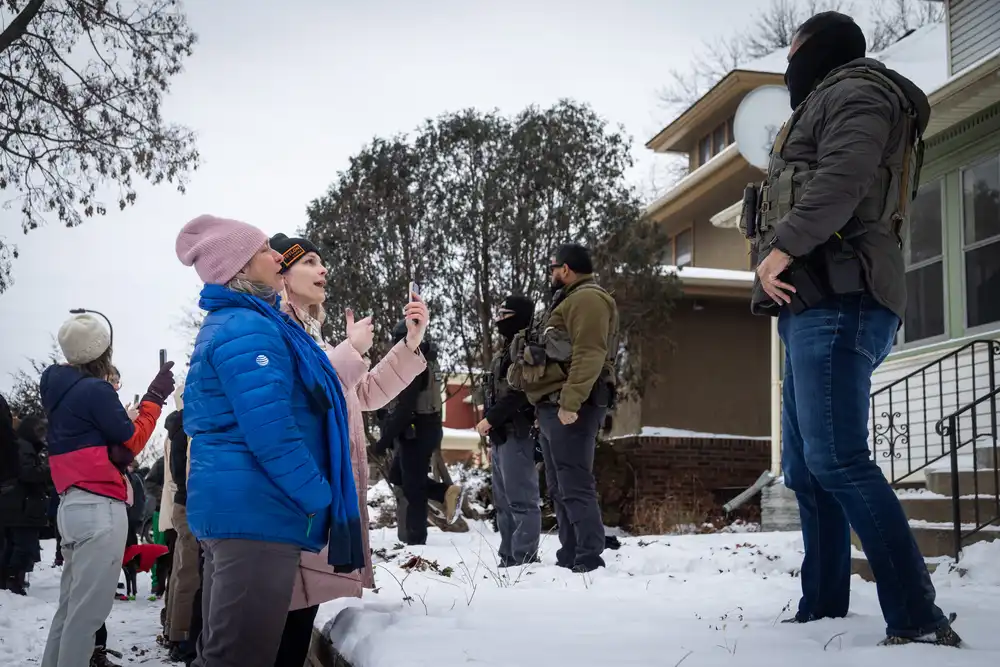

Two weeks into a federal immigration enforcement campaign known as Operation Metro Surge, tensions have grown across Minneapolis and other parts of Minnesota. Residents, activists, and bystanders have repeatedly gathered when U.S. Immigration and Customs Enforcement agents have appeared, often documenting encounters between officers and undocumented individuals. One such incident near 29th Street and Pillsbury Avenue South saw a crowd form within minutes as ICE agents attempted to detain a woman during what witnesses described as a traffic stop. The situation quickly escalated as people shouted and threw snow, prompting agents to retreat.
The Department of Homeland Security said its agents requested immediate support when surrounded by a crowd of roughly seventy people. Local police and deputies responded soon after, saying their main role was to maintain order and ensure everyone’s safety. ICE has described those detained this month as individuals with serious criminal records, calling the campaign necessary to protect public safety. Immigration advocates, however, say many of those being detained have no criminal history and are being caught up in broader enforcement sweeps rather than targeted operations.
Federal authorities have confirmed more than 400 arrests since early December, though they have not released full details on the nationalities or locations of detainees. Reports suggest that individuals have been taken from workplaces, homes, and traffic stops, with some transferred to facilities both in and outside Minnesota. Advocates argue that many detainees are longtime residents with families, jobs, and established community ties. Cases of asylum seekers from Somalia and Latin America facing extended detention have also come to light, raising concerns about due process and the well-being of local families.
Experts say the rapid expansion of immigration enforcement under the current federal administration has created widespread anxiety within immigrant communities. University researchers note that in pursuing higher deportation targets, ICE has leaned on collateral arrests, which can affect individuals not originally sought in an investigation. Critics argue that this broad approach undermines trust and disproportionately impacts residents with deep local connections. Meanwhile, supporters of the surge maintain that immigration enforcement remains essential to national integrity and public security.
Similar operations across major cities have led to tense encounters between ICE agents and local activists. In Minnesota, cold winter conditions have not stopped demonstrations, as community members continue to monitor and record immigration actions. Observers have compared the movement to those in Los Angeles and Chicago but note Minneapolis has developed its own style of grassroots resistance. Legal challenges have also begun to emerge, focusing on whether bystanders have the right to observe or record federal operations. With no timeline announced for the end of Operation Metro Surge, residents and officials remain on edge as winter deepens.