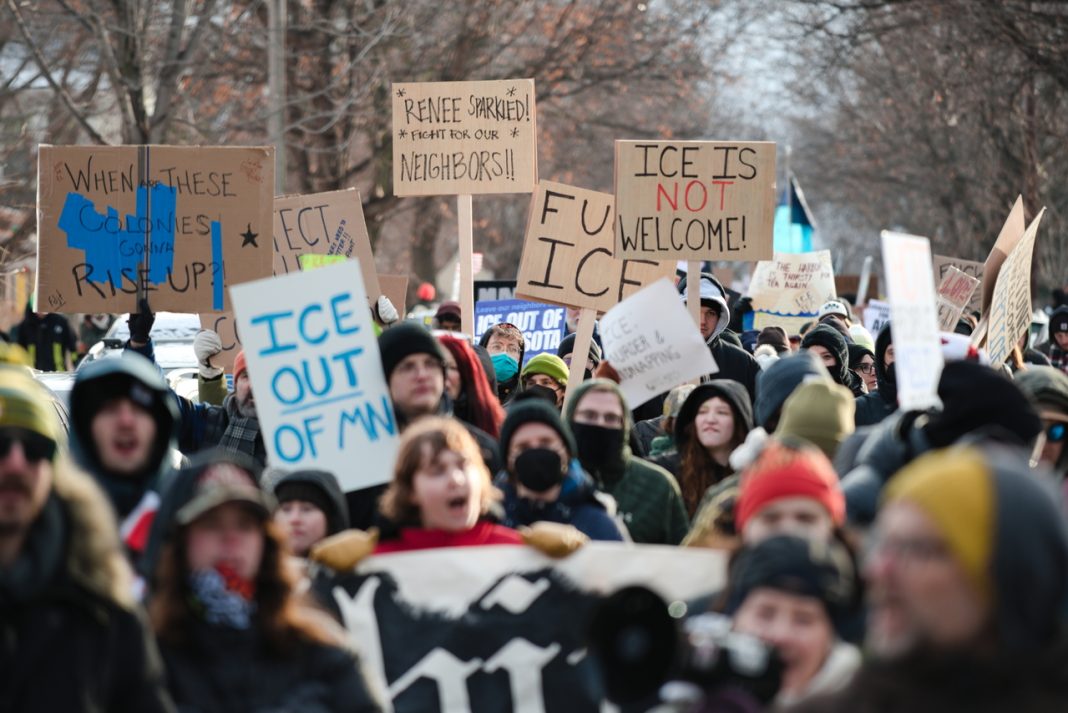


Minnesota has become an unlikely stress test for the American federal system. What began as disputes over federal enforcement and state authority quickly escalated into a public confrontation that exposed how fragile cooperation between Washington and the states has become. As federal agencies pressed forward and state leaders pushed back, long-standing assumptions about shared power, consent, and accountability began to unravel. The conflict unfolding in Minnesota is no longer just about one state’s resistance. It’s about whether America’s federal structure can still function when trust breaks down and power is exercised without restraint.
How Minnesota Became a Flashpoint in Federal-State Conflict
Here’s the thing about Minnesota’s role in the current national moment: it didn’t seek to become a test case for American federalism, but a sequence of events pushed it there anyway. Federal immigration enforcement actions carried out inside the state triggered intense backlash from local leaders, civil society groups, and residents who viewed those actions as aggressive, opaque, and dismissive of state authority. What began as a law enforcement dispute quickly widened into something larger. Minnesota’s governor, attorney general, and city officials publicly challenged federal agencies, arguing that Washington was bypassing local consent and undermining long standing norms of cooperation. That clash turned routine intergovernmental tension into a visible constitutional standoff.
What makes this moment stand out is how fast it escalated. Within days, disagreements that would normally be handled quietly through courts or negotiations spilled into public view. State officials accused federal agencies of acting unilaterally. Federal officials pushed back, insisting on supremacy and national authority. The result was a breakdown in the informal trust that usually keeps federalism functioning. Minnesota became a symbol not because it is unique, but because the conflict there exposed how fragile the system can be when political will replaces institutional restraint. What this really means is that the crisis is less about one state and more about a governing framework under strain.
Governors, Mayors, and the Limits of Federal Power

At the heart of the Minnesota conflict is a question American leaders have wrestled with since the founding: how much power does the federal government actually have when states refuse to cooperate. Minnesota’s governor and several mayors took unusually direct steps to resist federal actions, issuing public statements, filing legal challenges, and coordinating with local law enforcement to limit cooperation. These moves were not symbolic. They were deliberate attempts to assert state sovereignty within a constitutional system designed to balance shared authority.
Federal agencies responded with equal force, arguing that immigration enforcement is a federal responsibility and that states cannot selectively opt out. That legal position is well established, but the way it has been exercised matters. When federal power is applied without consultation or coordination, it can feel less like governance and more like imposition. Minnesota’s leaders framed their resistance not as defiance, but as defense of democratic accountability. They argued that voters elect governors and mayors to protect residents, not to serve as administrative extensions of Washington. The resulting standoff revealed a hard truth: federalism depends as much on restraint and cooperation as it does on constitutional text.
Constitutional Strains on Federalism
American federalism was never designed to function smoothly under constant confrontation. The system assumes good faith, mutual respect, and a willingness to compromise. In Minnesota, those assumptions broke down. Legal scholars watching the situation have pointed out that while the Constitution grants broad authority to the federal government, it also protects states from being commandeered. That tension has always existed, but it becomes dangerous when political actors push boundaries instead of respecting them.
What makes the current moment especially concerning is the erosion of cooperative federalism. For decades, states and federal agencies worked together through shared programs, negotiated enforcement, and informal agreements. In Minnesota, those mechanisms failed. Federal actions moved ahead without local buy-in. State leaders responded with public resistance instead of quiet negotiation. Courts became the first stop rather than the last resort. This shift matters because once cooperation is replaced by coercion, the system begins to resemble a hierarchy rather than a partnership. That’s the warning embedded in Minnesota’s experience. When federalism becomes a battlefield, governance itself starts to fray.
Grassroots Movements and Civic Resistance

While political leaders battled over authority, ordinary Minnesotans stepped into the vacuum. Grassroots organizations, faith groups, unions, and advocacy networks mobilized quickly, framing the conflict as a defense of civil liberties and local democracy. Protests, mutual aid efforts, and legal support campaigns spread across the state. These movements were not centrally coordinated, but they shared a common message: decisions affecting communities should not be imposed without consent or accountability.
What’s notable is how civic resistance reshaped the political landscape. Grassroots pressure gave state leaders leverage in their negotiations with federal officials. It also reframed the conflict in moral terms, not just legal ones. For many residents, this was no longer about jurisdictional boundaries. It was about dignity, safety, and the right to self-governance. Minnesota’s civic response shows how federalism isn’t only maintained through courts and constitutions, but through public participation. When institutions falter, people step in. That doesn’t solve the structural problem, but it does reveal where legitimacy still lives.
What Minnesota Reveals About the Future of American Federalism
Minnesota’s experience offers an uncomfortable preview of what could lie ahead if current trends continue. A federal system cannot survive on legal authority alone. It requires trust, restraint, and shared commitment to democratic norms. When federal agencies act as though state consent is optional, and states respond as though federal authority is illegitimate, the middle ground collapses. Minnesota shows how quickly that collapse can happen and how hard it is to reverse once it begins.
The broader lesson is not that federalism is broken beyond repair, but that it is vulnerable. Rebuilding it will require more than court rulings. It will require leaders willing to de-escalate, institutions willing to negotiate, and citizens willing to demand accountability from all levels of government. Minnesota didn’t cause America’s federal system to crack. It revealed the cracks that were already there. Whether those fractures widen or are repaired will shape the future of American democracy far beyond one state.