
Alaska’s Katmai National Park has a new Fat Bear Week champion, and his journey to the title is far more interesting than his impressive size. Bear 89, better known as Backpack, captured the 2026 crown after edging out Bear 910 in a remarkably close final. But the victory is about more than votes. Backpack has a story that stretches back to his days as a cub, includes a serious childhood injury, and connects him to one of Katmai’s most famous former champions. His rise also highlights what Fat Bear Week is really celebrating: the remarkable effort brown bears make each year to build the fat reserves they need to survive winter.
Backpack Finally Has a Fat Bear Week Crown
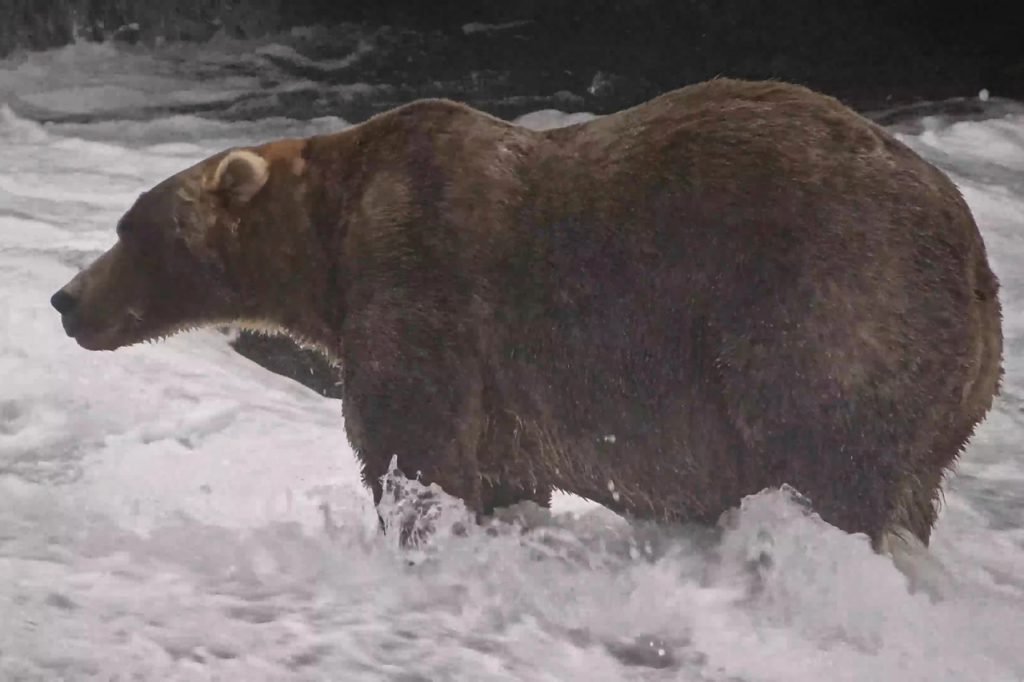
Backpack, officially known as Bear 89, has reached the top of Katmai’s annual competition after years of being a familiar presence along the Brooks River. The 20-year-old male defeated Bear 910 in the 2026 final with 103,334 votes to 98,253, a margin of 5,081 votes. More than 2.3 million votes were cast during this year’s competition, making his victory especially notable.
His win also came after a remarkably close semifinal against Bear 164, known as Bucky. Backpack eventually advanced by 79,945 votes to 75,805. That narrow escape made the final even more meaningful, particularly because Backpack had already established himself as a fan favorite earlier in the tournament. His victory was the first time he had been named Katmai’s Fat Bear Week champion.
His Nickname Comes From a Childhood Habit
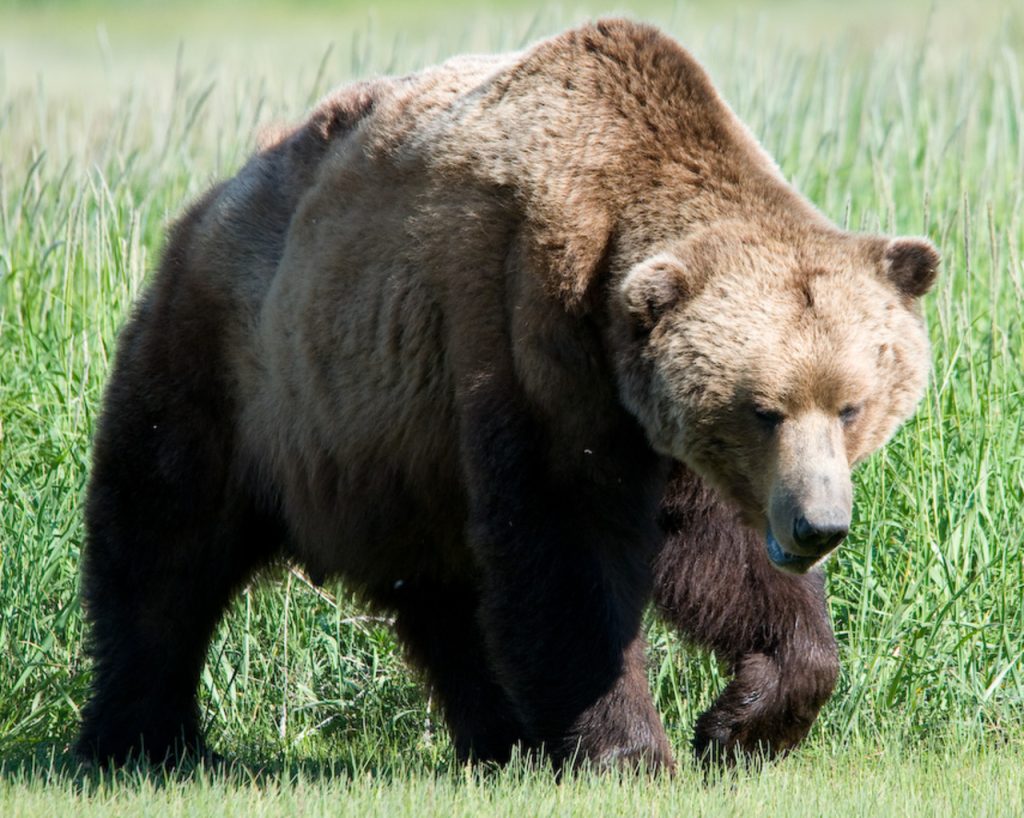
Long before Backpack became a 1,000-pound-plus adult, he was a cub riding on his mother’s back. His mother, Bear 435, better known as Holly, brought him to Brooks River in 2006. While the pair moved through the water, the young bear frequently climbed onto Holly, earning the nickname Backpack that stayed with him into adulthood.
The family connection makes his championship even more memorable. Holly won Fat Bear Week in 2019, meaning Backpack has now joined his mother among Katmai’s champions. His own story, however, took a much more difficult turn when he was still young. In 2007, he suffered a significant leg injury that left park staff and visitors uncertain about whether he would survive.
A Serious Injury Could Have Changed Everything
Backpack’s path to adulthood was not guaranteed. When he returned to Brooks River as a yearling in 2007, he had a serious leg injury and struggled to put weight on it. Rangers were concerned about his prospects, but he eventually recovered without human intervention and became independent the following year.
That recovery is an important part of why his championship story stands out. Backpack went from a young bear whose survival was questioned to a long-established adult male that has been observed around Brooks River for years. Park records identify him as a bear first recognized as a 2.5-year-old subadult in 2008. By 2026, he had become one of the familiar bears watched by people through Katmai’s live cameras.
Backpack Is Big Without Being a Bully
There is more to Backpack’s appeal than his size. Park observations describe him as a relatively peaceful bear, and he has accumulated surprisingly few wounds for an adult male of his age. That has helped create a reputation for quiet toughness rather than aggression, giving fans another reason to root for him.
His fishing style also fits that reputation. Backpack is often seen around the lower portions of Brooks River during the fall, while early in the summer he fishes near the falls without being as dominant there as some other adult males. He is also known for sitting on a rock in the river while watching for fish, a behavior that has led fans to affectionately refer to it as Backpack’s rock.
His Weight Tells the Real Katmai Story
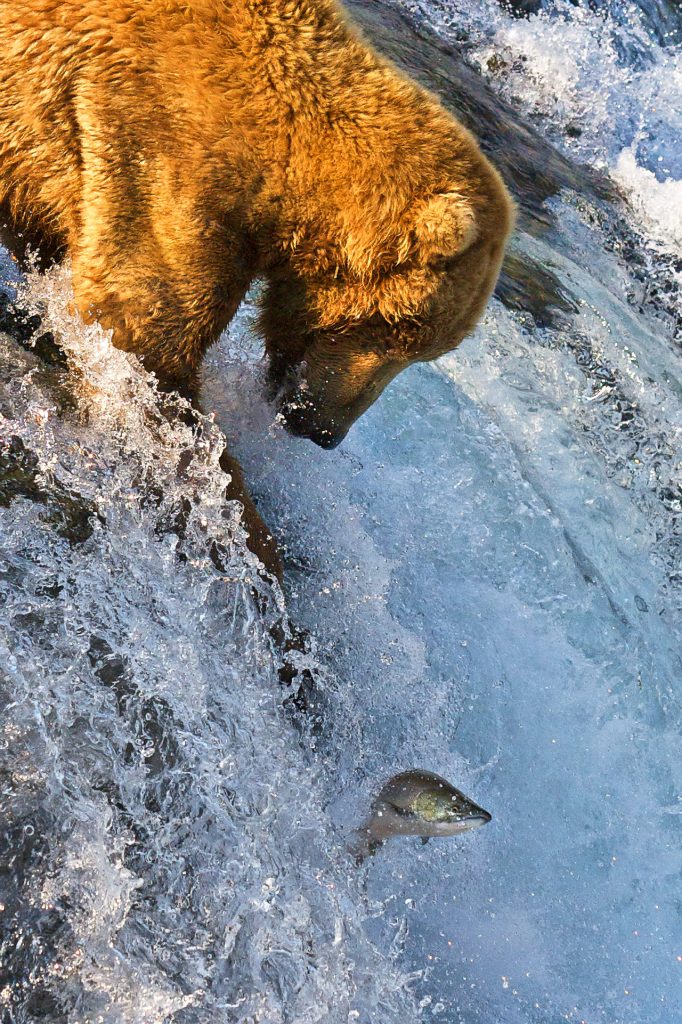
Fat Bear Week is ultimately about survival, not simply appearance. Katmai’s brown bears spend the productive months eating heavily, particularly during the salmon runs, to build the fat reserves they need before winter. The dramatic changes shown in the competition’s before-and-after photographs reflect that seasonal preparation.
Backpack’s own transformation is striking. Park ranger Sarah Bruce estimated that he weighs between 1,000 and 1,200 pounds, and his appearance changes considerably as summer progresses. His coat also shifts from lighter brown early in the season to a darker, grizzled shade later on. That combination of weight gain and seasonal change is exactly what Fat Bear Week was created to showcase when the competition began in 2014.