
NASA is taking another step toward a sustained human presence on the Moon by selecting three new investigations designed to answer some of the practical questions future lunar explorers will face. The missions will study the Moon’s environment, search for underground lava tubes, and investigate ice and surface conditions that could affect future operations. Each tackles a different piece of the puzzle, but together they could help NASA determine where astronauts can work safely, what resources may be available, and how future infrastructure could be built around the lunar South Pole.
LEMS-SP Will Keep Watch on Lunar Hazards
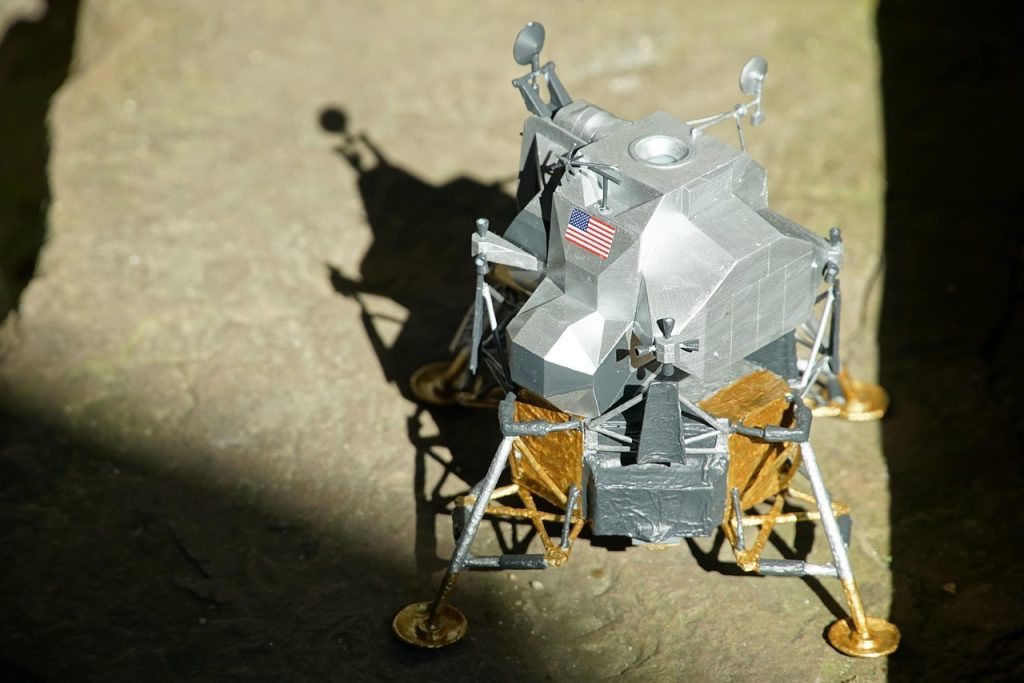
The Moon may look still from Earth, but its surface is an active and demanding environment. NASA’s Lunar Environment Monitoring Station-South Pole, or LEMS-SP, is being designed as a long-term environmental and hazard monitoring station. Its instruments will monitor falling micrometeoroids, track volatile materials moving through the Moon’s extremely thin outer layer of gases, and use a short-period seismometer to detect seismic events. That information could help scientists build a clearer picture of the conditions around the lunar South Pole, where future Moon Base activities are expected to take place.
The practical value is especially important for hardware. A permanent lunar outpost cannot simply assume that the environment will remain predictable. NASA says LEMS-SP could provide hazard assessments needed to help protect Moon Base hardware and support safer operations. Rather than gathering a snapshot and moving on, the station is intended to provide longer-term environmental observations that can reveal conditions future crews and equipment will have to contend with.
GIMLI Will Look for Hidden Lunar Lava Tubes
One of the most intriguing investigations will send the Geophysical Instruments for Marius Lunar pit Investigation, or GIMLI, to the Marius Hills Pit. Its job is to scan beneath the lunar surface and determine whether the pit leads into a large underground lava tube. The investigation will also contribute to scientists’ understanding of the Moon’s volcanic processes, making it useful for both basic lunar science and future exploration planning.
The underground spaces GIMLI is searching for could have an important practical benefit. If the Marius Hills Pit connects to a large lava tube, the natural structure could provide protection from some of the Moon’s most difficult surface conditions. NASA says such spaces could offer future astronauts shielding from harmful radiation and micrometeoroid bombardment, along with greater thermal stability. Confirming these structures could therefore influence how future lunar habitats are planned.
DISCO Will Pinpoint Lunar Ice
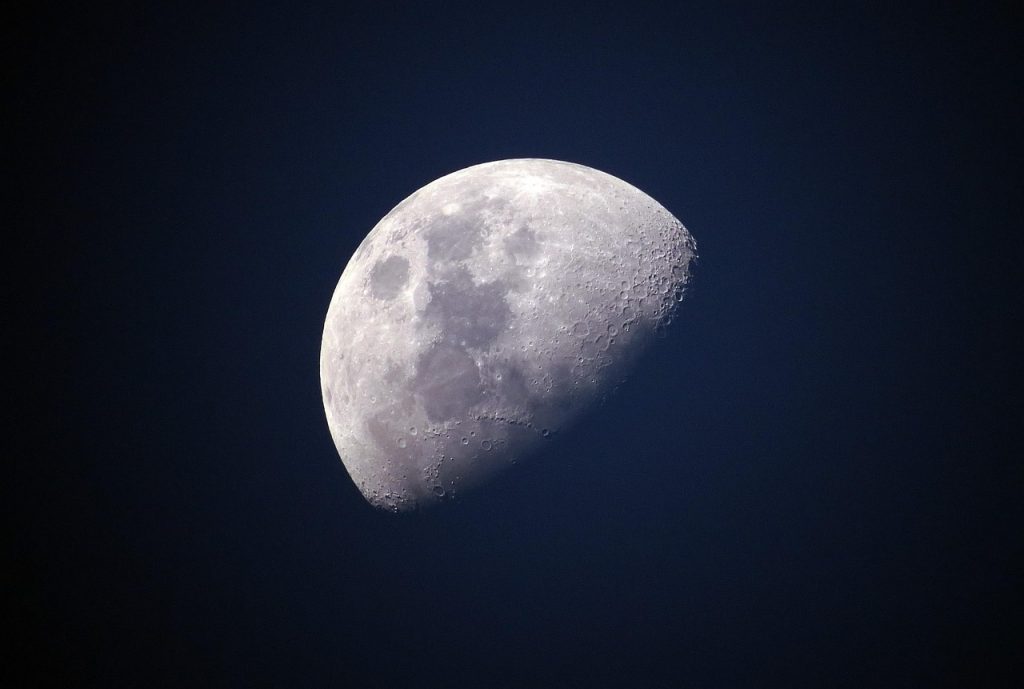
Finding usable water on the Moon is one of the biggest pieces of the long-term exploration puzzle, and NASA’s Depth Imager with Spectral and Color Optics, known as DISCO, is designed to improve that picture. The payload will make what NASA describes as the first direct, on-the-ground measurements of ice hidden in lunar micro-cold traps. These extremely cold areas can preserve ice that could otherwise be difficult to detect or characterize from the surface.
DISCO is not focused only on locating ice. It will also examine how the lunar surface behaves during operations, including how rocket exhaust disturbs the ground and how stable the terrain is for mobility. By determining where ice exists and how much is present while also studying surface conditions, the investigation can provide information needed for future surface operations. NASA says those measurements will help support technologies aimed at turning lunar ice into a usable resource for the future Moon Base.
The Three Missions Tackle Different Problems
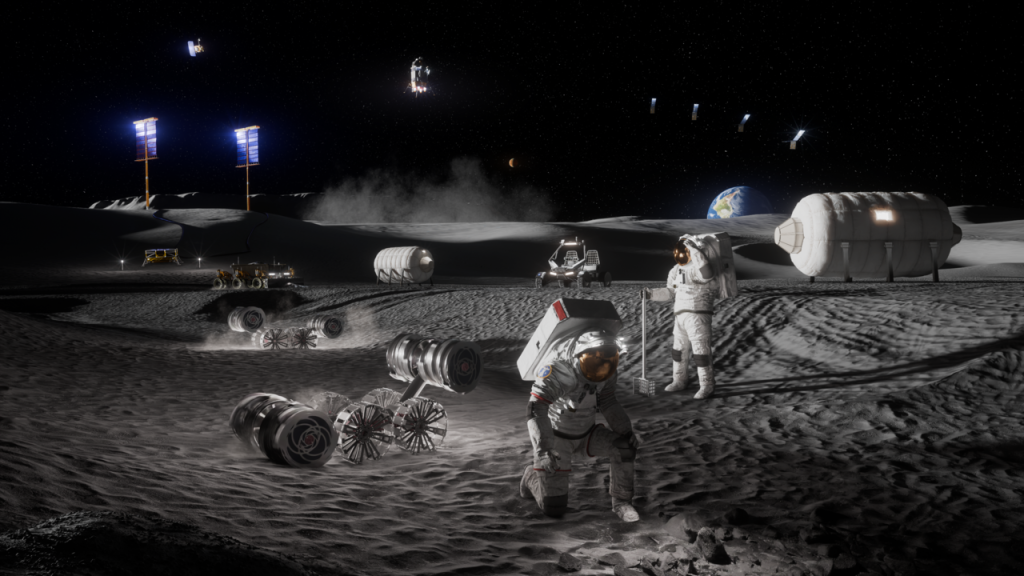
What makes these selections significant is how neatly their jobs fit together. LEMS-SP focuses on the surrounding lunar environment and potential hazards, GIMLI investigates whether natural underground shelters exist, and DISCO examines ice and the behavior of the surface itself. NASA selected all three through its Payloads and Research Investigations on the Surface of the Moon program, known as PRISM.
The investigations are intended to provide information before NASA attempts to maintain a sustained human presence on the Moon. NASA says the payloads will help researchers understand lunar resources, map potential natural shelters, and assess environmental hazards. They will reach the lunar surface through the Commercial Lunar Payload Services initiative as part of the agency’s Moon Base Program. The broader goal is straightforward: gather the science and safety information needed to reduce risks as human activity on the Moon becomes more sustained.
The Missions Could Shape How People Live on the Moon
A permanent lunar base will require much more than a spacecraft that can land and take off. NASA needs to know where astronauts can safely operate, what resources they can use, how the terrain responds to spacecraft and vehicles, and what natural features might protect people from the lunar environment. These three investigations address several of those questions directly, giving future planners information that cannot be obtained simply by sending astronauts to the surface without prior study.
There is also a larger objective behind the Moon Base work. NASA says it is increasing the cadence of lunar missions to deliver science investigations and technology payloads that can strengthen a sustained presence on the Moon and advance future human exploration. The agency has also framed this work as preparation for eventually sending astronauts to Mars. In that sense, these missions are not simply three isolated experiments. They are pieces of a much larger effort to learn how humans can safely operate beyond Earth for longer periods.