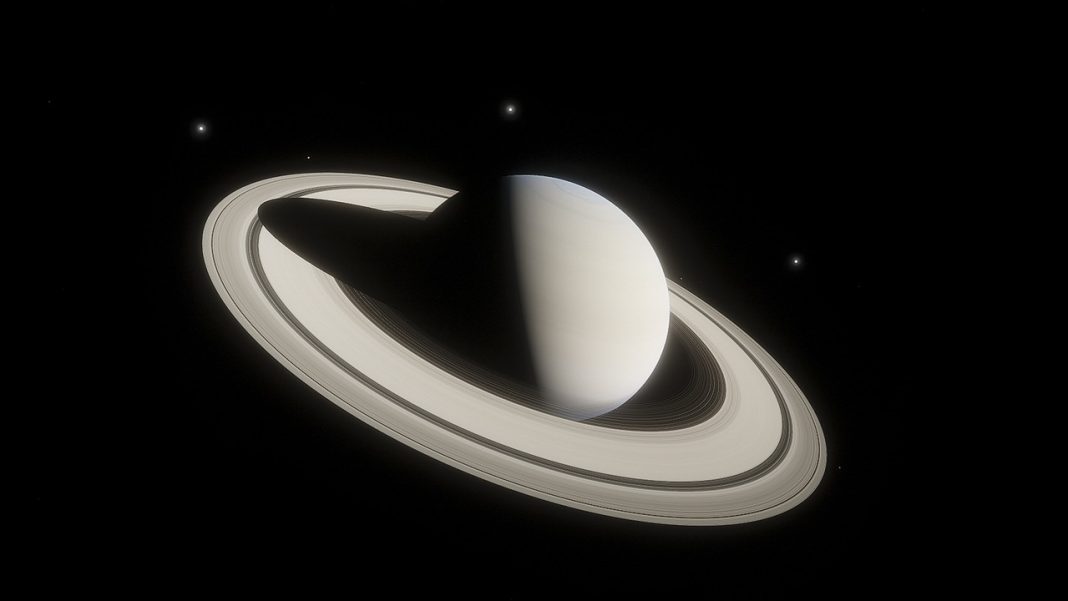

Saturn is giving skywatchers a particularly good reason to look up this October. The ringed planet reached opposition on October 4, placing it near its closest point to Earth for the year and making it visible for much of the night. You do not need a telescope to spot Saturn, but even a small one can reveal the planet’s famous rings. There is also fresh scientific intrigue surrounding Saturn, with NASA highlighting a newly observed atmospheric pattern near its south pole.
Saturn Has Reached One of Its Best Viewing Points
Saturn is taking center stage this week because it reached opposition on October 4, putting Earth almost directly between the planet and the Sun. That alignment makes Saturn especially easy to observe because it rises around sunset, stays visible through most of the night, and sets around sunrise. NASA describes opposition as one of the year’s best opportunities to see the ringed planet.
The timing is useful for more than convenience. Saturn is also at about its closest point to Earth for the year around opposition, although it remains roughly 1.3 billion kilometers away. From Earth, that combination makes the planet appear particularly favorable for observation. For anyone hoping to catch Saturn, the evenings around October 4 and 5 offer an especially good opportunity.
You Can Spot Saturn Without a Telescope
Saturn does not require expensive equipment just to find it. To the unaided eye, it appears as a moderately bright, creamy-white point of light. One useful clue is that its light tends to look steadier than the surrounding stars, which noticeably twinkle because of Earth’s atmosphere. The Guardian reports that Saturn is currently shining at about magnitude +0.3, making it an accessible target for casual skywatchers.
The best approach is simply to give your eyes time to adjust and look toward the eastern to southeastern sky after sunset. From the Northern Hemisphere, Saturn can be located beneath the Great Square of Pegasus, which acts as a useful landmark. Its position slowly shifts against the background stars from night to night, so returning to the same area of sky can also reveal that movement.
A Small Telescope Changes the View Completely
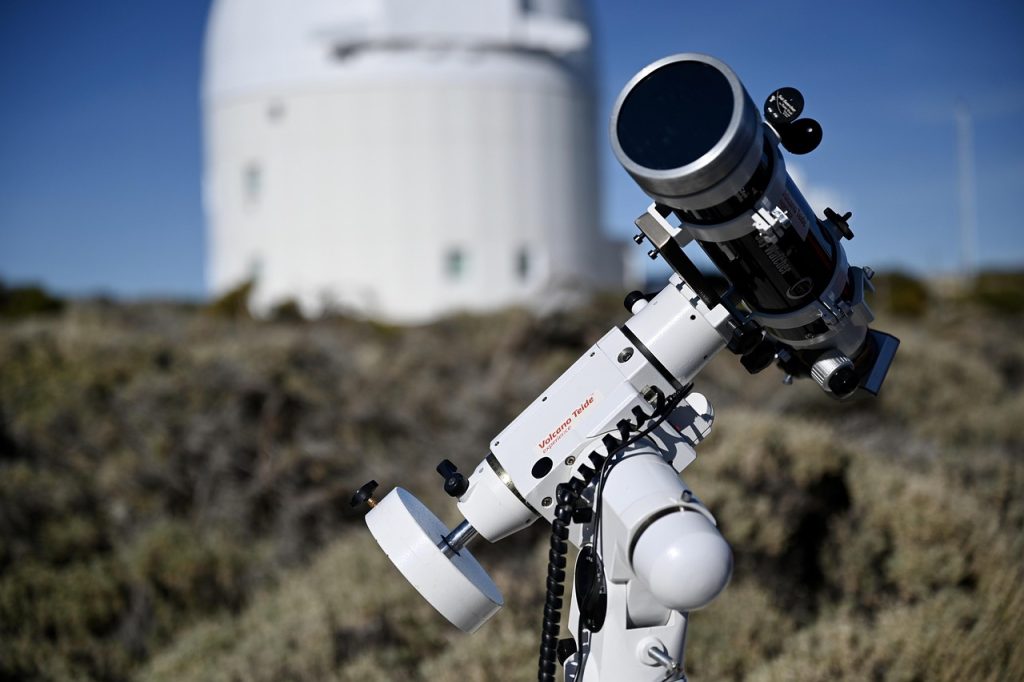
Finding Saturn is one thing, but seeing why the planet is so famous requires optical help. The planet’s rings are not visible to the naked eye, but a small telescope can reveal them. Even modest equipment can transform Saturn from a bright point into a clearly recognizable planetary disk surrounded by its distinctive ring system. The rings are made primarily of countless particles of ice and rock ranging from tiny grains to much larger chunks.
This year’s opposition is particularly appealing for telescope users because Saturn is visible for much of the night and reaches its highest point around local midnight. NASA’s October skywatching guide specifically highlights the opposition as one of the year’s best opportunities to observe the planet. Observers in the Southern Hemisphere also have an advantage in October because Saturn climbs higher in the sky there.
Saturn Has a New Atmospheric Mystery
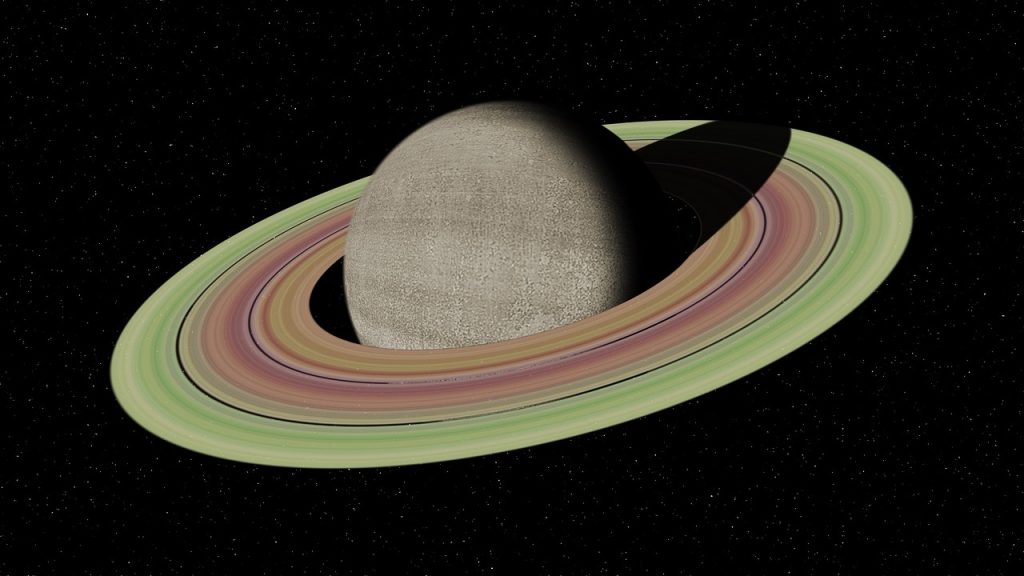
There is a scientific reason to pay attention to Saturn beyond its spectacular rings. Recent observations from NASA’s Hubble Space Telescope revealed a huge, 10-sided atmospheric wave around Saturn’s south pole. The discovery is particularly interesting because scientists have long known about the planet’s famous six-sided jet stream around its north pole, but had not seen a comparable large, regular-sided pattern in the southern hemisphere.
The newly observed southern feature appears to be strengthening, giving scientists an unusual chance to watch a giant atmospheric pattern evolve. NASA says the observations date back to 2023 and that the discovery was reported in September 2026. Watching how this enormous wave changes could help researchers better understand Saturn’s atmosphere, including the circulation patterns operating deep within its cloud layers.
October Gives Skywatchers More Than One Reason to Look Up
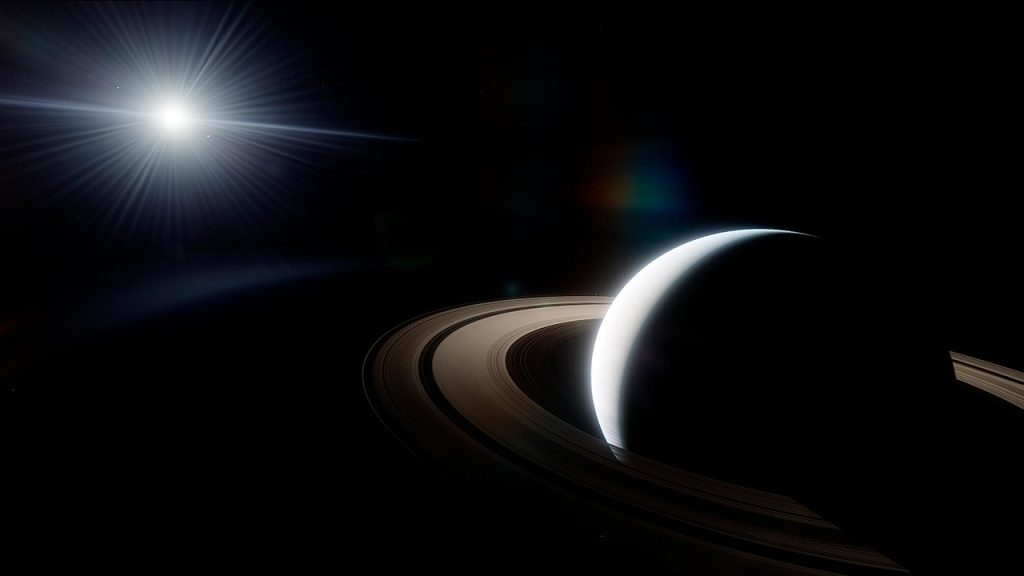
Saturn may be the month’s headline attraction, but it is part of a much broader October skywatching lineup. NASA also highlights the Orionid meteor shower, which peaks during the night of October 21 into the morning of October 22. The meteors are created by debris left behind by Halley’s Comet, although bright moonlight will wash out some of the fainter streaks this year.
Later in the month, the Moon will pass close to the Pleiades, the star cluster commonly known as the Seven Sisters, during the night of October 27 into October 28. The cluster can be seen without optical equipment, while binoculars or a telescope reveal many more stars. But for now, Saturn has the strongest claim to the spotlight, with its opposition giving skywatchers a long, accessible window to see the ringed planet at its yearly best.