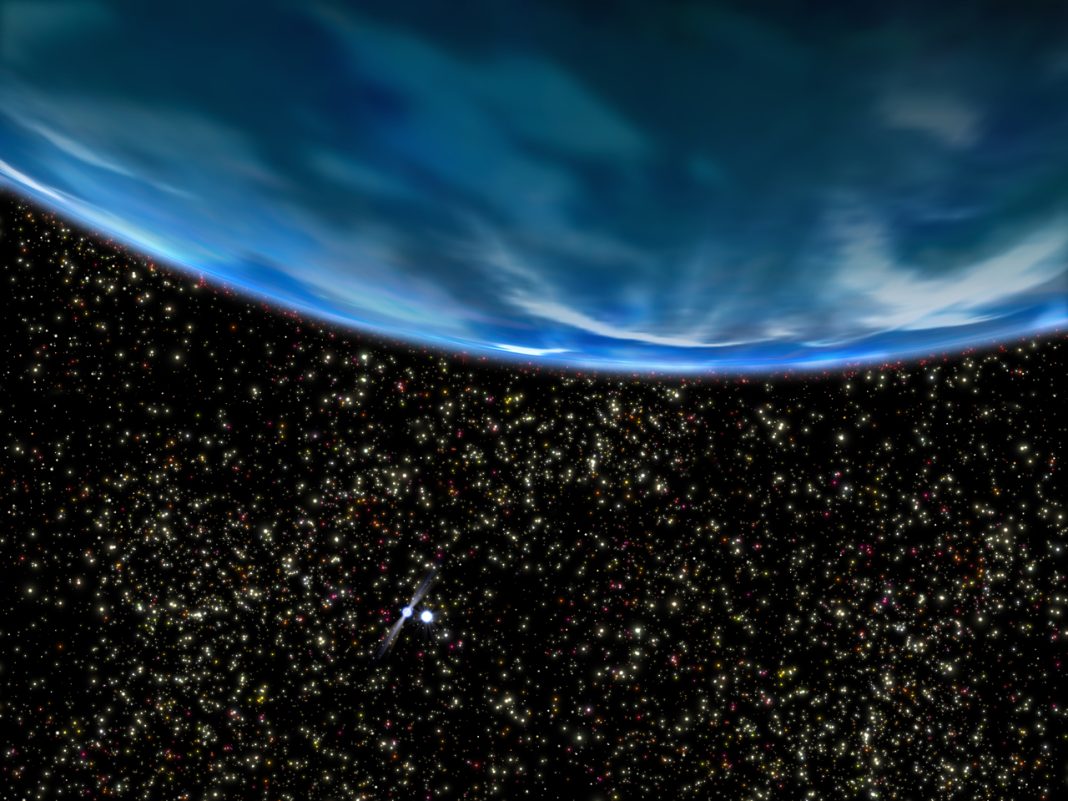

A star system only about 16 light-years from Earth is getting another look from astronomers, and this time the focus is on what might be orbiting its two stars. Known as 70 Ophiuchi, the system contains a pair of stars smaller and cooler than our Sun. No planet has been confirmed there, but new modeling suggests an Earth-mass planet could potentially maintain a stable orbit within the habitable zone of the larger star. The finding does not mean such a world has been discovered. Instead, it gives astronomers a promising target to investigate as increasingly powerful tools reshape the search for potentially habitable planets.
70 Ophiuchi Is Getting a Fresh Look
A familiar star system is suddenly offering a new reason to pay attention. Known as 70 Ophiuchi, the binary system lies about 5 parsecs, or roughly 16 light-years, from Earth and contains two stars that are somewhat smaller and cooler than the Sun. The larger star has about 88% of the Sun’s mass, while its companion has about 73%. Astronomers have observed the pair for decades, but no planet has been confirmed around either star. New observations from the University of Michigan have provided a more precise picture of how the two stars move around each other, allowing researchers to revisit the possibility of planets in the system.
An Earth-Mass Planet Could Stay in Place
The interesting part is not simply that 70 Ophiuchi has two stars, but that a planet could potentially survive their gravitational tug. Researchers calculated the habitable zone around the larger star, meaning the region where temperatures could theoretically allow liquid water to exist on a planet’s surface. They then placed a hypothetical Earth-mass planet at different distances from that star and used computer simulations to track its movement over time. The results showed that stable orbits are possible within the primary star’s habitable zone, despite the gravitational influence of the companion star.
Two Suns Do Not Automatically Mean Chaos
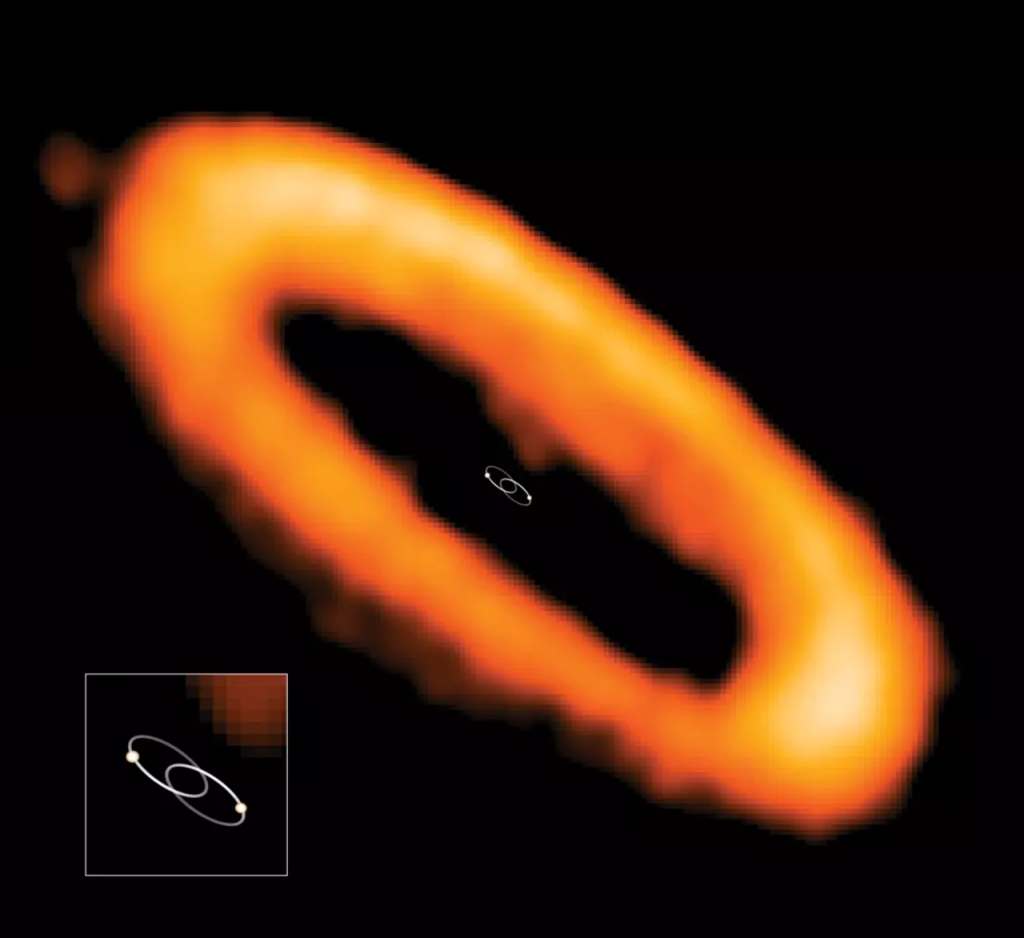
Binary star systems can look intimidating from a planet-hunting perspective because a second star introduces another powerful source of gravity. A planet that begins in a relatively regular orbit can become increasingly elongated if those gravitational influences push it into an unstable path, potentially sending it crashing into a star or ejecting it from the system. But the simulations for 70 Ophiuchi produced a more encouraging picture. The companion star does not necessarily disrupt every possible planetary orbit. Instead, there are regions where an Earth-sized planet could remain gravitationally stable for long periods.
Better Measurements Made the Modeling Possible
The new analysis depends heavily on knowing the binary system’s architecture accurately. Astronomers already had decades of observations, but the precise motions of the two stars were not known well enough to confidently model every possible planetary scenario. Observations conducted at the University of Michigan helped researchers better constrain those stellar motions. UC Riverside doctoral student Skylar D’Angiolillo then used dynamical simulations to test how an Earth-mass planet would behave at different locations around the primary star. This kind of modeling lets scientists eliminate environments where a planet could not remain stable before spending valuable telescope time searching for one.
70 Ophiuchi Could Become a Future Target
There is an important distinction between possibility and discovery here: scientists have not found an Earth-sized planet around 70 Ophiuchi. What the study shows is that such a planet could theoretically maintain a stable orbit in the larger star’s habitable zone. That makes the system more interesting for future searches, particularly as astronomers prepare for missions such as NASA’s planned Habitable Worlds Observatory, intended to help identify and study potentially habitable worlds in the 2040s. The research shows why scientists can benefit from dynamical vetting first. Before trying to directly observe a planet, they can determine whether a system has the right gravitational conditions for one to exist at all.