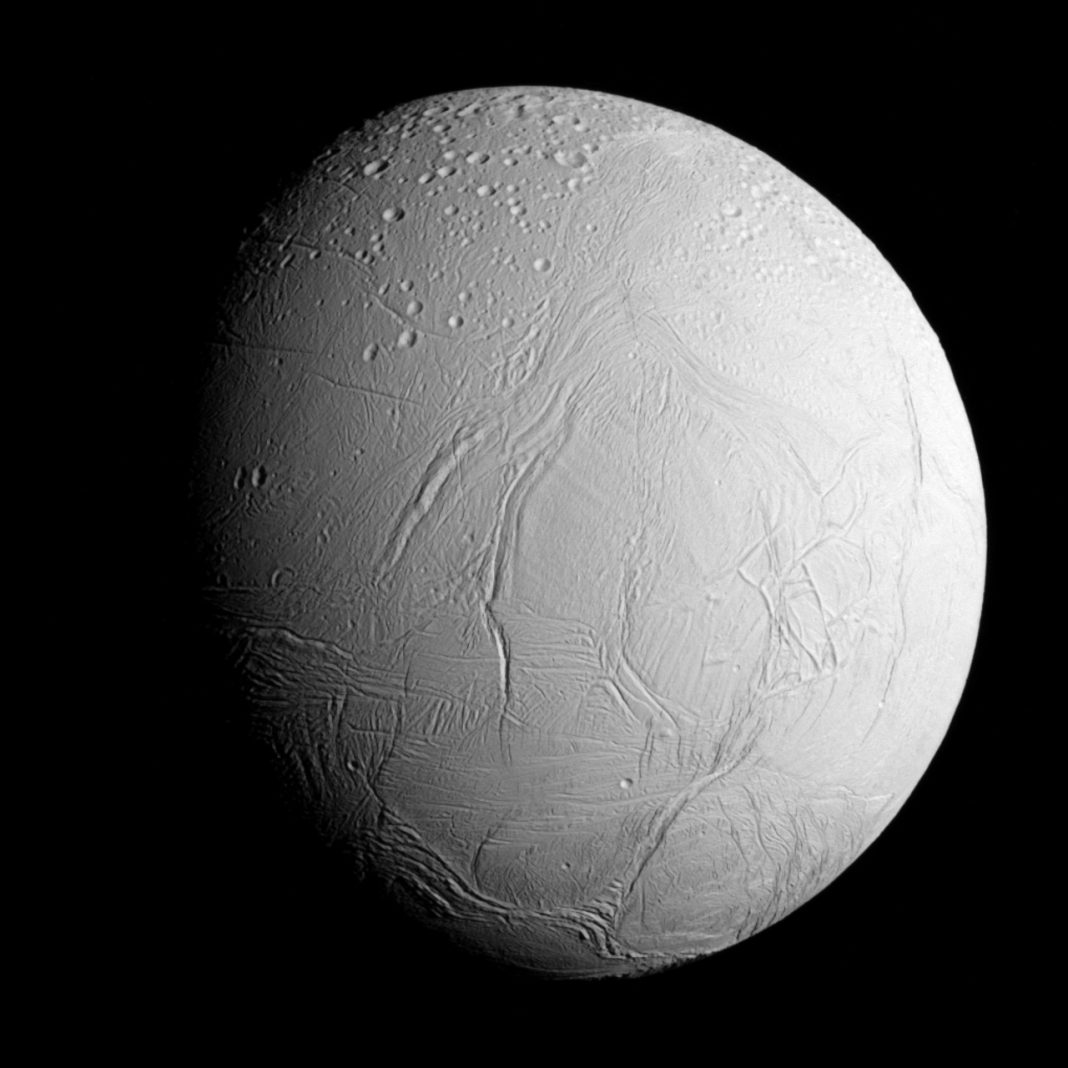

Saturn’s icy moon Enceladus has long intrigued scientists because a vast ocean lies beneath its frozen surface and material from that ocean is regularly sprayed into space. New research suggests the moon may make that hidden ocean even easier to study than scientists realized. As water droplets freeze and break apart inside Enceladus’ icy vents, they may naturally separate and concentrate different chemicals into individual ice grains. That process could give future spacecraft better opportunities to detect rare organic compounds and investigate whether the moon has the chemical conditions needed for life.
Enceladus May Be Preparing Samples for Scientists
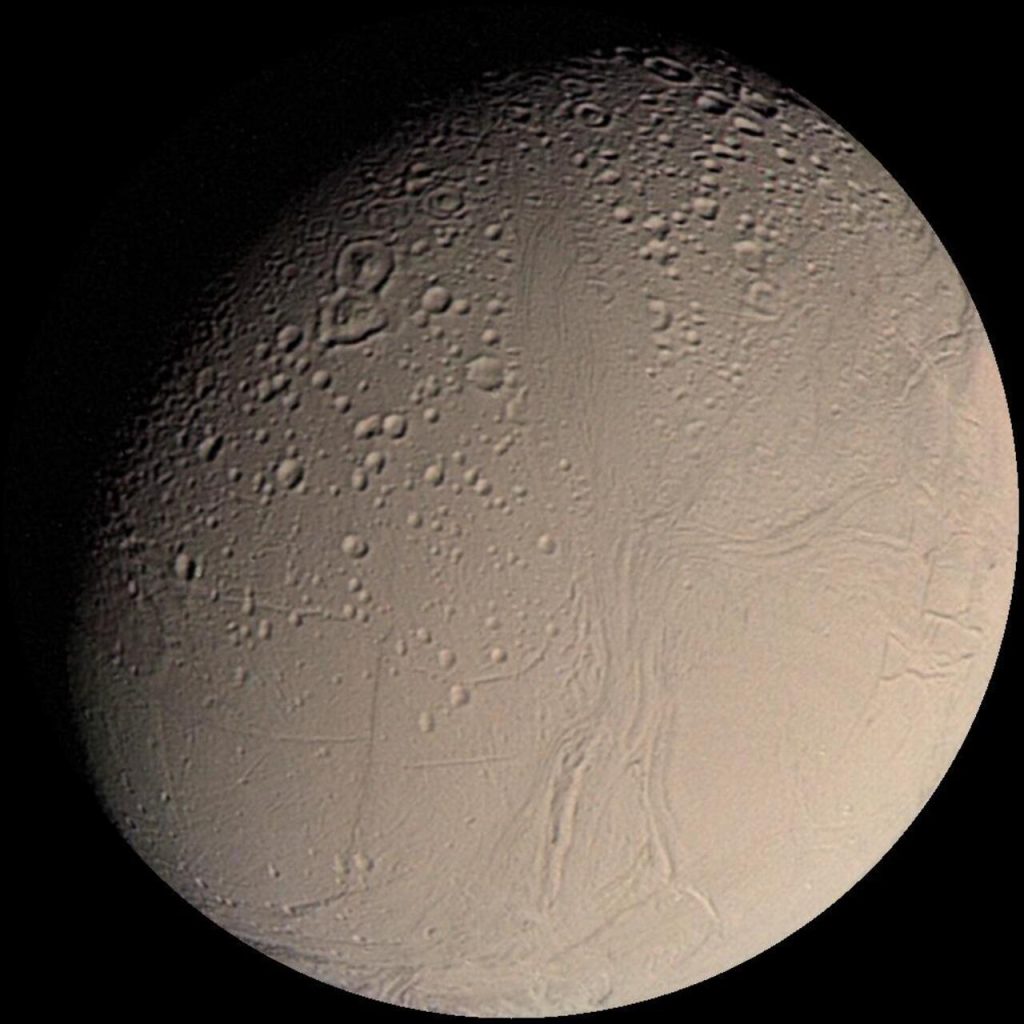
Enceladus may have an unusual advantage in the search for life: its own geology could be doing some of the sample preparation. The Saturnian moon has a global ocean beneath its icy crust, and water from that ocean escapes through fractures near the south pole as vapor and ice particles. As larger ocean droplets travel upward through the moon’s vents, they may freeze gradually rather than all at once. During that slow freezing, salts and other compounds can separate into different regions. The frozen droplets can then break apart as they encounter narrow, icy passages, producing much smaller grains with distinct chemical compositions. That means spacecraft may be able to study concentrated pieces of the hidden ocean without drilling through the ice shell.
Cassini Found Chemical Differences Between Individual Grains
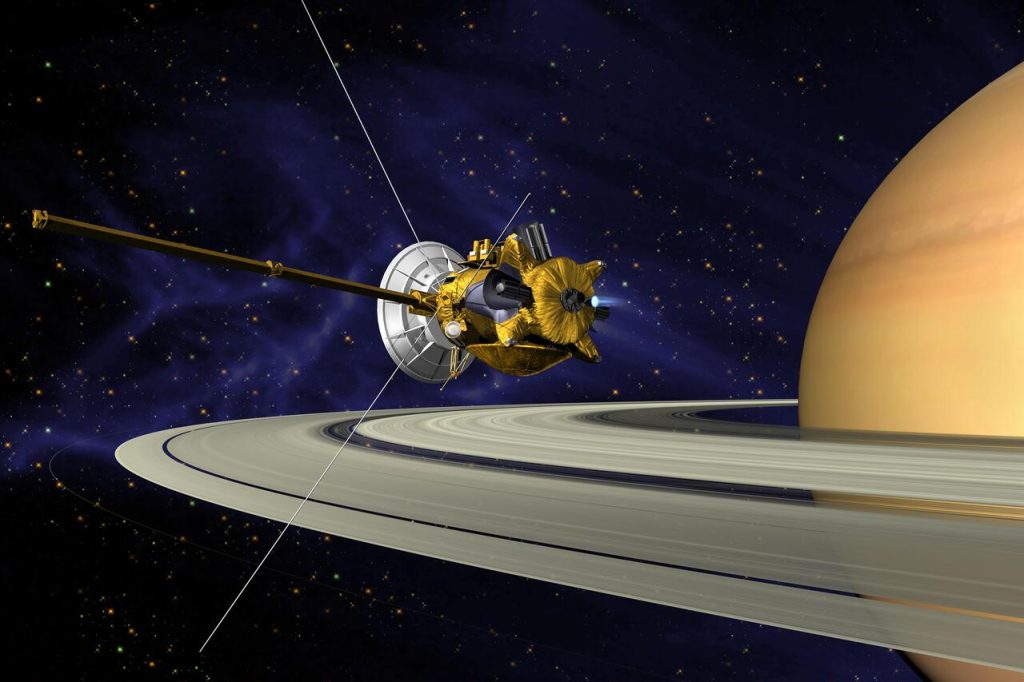
What first looked like a puzzling collection of ice particles now appears to contain an important clue about how Enceladus works. Researchers examined 961 salt-rich ice-grain measurements collected by Cassini’s Cosmic Dust Analyzer and found much more chemical diversity than expected. Some particles were rich in sodium chloride, while carbonates, phosphates, hydroxides or potassium-bearing salts dominated others. Chloride and carbonate compounds were particularly unlikely to appear together in the same sodium-rich grain. The results suggest that these particles are not simply tiny, evenly mixed samples of the ocean. Instead, many may be fragments of much larger droplets whose chemistry separated as they slowly froze.
Slow Freezing Could Explain the Strange Chemistry
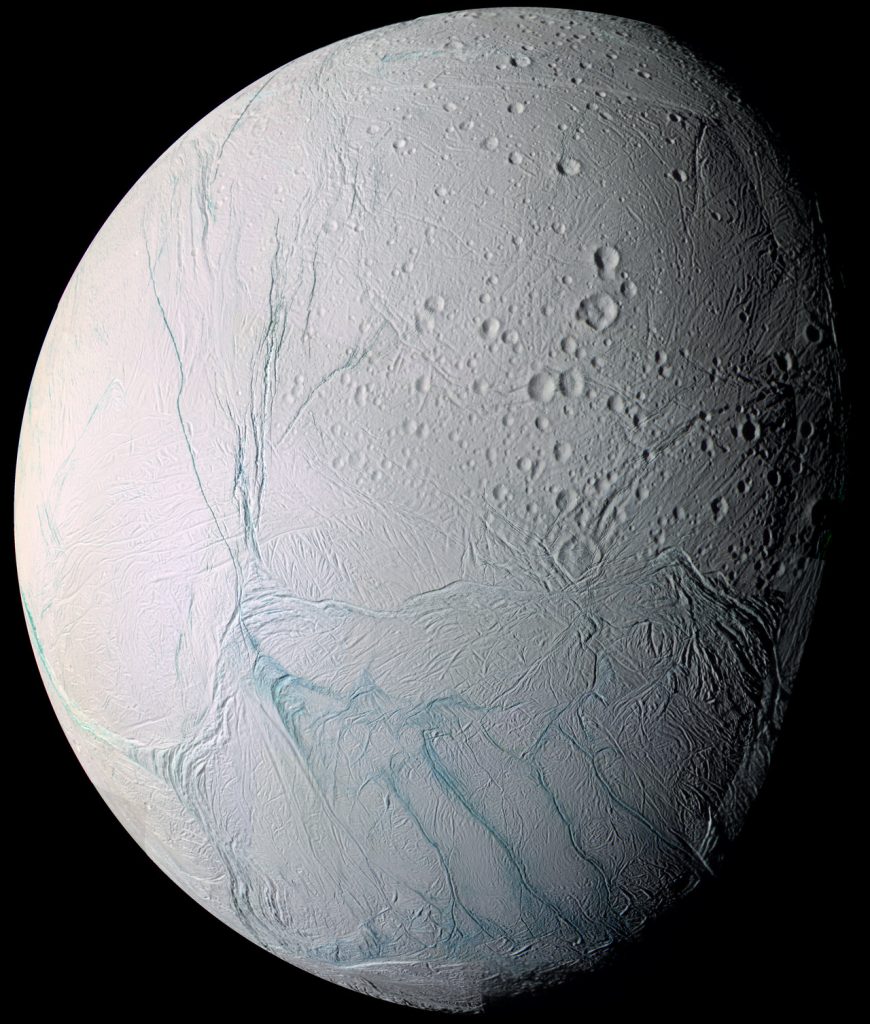
The key may be hiding in how quickly the ocean droplets freeze. Researchers recreated aspects of Enceladus’s alkaline ocean in laboratory experiments, using droplets of different sizes and exposing them to different cooling rates. Larger droplets that cooled slowly developed distinct salt-rich regions, while rapidly frozen droplets remained considerably more uniform. The experiments showed that droplets around 200 micrometers across could develop strong chemical separation when freezing occurred at roughly 10 kelvins per minute or less. This provides a plausible explanation for Cassini’s observations: ocean spray may begin as relatively large droplets, gradually freeze inside the vents, and only later fracture into the tiny particles detected in space.
Rare Organic Compounds Could Become Concentrated
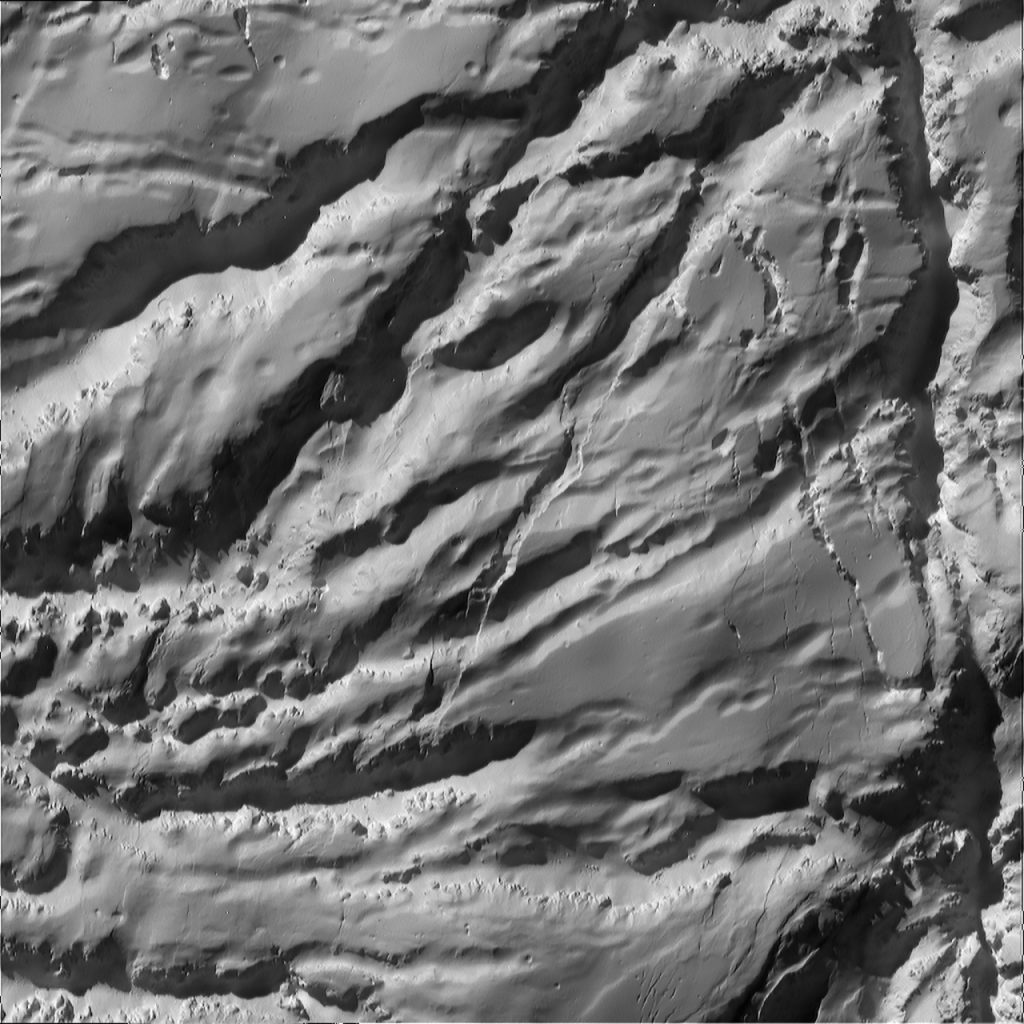
The most intriguing possibility concerns molecules that scientists would actually want to find in a search for life. The researchers do not claim that Enceladus contains life, but the physical process they identified could make certain organic molecules and potential molecular biosignatures easier to detect. As water freezes, chemical components can become separated and concentrated into particular regions. When the larger frozen droplets fragment, some of those compounds could end up enriched in only a small fraction of the resulting grains. Previous Cassini observations have already identified organic compounds in material from Enceladus’s ocean. If possible biosignatures behave similarly, a spacecraft could have a better chance of detecting them by examining individual grains rather than treating the entire plume as one uniform sample.
Future Spacecraft May Need to Examine More Grains
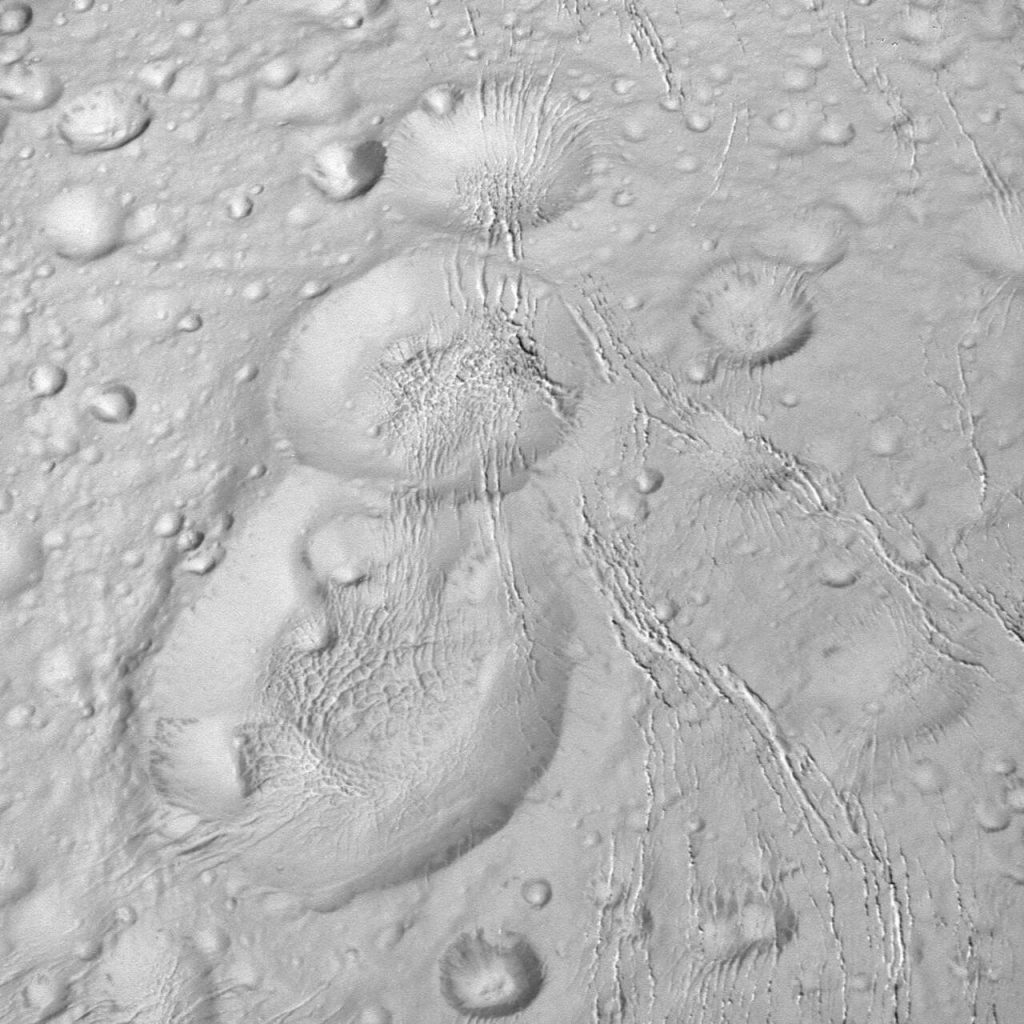
The new findings could change the way future missions approach Enceladus. If each ice grain carries a different piece of the ocean’s chemistry, combining many particles into one measurement could actually remove valuable information. A rare compound might be diluted by more common materials and become difficult to identify. Studying individual grains preserves the differences between particles and gives scientists more opportunities to find unusual chemical combinations. Enceladus is especially attractive because its south-polar plume naturally sends ocean-derived material into space, allowing spacecraft to sample material from below the ice without having to land and drill through the crust. The research therefore suggests that future missions should collect and analyze as many individual grains as possible when searching for clues about the moon’s habitability and possible signs of life.