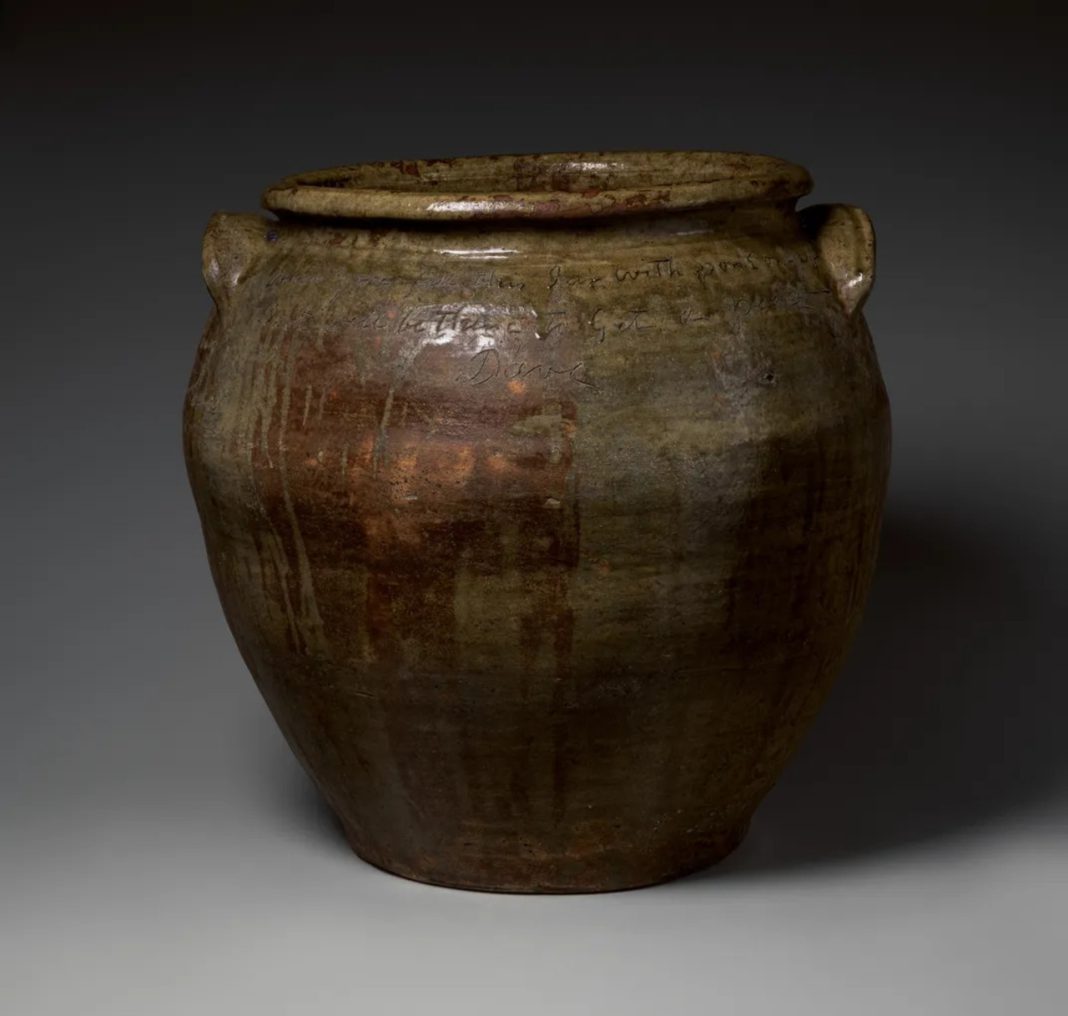

Two remarkable pottery vessels made by David Drake, the enslaved South Carolina potter whose signed works have become important pieces of American art history, have been returned to his descendants. The Milwaukee Art Museum transferred ownership of the pieces to the Dave the Potter Legacy Trust, reconnecting Drake’s family with objects created by their ancestor more than 160 years ago. The return also highlights how his pottery continues to tell a story of skill, identity and perseverance despite the restrictions imposed on him during slavery.
The Signed 1855 Stoneware Jar
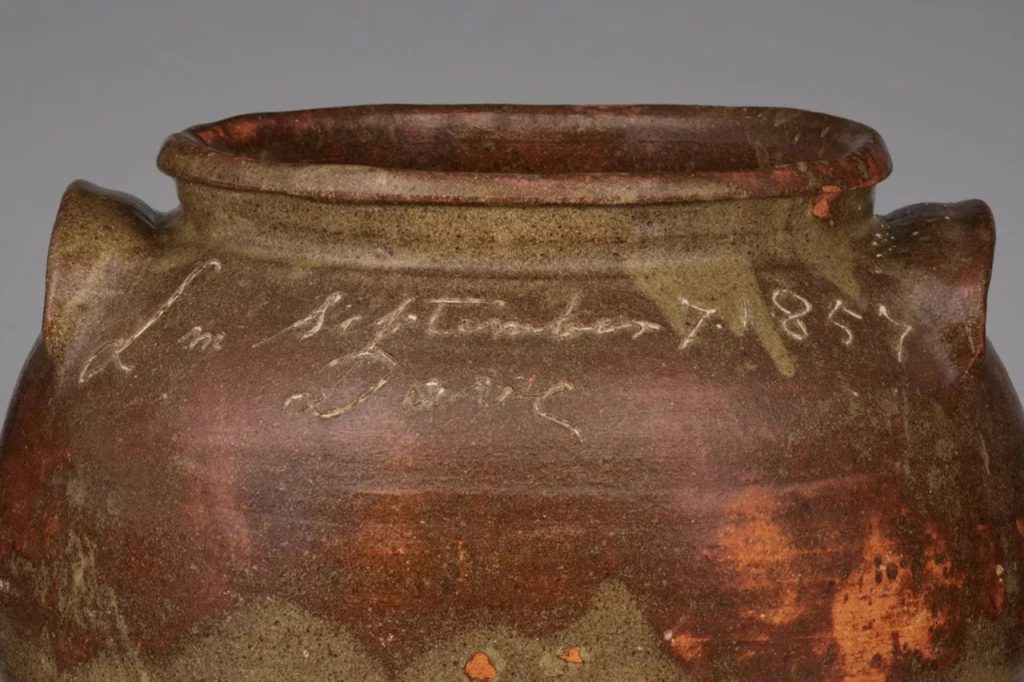
One of the two vessels carries something especially powerful for understanding David Drake’s life: his own name. The Milwaukee Art Museum returned an 1855 stoneware jar signed “Dave” to the Dave the Potter Legacy Trust, which represents Drake’s living descendants. Drake was known for signing some of his pottery and occasionally adding short poems, an extraordinary act for an enslaved Black man in 19th-century South Carolina, where laws restricted Black literacy. The surviving signature gives the vessel a direct connection to its maker and helps preserve the identity of an artist whose labor was originally performed under slavery.
The Larger Unsigned Pot
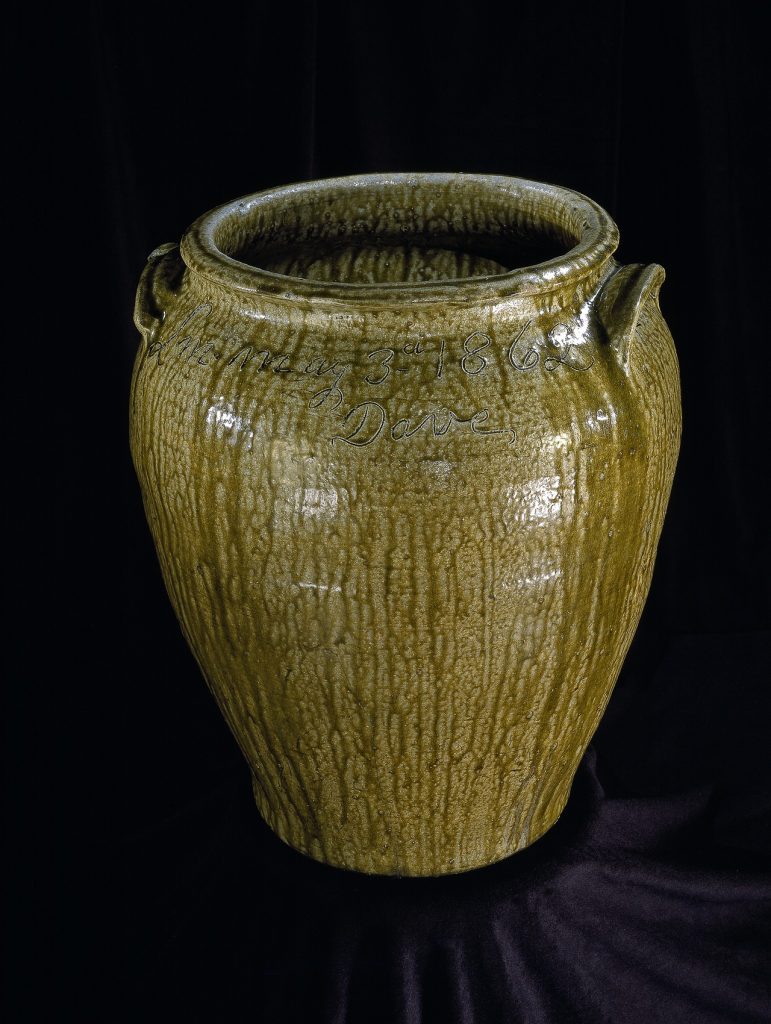
The second vessel tells Drake’s story in a quieter way because it does not carry a known signature or inscription. It is a larger stoneware pot dating to roughly the 1840s or 1850s and demonstrates the scale and technical skill that made Drake one of the most important American potters of his era. Drake worked in Edgefield, South Carolina, a region famous for its clay-rich soil and large alkaline-glazed stoneware. He was capable of producing exceptionally large storage vessels, some holding dozens of gallons. Even without written words, this pot remains important evidence of his craftsmanship and the demanding pottery industry in which enslaved labor played a central role.
A Return Rooted in Drake’s Family History
The ownership transfer has significance beyond the two physical objects. Drake’s descendants only discovered their connection to him relatively recently, with genealogical research helping establish the family relationship. Because slavery deliberately disrupted family records and separated generations, many descendants of enslaved people have faced enormous challenges tracing their ancestry. The creation of the Dave the Potter Legacy Trust gave Drake’s living relatives a way to preserve his story and pursue the return of works created by their ancestor. The Milwaukee agreement therefore represents both the recovery of historic objects and a reconnection between a family and an ancestor whose identity had been obscured for generations.
The Museum Had Displayed the Pots for Years

These were not newly discovered objects. Drake’s pottery had been connected with the Milwaukee Art Museum since 2010, when the Chipstone Foundation presented an exhibition of his work. The two vessels were later displayed as part of the museum’s Dave Project in its American art galleries. In 2025, Drake’s descendants contacted the Chipstone Foundation seeking restitution of the works. The foundation subsequently donated the vessels to the Milwaukee Art Museum, which then completed the ownership transfer to the family trust in September 2026. That sequence made it possible for the museum to participate in the restitution while continuing to keep the pieces accessible to visitors.
Drake’s Work Will Still Be Seen in Milwaukee

Returning ownership does not mean the two vessels are disappearing from public view. Under the arrangement, the Milwaukee Art Museum purchased the signed 1855 jar back from Drake’s family, while the larger unsigned vessel will remain with the museum on a long-term loan from the family. Both pieces can therefore continue to be displayed in Milwaukee while ownership has been formally restored to Drake’s descendants. The arrangement also reflects the family’s broader goal of keeping Drake’s work available to the public. His descendants have emphasized that they want people to learn about his talent, resilience and place in Black American history, rather than seeing the return of his pottery as the end of its public life.