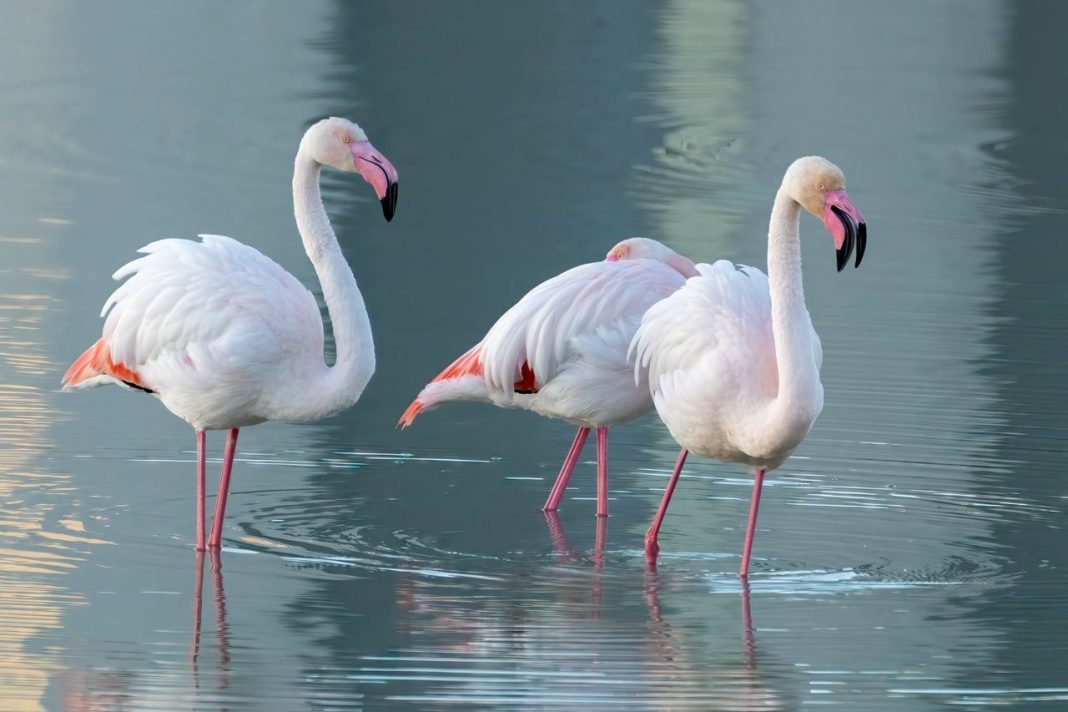

Flamingos are famous for their bright pink feathers and unusual habit of standing on one leg, but their feeding behavior is proving just as fascinating. What looks like an elaborate underwater dance is actually a sophisticated hunting technique that helps these birds catch tiny aquatic organisms. Scientists have discovered that flamingos use their feet, heads, and rapidly moving beaks to create swirling water currents that trap prey and direct it toward their mouths. The findings offer a fresh look at how these birds eat and could even inspire new approaches to water filtration technology.
Flamingos Create Underwater Tornadoes to Trap Their Food
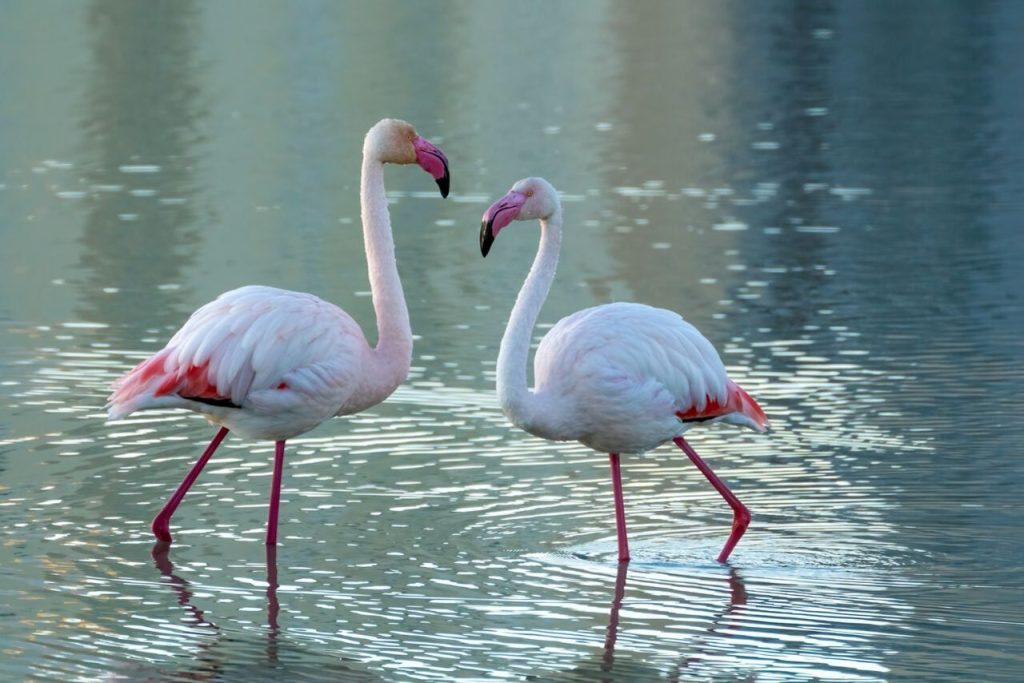
What looks like a bird casually bobbing its head in shallow water is actually a carefully coordinated feeding technique. Scientists have discovered that flamingos use their heads and uniquely shaped beaks to create small underwater tornadoes, known scientifically as vortices, that help capture prey. When a flamingo quickly pulls its head upward through the water, it generates a swirling current that lifts sediment and tiny aquatic animals from the bottom. Researchers measured this head movement at approximately 40 centimeters per second, fast enough to create powerful vortices capable of trapping active prey such as brine shrimp and copepods. The bird’s distinctive L-shaped beak plays an important role because its flattened upper portion helps generate the swirling movement as the head rises. Once the tiny organisms are brought closer to the surface, the flamingo can direct them toward its upside-down beak and filter them out of the water. This discovery changes how scientists understand flamingo feeding. Although these birds are traditionally described as passive filter feeders, their movements show that they actively manipulate the surrounding water to collect moving prey. Rather than simply waiting for food to enter their mouths, flamingos create the conditions that make catching it easier.
Their Stomping Dance Pushes Tiny Animals Toward Their Beaks
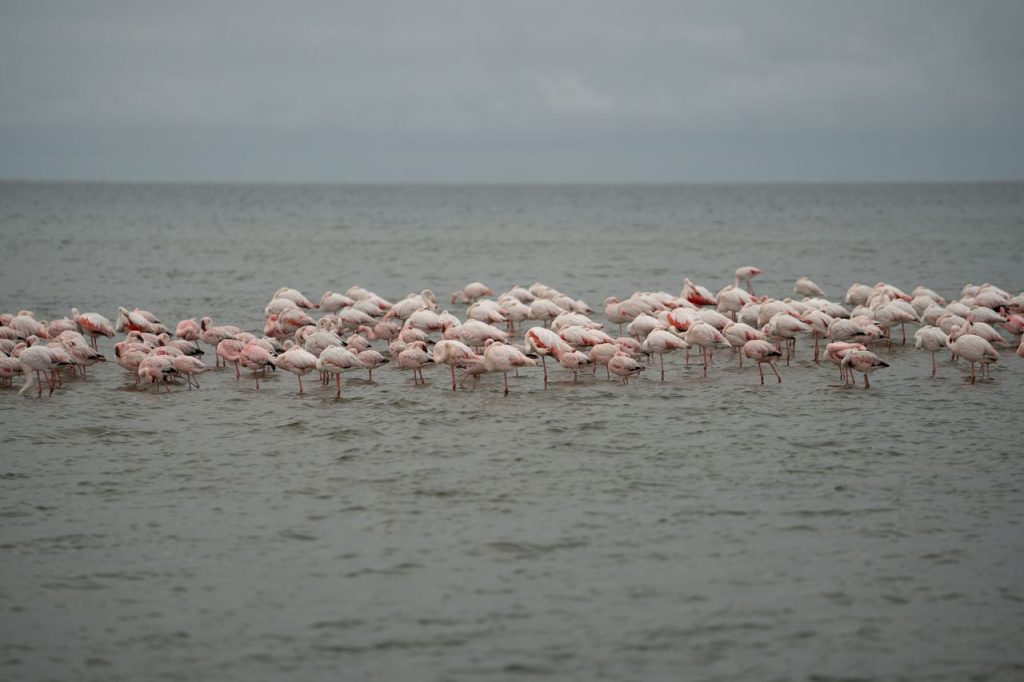
Those peculiar foot movements that make flamingos look as though they are dancing have a much more practical purpose than entertaining observers. Researchers discovered that their stomping movements help stir up muddy lake bottoms and create swirling currents that push small aquatic organisms toward their waiting beaks. Flamingos have webbed feet with flexible skin between their toes, allowing them to generate distinctive water movements as they step and lift their feet. When a bird presses its foot into the sediment, the webbing spreads out and pushes water and particles forward. As it lifts the foot, the flexible webbing folds, reducing resistance and allowing the bird to move through soft mud without creating as much suction. Experiments using 3D-printed models of flamingo feet showed that this flexible design produces more effective vortices than rigid webbed feet. These swirling currents help lift organisms such as brine shrimp and microscopic crustaceans from the bottom, concentrating them in the water where the bird can collect them. Flamingos often position their heads in front of their moving feet, allowing the disturbed particles and prey to travel toward their feeding area. The behavior is particularly useful in shallow wetlands, where food may be spread across muddy surfaces. What appears to be an amusing dance is actually an efficient way of gathering a meal.
Flamingos Snap Their Beaks Around 12 Times Per Second to Capture More Food
A flamingo’s unusual beak is doing considerably more work than simply filtering water. Scientists discovered that these birds rapidly open and close their bills in a movement called chattering, which generates additional currents that help direct small organisms toward their mouths. During this process, the upper part of the beak remains relatively stationary while the lower part moves repeatedly, creating a directional flow through the water. Researchers measured the movement at approximately 12 times per second, or 12 hertz. This rapid action produces an upward current that can reach around 7 centimeters per second, helping draw swimming organisms toward the bird’s filtering apparatus. To understand just how effective the movement is, researchers conducted experiments using an actual flamingo beak attached to a mechanical system. They also used a small pump to simulate the action of the bird’s tongue, which helps move water through the mouth. The experiments revealed that adding the chattering movement increased the number of brine shrimp passing through the system by approximately seven times compared with using the pump alone. Once the organisms enter the mouth, comb-like structures called lamellae along the beak help separate food from water. The tongue then assists in moving water through the filtering system. This combination of rapid beak movements, water currents, and specialized filtering structures makes flamingos remarkably effective at collecting tiny prey from their surroundings.
Their Unusual Feeding Technique Could Inspire Better Water Filters

Flamingos may have developed their unusual feeding movements to survive in shallow wetlands, but scientists believe the same principles could eventually influence human engineering. Their ability to create controlled water currents and concentrate tiny organisms offers an interesting model for improving filtration systems. Conventional filters often struggle when very small particles accumulate around their surfaces, gradually blocking the flow of water and reducing efficiency. Flamingos avoid some similar challenges through a combination of swirling currents, flexible movements, and rapid beak chattering that help direct food toward their filtering structures. Researchers are particularly interested in how these movements could inspire self-cleaning filters that reduce the buildup of unwanted material. The principles may also help engineers develop better systems for collecting tiny particles, including microplastics, from contaminated water. Another potential application involves designing equipment that can move through soft mud and shallow water without becoming stuck. The flexible structure of flamingos’ feet offers useful clues for developing robots capable of walking across difficult wet environments. However, these are potential engineering applications rather than technologies already proven to work at large scale. Scientists still need to translate the birds’ biological mechanisms into practical equipment and test how well those designs perform outside the laboratory. Nevertheless, the research demonstrates how studying an animal’s everyday behavior can reveal surprisingly useful solutions to engineering problems. A feeding technique that has helped flamingos survive for millions of years could eventually help humans build more efficient ways to handle water and its microscopic contents.