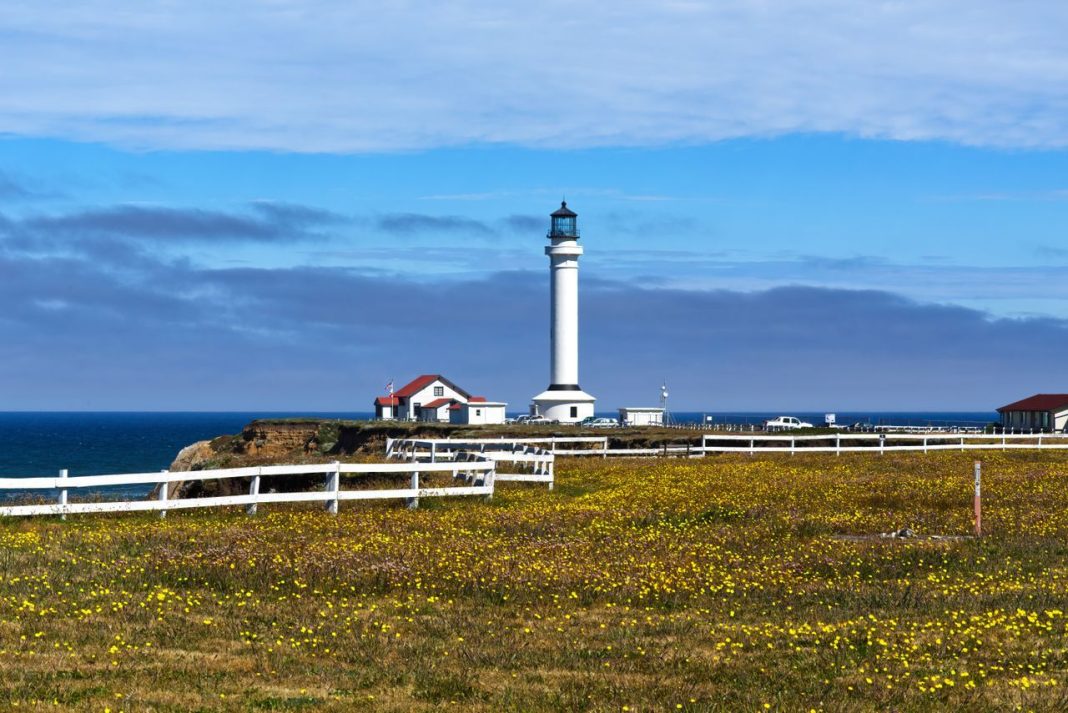

America’s lighthouses have guided ships through dangerous waters for centuries, but their appeal today extends far beyond maritime history. Perched on rugged cliffs, remote barrier islands, and the shores of the Great Lakes, these historic landmarks offer sweeping views and fascinating stories of shipwrecks, coastal communities, and remarkable engineering. Some have survived powerful storms and shifting shorelines, while others preserve the lives and routines of the keepers who once maintained their lights. From North Carolina’s towering Cape Hatteras Lighthouse to Michigan’s secluded Au Sable Light Station, these seven destinations are worth taking a detour to explore.
Cape Hatteras Lighthouse, North Carolina
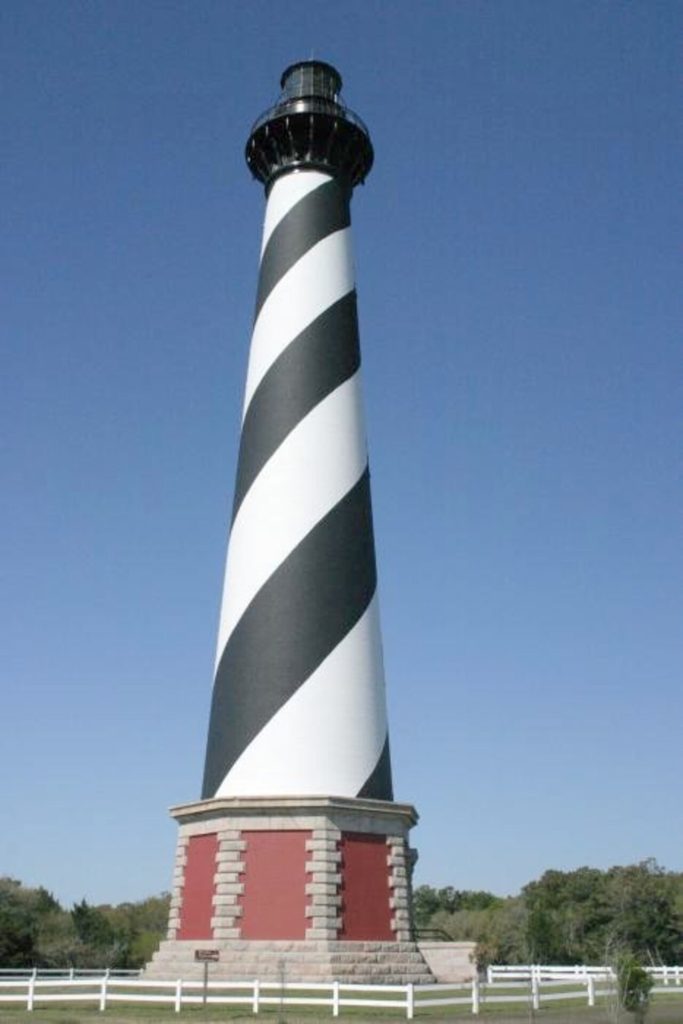
Few American lighthouses have a story as dramatic as Cape Hatteras Lighthouse, which stands on North Carolina’s Outer Banks, an area historically notorious for shipwrecks. The current tower was completed in 1870 and rises approximately 198 feet above the ground, making it the tallest brick lighthouse in the United States. Its distinctive black-and-white spiral pattern makes it instantly recognizable against the coastal landscape. The lighthouse was built to warn ships about Diamond Shoals, a dangerous stretch of shifting sandbars extending into the Atlantic Ocean. Strong currents, unpredictable weather, and shallow waters contributed to hundreds of shipwrecks in the surrounding region, earning it the nickname Graveyard of the Atlantic.
The lighthouse’s own survival story is equally remarkable. Coastal erosion gradually brought the ocean dangerously close to its original location, prompting engineers to relocate the entire structure in 1999. The approximately 4,830-ton tower was moved 2,900 feet inland over 23 days. Today, visitors can explore the lighthouse grounds and learn about its history at Cape Hatteras National Seashore. However, climbing access is subject to restoration work and other restrictions, so check the National Park Service’s current announcements before planning a visit.
Cape Lookout Lighthouse, North Carolina
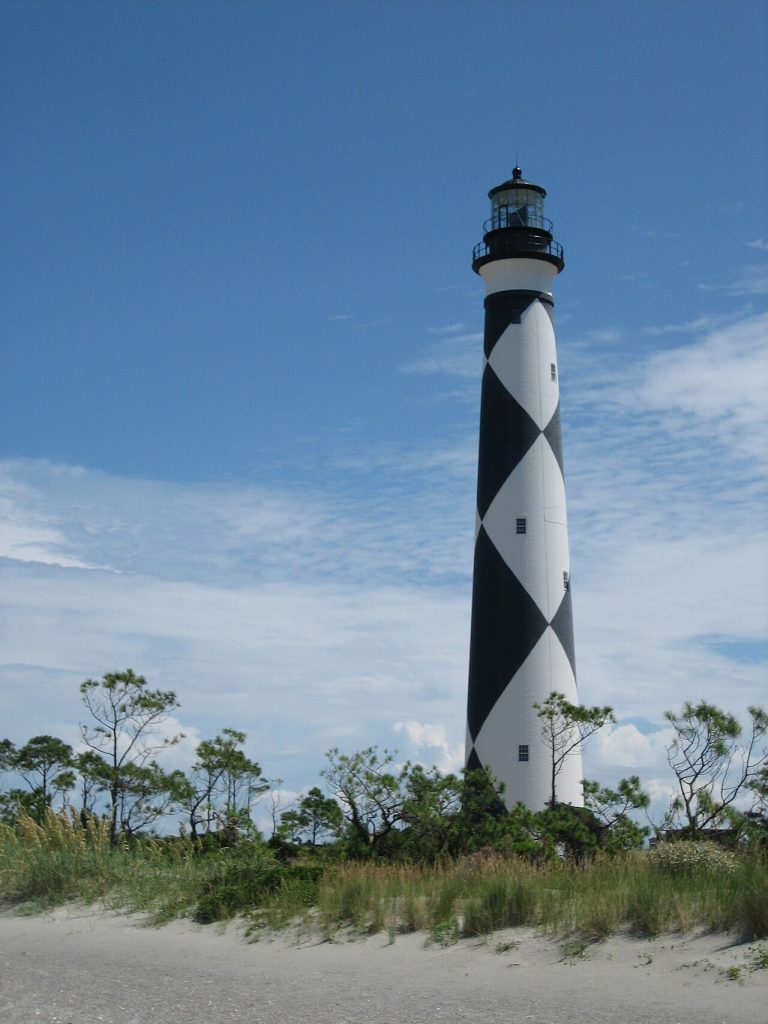
Cape Lookout Lighthouse stands apart from many coastal landmarks because its remote setting is part of its appeal. Located on the barrier islands of Cape Lookout National Seashore, the lighthouse is known for its striking black-and-white diamond pattern. The present tower was completed in 1859, replacing an earlier lighthouse built in 1812 that proved inadequate for warning ships about the dangerous Cape Lookout Shoals. At approximately 163 feet tall, the tower was designed to make its light visible far out to sea, helping mariners navigate one of North Carolina’s challenging coastal areas.
Reaching the lighthouse requires more planning than visiting a roadside attraction. Cape Lookout National Seashore is largely accessible by boat or ferry, and visitors can explore the surrounding beaches, maritime landscape, and historic light station. The remote location offers a chance to experience a less developed stretch of the Atlantic coast, where open water, shifting sands, and wildlife define the scenery. The lighthouse’s distinctive diamond pattern was introduced in 1873 to help sailors identify it during daylight hours. One important consideration is that the tower was closed for stabilization work after structural concerns were identified in 2021. Check the National Park Service’s latest updates before arranging transportation or expecting to climb it.
Point Reyes Lighthouse, California
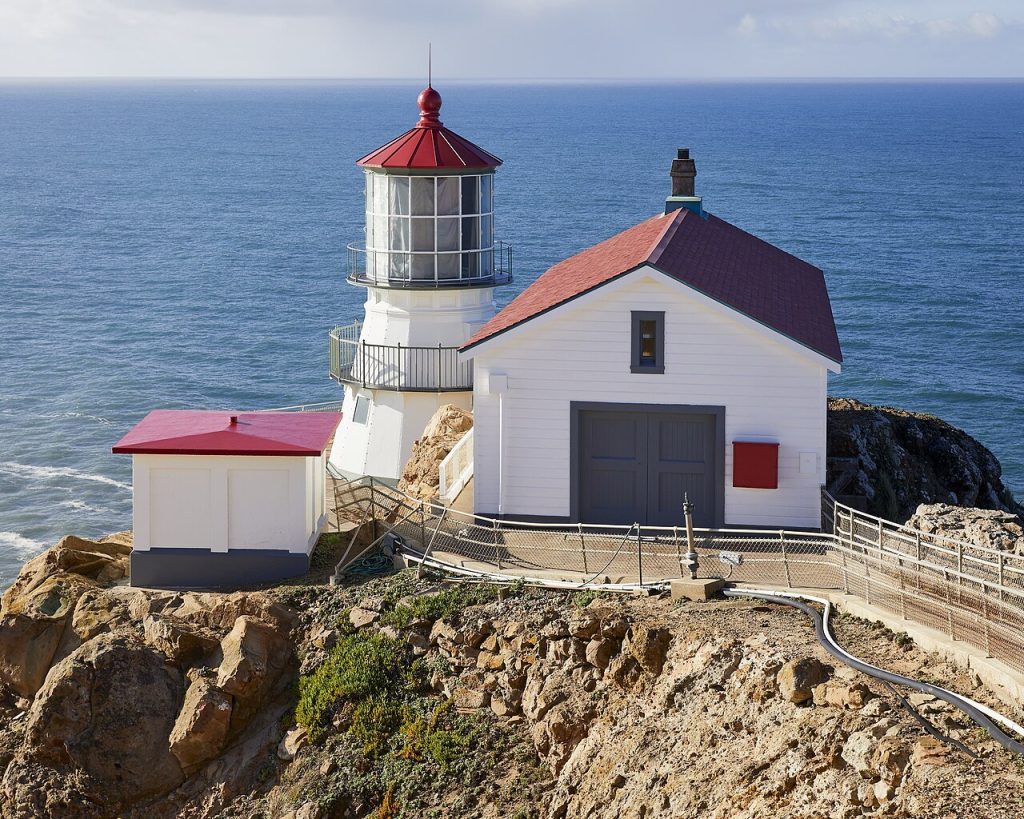
The California coastline can be spectacular, but its rugged headlands have also posed serious challenges for sailors. Point Reyes Lighthouse was built in 1870 to warn ships about the hazardous Point Reyes Headlands, which project approximately 10 miles into the Pacific Ocean. The lighthouse operated for 105 years before being retired in 1975, when the Coast Guard installed an automated light nearby. Today, the historic structure remains one of the most memorable destinations within Point Reyes National Seashore, combining maritime history with sweeping ocean views.
Getting to the lighthouse is an experience in itself. Visitors travel through the national seashore’s open landscapes before reaching the lighthouse parking area. From there, the route includes a walk to the visitor center and a descent down 313 steps to the lighthouse itself. The climb back up can be demanding, so allow enough time and bring water, particularly on warmer days. The surrounding headlands are also known for wildlife watching, including opportunities to spot whales and seabirds from designated viewpoints. Wind is a major consideration at Point Reyes, and the stairs to the lighthouse close when sustained conditions become unsafe. The observation deck offers an alternative for visitors who cannot descend the steps, making it possible to appreciate the scenery without completing the entire route. Check current visitor-center hours before setting out.
Bass Harbor Head Light Station, Maine
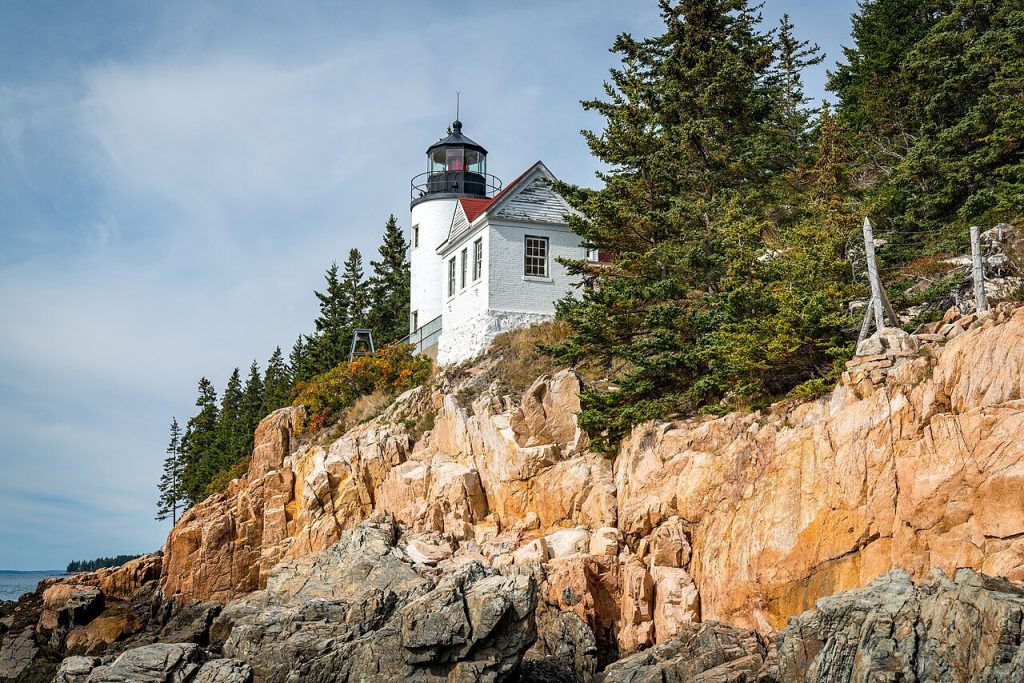
For visitors seeking a classic New England coastal scene, Bass Harbor Head Light Station offers a compelling combination of maritime history and rocky shoreline scenery. Located in Tremont on the southwestern corner of Mount Desert Island, Maine, the lighthouse marks the entrance to Bass Harbor and Blue Hill Bay. It was constructed in 1858, reflecting the importance of safe maritime transportation to coastal communities during the nineteenth century. The light station includes more than just the tower: its historic grounds also contain a keeper’s dwelling, a bell house, an oil house, and a barn, helping visitors understand how these stations functioned before modern automation.
The lighthouse is particularly popular with photographers because of its position above a rugged shoreline. A short trail leads from the parking area toward a viewpoint reached by descending steps over uneven coastal terrain. The setting is especially attractive around sunset, when the light and sky can transform the surrounding rocks and water. That popularity has a practical downside, however. Parking is limited, and the National Park Service warns visitors to expect congestion near sunset during busy periods. Arriving earlier can make the experience less stressful and leave more time to explore Acadia National Park. The lighthouse was added to the National Register of Historic Places in 1988 and is now managed by the National Park Service, while the Coast Guard continues to maintain the navigational light.
Old Point Loma Lighthouse, California
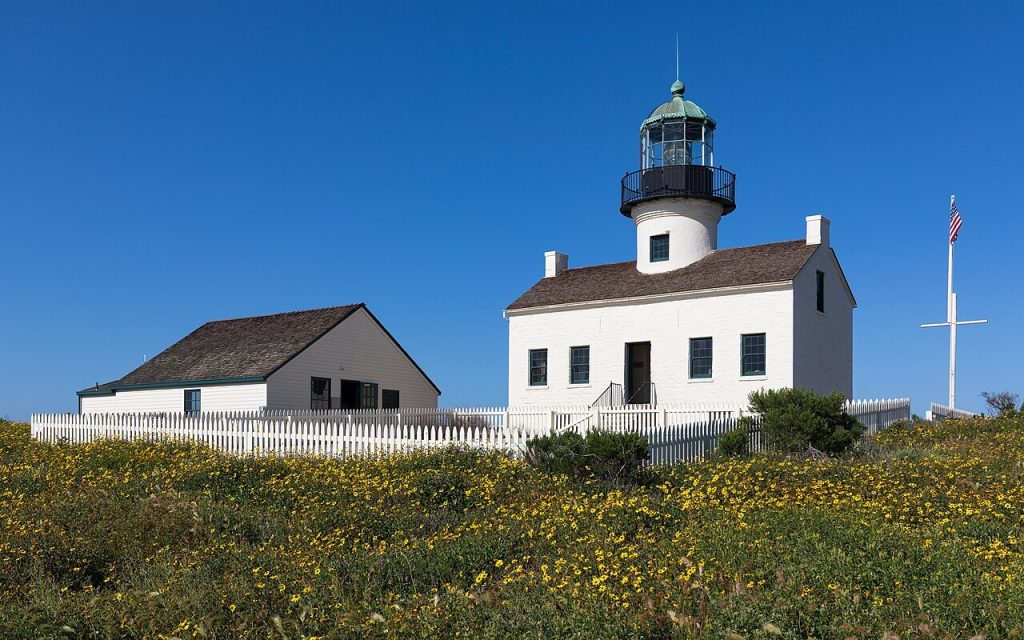
Perched high above the entrance to San Diego Bay, Old Point Loma Lighthouse offers visitors a fascinating look at the early days of coastal navigation on the Pacific. Built in 1855, it was one of the first lighthouses established on the California coast after the state entered the Union. Its elevated position initially seemed ideal because the light could be seen from far offshore. In practice, the height created a problem: low clouds and fog frequently obscured the beacon, making it difficult for ships to see when they needed it most. The lighthouse was therefore decommissioned in 1891, and a replacement was built closer to the water.
Rather than disappearing from the landscape, the original lighthouse became a historic attraction within Cabrillo National Monument. Visitors can explore the restored interior, where period furnishings and exhibits offer a glimpse into the lives of lighthouse keepers and their families during the 1880s. The grounds also provide panoramic views of the Pacific Ocean and San Diego Bay, making the site appealing to both history enthusiasts and photographers. Its location on the Point Loma Peninsula allows visitors to combine the lighthouse with other attractions within the national monument, including exhibits about the area’s maritime and cultural history. The first floors are normally open to visitors, but reaching the top of the tower is generally limited to special events.
Fire Island Lighthouse, New York
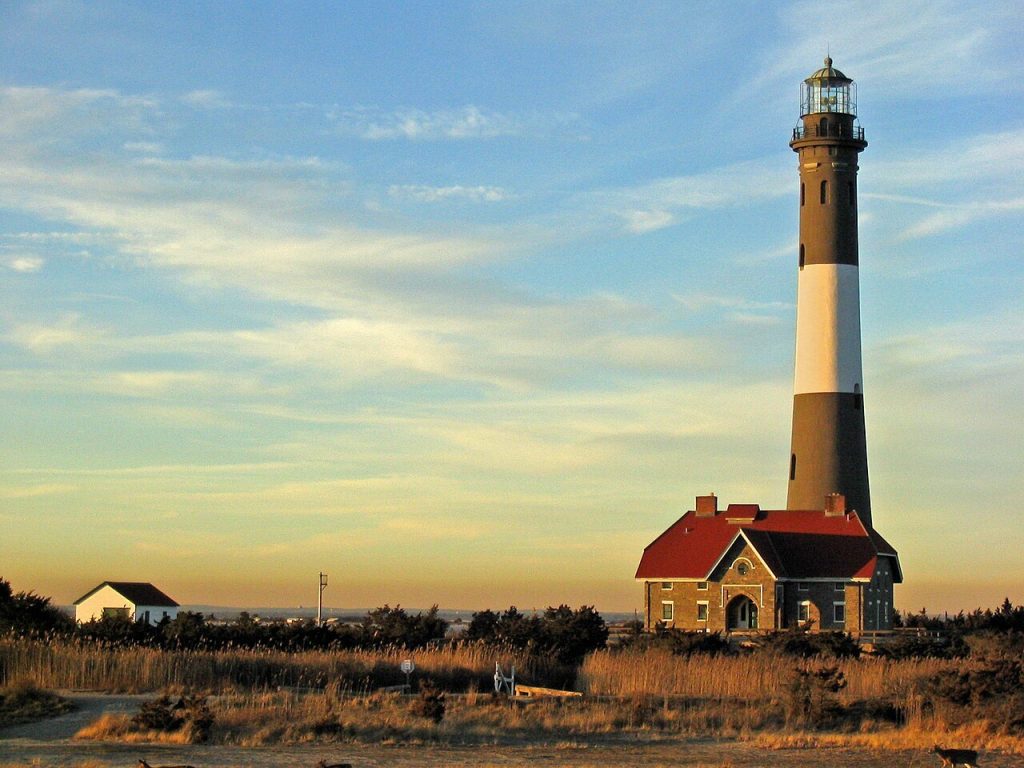
Long before New York became a symbol of skyscrapers and busy streets, its coastal waters presented serious challenges for ships approaching the region. Fire Island Lighthouse was established to help mariners navigate the dangerous southern shore of Long Island, where offshore sandbars could cause vessels to run aground. The first lighthouse on Fire Island began operating in 1826, but the current tower was completed in 1858. Its more powerful light and improved optical equipment helped guide ships toward New York Harbor during a period when maritime traffic was expanding rapidly.
The lighthouse is now a prominent historic attraction within Fire Island National Seashore. Visitors can explore the grounds, learn about the people who maintained the station, and enjoy views of the surrounding coastal landscape. The tower’s distinctive black-and-white markings, added in 1892, help it stand out against the sky and nearby vegetation. The original first-order Fresnel lens, an important piece of lighthouse technology, was removed from service in 1933 and later displayed elsewhere before returning to the site’s preservation story. Visitor services are supported by the Fire Island Lighthouse Preservation Society in cooperation with the National Park Service. Access requires some planning because Fire Island is a barrier island, and visitors generally reach the area through nearby parks and designated access routes. Check seasonal hours and tower-climbing availability before traveling.
Au Sable Light Station, Michigan
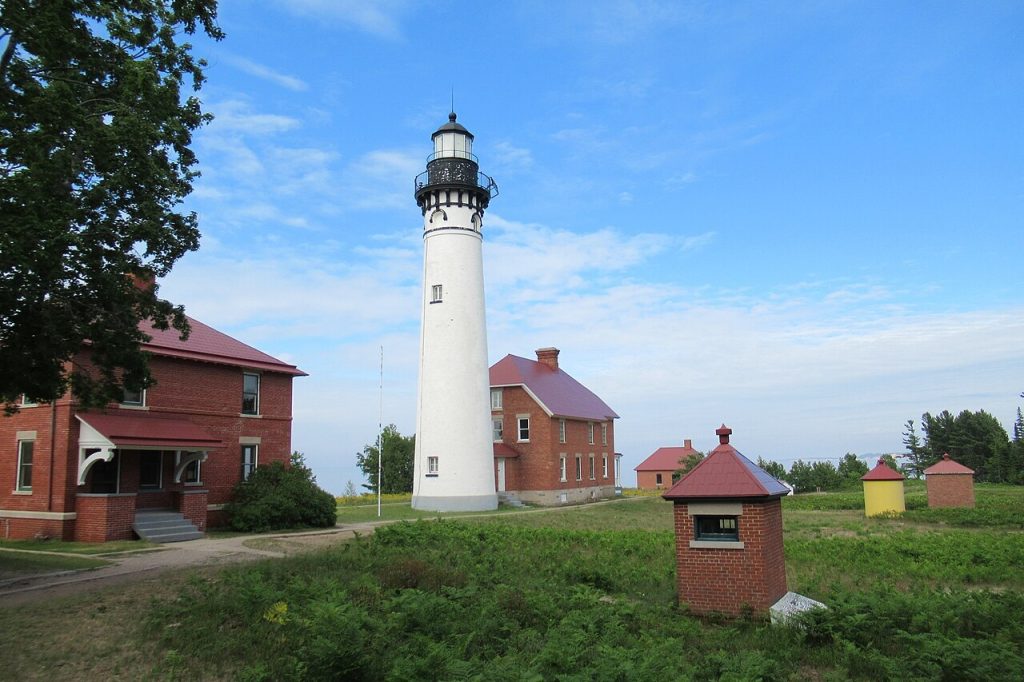
Not every famous American lighthouse stands beside the Atlantic or Pacific. Au Sable Light Station rises above the southern shore of Lake Superior in Michigan’s Pictured Rocks National Lakeshore, where powerful storms, dense fog, and underwater sandstone reefs once threatened passing ships. The lighthouse began operating in 1874 and stands 86 feet tall. Its construction reflected growing concern about maritime safety as shipping traffic increased on the Great Lakes following the opening of the Soo Canal in 1855. The surrounding coastline became known for shipwrecks, and the lighthouse helped warn vessels away from dangerous underwater hazards near Au Sable Point.
The light station is especially rewarding for visitors who enjoy combining history with a walk through a natural landscape. Reaching it requires a hike of approximately 1.5 miles each way from the Hurricane River Campground area. Along the route, visitors can experience the forested surroundings and Lake Superior shoreline, where remnants of shipwrecks can sometimes be seen on the beach. The historic complex includes the tower, keepers’ quarters, and other buildings that illustrate how lighthouse staff once lived and worked in relative isolation. During the summer season, the National Park Service offers guided tours and climbs that can include the 98 steps to the top of the lighthouse. These climbs provide views of Lake Superior and the Grand Sable Dunes, weather permitting. Check the current schedule and trail conditions before visiting, as the site is reached on foot rather than by a road directly to the lighthouse.